Supplement brand kraft paper bags cost less than rigid cartons on paper, but the number only makes sense after freight, setup, and shelf-life performance are added in. A pouch that looks inexpensive yet leaks oxygen, crushes in transit, or needs a reprint can cost more than a better-built structure from the start. For vitamin blends, greens, protein powders, and sample packs, the real question is not whether kraft looks premium. It is whether the package protects the formula, fits the line, and keeps landed cost under control.
Why Supplement Brands Switch to Kraft When Shipping Costs Matter
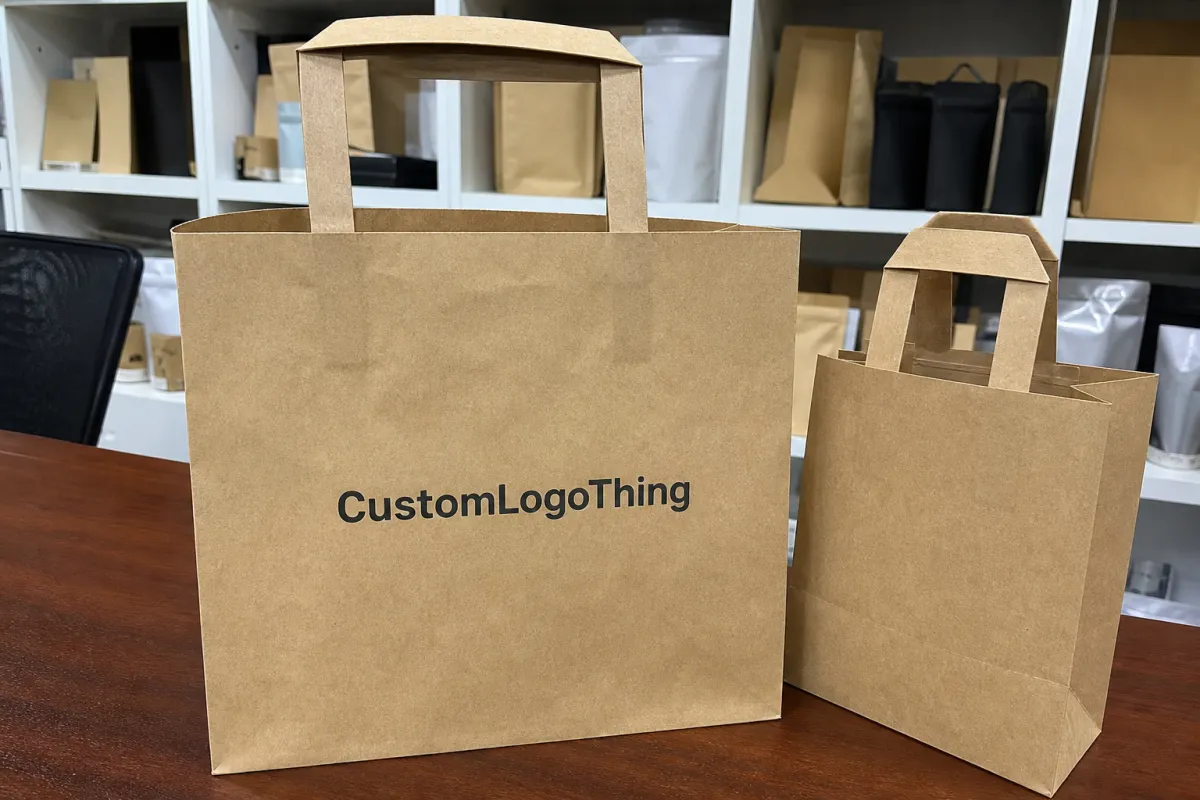
The first savings usually show up in logistics. Corrugated cartons, rigid tins, and multi-part retail kits add weight, cube, and labor. Kraft Paper Bags are lighter and flatter, which can lower shipping charges and reduce the time spent folding, inserting, and kitting. For direct-to-consumer brands and smaller retail replenishment orders, those savings can matter more than the cost of the outer package alone.
There is also a visual reason buyers keep returning to kraft. The material reads as restrained and ingredient-focused, which fits supplements better than glossy packaging that feels overly promotional. That look works well for clean-label positioning, recycled-content claims, and launch SKUs that need to communicate function before flair. A well-printed kraft pouch can improve the unboxing experience without forcing a heavier carton structure.
The trap is assuming the cheapest-looking format is the cheapest package. A thin paper face without the right barrier layer may save a few cents, then create returns, flavor loss, clumping, or oxidation. A kraft outer layer can sit on a high-barrier laminate and still stay cost-effective. That is often the practical middle ground for brands that want a natural appearance and stable shelf life.
From a purchasing standpoint, the biggest savings usually come from three places:
- Lower shipping weight versus carton-and-insert packaging.
- Fewer components to source, count, and assemble.
- Simpler fulfillment on fill lines and kitting tables.
Kraft alone is not enough for oxygen-sensitive formulas. Protein blends with flavors, magnesium powders, probiotics, and moisture-prone ingredients need a structure chosen for preservation first and appearance second. If the package is selected only because it looks natural, the launch can become an expensive lesson in rework.
Buyers who want a packaging baseline often review supplement packaging case studies before requesting pricing. That is a practical move. Real projects reveal tradeoffs between appearance, freight, and shelf life much faster than a catalog description.
Pouch Formats and Print Builds That Fit Supplement Use Cases
Not every supplement belongs in the same bag. The right format depends on how the product pours, how often consumers reopen it, and how much shelf presence the brand needs. Powdered greens usually need a wider mouth and a stronger bottom seal. Capsules and gummies do better in a stable stand-up shape with a zipper. Sachets and starter kits can work in flat pouches when compact shipping matters more than a retail display footprint.
Stand-up pouches are the most common format for supplements because they balance shelf impact and fill efficiency. Flat pouches fit sample packs, refills, and low-count bundles. Gusseted bags can handle bulkier fills, though the side and bottom seals need careful control. Zipper-reclosable retail packs usually make sense when the product is consumed over several days and the buyer expects repeated opening and closing.
Printing method changes the economics quickly. Digital printing is useful for short runs, launch tests, and artwork that may still change after sell-through data comes in. Flexographic printing typically improves unit cost at medium to high volumes, especially when the artwork is stable. Gravure can work well on large recurring programs, but the setup burden is higher and the numbers only improve once volume justifies the tooling.
Finish details also move the quote. Matte kraft usually reads as more natural than gloss, but it adds process cost. A window panel can help sell a product by showing texture or color, though it reduces printable area and can complicate barrier planning. Tear notches improve first-open behavior. Zippers improve reuse. Each feature has value, but each one adds cost. The better question is not whether the feature is available. It is whether it improves sell-through or product protection enough to earn its place.
| Format | Best For | Typical MOQ | Ballpark Unit Cost | Main Tradeoff |
|---|---|---|---|---|
| Flat kraft pouch | Sample packs, sachets, lightweight blends | 5,000-10,000 | $0.12-$0.24 | Less shelf presence |
| Stand-up pouch | Capsules, gummies, powders | 3,000-10,000 | $0.18-$0.42 | Higher structure cost |
| Gusseted bag | Bulk refills, larger powder fills | 5,000-12,000 | $0.20-$0.48 | Needs stronger seal control |
| Zipper retail pack | Premium SKUs, repeat-use products | 5,000-15,000 | $0.24-$0.55 | Convenience adds cost |
For launch runs, a simpler closure and digital print often produce the cleanest economics. For validated SKUs with steady demand, flexo usually lowers the landed unit cost. The difference can be large enough that a second quote is worth requesting before a format is locked in.
Barrier Specs, Liners, and Seal Details to Protect the Formula
Inside the bag matters more than the outside face. Buyers should ask separately for moisture barrier, oxygen barrier, light protection, and puncture resistance. These are not the same thing. A kraft exterior can look natural while the inner layer does the real preservation work.
Common builds include kraft laminated to PET, metallized film, EVOH-containing layers, or other high-barrier combinations. The right stack depends on formula sensitivity and expected shelf life. Hygroscopic powders usually need stronger moisture resistance. Flavor-heavy blends and probiotic products often need better oxygen control. Gummies can need both moisture management and a reliable seal because stickiness creates stress after opening and during transit.
There is a sustainability angle here, but the claim has to be accurate. FSC certified kraft outer layers are useful, and post-consumer waste content can strengthen a recycled-content story. A laminated barrier pouch, though, is not automatically biodegradable packaging. If a supplier makes that claim, ask for the full structure and the disposal conditions. Too many buyers hear one green statement and assume the entire pouch behaves the same way in recycling or composting. It usually does not.
Supplier documentation should be ready before approval. Food-contact declarations, ink safety statements, and material spec sheets are common requests, especially for supplements sold through regulated channels. If the package touches a formula that sits near food-contact standards, the paperwork should be available without delay.
Seal performance is where many quotes become vague. They should not be vague. Ask about top seal width, seal temperature range, and whether the pouch is built for heat seal only or heat seal plus zipper closure. A weak top seal can waste an entire batch. A zipper placed too close to the fill zone can slow packing. A poorly positioned notch can make first-open awkward and push consumers to tear the pouch in the wrong place.
Practical rule: if the pouch cannot survive packing, distribution, and consumer use, the lowest quote is not a bargain. It is a reprint waiting to happen.
Transit testing is worth asking about, especially for mail-order supplements. ISTA-style drop and vibration checks are useful benchmarks because parcels rarely travel gently. A pouch may look perfect right after press approval and still fail after a truck ride, a sortation center, and one bad drop at the doorstep. For products with brittle capsules, fine powders, or sensitive closures, that is where quality problems surface first.
Several technical references help frame those conversations. Packaging industry resources are useful for material terminology, while FSC provides the chain-of-custody standard for certified fiber. Neither source replaces a supplier spec sheet, but both help buyers ask better questions.
Pricing, MOQ, and supplement brand kraft paper bags cost drivers
This is where quotes are often misread. Buyers focus on the per-unit number and ignore the setup behind it. In practice, Supplement Brand Kraft Paper Bags cost is shaped by size, structure, print coverage, hardware, and order quantity. That is why two pouches that look similar can come back with very different prices.
The biggest levers are straightforward:
- Bag size and fill volume.
- Barrier structure and number of laminate layers.
- Zipper, tear notch, spout, or window additions.
- Print coverage, especially full-wrap artwork.
- Finishing, such as matte coating or specialty surface treatment.
MOQ changes the math quickly. A digitally printed run of 3,000 pieces may have a higher unit price than a 10,000-piece flexo run, but the smaller order reduces risk if the formula, label claims, or artwork still need revision. That tradeoff is often rational for new supplement brands. Reorders are different. Once the design is stable and the SKU is moving, the price break can be meaningful.
Watch for hidden charges. Plate fees, cylinder charges, proof costs, freight, and artwork corrections can be split across different lines in the quote. Some suppliers quote only factory price. Others give a fuller landed view. The second version is more useful. Ask for the same build at multiple quantities so you can see how unit cost drops as volume increases. If a supplier only gives one quantity, the picture is incomplete.
| Quote Tier | Typical Scenario | Indicative Unit Cost | What Usually Changes | Buyer Takeaway |
|---|---|---|---|---|
| Small launch run | 3,000-5,000 pieces, digital print | $0.22-$0.55 | Higher setup share, less volume efficiency | Best for testing demand |
| Core production run | 10,000-20,000 pieces, flexo print | $0.15-$0.34 | Better material buying, lower setup burden | Best balance for active SKUs |
| High-volume reorder | 25,000+ pieces, stable artwork | $0.11-$0.27 | More efficient press time and sourcing | Lowest cost per unit if specs stay fixed |
The lowest headline price can still be the worst landed cost if freight, scrap, or rejected samples eat the margin. A bag that fits the filling line, seals cleanly, and ships efficiently often beats a cheaper quote that causes delay later. For supplement packaging, the best number is the one that survives production and distribution.
Production Steps and Turnaround Expectations for Custom Orders
A clean order moves through a predictable sequence. RFQ review comes first. Then the supplier confirms or creates the dieline. Artwork is checked for bleed, barcode size, and safe zones. Proofs follow, then sample approval, then production, inspection, and shipment. The steps are ordinary; the delays usually happen in the handoffs.
Lead time depends on the print method and the amount of setup required. Digital launch jobs may move in roughly 7-12 business days after proof approval if the materials are in stock and the build is simple. Flexographic or gravure work often takes 12-20 business days, sometimes longer if laminate sourcing, special finishes, or hardware are involved. Repeat orders can move faster once the tooling and specs are already on file.
Most delays come from avoidable issues:
- Artwork that does not match the dieline.
- Barcodes that are too small or too light.
- Missing finish instructions.
- Late approval on sample pouches.
- Unclear shipping destination or incoterms.
The quickest way to reduce cycle time is to send complete files and make the product brief specific from the start. Fill weight, closure style, storage conditions, and seal preference should be clear before pricing is finalized. A supplier cannot guess those details without adding time or risking a bad build.
For rougher distribution routes, ask whether the pouch has been validated for parcel handling. That matters for DTC programs in particular. The bag may look fine on a screen and still fail after movement through a warehouse, a conveyor, and multiple touchpoints before arrival.
How to Compare Suppliers on Quality, Proofs, and Repeatability
Price matters, but repeatability matters more. If a supplier cannot hold color from run to run, maintain seal strength, or explain a material substitution before it ships, the relationship gets expensive fast. The right packaging partner reduces risk on the next order, not just the first one.
Good suppliers show the work. They provide clear spec sheets, confirm the material stack, and explain what happens if one component is unavailable. They also send digital mockups that reflect actual print placement, then physical samples when the structure needs a closer check. That proof sequence protects both sides because problems get caught while they are still cheap to fix.
Repeat orders are where consistency is tested. A supplement line may start with a small launch and then move into recurring replenishment orders with the same artwork for months. If the supplier can keep registration stable, manage batch consistency, and retain tooling notes, the brand avoids redesigning the package every time volume changes. That kind of discipline is often the difference between a cheap quote and a workable program.
A useful supplier review usually checks the following:
- Responsive prepress support.
- Specific answers on barrier layers and seal specs.
- Clear proof approval checkpoints.
- Fast reporting when a problem appears.
- Transparent substitutions if materials change.
From a buyer’s point of view, a strong supplier should feel boring in the best way. No surprises. No vague answers. No uncertainty about the due date. When a supplier is organized, supplement brand Kraft Paper Bags cost becomes easier to predict because the quote reflects an actual production process instead of optimism.
Next Steps to Get an Accurate Quote Without Rework
The cleanest quote request includes four basics: fill weight, product type, bag dimensions, and target quantity. If those are missing, the quote will be broad or wrong. Add the storage risk as well. Powder, capsule, gummy, and blend each affects the pouch structure. A 250g greens powder and a 60-count capsule pack do not belong in the same spec conversation.
Send these items in the first request:
- Artwork files or a concept direction.
- Closure preference: zipper, heat seal, or both.
- Barrier requirement: moisture, oxygen, and light control.
- Finish preference: matte kraft, window panel, or full coverage print.
- Shipping destination so the landed cost is realistic.
Ask for at least three quote variables: MOQ, unit cost at each tier, and expected turnaround. That gives a real purchasing view instead of a single number that may not survive the next revision. If a supplier can also provide a sample or digital proof before production, that helps confirm opening behavior, structure, and shelf appearance.
Confirm the final spec in writing before the order goes live. Include the material build, print method, finish, seal type, and carton pack-out if the bags will ship in master cases. That is how brands keep supplement brand Kraft Paper Bags cost aligned with budget instead of watching the number drift upward through avoidable revisions.
Bottom line: supplement brand kraft paper bags cost is not a single price; it is a function of structure, print method, order size, and performance requirements. Get the barrier right, keep the artwork clean, and ask for landed pricing at more than one quantity. That is how buyers end up with a bag that looks good, protects the formula, and stays inside budget.
What affects supplement brand kraft paper bags cost per unit?
Size, barrier structure, and print coverage are the main drivers. MOQ changes unit pricing fast, especially on custom print jobs. Add-ons like zippers, windows, and matte finishes raise the price.
Can kraft paper bags work for protein powder and capsules?
Yes, if the pouch has the right barrier and seal structure. Powders usually need stronger puncture resistance and moisture control. Capsules and gummies often need light protection and reclose features.
What MOQ is typical for custom supplement kraft bags?
MOQ varies by material build and print method. Digital or simplified builds can support lower quantities. Conventional printed production usually needs higher minimums to reach better unit pricing.
How long does production usually take after approval?
Lead time depends on print method, material availability, and order size. First orders take longer because proofs and setup are part of the schedule. Repeat orders are usually faster once specs are locked.
What should I send to get an accurate quote for supplement kraft bags?
Send product type, fill weight, dimensions, and quantity target. Include artwork files, finish preference, and barrier requirements. Add shipping location so the quote reflects landed cost, not just factory price.


