Corporate Gifting Paper Shopping Bags Unit Cost for Buyers
Corporate gifting paper shopping Bags Unit Cost looks simple on a quote, yet the number only makes sense once the structure, paper, handle, finish, and quantity are all lined up. The bag is not just packaging; it is the first branded object most recipients touch, and it often stays visible after the gift itself has been opened, stored, or shared. That means the bag carries a real share of the presentation burden.
For buyers, the useful question is not only what each bag costs. It is what that cost buys in appearance, strength, consistency, and delivery certainty. A modest gift set can feel more polished with a well-made paper shopping bag, while a premium gift can fall flat if the bag dents, tears, or arrives with poor color control. The best purchasing decisions treat the bag as part of the program, not as a last-minute accessory.
Paper shopping bags remain popular for internal events, onboarding kits, client appreciation gifts, retail-style handouts, and holiday programs because they are easy to store, easy to distribute, and easy to brand. They also hold up well in office environments where teams need something that stacks flat, assembles quickly, and looks orderly on a reception desk or event table. That combination is hard to beat when deadlines are tight and the presentation still has to feel deliberate.
“The bag is often the first branded surface people touch, and it does more visual work than many buyers expect.”
Used well, the bag can raise perceived value without changing the contents. That is one reason procurement teams keep returning to it. The packaging budget may be small compared with the total gift program, but the visibility is high, so even minor improvements in stock, handle, or finish can have an outsized effect.
Why Paper Shopping Bags Still Win for Corporate Gifts
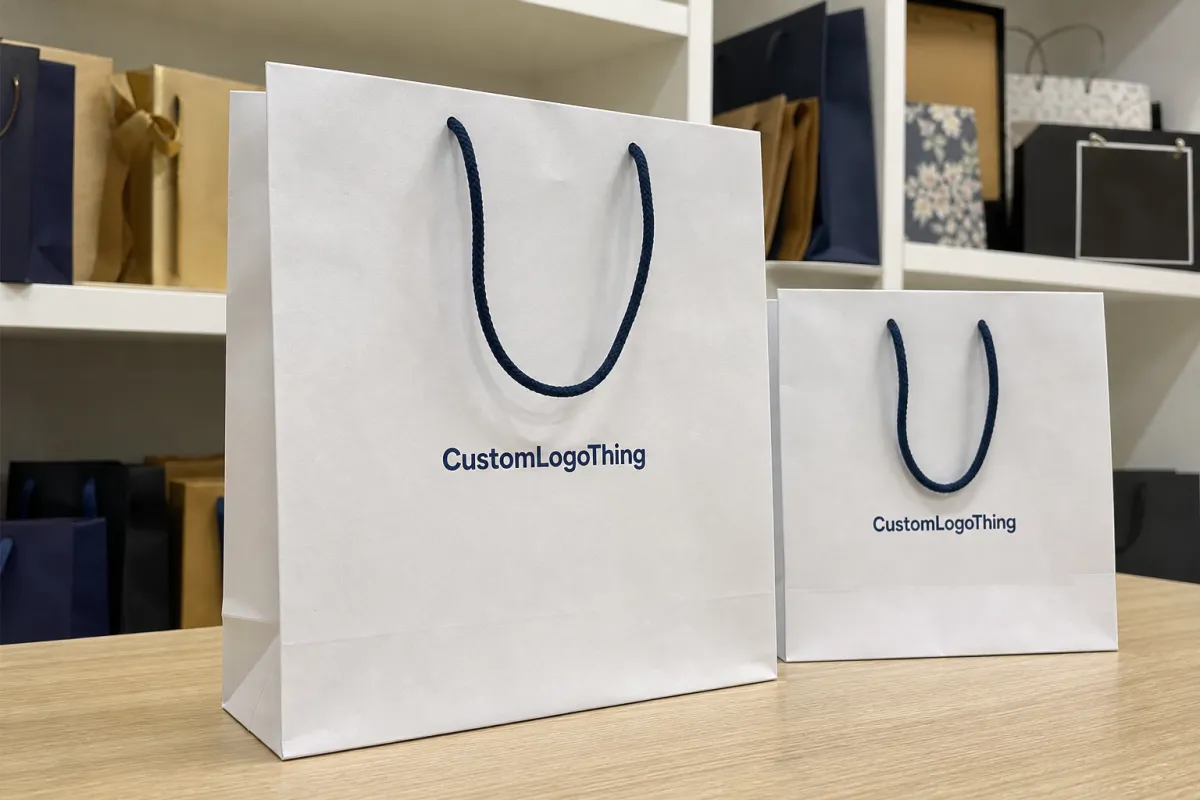
Paper shopping bags continue to win because they solve several problems at once. They carry the item, carry the brand, and create a clean first impression before the recipient opens anything inside. That makes them especially useful for programs that need a neat handoff without building a custom box for every item. For teams balancing cost and presentation, Corporate Gifting Paper Shopping Bags unit cost is often easier to justify than a more rigid format.
There is a logistical advantage as well. Bags ship flat, store efficiently, and can be counted, staged, and distributed with very little training. If a team is handling hundreds of gifts across multiple desks, counters, or event tables, a paper shopping bag is usually simpler than a rigid carton or a fully assembled luxury box. That matters more than it sounds, because packaging that is easy to manage is less likely to create bottlenecks on launch day.
The visual value is often higher than buyers first expect. A clean bag with a balanced logo, the right paper weight, and a handle that feels secure can make a standard gift set look much more considered. That is useful when the contents are fixed by policy or budget. The packaging becomes the part that signals care.
Paper bags also support a wide range of use cases. A small accessory kit, a folded apparel set, a bottle-and-card package, or a boxed client gift can all be presented well if the dimensions and construction are chosen correctly. When the bag matches the contents, the whole program feels calmer and more organized.
Bag Styles, Handles, and Brand Presentation Options
The style of bag changes the presentation immediately. Standard square-bottom shopping bags remain common because they stand upright and handle a broad range of contents. Gusseted carry bags offer more depth, which helps with boxed sets, soft goods, and mixed kits. Fold-top or reinforced luxury formats create a more controlled appearance, especially when the contents should stay tucked in and the opening needs to look tidy in photos or at handoff.
Handle choice is equally important. Twisted paper handles are practical, familiar, and usually the most economical. Ribbon handles shift the look toward gifting and hospitality. Cotton and rope handles feel sturdier in the hand and are better suited to heavier loads or a more premium feel. If a bag is carrying a weighted set, it is usually smarter to spend a little more on a stronger handle than to risk a bag that feels flimsy at first touch.
- Twisted paper: practical for moderate loads and cleaner bulk pricing.
- Ribbon: softer, more gift-like, and well suited to presentation-focused programs.
- Cotton or rope: sturdier in the hand and better for heavier contents.
- Die-cut or folded-top styles: useful when a neater opening or a more upscale look matters.
Print coverage should support the brand rather than overwhelm it. A centered logo with clean margins often reads more corporate and more expensive than a bag covered edge to edge in graphics. White space gives the print room to breathe and usually makes the bag easier to use across multiple settings, from a boardroom welcome to a conference registration desk. A restrained design also reduces the chance that color drift or registration issues will stand out.
Finish choices should follow a reason, not a habit. Matte lamination softens glare and tends to feel more refined. Gloss lamination gives stronger color contrast and can make a simple mark pop. Spot UV works best when a buyer wants a small, deliberate highlight on a logo or pattern. Embossing adds texture and depth, which can be helpful for a formal program. Foil stamping can elevate the look, but it should be used carefully, since it adds cost and can show flaws more clearly if the art or die alignment is off.
For heavier gift sets, details that look minor on paper can matter a lot in use. Reinforced top edges, stronger base boards, and carefully placed handle patches help the bag survive loading, stacking, and handoff. A bag that is attractive but underbuilt creates problems quickly, especially if the contents are boxed, glass, or carried through a long event schedule.
Paper Grades, GSM, and Finishing Specifications
Paper grade is one of the first places to sort value from appearance. Kraft paper has a natural, straightforward look and is often the most efficient route for buyers who want a clean branded bag without a lot of decorative finish. Coated art paper prints with sharper detail and supports richer color treatment. Specialty textured papers sit higher on the presentation scale and are usually chosen for programs where the bag is part of a more premium gifting experience rather than a simple carry solution.
GSM, or grams per square meter, gives a fast reading on paper weight. Lower GSM can work for light accessories, apparel, or flat gift packs. Heavier gifts usually justify a thicker sheet because the bag needs more stiffness at the handle and better support at the base. The bag should feel composed, not fragile. Buyers often try to shave cost by dropping the paper weight, but the savings are small compared with the risk of a bag that buckles or wrinkles before the program ends.
Dimensions matter just as much as paper. Width, gusset depth, and height need to match the actual contents, not just the imagined contents. A shallow bag with a narrow base may look fine in a mockup and still fail once a box, bottle, or multi-item kit is loaded inside. That is why a proper spec review should include the weight and shape of the gift itself. A well-sized bag usually performs better and looks more premium than a bag that is oversized or forced to carry too much.
Finishing should support the use case. Lamination helps protect the print surface and makes the bag easier to handle. Foil stamping can create a crisp accent, especially on a logo that needs a formal note. Embossing adds tactile depth. If the bag needs to be recycled or sourced responsibly, ask for documentation early rather than after approval. FSC certification is a common benchmark, and the organization’s standards are publicly described at fsc.org.
For buyers who care about shipment performance, it can also help to ask how the bag has been evaluated for transit and handling. Organizations such as ista.org publish testing frameworks that are useful reference points for packaging durability. Not every paper bag needs formal lab testing, but heavier kits, multiple distribution points, and longer freight routes justify a closer look at how the sample was checked before the full order was released.
Color control is another practical issue. The same logo can look slightly different on kraft, coated stock, and laminated surfaces. Dark colors may deepen on some papers, while pale colors can lose contrast. Buyers who need a precise match should not assume the proof image tells the whole story. Physical samples or press checks are often the safest way to protect brand consistency.
How Corporate Gifting Paper Shopping Bags Unit Cost Is Built
Corporate gifting paper shopping Bags Unit Cost is driven by a handful of measurable inputs. Paper grade, bag size, print coverage, finish, handle type, and order quantity all influence the final number. Once those inputs are separated, the quote becomes much easier to understand and compare. That matters because two bags that look similar in a sales image can differ sharply in production cost once the details are lined up.
Material is usually the largest lever. Heavier paper and specialty stock increase the base cost. Larger bags use more sheet area and often require more labor at cutting, folding, and assembly. More print colors mean more setup, more plates, and more risk of alignment issues. Premium handles, laminated surfaces, foil, and embossing each add another production step. On custom builds, tooling or die charges may also appear as separate line items.
Quantity changes the economics quickly. A 500-piece order often costs more per bag than a 5,000-piece order because setup costs are spread across fewer units. Small runs are useful for pilot campaigns, short holiday programs, or event-specific needs, but buyers should expect a higher per-piece price when the order is limited or highly customized. That premium is normal and usually unavoidable.
A fair comparison requires the same bag size, the same paper weight, the same handle, the same print count, and the same finish. If one quote includes proofing, freight packaging, and plate charges while another leaves them out, the comparison is incomplete. The cheapest line on the page may not be the lowest total spend once revisions, freight, and replacement risk are included.
| Option | Typical MOQ | Typical unit cost | Best fit | Notes |
|---|---|---|---|---|
| Standard kraft bag, one-color print, twisted paper handle | 250-500 pcs | $0.28-$0.48 at 5,000 pcs; $0.55-$0.95 at 1,000 pcs | Internal events, simple gift kits | Usually the cleanest path for lower setup charges and faster approvals |
| Coated art paper, two-color print, ribbon handle | 300-500 pcs | $0.35-$0.65 at 5,000 pcs; $0.70-$1.20 at 1,000 pcs | Client thank-yous, branded retail-style gifting | Better print sharpness and a more polished hand feel |
| Premium laminated bag, full coverage print, rope handle | 500-1,000 pcs | $0.75-$1.50 at 5,000 pcs; $1.20-$2.40 at 1,000 pcs | Executive gifts, holiday programs, high-visibility handoff | More finishing steps, stronger visual impact, and higher tooling fees possible |
These figures are directional rather than universal. A small accessory bag and a large bottle carrier are not the same product. Neither is a plain kraft carry bag and a foil-stamped luxury version. Still, the ranges give buyers a grounded framework for planning. If a quote lands far outside them, the next step is usually to ask which spec is driving the increase and whether that spec is truly necessary.
One useful purchasing habit is to think about failure cost, not just unit cost. A slightly more expensive bag that keeps its shape, holds the weight, and arrives without scuffing may save money by avoiding reprints, rush freight, or last-minute substitutions. That is especially true for programs with many recipients or a fixed event date, where there is no room to recover from a packaging miss.
Freight can also distort the true price. Heavy paper, oversized bags, and stiff inserts take up space in cartons and may raise shipping cost more than expected. Buyers comparing overseas and domestic quotes should ask for packed carton dimensions, carton counts, and estimated weight. Those numbers matter as much as the per-piece price once the order leaves production.
Production Steps, Proofing, and Lead Time
The production flow is straightforward, but every step affects the outcome. It usually starts with artwork and dieline confirmation. After that comes digital proofing, and for many programs, a physical sample or pre-production proof is the safest next move. Once the artwork is approved, the bag moves into printing, then cutting, folding, assembly, finishing, packing, and outbound shipment.
- Artwork and dieline: confirm dimensions, bleed, logo placement, and handle position.
- Digital proof: verify type, color callouts, and print coverage before production starts.
- Sampling: request a physical sample if the bag carries heavy contents or strict brand colors.
- Production: print, cut, fold, assemble, and finish the bags.
- Packing and shipment: confirm counts, carton sizing, and delivery destination.
Timing depends on complexity. A simple bag with standard paper and a single-color print can move faster than a premium bag with foil, embossing, or unusual dimensions. Multiple proof revisions extend the schedule, and custom color work often takes more back-and-forth than teams expect. The most common delay is not the machine time; it is late artwork changes, slow approvals, or a mismatch between the planned contents and the selected bag size.
For many standard custom orders, a practical production window is 12-15 business days after final proof approval. Premium builds, unusual structures, and programs with more finishing steps usually need longer. For holiday gifting, conferences, and launch events, a little extra buffer helps. Even an experienced supplier needs time to sort files, confirm specs, and keep the line moving without shortcuts.
QC should focus on the details that create real problems in the field. Check handle attachment, base integrity, print alignment, color consistency, and surface scuffing. For heavier kits, confirm that the bag still feels stable when lifted at full load. A good sample may look fine sitting on a table and still fail once the contents are inside. That is why weight testing, even if informal, is worth the effort.
Packaging coordination matters too. If the bag is one part of a larger gift pack, the bag dimensions should be locked against the actual insert dimensions before the order is released. A bag that is too narrow or too shallow can force a redesign of the entire pack, which costs time and money. Tight coordination at the quote stage prevents that kind of scramble.
What Makes a Strong Corporate Bag Supplier
A strong supplier does more than print a logo. The real test is whether they can keep color stable, communicate clearly, and repeat the same result on reorder. That matters because many corporate gift programs run more than once a year, and a second run that drifts in paper tone or finish can undermine the consistency of the whole program. If the first batch looks polished and the second batch looks slightly off, the difference is obvious.
Sampling support is a major signal. A useful pre-production sample can confirm proportions, handle feel, and whether the print still reads well on the chosen stock. Good spec sheets also reduce confusion because they lock in the paper grade, GSM, handle style, finish, and count before production starts. The less interpretation required, the fewer mistakes show up later.
Packaging advice is another sign of quality. A capable supplier should be able to explain why one structure suits a bottle kit better than another, or why a certain handle style makes sense for a heavier pack. That kind of guidance is practical, not promotional. It helps buyers avoid overpaying for features that do not improve the actual use case.
Service quality affects the total budget. Fewer corrections mean fewer rush charges and fewer replacements. Better packing reduces corner damage and scuffed surfaces. Cleaner approvals shorten the back-and-forth between procurement, marketing, and operations. Those hidden efficiencies rarely appear on a line item, but they are part of the real unit cost of any packaging program.
Reorder consistency matters just as much as first-run quality. If a supplier can reproduce the same color, the same finish, and the same construction months later, that saves time and protects the brand. Over multiple campaigns, that reliability is often worth more than a small difference in the initial quote.
What to Send for an Accurate Quote and Fast Start
The fastest quotes come from complete specs. If you want a serious answer on corporate gifting paper shopping bags unit cost, send the size, paper type, handle preference, artwork, quantity, destination, and delivery date together. That gives the supplier enough information to price the bag accurately without making assumptions that later need correction.
- Bag dimensions: width, gusset, and height.
- Paper grade and GSM: kraft, coated art paper, or specialty stock.
- Handle style: twisted paper, ribbon, cotton, or rope.
- Print details: number of colors, logo placement, and finish.
- Quantity and destination: needed for bulk pricing and freight planning.
- Deadline: helpful for proofing and production scheduling.
If you are matching an existing bag, include a photo or physical sample. That helps with color, gloss, handle appearance, and the overall visual balance of the bag. A reference sample is often more useful than a long email description. It also shortens the approval cycle because there is less room for misunderstanding.
It helps to explain how the bag will be used. A registration desk bag, a lobby handoff bag, and a bottle carrier do not need the same construction. Light apparel kits can use a different spec than boxed gifts or multi-item packs. The more clearly you define the load and the handoff, the easier it is to land on a realistic price and avoid redesign work later.
If budget is limited, decide what actually matters. Size and strength usually come first. After that, buyers can decide whether lamination, foil, or embossing is worth the additional cost. A simple bag with good proportions and clean print often looks better than a busy one with too many finishes and too little restraint.
FAQ
What drives corporate gifting paper shopping bags unit cost the most?
Paper grade, bag size, handle type, print coverage, finish, and order quantity are the main drivers. Heavy stock, specialty handles, and extra finishing steps raise the price fastest.
What is a realistic MOQ for custom paper shopping bags?
Many custom programs start around 250-500 pieces for simpler builds and 500-1,000 pieces for premium bags. The lower the run, the higher the unit cost tends to be.
How long does production usually take?
Standard custom orders often take about 12-15 business days after final proof approval. Premium finishes, unusual sizes, or multiple proof revisions can extend that timeline.
Can a lower-cost bag still look premium?
Yes, if the proportions are right, the paper weight is adequate, and the print is kept clean. A restrained layout on a sound structure often looks more polished than a heavily decorated bag that is underbuilt.
What should buyers ask for before approving a run?
Ask for the final dieline, a proof showing exact artwork placement, confirmation of paper weight and handle type, and, when the contents are heavy or the brand colors are strict, a physical sample.
Good corporate packaging does not need to be complicated. It needs to be sized correctly, built honestly, and priced against the full set of choices behind the quote. Once those pieces are clear, corporate gifting paper shopping bags unit cost becomes much easier to manage, and the final bag does its job without creating avoidable surprises.


