A printed poly mailer can do more for a gift program than hold the contents together. It sets the tone before the box is opened, signals how much care went into the shipment, and shapes how the brand is remembered. Yet the first mistake many teams make is treating film thickness as the whole story. The corporate gifting Printed Poly Mailers material thickness guide should start with protection, fit, and production reality, not with a bigger mil number.
In practice, a 3 mil mailer can outperform a heavier bag if the closure is wider, the side seams are cleaner, and the dimensions match the contents. A thicker film only helps when the rest of the structure supports it. Otherwise, buyers end up paying for stiffness they cannot use. That is a common pattern in gift programs: the spec sounds premium, but the finished package feels awkward on the packing line.
For packaging buyers, the objective is straightforward. Protect the gift, keep the presentation sharp, and stay within a landed-cost target that does not swallow the rest of the program. Simple on paper. Less simple once you compare real products, real artwork, and real handling conditions.
Why a Thicker Mailer Is Not Always Better
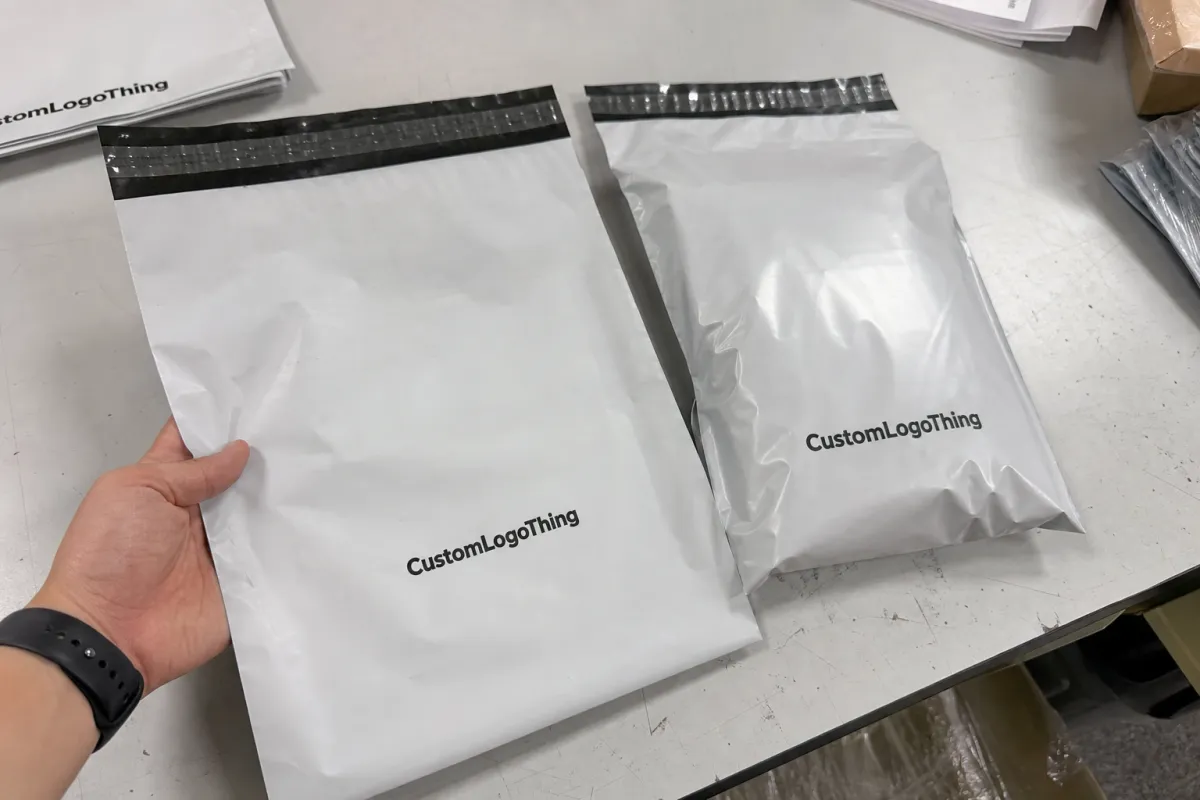
Picture a welcome kit with a folded polo, a notebook, a metal bottle, and a card tucked on top. In a glossy mailer, the kit can look polished before it is even opened. But if the contents push hard against a narrow flap or a weak seal, the package may split on a conveyor turn or at the corner of a shipping tote. The front film is not usually the weak point; the construction around it is.
That is why thickness has to be read with caution. It improves puncture resistance and adds some body, but it does not fix poor fit. A heavy film can also become harder to fold around irregular contents, which creates stress at the corners and along the seal line. A mailer that is too stiff may actually create more trouble than a slightly lighter one that sits flat and closes cleanly.
Corporate gifting also adds a presentation requirement that ordinary shipping often ignores. A mailer that bulges, wrinkles badly, or looks overstuffed can feel less premium than a thinner one that hugs the contents with control. The recipient sees the outer package first. That detail matters more than most procurement spreadsheets admit.
The best spec is not the heaviest film on the quote sheet. It is the bag that survives handling, closes cleanly, and still looks intentional when the recipient opens it.
There is also a cost trap. Once film thickness rises beyond what the contents actually need, the extra material adds expense without necessarily reducing damage. Shipping weight climbs a little. Pack-out can slow down. In some cases, the bag becomes harder to store or bundle for fulfillment. If the gift is soft and low-risk, those added cents buy very little. If the gift has sharp edges, the same thickness increase may still not be enough because the failure point is the edge, not the average film gauge.
That is why experienced buyers test the real item, not an empty sample. Fit, seam quality, closure width, opacity, and print coverage all work together. Thickness helps, but it rarely rescues a weak build.
How Poly Mailer Construction Affects Protection
Start with the measurement. Mil means one-thousandth of an inch, so 3 mil equals 0.003 inch of film. Some suppliers still use gauge, but mil is easier to compare because gauge tables vary and are often misunderstood. Even then, the number only tells part of the story.
Most Printed Poly Mailers use a coextruded film. That means multiple polyethylene layers are combined so the outer surface prints well while the inner layer stretches and resists tearing. One layer may carry the ink better; another may add toughness or elongation. Good structure matters. So does consistency from roll to roll.
- Outer film: Affects print sharpness, scuff resistance, and the first visual impression.
- Inner film: Influences stretch, puncture behavior, and how the bag wraps around contents.
- Side and bottom seals: Often determine whether the mailer survives transit or opens under load.
- Closure style: Peel-and-seal, tamper-evident adhesive, and zip-style closures perform differently on the line and in the field.
A soft apparel kit behaves differently from a box containing a mug, a metal accessory, or a framed item. The first mostly sees flexing and sliding. The second introduces point pressure. That difference changes everything. A thickness that works for folded tees may fail quickly when a rigid object presses into one corner.
In those cases, the answer is not always a heavier film. A wider seal, a slightly larger bag, or a better closure flap can solve the problem with less waste. Sometimes a paper-based presentation or a rigid outer box is the more honest option. The package should match the object, not force the object to behave like something else.
For buyers comparing formats, start with Custom Poly Mailers if you need a flexible outer layer, or review the wider Custom Packaging Products range if the gift needs a different structure altogether. A heavier poly bag is one answer. It is not the only one.
For shipments that face rough handling, it helps to think in terms of stress rather than thickness alone. A bag that feels fine in a hand test may still fail after vibration, compression, or a waist-high drop. Many teams borrow ideas from ISTA handling profiles and simple tensile checks when the contents are expensive or the campaign is visible enough that one damaged package would be expensive in reputation, not just replacement cost.
Material Specs That Matter More Than Thickness Alone
If you use the corporate gifting Printed Poly Mailers Material thickness guide as your only filter, you can still miss the details that change performance. Resin blend matters. Finish matters. Opacity matters. Even ink coverage changes the way the mailer feels in hand.
Ask what the film is actually made from. LDPE and LLDPE are common, and many mailers use a coex blend to balance stretch and print quality. Recycled-content films can be a good fit for brands trying to reduce virgin plastic, but recycled resin can also introduce small tradeoffs: less clarity, a slight odor, or more variation from batch to batch. Those differences are manageable, but they should be tested instead of assumed away.
Opacity deserves more attention than it gets. A white or black mailer hides the contents better than a translucent one, which can make the package feel cleaner and more controlled. That matters in corporate gifting, where the outer package often carries the first brand impression long before the inner reveal.
Print method changes the result too. Flexographic printing is common for larger runs because it handles volume efficiently. Digital printing can make sense for smaller orders or programs that need more variation. Heavy color coverage, fine lines, and dark logos on a light or translucent film can all change how the mailer reads in real life. A matte finish usually looks quieter and more modern. Gloss feels brighter and more retail-driven.
Size and closure style often matter more than an extra half mil. A bag that is too narrow forces stress into the seal every time the packer inserts the gift. A better flap, a wider adhesive strip, or a gusset that accommodates the product shape may do more for performance than adding film weight.
Be careful with sustainability shorthand. FSC certified applies to paper-based components, not standard polyethylene film. If your gift pack includes paper sleeves, kraft inserts, or cartons, verify chain of custody for those pieces directly. The FSC system is useful, but only for the materials it actually covers.
That is also where post-consumer waste and biodegradable packaging claims need context. A heavier poly mailer is not automatically greener. A paper outer is not automatically better. The right choice depends on the product shape, the route, and the disposal stream your audience can realistically access. If the item is fragile or expensive, a kraft paper presentation may be more credible than a thicker plastic bag. If the goal is weather resistance and low-weight shipping, poly can still make more sense.
One more practical point: quoted thickness is not always identical to measured thickness across an entire run. Tolerances exist. Resin batches vary. Print coverage can slightly change the hand-feel. Buyers who care about consistency should ask how the supplier checks film uniformity, seal width, and sample pull strength before production is released.
Cost, MOQ, and Quote Drivers for Branded Mailers
This is where the decision becomes real. The corporate gifting Printed Poly Mailers Material Thickness guide works best when you compare total landed cost, not just the unit price listed on the quote. A bag that looks cheaper can become more expensive if it increases damage, slows pack-out, or forces the use of a larger shipper carton.
Pricing usually moves with thickness, bag size, print coverage, and volume. More colors increase plate or setup costs. Custom sizing often raises minimum order quantity. Metallic inks, full-bleed artwork, and specialty finishes can all push price higher even if the film thickness stays the same.
| Mailer Option | Typical Thickness | Best Use | Typical Unit Cost at 5,000 pcs | Notes |
|---|---|---|---|---|
| Stock lightweight poly mailer | 2.5 mil | Soft apparel, low-risk kits | $0.18-$0.28 | Lowest material cost, less forgiving around hard edges |
| Custom branded standard mailer | 3.0 mil | Most corporate gift programs | $0.24-$0.38 | Often the best balance of strength, appearance, and cost |
| Heavy-duty presentation mailer | 4.0 mil+ | Rigid kits, longer transit, high-value contents | $0.32-$0.52 | Useful when puncture risk is real, not just assumed |
These ranges are directional, not promises. The final number depends on artwork coverage, quantity, dimensional tolerance, freight class, and whether the order ships in bulk cartons or as individually packed units. Low MOQ orders tend to raise the per-piece cost quickly. Larger programs usually gain better economics, especially once the same artwork and size can be repeated across multiple campaigns.
There are also hidden costs that do not appear on the quotation line. An oversized mailer may require extra void fill or slower fulfillment. An underspecified one may trigger returns, damage claims, or replacement shipments. That is why the cheapest printed mailer on paper is not always the cheapest package in the building.
A useful buyer habit is to ask for the quote split by film, print, and setup. That makes tradeoffs visible. You can usually see whether moving from 2.5 mil to 3 mil is a small material increase or a more meaningful tooling change. That information saves time before the order is locked.
Price can also shift based on the type of artwork. Fine typography and edge-to-edge logos require tighter print control than a simple one-color mark. White ink on a dark film can add cost. So can the need to color-match a brand standard exactly. A good supplier will tell you where the design is expensive and where the film is doing all the work.
Production Steps and Lead Time From Artwork to Delivery
Good packaging usually comes from a predictable process. The more rushed the artwork stage, the more fragile the rest of the timeline becomes. And if the sample is approved too quickly, the first bulk run can reveal a fit problem that should have been caught much earlier.
- Spec selection: Choose size, thickness, film color, print method, and closure style.
- Artwork prep: Set up logos, bleed, line weight, and any color references.
- Proofing: Review layout, spelling, barcode placement, and the visual balance of the design.
- Sample approval: Test the actual contents, not just the empty bag.
- Production: Print the film, convert it, and seal the bag structure.
- Quality control: Inspect dimensions, seal integrity, print registration, and closure performance.
- Packing and shipping: Box the finished mailers and send them to the fulfillment site or warehouse.
Typical timing depends on complexity. A straightforward branded mailer can often move from proof approval to production in about 12-15 business days. Sampling may add 5-7 business days. Freight adds more, especially if the shipping route crosses regions or requires consolidation. Specialty finishes, precise sizing, or artwork with tight color expectations can extend the schedule further.
Late changes are usually what delay an order. Color matching tends to be the biggest source of friction. A dark logo on a translucent film can shift in appearance more than expected. The same is true when the film opacity changes even slightly. A design that looked clean on screen can read very differently once it is printed on polyethylene and folded around a real product.
For higher-value kits, ask for a test plan that reflects the route. A basic in-house check may be enough for soft goods, but a premium gift program benefits from something closer to a drop-and-compression review. Internal checks do not need to mimic a laboratory report, but they should be specific. If the package must survive courier handling, confirm that the closure and the seal behave under realistic pressure, not only under careful inspection.
Plan lead time around the campaign, not the purchase order date. Holiday gifting, onboarding waves, and event kits compress decisions faster than most teams expect. If the mailer size changes after artwork approval, the clock starts again. That is not unusual. It is simply the cost of changing the spec after the art is already built.
Common Thickness Mistakes That Hurt Corporate Gifting
Overspecifying is the first mistake. Teams see a premium occasion and jump straight to the thickest film available. That may be the right call for a sharp-edged item, but not for soft goods. A folded tee, scarf, or lightweight insert set often does better in a well-sized mid-range bag than in an overbuilt one.
The second mistake is ignoring shape. A bottle, framed item, or boxed accessory behaves differently from apparel. Sharp corners create pressure points. Long items push against the seal. In those cases, the better fix may be a larger gusset, a different closure, or even a switch to corrugated cardboard or a kraft paper presentation rather than simply adding more plastic.
The third mistake is skipping real-use testing. A sample can look perfect and still fail on the packing line. Test the mailer with the actual contents, the actual seal, and the actual hands that will use it. If the fulfillment process is fast, a bag that feels fine in a quiet review can slow the line once it is used at speed.
Here is a practical rule: if a package needs to survive a drop, a slide, and a hurried re-seal, the closure and seam deserve as much attention as the film thickness. The mailer should support the operation, not fight it.
If the package cannot survive the way your team really packs it, the spec is incomplete.
Another blind spot is sustainability messaging. A heavier mailer is not automatically the more responsible choice, and a recycled-content build is not automatically enough to support a brand claim. If the goal is lower plastic use, compare the whole system. Sometimes a lighter bag with better fit is the better move. Sometimes a paper-based outer with FSC certified components makes more sense. And if curbside recyclability is central to the story, a kraft paper presentation can be more credible than a thicker plastic bag.
That is the point buyers should press on. A low-risk apparel kit and a rigid tech gift are not the same packaging problem. Treating them as if they are usually creates waste somewhere in the chain, whether that is wasted film, wasted labor, or wasted shipping volume.
One more common error: assuming thicker film automatically reduces returns. It does not. A return caused by poor fit, weak adhesive, or a bad seal will still happen even if the bag is heavier. Thickness is part of the solution, not the solution itself.
Next Steps: Build a Spec Sheet Before You Request Quotes
The quickest way to get useful pricing is to write the brief before you request it. A tight spec sheet keeps the conversation focused on the variables that matter. It also helps suppliers tell you whether 2.5 mil, 3.0 mil, or 4.0 mil is the sensible fit for the job instead of guessing from a product photo.
Use this checklist before sending a quote request:
- Gift dimensions and weight: Include the largest item, not only the average one.
- Contents shape: Note whether the gift is soft, rigid, sharp-edged, or mixed.
- Target look: Gloss, matte, opaque, metallic, or minimal.
- Print needs: Number of colors, logo placement, and any color-match requirement.
- Shipping route: Parcel, courier, mail center, or inter-office distribution.
- Budget ceiling: State the maximum landed cost per mailed gift.
Then sample two or three thicknesses. Do not sample only the thickest option. Compare a standard build against a heavier one and pack them with the real contents. Ask the fulfillment team which one feels easier to seal, which one sits flatter, and which one still looks composed after handling.
That small exercise usually reveals more than a stack of spec sheets. It also protects the brand moment. A mailer that ships well and opens well earns its keep twice.
If your packaging program uses more than one outer format, you can pair branded poly mailers with other systems from our Custom Packaging Products page and keep the look consistent across campaigns. If you want a single-format starting point, begin with Custom Poly Mailers and work outward from the contents rather than the catalog.
For most teams, the right decision is not the thickest film. It is the film that fits the gift, supports the seal, and keeps the line moving. That is the practical lesson behind the corporate gifting Printed Poly Mailers material thickness guide. It saves time, cuts waste, and prevents the kind of rework that usually shows up only after the first shipment goes wrong.
What thickness is best for corporate gifting printed poly mailers?
Most light-to-medium gift kits do well in the mid-range rather than the thickest option. The corporate gifting printed poly mailers material thickness guide should start with the product shape, seam stress, and shipping distance, then match film thickness to those risks.
How does printed poly mailer thickness affect unit cost?
Thicker film usually raises material cost and can increase freight weight slightly. Bigger jumps often come from low MOQ, extra print colors, custom sizing, and specialty finishes.
Do thicker mailers improve the unboxing experience?
Often yes, because they feel sturdier and hold shape better during presentation. The best experience still depends on matching thickness, opacity, and finish to the gift itself.
How long does production usually take for custom printed mailers?
Timeline depends on artwork approval, sample signoff, and whether the factory already stocks the needed film spec. Standard custom builds are usually faster than fully custom sizes or specialty finishes.
What should I test before placing a bulk order?
Test fit, closure strength, print readability, and drop performance with the real gift contents. Also check how the mailer behaves on your actual packing line, not only in a sample photo.


