Buyer Fit Snapshot
| Best fit | Custom Beverage Cartons Wholesale projects where brand print, material claims, artwork control, MOQ, and repeat-order consistency need to be specified before quoting. |
|---|---|
| Quote inputs | Share finished size, material target, print colors, finish, packing count, annual reorder estimate, ship-to region, and any compliance wording. |
| Proofing check | Approve dieline scale, logo placement, barcode or warning zones, color tolerance, closure strength, and carton packing before bulk production. |
| Main risk | Vague material claims, crowded artwork, missing packing details, or unclear freight terms can make a low unit price expensive after revisions. |
Fast answer: Custom Beverage Cartons Wholesale: Pricing, Specs, MOQ should be specified like a repeatable production item. The safest quote records material, print method, finish, artwork proof, packing count, and reorder notes in one written spec.
Production checks before approval
Compare the actual filled-product size with the drawing, then confirm tolerance on folds, seals, hang holes, label areas, and retail display edges. Reserve space for logos, QR codes, warning copy, and material claims before decorative graphics fill the panel.
Quote comparison points
Review material grade, print process, finish, sampling route, tooling charges, carton quantity, and freight assumptions side by side. A quote is only useful when the supplier can repeat the same color, closure quality, and packing count on the next order.
Custom beverage cartons wholesale is one of those buying categories that looks straightforward until the carton starts costing money in all the wrong places. Freight creeps up. Fill-line issues slow production. Rework eats labor. Spoilage risk hangs over the whole run like a bad forecast. A buyer can save two cents on the unit price and lose six cents somewhere else. That is not savings. That is a more polished headache.
Carton structure matters before artwork does. A sharp print job means very little if the carton will not run cleanly on the line, stack without crushing, or stay intact in refrigerated storage. The carton has to do real work. It protects the product, survives the supply chain, and still looks decent on shelf. That is a bigger job than most packaging briefs admit.
Juice, milk, tea, coffee, plant-based drinks, and shelf-stable beverages all ask for different specs. Some need stronger barriers. Some need a reseal feature. Some need a package that can survive cold distribution without softening at the seams. The decisions usually come down to margin, speed, and consistency. The right carton lowers per-unit cost at scale, reduces reorder drama, and makes the shelf look organized. The wrong one creates damage, delays, and a production team that remembers your project for the wrong reasons.
There is no perfect carton in the abstract. There is only the carton that fits the product, the fill method, the distribution route, and the budget. That is the practical lens for custom beverage cartons wholesale, and it keeps a lot of projects from drifting into expensive guesswork.
Why custom beverage cartons wholesale beats piecemeal buying
Piecemeal buying feels flexible until the invoice lands. Small, one-off orders often cost more in setup, freight, and delays than they save on paper. If you are ordering a few thousand units at a time from different sources, the quote may look fine on the surface, but the real cost shows up elsewhere: shortages, mismatched print runs, extra labor, and cartons that behave differently from one batch to the next.
Wholesale buying fixes that by giving you a predictable structure, a repeatable print spec, and a supply plan that fits production. The carton stops being a weekly scramble and becomes part of the operating model. That matters even more for beverage brands, because the package is not just a label holder. It has to handle fill, seal, transport, and shelf display without causing problems upstream or downstream.
A carton that runs cleanly on the line can save more than a cheaper carton that slows everything down. If your team hand-packs, the difference is even easier to see. A well-designed carton speeds assembly, reduces fold errors, and cuts damaged units. Not glamorous. Still profitable.
Wholesale also helps with inventory planning. Instead of scrambling every time stock runs low, buyers can set a reorder point and keep material moving. That means fewer rush fees and less chance of a product launch sitting idle because the packaging arrived late. In plain terms, custom beverage cartons wholesale gives a brand steadier supply and a cleaner shelf presence, which is exactly what growing beverage companies need.
Standardizing board, print method, and closure type also helps when a brand has multiple SKUs. The line team gets fewer variables. The packaging looks more coherent. Retail packaging starts to feel like a family, not a group project with half the team missing.
“The carton that saves the most money is usually the one that runs the best, not the one with the lowest quote.”
If you are comparing suppliers, start with the structure, then check freight, then look at print quality. Not the other way around. If the carton is wrong for the product, the quote is just a distraction with a spreadsheet attached.
Product formats for custom beverage cartons wholesale
Not every beverage needs the same carton format. Juice, dairy, plant-based drinks, and shelf-stable beverages each need different barrier performance, closure styles, and shelf-life support. That is why format comes first, before anyone opens an artwork file or argues about finish options.
Gable-top cartons
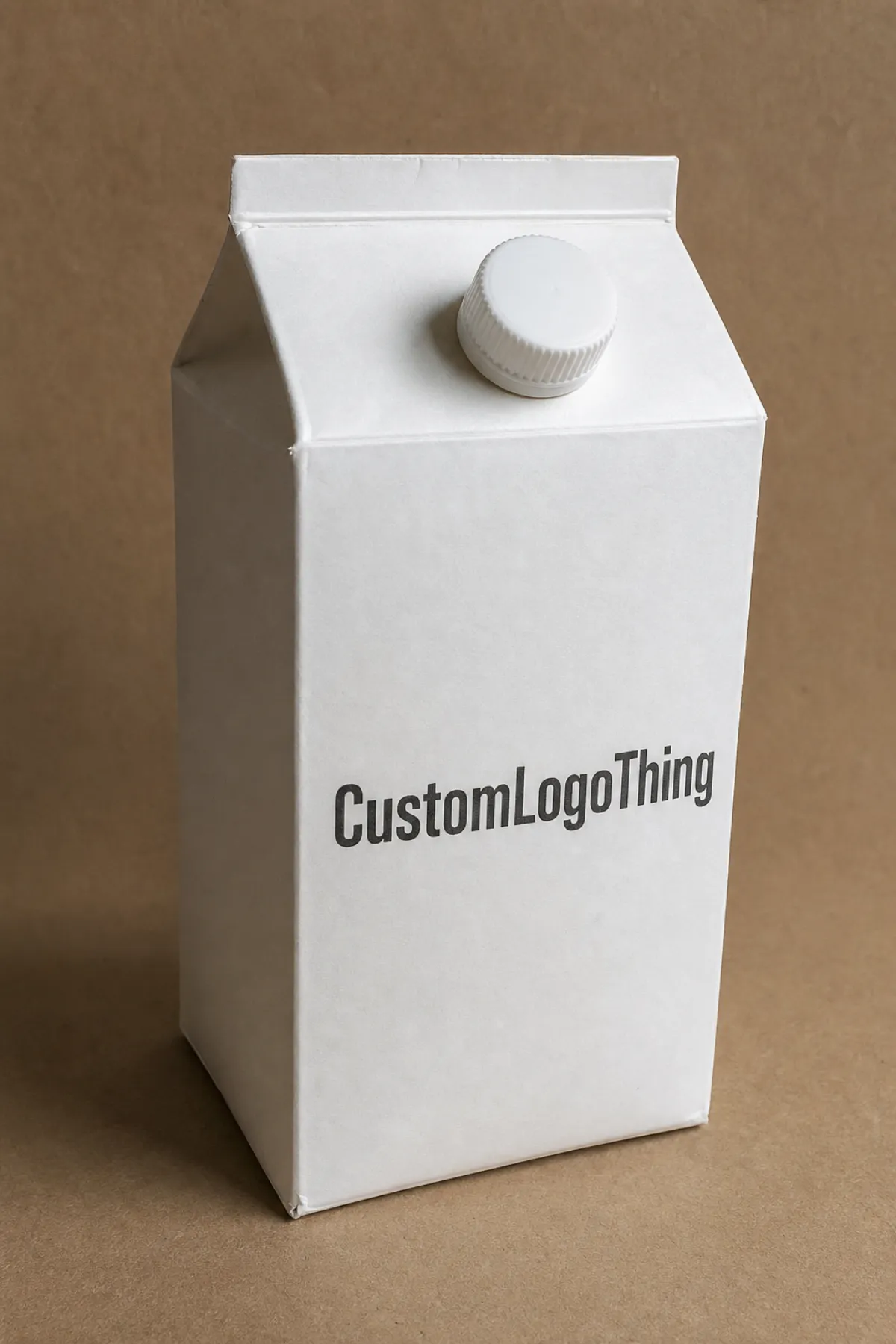
Gable-top cartons are common for milk, cream, juice, and some refrigerated drinks. They stack neatly, feel familiar to consumers, and usually strike a decent balance between cost and performance. Many buyers like them because the format is efficient and recognizable. The tradeoff is straightforward: the structure works best when the fill and distribution plan are already clear. If the product needs a stronger oxygen barrier or a more advanced reseal option, the spec tightens quickly.
Aseptic cartons
Aseptic cartons are built for shelf-stable beverages that need stronger barrier performance and longer ambient storage. Their layers protect the drink from light, oxygen, and moisture transfer. For brands shipping into broader regions or selling through retail without cold-chain dependence, this format makes a lot of sense.
The catch is cost and technical coordination. You are paying for more structure, tighter process control, and more testing. That is not a flaw. That is the price of buying time on the shelf without sacrificing product stability.
Tetra-style structures
Tetra-style packaging is a familiar choice for long-life beverages, especially where shelf efficiency and retail familiarity matter. Depending on the application, these cartons may include spouts, screw caps, or tamper-evident features. The build changes from product to product, but the business logic stays consistent: reduce spoilage risk and stretch the sell-through window. For brands moving volume, that matters more than a fancy finish.
Folding cartons with barrier linings
Some beverages fit folding cartons with barrier linings, especially when the format needs a premium look or a softer retail feel. That can work for specialty tea, coffee, or functional drinks in smaller volume packs. Buyers should watch the tradeoff. A folding carton with a barrier layer can look elegant, yet it may not match the performance of a purpose-built liquid carton if the product is sensitive to oxygen, temperature swings, or rough transit.
Functional details matter just as much as structure. Tamper evidence, easy-open caps, straw holes, reseal features, and spouts can all change how the carton performs on shelf and in the customer’s hand. They also change the quote. A closure is not a tiny add-on. It is a real cost driver.
Material choices matter too. Paperboard thickness, barrier coatings, food-contact layers, and finish level all affect appearance and performance. For folding-carton-style packs, a 250-400 gsm range is common, but liquid cartons use format-specific board and barrier layers rather than a simple paperboard-only construction. The right spec depends on fill method, carton format, and whether the pack needs extra resistance to compression or moisture. When the carton ships flat, rigidity still matters because it has to survive the fill line and the case packer without deforming.
From a packaging design standpoint, the best format is the one that balances function and shelf appeal. That is why product packaging decisions should be tied to the actual drink, not just the marketing brief. A sparkling drink and a shelf-stable dairy alternative do not want the same thing, even if the logo looks beautiful on both.
Specifications to lock before you request a quote
If you want a quote that means anything, lock the specs first. Vague requests create vague pricing, and vague pricing wastes everybody’s time. The most useful starting point is fill volume, dimensions, closure type, board grade, and barrier requirement. Those five details shape the structure and most of the cost.
Fill volume is more than a number. It determines footprint, height, and often the closure or seam style. A 250 ml carton and a 1-liter carton are not cousins. They are different animals. Target dimensions matter too, because even a small change can affect pallet count, case-packing efficiency, and how the carton sits on shelf.
The product itself needs to be spelled out clearly. Buyers should say whether the beverage is cold-fill, hot-fill, aseptic, refrigerated, or shelf-stable. Viscosity matters too. A thick smoothie base behaves differently from a thin tea or juice. Storage conditions matter. Transit distance matters. If the cartons are crossing climate zones or sitting in warehouses before distribution, the spec should reflect that instead of pretending the supply chain is polite.
Artwork details should be gathered early. Print colors, coating choices, finish level, legal copy, barcode placement, and any regulatory statement should be included in the brief. Nothing slows a job down like finishing a dieline only to discover the nutrition panel no longer fits where the brand team wanted it. That mistake is common because it is easy to avoid.
Samples matter because a carton can look perfect in a PDF and still fail in production. Neck alignment, seam tolerance, fold memory, and closure fit all need to be checked before a large run. If the carton is for a new product launch, ask for a physical sample or a close mockup. A line test beats a pretty rendering every time.
For technical review, buyers often lean on industry references instead of guessing. Sensible move. Testing and handling standards from groups like ISTA help frame transit performance, while broader packaging guidance from the Institute of Packaging Professionals can support tighter spec writing. If your cartons use certified fiber, review sourcing expectations from the FSC.
Do not wait until the quote arrives to define the spec. That is backwards. A quote should confirm a decision, not create one.
Custom beverage cartons wholesale pricing, MOQ, and unit cost
Pricing for beverage cartons comes from several moving parts, and each one can push the number in a different direction. The main drivers are carton size, material grade, barrier complexity, print coverage, finishing, and whether the carton needs custom tooling or a new die. If the carton has a special closure or a nonstandard shape, the quote usually moves up. That is normal. The machine has to do more work, and somebody has to pay for it.
For a practical range, simple stock-style beverage cartons or lightly customized runs often start at lower price points at moderate volumes, while fully custom structures with barrier layers and specialty closures can cost materially more. At 5,000 units, buyers may see unit pricing that feels high because setup gets spread across a smaller run. At 10,000 to 25,000 units, the per-unit cost usually gets more attractive, assuming the spec stays stable. Above that, the math can improve again, but only if freight and inventory carrying cost do not wipe out the gain.
MOQ depends on the structure. Standard forms with simple print and common board specs often allow lower minimums, while custom shapes, multiple print versions, and higher-performance barriers raise the floor. If a supplier gives a low MOQ but the setup fees are high, the quote may still be poor for the buyer. The real question is not just how many units you must order. It is how expensive the first run becomes once tooling, sampling, freight, and any customs work are added.
That is why landed cost matters more than unit price. A carton that is 8 cents cheaper on paper can become the more expensive option once it ships halfway across the country or arrives on a pallet that wastes cube space. Freight is not a footnote. It is part of the carton cost. So is the labor needed to handle the packaging once it reaches your facility.
| Option | Typical MOQ | Common Price Range Per Unit | Best Fit | Main Tradeoff |
|---|---|---|---|---|
| Stock-style gable-top carton | 3,000-5,000 | $0.14-$0.26 | Refrigerated milk, juice, basic dairy drinks | Lower setup cost, less structural flexibility |
| Custom printed liquid carton | 5,000-10,000 | $0.18-$0.34 | Branded juice, plant-based beverages, RTD tea | Better branding, higher print and setup cost |
| Aseptic carton with barrier layers | 10,000+ | $0.24-$0.48 | Shelf-stable drinks, wider distribution | Higher performance, tighter technical spec |
| Custom structure with specialty closure | 10,000-25,000 | $0.30-$0.60+ | Premium or functional beverage launches | More options, more tooling, more chances to slow things down |
These ranges are directional, not a promise. Real pricing depends on print coverage, board stock, closures, testing needs, and shipping lane. A buyer asking for 7,500 cartons of one flavor with light print coverage will get a different number from a buyer needing three SKUs, a barrier upgrade, and a reseal cap. That is just how quoting works.
Smart buyers look at the whole run, not just the sticker price. If a carton saves three cents but increases spoilage, creates pallet waste, or slows down packing, the cheaper quote turns expensive fast. That is the part people forget when they are staring at an RFQ spreadsheet at 4:45 p.m.
Process, timeline, and lead time from proof to delivery
The process usually starts with a brief, not with a finished quote. A supplier needs volume, product type, fill method, board preferences, closure choice, print needs, and target delivery window before the numbers mean much. Once that is in place, the supplier can recommend a structure, flag technical issues, and give a real estimate instead of a nice-sounding guess.
Proofing comes next. That means dielines, artwork alignment, barcode checks, and copy review. If the design is being built from scratch, expect back-and-forth. That is normal. It should not be chaotic, though. Clear specs make proofing faster, and faster proofing keeps the launch from drifting.
Sampling matters before mass production. A flat sample, a printed mockup, or a production-grade sample can catch fit issues early. Some projects need a line test too, especially if the carton will run on existing filling equipment. That step is boring in the best way. Boring means the carton works.
Lead time depends on complexity. Simple printed runs can move faster than aseptic builds or specialty structures. New tooling, custom closures, imported materials, and regulatory review all add time. Buyers planning a launch should build in cushion, because carton delays have a nasty habit of turning into product delays. If the packaging is late, the beverage is late. That part never gets old, which is annoying because it happens a lot.
Shipping also deserves real planning. Ocean freight can lower cost but stretch the calendar. Air freight can save a launch but crush the budget. Domestic freight may look straightforward until pallet counts, receiving schedules, and warehouse hours get involved. The fastest route is not always the smartest one, and the cheapest route is not always cheap once the cartons hit the dock.
Good suppliers will ask about storage conditions, pallet configuration, and whether the cartons need extra packaging protection. That is not them being fussy. It is them trying to keep your cartons from arriving squashed, damp, or warped. There is a difference between a carton that exists and a carton that survives arrival.
Why buyers choose us for wholesale beverage cartons
Buyers usually come in after they have already been burned by a quote that looked good and performed badly. Fair. Packaging can be annoyingly easy to misjudge from a screen. The reason they stay is simple: we treat the carton like part of the product, not a box-shaped afterthought.
We start with the use case. Refrigerated milk, shelf-stable tea, plant-based drinks, premium juice, functional shots, and coffee all need different tradeoffs. A carton spec that works for one product can make another one miserable. We do the unglamorous work of matching structure, board, closure, and print method to the actual beverage instead of guessing from the label mockup.
We also pay attention to production reality. A carton should fit the line, ship well, and hold up in the warehouse. That sounds basic. It is. Basic is where a lot of projects fail. Plenty of suppliers can print a pretty carton. Fewer can help a buyer avoid the exact problems that turn into rework and returns.
Consistency matters to buyers with multiple SKUs. Once a brand standard is set, we help keep the look coherent across flavors and sizes without forcing the same structure onto every product. That lets the lineup feel intentional while still giving each beverage the spec it actually needs.
Communication matters too. Nobody wants a quote that reads like a puzzle. Buyers Should Know what changes pricing, what can move the MOQ, and where the technical risks sit. Clear answers save time. Fog burns it.
Next steps to order custom beverage cartons wholesale
Start with the product, not the packaging fantasy. Write down the fill volume, beverage type, closure style, storage condition, target market, and expected order volume. If there are multiple flavors or sizes, list them separately. That avoids the classic mistake of treating a family of products like one spec with a different label.
Gather artwork files early. Include logo files, legal copy, barcode data, and any claims that need to appear on the pack. If the project needs regulatory review, do that before production starts. Reprints cost more than patience, and they are usually caused by something that could have been caught in the brief.
Ask for samples. Ask for a line test if the equipment is sensitive. Ask about lead time, freight method, pallet configuration, and the real MOQ after tooling and setup. A clean quote should tell you more than the price. It should tell you whether the project is actually ready to happen.
If you are comparing suppliers, compare the full picture: structure, performance, print quality, MOQ, and landed cost. Not just the per-unit number. The cheapest carton is not cheap if it fails in the field or makes the warehouse team curse your name.
Practical takeaway: build your next RFQ around a finished spec sheet, not a loose idea. Lock the fill volume, product type, closure, barrier need, artwork status, and delivery window first. That one step does more to improve custom beverage cartons wholesale pricing than any last-minute negotiation.
Custom beverage cartons wholesale works best when the spec is tight and the production plan is honest. Clear inputs, realistic timelines, and a carton that does its job without drama. That is the job. Not glamorous, but very good for margins.
Frequently Asked Questions
What is the best carton type for custom beverage cartons wholesale?
The best type depends on the beverage. Gable-top cartons work well for refrigerated dairy and juice. Aseptic cartons fit shelf-stable drinks that need stronger barrier protection. Specialty folding cartons can work for premium beverages in smaller volumes, but they are not the right answer for every liquid.
How do I lower unit cost without wrecking the spec?
Increase order volume, simplify the closure, keep print coverage controlled, and avoid unnecessary custom shapes. Standard board grades and stable dimensions usually help too. The goal is to cut cost without making the carton harder to fill, ship, or store.
What MOQ should I expect?
MOQ depends on the carton format and how custom the project is. Simple gable-top or lightly customized cartons can start around 3,000 to 5,000 units. Aseptic and specialty builds usually need higher volumes. The quote should spell out whether tooling, sampling, and freight are included or separate.
Can I use one carton for different beverage flavors?
Sometimes. If the fill volume, closure, and storage requirements are the same, one carton shell can work across flavors with different print versions. If the product contents or handling needs change, the carton may need a different spec. Matching the same outer look to different products is fine. Forcing one structure onto everything is where trouble starts.
How long does production usually take?
Simple printed orders may move faster than specialty or aseptic projects. New tooling, custom closures, artwork revisions, and shipping method all affect timing. A buyer should build in extra time for proofing, sampling, and freight. Rush orders can happen, but they usually cost more and leave less room for mistakes.
What should I send in my first RFQ?
Send fill volume, beverage type, closure preference, board or barrier needs, target dimensions, print requirements, quantity, delivery region, and any timeline pressure. If you have artwork, include it. If you do not, say that up front. Clean inputs get cleaner quotes.
Do I need a physical sample before placing a large order?
Yes, if the carton is new or the project is sensitive. A physical sample catches fit, seam, and closure issues that a PDF will never show. For new beverage launches, that step is cheap insurance.
Related packaging resources
Use these related guides to compare specs, costs, quality checks, and buyer decisions before making the final call.

