Custom Clothing Store Paper Bags bulk order sounds straightforward until a strong weekend sale empties the stockroom faster than the register can keep up. That is usually when the weak points show themselves: handles pull, bottoms bow, print rubs off, and a bag that should have felt like part of the brand starts acting like an apology.
For apparel retailers, the bag is not just a carry item. It is the last piece of the sale the customer touches, and that final touch either supports the price point or quietly drags it down. A well-built bag protects folded garments, keeps the checkout counter tidy, and makes the purchase feel finished instead of improvised.
That is why buying in bulk is usually the practical move. It lowers unit cost, keeps print and finish consistent, and gives a store enough buffer to survive promotions, seasonal spikes, and reorder delays without scrambling for a temporary substitute.
Why custom clothing store paper bags bulk order beats piecemeal buying
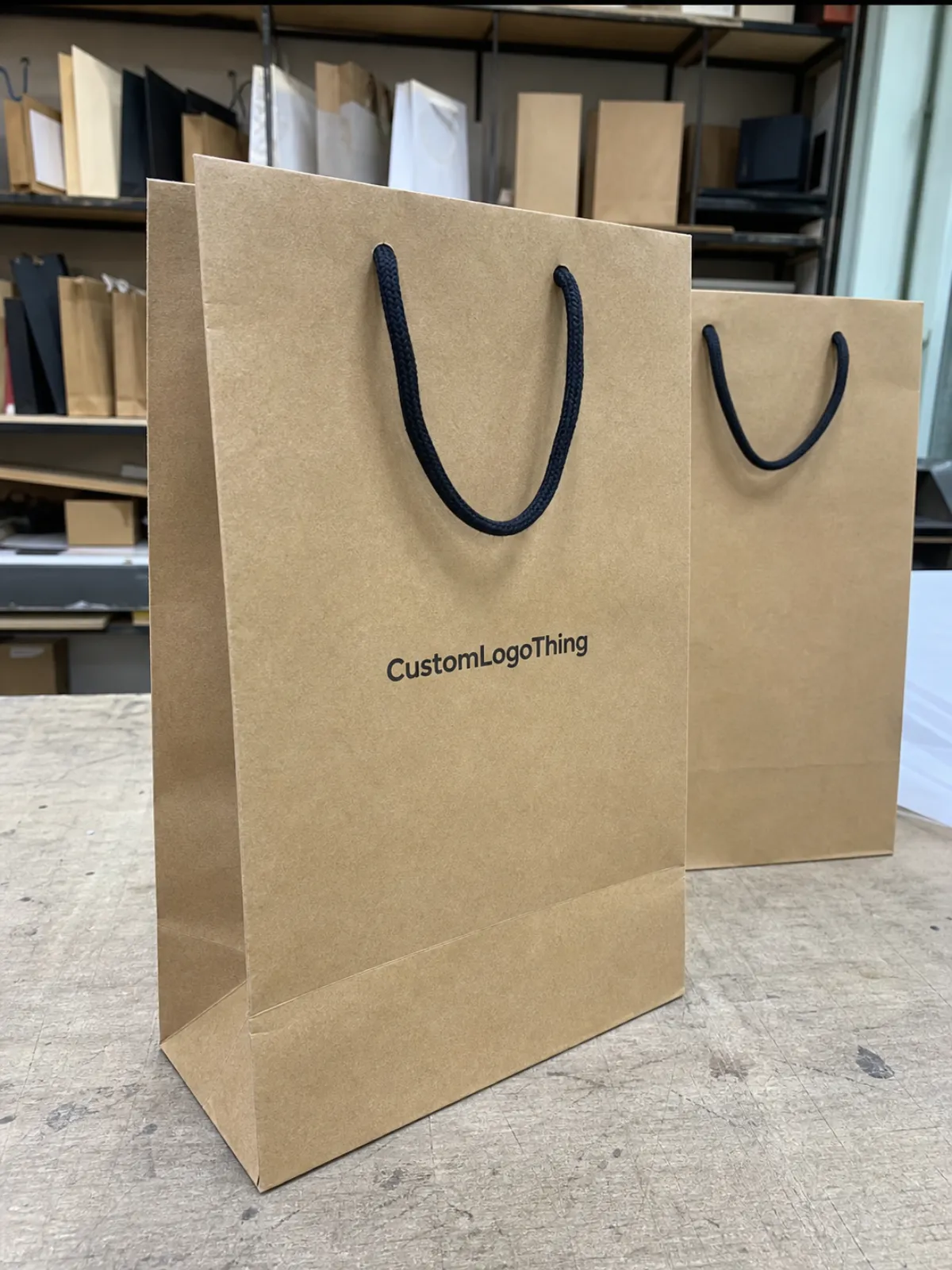
Small, repeated purchases look manageable on a spreadsheet, but they usually cost more once freight, setup, and staff time are counted. A custom clothing store Paper Bags Bulk order spreads those fixed costs across more units, which is where the real savings come from. The difference can be noticeable even before you factor in the time lost chasing emergency reorders.
There is also a brand-side reason to buy in bulk. Apparel packaging tends to work best when it is predictable: same color, same handle feel, same logo placement, same board feel in the hand. Piecemeal buying increases the chance that one batch will be a little glossier, a little thinner, or a little off in ink density, and those shifts are easy for customers to notice even if they do not describe them in technical terms.
The weak bag problem is not theoretical. Thin handles cut into hands, greasy lamination can scuff easily, and a soft-bottom bag can collapse if a folded sweater, denim stack, or boxed accessory is a little heavier than expected. Once that happens, the product presentation has already started slipping before the customer reaches the door.
Bulk buying also gives the buyer more room to plan inventory. Instead of reacting to bag shortages after they happen, you can set a reorder point, hold back a reserve carton for peak weeks, and keep the front counter moving. That sounds mundane, but in retail packaging, mundane is a compliment.
A bag should carry the sale without drawing attention to itself. If staff have to baby it, the spec is wrong.
For stores that run regular promotions or seasonal drops, a Custom Clothing Store Paper Bags bulk order is often the cleanest way to keep packaging stable across months. You are not starting over every time. You are simply reusing a spec that already worked.
Paper bag styles that fit apparel, accessories, and gift packaging
The best bag style depends on what leaves the counter most often. A bag that works well for a folded tee may be clumsy for a knit sweater or a boxed set. That is why the most useful spec is the one that matches actual merchandising, not the prettiest sample on a screen.
Flat-bottom shopping bags are the workhorses. They are efficient for tees, socks, scarves, and smaller accessories, especially when the goal is clean packing rather than a luxury feel. Twist-handle bags sit in the middle: practical, easy to store, and strong enough for most everyday apparel. Rope-handle bags feel more premium and usually make sense for boutiques, gift-heavy assortments, or stores where the packaging is part of the visual identity. Gift-style carry bags, often built from heavier stock with reinforced tops, are the right choice for boxed apparel or higher-value seasonal items.
| Style | Best for | Typical build | Brand feel | Typical unit cost |
|---|---|---|---|---|
| Flat-bottom shopping bag | Tees, socks, small accessories | 120-150 gsm kraft, paper twist handle | Practical and clean | $0.18-$0.32 at 5,000+ units |
| Twist-handle retail bag | Mixed apparel, folded knits, light bundles | 140-170 gsm kraft or coated paper | Reliable, everyday retail | $0.22-$0.40 at 5,000+ units |
| Rope-handle boutique bag | Premium shirts, gift sets, event purchases | 170-200 gsm stock, reinforced top fold | More polished, more upscale | $0.35-$0.75 at 5,000+ units |
| Gift-style carry bag | Boxed apparel, seasonal gifting, VIP orders | Heavy paper, laminated finish, reinforced handles | High-end and presentation-focused | $0.45-$0.95 at 5,000+ units |
Finish changes the feel more than many buyers expect. Matte stock tends to read calmer and more fashion-oriented, and it hides fingerprints and scuffs better during busy store traffic. Glossy stock can look sharper in a display, but it shows rub marks sooner and can feel less forgiving under bright retail lighting.
Paper source is another practical checkpoint. If the brand story includes sustainability, ask for FSC-certified paper and confirm whether the stock is virgin, recycled, or a blend. Recycled content can be a good choice, but it may change stiffness, print hold, or color absorption slightly. That is not a problem if you account for it early.
For stores that need the outer cartons to survive distribution and backroom handling, ISTA guidance is worth reviewing. Crushed cartons, split bundles, and dented corners usually trace back to packing assumptions rather than the bag itself. A good bag can still arrive looking poor if the shipping case was not built and labeled with enough care.
Sizes, paper stock, handles, and print specs to lock in
This is where a clean order is made or broken. For a custom clothing store Paper Bags Bulk Order, the quote is only as useful as the measurements behind it. If the size, paper weight, handle type, and print coverage are vague, the price may look good while the actual bag misses the job it needs to do.
Size should follow the garment, not the shelf space. A common mistake is ordering one oversized bag and forcing everything into it. That wastes paper, raises freight, and makes a small purchase feel oddly underdressed. A better method is to measure the folded item the way staff will actually bag it, then leave enough clearance so the garment slides in cleanly without being crushed.
- Small: about 8 x 4.5 x 10 in or 9 x 4.75 x 11.5 in for accessories, scarves, and folded tees.
- Medium: about 10 x 5 x 13 in or 11 x 5 x 14.5 in for shirts, light knits, and small gift bundles.
- Large: about 12 x 5 x 16 in or 13 x 5 x 17 in for sweaters, denim, and boxed apparel.
- Premium horizontal: wider carry bags for gift sets, paired items, or folded outerwear.
Paper stock usually lands in a few practical ranges. Standard retail bags often use 120-150 gsm. Premium rope-handle bags generally move into 170-200 gsm stock, sometimes more if the store wants a stiffer hand feel. Heavier is not automatically better. It can improve structure and load tolerance, but it also increases cost and may be unnecessary for lightweight apparel.
Handles deserve more scrutiny than they usually get. Paper twist handles are cost-effective and dependable for everyday apparel. Rope handles give a more polished finish and are easier to justify when the bag needs to reflect a higher ticket. Die-cut handles can look clean and modern, but they are less forgiving if the bag needs to carry heavier items or be opened and closed repeatedly by staff and customers.
Print setup affects both budget and appearance. A single-color logo on kraft stock is often the most efficient and most honest-looking option. Two-color printing adds depth without pushing the cost too far. Full-bleed art, foil, embossing, and spot UV can be attractive, but they also add setup time, proof complexity, and more places for the final piece to drift from the original intent. Those finishes should earn their place, not appear by default.
For a Custom Clothing Store Paper Bags bulk order, ask for the dieline before artwork approval and place the logo at actual size on the proof. A design that feels balanced on screen can look too cramped once it is reduced to fit the bag face, or too empty if the artwork was scaled too conservatively. The small differences matter more than they should, but they matter.
Pricing, MOQ, and unit cost tradeoffs for bulk buyers
Pricing for a custom clothing store paper bags bulk order depends on size, paper grade, handle style, number of print colors, finish, and how the bags are packed for shipment. Two bags that look similar in a photo can land very differently in price once stock thickness or handle reinforcement changes. That is normal, and it is why apples-to-apples comparison matters.
MOQ is not just a number; it is a production reality. Low minimums are usually possible, but they often come with a higher per-unit cost because setup, press time, and waste are spread over fewer bags. Depending on the spec, a small run can be 20% to 60% more expensive per bag than a larger order. That is not a penalty, just the math of production.
| Order size | Typical unit cost | Best use case | Buyer note |
|---|---|---|---|
| 500-1,000 units | $0.40-$0.90 | Test run, new store opening, short seasonal campaign | Good for proofing, expensive for routine use |
| 2,000-5,000 units | $0.18-$0.45 | Stable retail demand, single-store or small chain | Usually the sweet spot for many apparel shops |
| 10,000+ units | $0.12-$0.30 | Multi-store replenishment, predictable program buying | Best cost, but storage and cash flow matter |
The best MOQ is the one you can store, use, and reorder before your design changes. Buying 20,000 bags for a small boutique might look efficient until the logo changes, the store refreshes its palette, or the handle style no longer matches the packaging program. Then the warehouse starts holding old branding that no longer fits the floor.
Quotes should be compared by exact spec. Same size, same gsm, same handle, same finish, same print coverage, same carton count, same freight terms. If one supplier leaves out proof fees, packing, or shipping, the quote is incomplete, not cheaper. It is easy to compare a low number. It is harder, and more useful, to compare the real landed cost.
If the supplier cannot explain what drives the price difference, ask again. A solid breakdown should show whether the cost comes from heavier stock, a better handle insert, more colors, a more wasteful sheet layout, or a special finish. Clear answers tend to travel with cleaner production.
For a custom clothing store paper bags bulk order, the cheapest unit price is only useful if the bag arrives on time, matches the approved proof, and survives actual floor use. Anything less turns into a second purchase, which erases the savings.
Production steps, proofing, and lead time from approval to delivery
A reliable order follows a clear path: quote, spec confirmation, artwork review, proof approval, production, inspection, and shipment. For a custom clothing store paper bags bulk order, each step protects the next one. If a supplier rushes from quote to production without locking the details, the schedule may look fast right up until the corrections begin.
Lead time depends on the bag style, the level of customization, and whether the order requires special paper or color matching. Basic printed paper bags often take 12-15 business days after proof approval. More complex runs can take 15-20 business days or longer, especially if the stock must be sourced or the job lands during a busy production window.
A few things reliably slow orders down:
- Artwork revisions: Even small changes can force another round of checking.
- Dieline changes: New dimensions or handle positions require setup work.
- Ink matching: Brand colors can shift if the proof is unclear or the substrate is different.
- Paper sourcing: FSC-certified or specialty stock can add time if availability is tight.
- Peak season pressure: Q4, back-to-school, and spring promotions can stretch schedules quickly.
Approve the dieline, confirm the logo placement, and lock the quantity before the run starts. Those three checks prevent most of the avoidable delays. If the supplier asks for print-ready files, send vector artwork. If the logo uses a specific color target, provide the Pantone reference and ask how the paper color will affect the final appearance. Kraft stock is not a blank white field, and treating it like one leads to surprises.
Samples are worth the time. A physical sample shows stiffness, handle feel, fold memory, and print density in a way a PDF never can. Ask the supplier to label the sample clearly so nobody mistakes it for production stock. If sample iterations are included, get that in writing. It tells you how disciplined the vendor is about process.
Carton packing matters more than people want to admit. A good bag in a loose carton can still arrive with crushed corners or scuffed faces. Case counts, bundle counts, and internal packing should be treated as part of the spec, not as an afterthought. That is especially true if the bags need to be stored for weeks before use.
Stores that sell in both physical and online channels should keep the bag spec aligned with other packaging elements. If your custom printed boxes and mailers use one tone and one level of polish, the retail bag should not drift into a different color family or feel like it belongs to another brand. Customers notice mismatch faster than they notice subtle alignment.
What makes a supplier reliable for recurring retail orders
Repeatability is the real test. A nice first sample means very little if the second run changes shade, handle strength, or paper feel without warning. In recurring retail packaging, consistency matters more than theatrics.
Good suppliers handle the boring parts well. They provide dielines without delay, flag artwork problems early, send samples when needed, and give shipping updates that are specific enough to be useful. They also keep records so a reorder can match the previous run instead of becoming a fresh experiment each time.
Before trusting a vendor with ongoing packaging, look for a few basics:
- Spec control: Same paper weight, same handle type, same print method on repeat orders.
- Color discipline: Reasonable variance targets and proof methods that stay close to the approved sample.
- Practical support: Dielines, artwork review, and plain-language answers about tradeoffs.
- Packaging consistency: Carton counts and labeling that make receiving and storage easier for staff.
- Reorder memory: Prior specs stored well enough that the next order starts from the last approved version, not from scratch.
Some vendors talk a lot about image and very little about reinforcement, stock availability, or packing method. That should raise a question. Others are more grounded. They explain where the bag can be upgraded, where the quote is sensitive, and where the process is likely to slip if the artwork arrives late. The second type is easier to work with over time.
If you are coordinating bags with boxes, tissue, and mailers, it helps to keep the packaging program under one organized product path through Custom Packaging Products. Even when the items are different, the visual system should still feel like one set.
Reliable packaging also respects store reality. Staff need bags that open quickly, stand upright, and hold shape when the purchase includes more than one item. A coat, a receipt envelope, and a small accessory should not force a compromise in handle strength. That is a functional requirement, not a luxury feature.
For a custom clothing store paper bags bulk order, the best supplier is the one that makes reorder time dull in the best possible way. Dull means predictable. Predictable means the packaging stops being a daily problem and starts doing its job quietly.
Next steps to place a clean, accurate bulk order
Before asking for pricing, gather the facts that define the job. A custom clothing store paper bags bulk order goes much smoother when the buyer can answer the core questions without guessing. Measure the product, choose the bag style, confirm the print area, and decide on a realistic budget before anyone starts drawing mockups.
- Measure the actual items: Fold the garments the way staff will bag them and note the real dimensions.
- Pick the bag style: Match it to tees, sweaters, accessories, or gift sets.
- Lock the print plan: One-color logo, two-color logo, inside print, foil, or a premium finish.
- Set the quantity range: Decide whether you need a test run, a seasonal run, or a full replenishment order.
- Prepare the files: Send vector art, logo colors, preferred sizing, handle style, and delivery window.
If you already know the likely volume, ask for a spec-based quote instead of a loose estimate. The supplier should quote the exact size, stock, handle, finish, and carton pack. That makes comparison honest and keeps the discussion on facts rather than vague promises.
The FAQ can answer general questions, but the more accurate path is to send enough detail for the first quote to be meaningful. That saves the usual back-and-forth where everyone is trying to correct an incomplete brief after the artwork has already been built.
Before approving production, inspect the sample in hand, under store lighting, with the actual product inside. That is the only way to judge whether the bag feels like a clean fit or an awkward compromise. Screens do not show stiffness, handle comfort, or how the color reads next to your actual merchandise.
If you are ready to move forward with a custom clothing store paper bags bulk order, the cleanest path is to request a proof-based quote, verify the sample against the real product, and approve production only after the spec matches the store you are actually running. That process takes a little more care upfront, but it usually saves money, time, and more than a few headaches later.
FAQ
What size paper bag works best for a clothing store bulk order?
Choose the size based on what leaves the register most often. Tees and accessories usually fit smaller bags, while folded sweaters, denim, and boxed sets need more width and gusset depth. If your assortment is mixed, ask for 2 to 3 sizes so staff are not forcing every purchase into one oversized bag.
How much does custom clothing store paper bags bulk order usually cost?
Cost depends on size, paper thickness, handle type, print colors, finish, and packaging method. The same-looking bag can price very differently once those details change. In general, the unit cost drops as quantity rises, but very small MOQs usually carry a premium.
What is a normal MOQ for printed paper shopping bags?
MOQ varies by supplier and bag style, but custom printed retail bags often start in the low hundreds or higher. If you only need a test run, ask whether the supplier offers a lower minimum with a higher per-bag price. That is common, and sometimes it is the right choice.
How long does a bulk paper bag order take to produce?
Most orders need time for proof approval, production, inspection, and shipping, so lead time is usually measured in weeks rather than days. Custom sizes, special finishes, and peak season demand can extend the schedule. If the artwork is clean and the spec is locked, the process moves much faster.
Can you print my clothing store logo on both sides of the bag?
Yes, double-sided printing is common and often useful for brand visibility at checkout and in photos. Confirm whether the same artwork goes on both sides or whether you want different messaging on the front and back. That small choice changes both the look and the quote.

