Buyer Fit Snapshot
| Best fit | Custom Corrugated Boxes for Ecommerce projects where brand print, material claims, artwork control, MOQ, and repeat-order consistency need to be specified before quoting. |
|---|---|
| Quote inputs | Share finished size, material target, print colors, finish, packing count, annual reorder estimate, ship-to region, and any compliance wording. |
| Proofing check | Approve dieline scale, logo placement, barcode or warning zones, color tolerance, closure strength, and carton packing before bulk production. |
| Main risk | Vague material claims, crowded artwork, missing packing details, or unclear freight terms can make a low unit price expensive after revisions. |
Fast answer: Custom Corrugated Boxes for Ecommerce: Board, Finish, Dieline, and Unit Cost should be specified like a repeatable production item. The safest quote records material, print method, finish, artwork proof, packing count, and reorder notes in one written spec.
Production checks before approval
Compare the actual filled-product size with the drawing, then confirm tolerance on folds, seals, hang holes, label areas, and retail display edges. Reserve space for logos, QR codes, warning copy, and material claims before decorative graphics fill the panel.
Quote comparison points
Review material grade, print process, finish, sampling route, tooling charges, carton quantity, and freight assumptions side by side. A quote is only useful when the supplier can repeat the same color, closure quality, and packing count on the next order.
A box that saves four cents can cost you forty dollars once it shows up crushed, repacked, and refunded. I have watched that math play out more than once, and it usually starts with a generic carton that was chosen because it was available, not because it was right. That is the real story behind Custom Corrugated Boxes for ecommerce: the cheapest carton is often the most expensive one after it moves through a parcel network, rides conveyors, and lands at a front door with a customer expecting the order to arrive in one piece.
Custom corrugated packaging is not fancy cardboard cosplay. It is a shipping carton built around a product, a pack-out method, and the route it has to survive. For ecommerce brands, that means fewer voids, less movement, better protection, and cleaner branded packaging without wasting money on details that do not pull their weight.
Used well, Custom Corrugated Boxes for ecommerce help cut damage claims, reduce dimensional weight charges, speed up fulfillment, and make the unboxing feel intentional instead of rushed. Used poorly, they turn into overbuilt, overprinted, overpriced product packaging that looks elegant on a sample table and gets punished by actual shipping. The difference matters, and it is kinda bigger than people think.
Custom corrugated boxes for ecommerce: why the cheapest box costs more
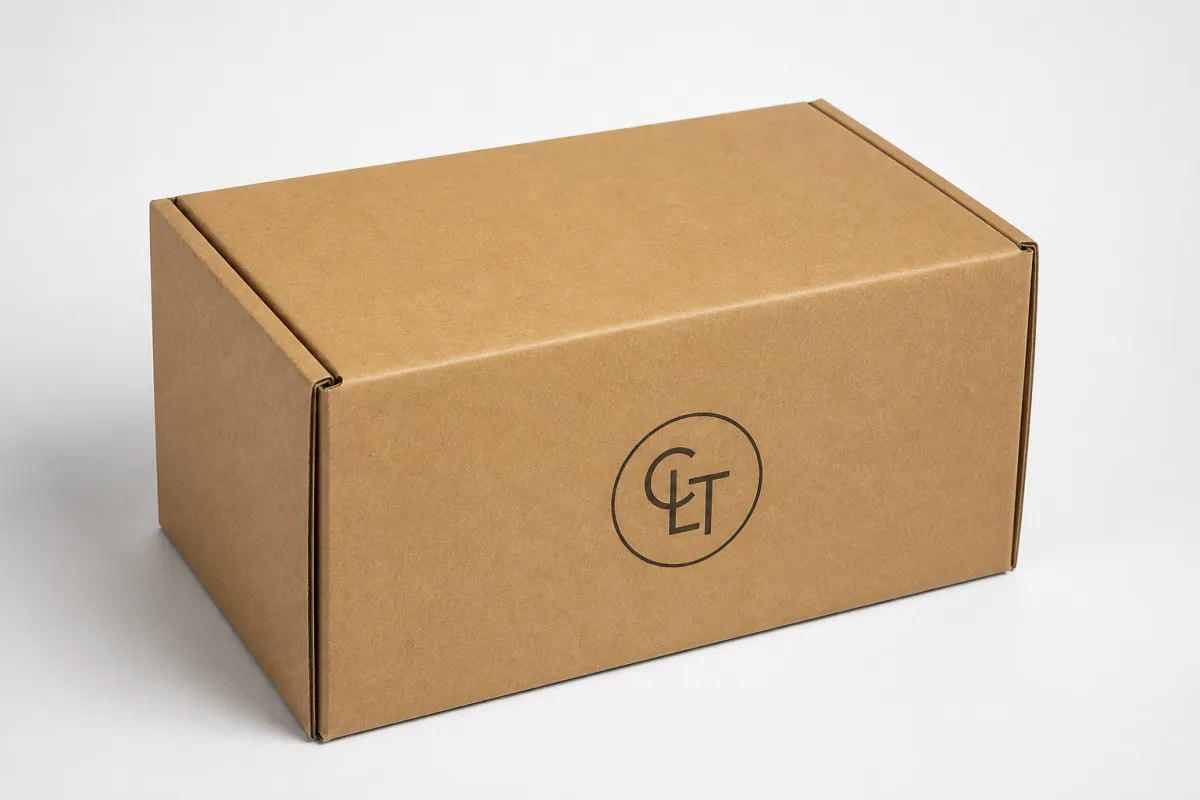
Most packaging problems begin with a box that was chosen because it was available, not because it was right. A seller grabs a generic carton, adds too much void fill, and ships a product that rattles around like loose change in a truck cup holder. The carton may cost less on paper, but the real bill shows up later through crushed corners, repacks, return labels, and unhappy customers. That is why Custom Corrugated Boxes for ecommerce are often the smarter buy, even before branding enters the picture.
In plain English, custom corrugated boxes are shipping cartons built around product size, weight, fragility, and pack-out. They are not one-size-fits-all retail packaging. They are meant to hold the item steady, protect it during transit, and keep you from paying for air you do not need. For brands shipping apparel, candles, supplements, home goods, electronics accessories, and subscription kits, that fit matters more than many buyers want to admit.
There is also a dull but important truth here: the cost of a box is never just the box. A bad box changes labor time, fill material, freight class, and damage rates. A good box can lower all four. That is why experienced buyers treat custom corrugated boxes for ecommerce as part of the shipping system, not as a decorative container.
“The box was cheaper, but we paid for it three times over.” That line comes up often after a team switches from generic cartons to custom corrugated boxes for ecommerce and finally sees how much repacking and damage the old setup was hiding.
If your brand also needs shelf presence, custom corrugated boxes can still support branded packaging and cleaner custom printed boxes. The first job stays the same, though: survive transit. Everything else is a bonus, not the mission.
How custom corrugated boxes for ecommerce actually work
Corrugated board is a layered material with liners on the outside and fluting in the middle. The liners provide surface strength, while the flutes act like tiny shock absorbers. That structure matters because parcel networks are rough in ways customers never see. Boxes get dropped, stacked, slid, tipped, and compressed. Good custom corrugated boxes for ecommerce use the board structure to absorb abuse before it reaches the product.
Fit matters just as much as board choice. If the carton is too large, the product moves. If it is too tight, packing slows down and the box can bulge or crush. Right-sized custom corrugated boxes for ecommerce reduce void fill and keep products from drifting inside the shipper. In practice, that means fewer dents on corners, fewer cracked lids, and fewer inserts doing work the box should have handled on its own.
Single-wall, double-wall, and die-cut mailers
Single-wall cartons are common for light to medium-weight orders. A 32 ECT or 200# burst-rated single-wall box often works for apparel, lightweight beauty products, and some home goods, although legacy burst specs are less common in new procurement conversations than they used to be. Move up to 44 ECT or double-wall when the item is heavier, stackable, or more fragile. If you are shipping dense products like mugs, small appliances, or multi-item kits, stronger board is usually cheaper than replacing broken merchandise.
Die-cut mailers are useful when presentation matters and the product needs a cleaner opening experience. They are common in branded packaging because the closure style and shape can feel more polished. Regular slotted cartons still win on simplicity and cost for many custom corrugated boxes for ecommerce programs, especially when the pack-out is straightforward and the box only needs tape closure and a label.
Shipping strength versus visual finish
Not every box has to look like a gift box. A carton can be plain on the outside and still be a very good shipping system. That point gets missed often while buyers chase print coverage. A plain, well-sized carton with the right board spec can outperform an attractive but flimsy box every time. For many ecommerce brands, that is the correct balance: solid product packaging on the inside, restrained branding on the outside.
Where the product is more sensitive, inserts help. Corrugated partitions, paper pulp trays, die-cut inserts, and molded pulp all help stabilize the item. The goal is simple: reduce movement and spread pressure. That is the part of custom corrugated boxes for ecommerce Design That Actually protects margin.
For shipping validation, compare your pack-out against industry testing methods. ISTA standards are widely used for transit simulation, while EPA recycling guidance helps keep materials and disposal decisions practical.
Key factors that shape custom corrugated boxes for ecommerce
Board grade comes first. That means looking at edge crush strength, burst strength, flute type, and how the carton will actually be handled. A 32 ECT box is fine for many lighter shipments. A 44 ECT or double-wall spec makes more sense when you are dealing with heavier products, stacked pallets, or longer parcel routes. Custom corrugated boxes for ecommerce should be spec'd from the real risk, not from a guess and a prayer.
Flute choice matters too. B flute tends to work well for print and crush resistance in smaller cartons. C flute gives more cushion and is common in many shipping applications. E flute is thinner and can help where board caliper and print presentation matter. These are not abstract details. They affect how the box folds, how it stacks, and how it survives the trip.
Product weight changes the equation fast. A box that works beautifully for a 1.2-pound candle set may fail badly for a 9-pound kitchen item. Stacking pressure in warehouse storage and carrier sorting also matters. If the product is likely to sit under other cartons, custom corrugated boxes for ecommerce need enough compression strength to avoid collapsing before they ever leave the building.
Print, coatings, and when plain is smarter
Custom printing helps with branded packaging, but more print is not automatically better. Heavy ink coverage, specialty coatings, and full-color graphics add cost and can complicate recycling if the design gets too elaborate. A simple one-color logo, a clean exterior, or a tasteful inside print can do a lot without turning the box into a vanity project. Many buyers would save money if they asked, “What does the customer actually see?” before they asked, “Can we print more stuff?”
Sustainability matters too, but not in the lazy marketing sense where someone slaps a leaf icon on a box and calls it strategy. Right-sizing cartons reduces board usage and often lowers dimensional weight charges. That is a practical win. Using FSC-certified materials can support sourcing goals as well, especially for brands that care about traceability. You can review FSC information at fsc.org if certification belongs in your procurement checklist.
For buyers comparing custom corrugated boxes for ecommerce, one useful filter is freight efficiency. A smaller outer dimension can reduce dimensional weight charges more than a slightly cheaper box can save on unit price. Parcel billing punishes wasted space. If your box is oversized by just half an inch on each side, you may be paying to ship air in every order.
That is also why package design should stay linked to box geometry. Good packaging design supports fit, speed, and carrier economics. Bad packaging design just creates expensive rectangles.
| Box option | Typical use | Approx. unit cost at 5,000 pcs | Main tradeoff |
|---|---|---|---|
| 32 ECT regular slotted carton | Light shipping, basic ecommerce orders | $0.45-$0.95 | Lower cost, less compression strength |
| 44 ECT regular slotted carton | Heavier items, better stacking performance | $0.70-$1.35 | Slightly higher price, better protection |
| Die-cut mailer | Cleaner presentation, subscription boxes | $0.80-$1.60 | More tooling and design sensitivity |
| Double-wall shipping box | Fragile or dense products | $1.20-$2.75 | Heavier carton, stronger protection |
| Custom printed box | Branded unboxing and retail-ready shipping | $0.85-$2.10 | Print adds setup and quality control |
Use that table as a starting point, not a promise. Prices move with quantity, board market conditions, ink coverage, insert complexity, and shipping terms. Still, the pattern stays steady: custom corrugated boxes for ecommerce get cheaper per unit as volume rises, and stronger constructions cost more for good reason.
Cost, pricing, and MOQ for custom corrugated boxes for ecommerce
Unit price is only one line in the budget. The real cost includes tooling, printing plates or dies, samples, freight, and any insert components. On low volumes, those fixed costs spread across fewer boxes, so the per-unit price climbs. That is why minimum order quantity, or MOQ, matters so much for custom corrugated boxes for ecommerce.
If you only need a few hundred boxes, expect the unit price to be higher. That is normal. Small runs require the same setup work as larger ones, just without the volume to dilute the expense. For a simple blank carton, a small order may feel manageable. For custom printed boxes, setup can make a tiny run look painfully expensive. That does not mean the quote is wrong. It means the math is working.
Most buyers should compare quotes at multiple tiers. For example, 1,000, 3,000, and 5,000 units often show where the break point sits. A box that costs $1.45 at 1,000 units may fall to $0.88 at 5,000 units. Sometimes the jump in order size pays for itself in a few months. Sometimes it does not. That depends on turn rate, storage space, and how stable your SKU is.
A strong quote is not just the lowest number. It is the one that tells you exactly what the box includes, what it does not include, and how much risk you are carrying if the spec changes.
Common cost drivers
- Box dimensions: larger cartons use more board and usually cost more to ship.
- Board grade: heavier-duty board increases material cost, but it can save damage claims.
- Print complexity: one-color branding costs less than full-color custom printed boxes.
- Tooling: die-cuts, special closures, and inserts often need extra setup.
- Quantity: more units usually lower unit price, sometimes sharply.
- Freight terms: delivered pricing and pickup pricing are not the same thing, even if people compare them that way.
Watch for hidden extras. Sampling, plate changes, proof revisions, and insert tooling can all appear after the first quote. If the supplier includes only the carton and not the pack-out components, you are not comparing apples to apples. You are comparing one vendor’s partial answer to another vendor’s complete one. That is how buyers end up thinking custom corrugated boxes for ecommerce are more expensive than they really are.
Here is a simple way to compare options fairly: ask every quote for the same dimensions, same board grade, same print coverage, same quantity tiers, and the same delivery assumption. If one vendor quotes FOB and another quotes delivered pricing, the lower number may be fake cheap. Nobody enjoys that surprise.
If you are still early in the process, start by reviewing Custom Packaging Products for a broader view of carton styles, then narrow to Custom Shipping Boxes once you know which formats make sense for your SKU mix. That saves time and cuts down on random spec drift.
Process and turnaround: how custom corrugated boxes for ecommerce get made
The process starts with the product, not the artwork. Measure the item packed as it will ship, not just the raw product. That means dimensions with inserts, protective wrap, and any secondary components included. A lot of bad box specs come from measuring the product only, then acting shocked when the packed version does not fit. For custom corrugated boxes for ecommerce, the packed dimensions are what matter.
Once the dimensions are set, the supplier builds or confirms the dieline. That template controls the folds, glue areas, closure style, and overall layout. From there comes artwork review, if the box is printed, followed by proof approval and sampling. Samples matter because a file that looks clean on screen can behave very differently once it is on board. Ink density, fold alignment, and closure fit all show their true colors in a physical sample.
After approval, production moves to manufacturing. Depending on quantity, print method, and plant capacity, simple blank cartons can move quickly while custom printed boxes usually take longer. In real terms, many projects land somewhere around 12 to 20 business days after proof approval, and more if the job needs revised samples or a special insert. When someone promises a tiny timeline without asking about artwork readiness, they are usually selling optimism, not capacity.
What slows a project down
- Unclear measurements or last-minute dimension changes.
- Artwork files that need cleanup, bleed fixes, or logo corrections.
- Sample revisions that change the dieline after testing.
- Board shortages or print capacity bottlenecks.
- Late approval from marketing, operations, or whoever suddenly cares once the PO is already out.
If you need faster turnaround, say so early. Expedited jobs can be possible, but they usually involve tradeoffs: fewer artwork changes, tighter spec options, or higher freight and production costs. For custom corrugated boxes for ecommerce, rushing is not free. It just moves the bill around.
Packaging testing should also be part of the process. Even a simple drop test, corner compression check, or short ship trial can reveal whether the carton is too soft, too large, or too costly to pack. If you want a more formal route, use transit testing methods inspired by ISTA. That keeps the evaluation tied to shipping reality instead of opinions from the conference room.
Common mistakes when ordering custom corrugated boxes for ecommerce
The most common mistake is oversizing. People leave too much room because they are worried about fit, then they fill the void with paper, air pillows, or random crumpled material. That inflates material cost, labor time, and dimensional weight. It also makes the package feel sloppy. A better approach is to tighten the outer dimensions and use the right insert or board style so the product stays put inside the carton. Custom corrugated boxes for ecommerce work best when they match the actual pack-out, not a generous guess.
Another mistake is under-specifying the board. If the product is heavy, fragile, or stacked during storage, a weak carton can fail before it even reaches the carrier. Buyers sometimes choose lighter board because the first few samples looked fine on a table. That is not a test. That is a mood. The right choice depends on product weight, carton size, and how much compression the box will see during storage and transit.
Skipping sample testing is another classic faceplant. If you ship subscription boxes, fragile goods, or multi-item kits, the sample tells you whether the box assembles fast enough, closes cleanly, and protects the contents during a drop. A carton that looks perfect on a spec sheet may jam the packing line or crush product corners once real workers use it. Custom corrugated boxes for ecommerce should earn their place with a sample, not a sales pitch.
Workflow mistakes that eat margin
Some of the worst problems are operational, not structural. If the carton takes too long to fold, your packing labor goes up. If the insert is inconsistent, your team wastes time sorting parts. If the box style requires too much tape, the line slows down. These are small things until you multiply them by thousands of orders. Then they are real money.
Here are the mistakes I see most often:
- Choosing a box that looks good but packs badly.
- Ignoring the difference between shipping strength and print finish.
- Forgetting that inserts, tape, and labor are part of the box cost.
- Comparing quotes without matching the exact spec.
- Rolling out a new carton across the whole catalog before testing one SKU.
There is a better habit: test a pilot order, check damage rates for a few hundred shipments, then refine the spec. That approach is calmer, cheaper, and far less embarrassing than discovering a carton flaw after a launch. It also gives you actual data, which is annoyingly useful.
For brands building a broader retail packaging system, these mistakes spill into customer perception too. A crushed shipper on the porch does not read as premium. It reads as somebody skipped a step.
Expert tips and next steps for custom corrugated boxes for ecommerce
Start with your best-selling SKU, not your weirdest one. The highest-volume product gives you the fastest feedback loop. If the box works there, you will learn whether the dimensions, board grade, and closure style are worth scaling. That is much smarter than trying to solve every packaging problem at once. Good custom corrugated boxes for ecommerce programs usually begin with one clean, well-tested carton.
Build a spec sheet before you ask for quotes. Include product dimensions, packed weight, fragility level, target quantity, print needs, insert requirements, and any storage or stacking pressure. Add whether you care more about cost, protection, or presentation. When suppliers get that information up front, the quotes get cleaner and the revisions drop. That saves time and usually improves the final result.
Test multiple ship methods if you can. Ground, regional parcel, and longer-zone shipments can behave differently. A carton that survives a short route may struggle on a harsher one. Watch for crushed corners, scuffed print, shifting inserts, and slow pack-out. Then adjust the box size or board grade instead of guessing. That is how custom corrugated boxes for ecommerce improve over time: small corrections, not dramatic reinventions.
Practical next steps
- Request 2 to 3 samples in different board grades.
- Run a real pack-out test with your team.
- Ship the sample orders through your normal carrier mix.
- Track damage, labor time, and dimensional weight charges.
- Scale only after the numbers make sense.
If the goal is both protection and presentation, balance the carton spec with the brand story. That does not mean overprinting everything. It means Choosing the Right amount of visible branding, the right board finish, and the right box style so the customer feels the difference without you overpaying for ink. A simple, sharp package can still do a lot of heavy lifting for branded packaging.
Plain boxes still have a place. Sometimes the smartest move is a restrained exterior with strong structure inside. Other times, a printed mailer or branded shipper makes sense because the unboxing is part of the product experience. The right answer depends on margin, SKU type, and how much the box needs to say before the customer opens it.
If you are comparing vendors, compare more than price. Compare spec clarity, sample quality, turnaround, and how well the supplier explains tradeoffs. Good suppliers do not just say yes to everything. They tell you where the box is overbuilt, where it is underbuilt, and where you are paying for details nobody will notice. That is the kind of honesty that saves real money on custom corrugated boxes for ecommerce.
How much do custom corrugated boxes for ecommerce usually cost?
Price depends on dimensions, board grade, print coverage, inserts, and quantity. Smaller runs usually cost more per box because setup costs are spread across fewer units. Ask for quotes at multiple quantity tiers so you can see where the unit price drops enough to justify a larger order.
What is the typical turnaround for custom corrugated boxes for ecommerce?
Simple blank cartons can move faster, while printed boxes take longer because of artwork review, proofing, and sampling. A realistic timeline is often 12 to 20 business days after approval, but revisions and supply bottlenecks can add time. Add extra days if your team is still changing the spec.
Are custom corrugated boxes for ecommerce better than mailers?
Use corrugated boxes when the product needs more crush protection, stacking strength, or room for inserts. Mailers can be a good fit for lightweight, low-fragility products, but they are not a shortcut for heavier or breakable items. The right choice depends on the product, not the trend.
What board strength should I choose for custom corrugated boxes for ecommerce?
Match the board to product weight, fragility, and stacking pressure instead of guessing based on box size alone. A 32 ECT single-wall carton works for many lighter shipments, while 44 ECT or double-wall is often better for heavier or more fragile items. If you are unsure, request samples in two grades and test them with a real packed order.
How many custom corrugated boxes for ecommerce should I order first?
Start with a small pilot run for your main SKU so you can test fit, damage rates, and packing speed. Only scale after the carton proves itself in real shipping conditions and the unit price makes sense for your margin. That way you learn from actual shipments instead of expensive assumptions.
The safest path is simple: measure the packed product, choose the lightest box that protects it, test a pilot run, and then order volume only after the carton proves itself in real shipping. That is how custom corrugated boxes for ecommerce stop being a guess and start becoming part of the operating system.

