Buyer Fit Snapshot
| Best fit | Custom Corrugated Mailers with Logo projects where brand print, material claims, artwork control, MOQ, and repeat-order consistency need to be specified before quoting. |
|---|---|
| Quote inputs | Share finished size, material target, print colors, finish, packing count, annual reorder estimate, ship-to region, and any compliance wording. |
| Proofing check | Approve dieline scale, logo placement, barcode or warning zones, color tolerance, closure strength, and carton packing before bulk production. |
| Main risk | Vague material claims, crowded artwork, missing packing details, or unclear freight terms can make a low unit price expensive after revisions. |
Fast answer: Custom Corrugated Mailers with Logo: Film, Print, MOQ, and Carton Packing should be specified like a repeatable production item. The safest quote records material, print method, finish, artwork proof, packing count, and reorder notes in one written spec.
Production checks before approval
Compare the actual filled-product size with the drawing, then confirm tolerance on folds, seals, hang holes, label areas, and retail display edges. Reserve space for logos, QR codes, warning copy, and material claims before decorative graphics fill the panel.
Quote comparison points
Review material grade, print process, finish, sampling route, tooling charges, carton quantity, and freight assumptions side by side. A quote is only useful when the supplier can repeat the same color, closure quality, and packing count on the next order.
Custom Corrugated Mailers with logo can look straightforward on a screen, then get surprisingly nuanced once you start balancing fit, print quality, packing speed, and transit protection. The outside panel is often the first thing a customer touches, so the mailer starts doing brand work before the product ever comes into view. That can be smart spending, or it can quietly turn into waste if the spec is off.
For brands shipping apparel, books, beauty kits, accessories, subscription sets, and other lightweight retail goods, Custom Corrugated Mailers with logo usually handle three jobs at once: they protect the product, present it cleanly, and reduce the need for filler. That mix is why they show up so often in DTC and retail packaging. They are not just shipping boxes. They are a brand surface, a protective layer, and a practical cost decision all packed into one piece of product packaging.
If you are comparing branded packaging options, the best way to judge them is in operational terms, not buzzwords. A mailer with the right dimensions can speed up packing, lower waste, and make the unboxing feel more deliberate. A mailer that is too large, too thin, or printed poorly works against you on every front. A logo cannot rescue a box that arrives crushed or rattles around like it was packed in a hurry, and I have seen that happen more than once.
This guide breaks down how custom corrugated mailers with logo work, what affects pricing, how to choose the right size, and where buyers tend to spend too much for too little return. If you are building branded packaging with Custom Logo Things, starting here should save time and a few headaches.
Custom Corrugated Mailers with Logo: Why They Stand Out
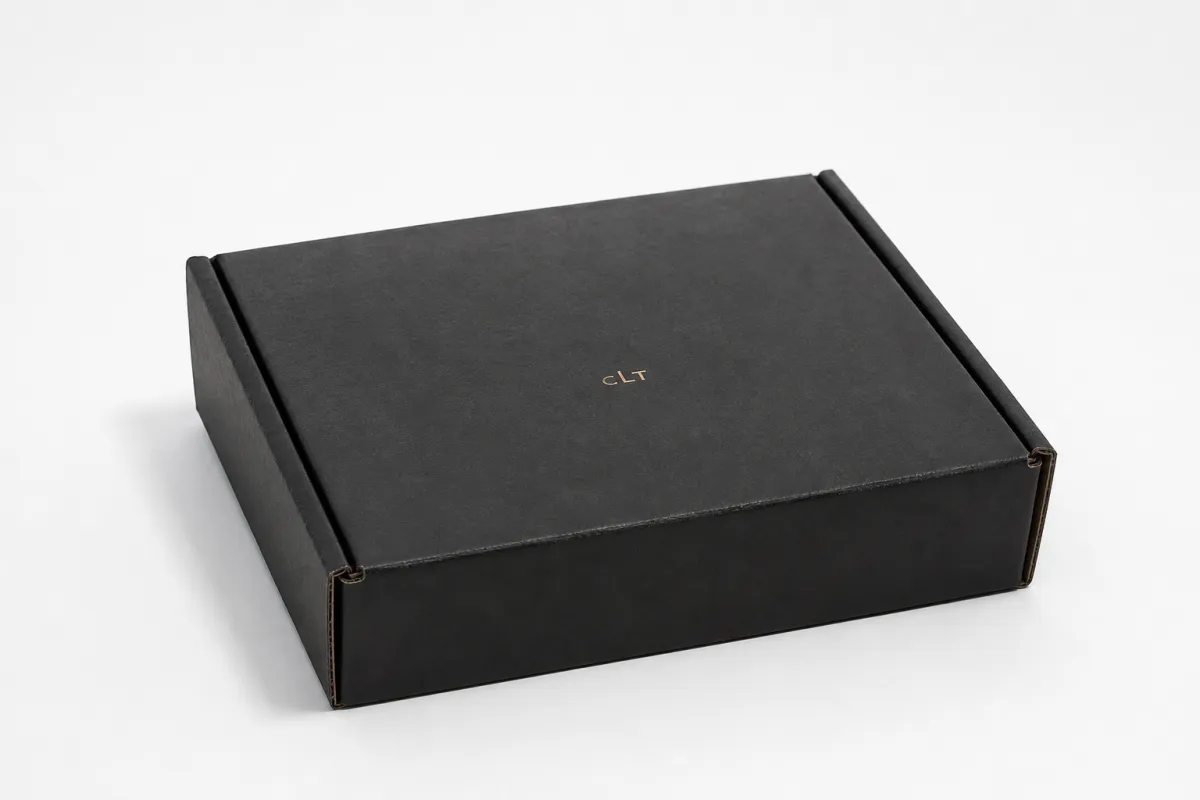
The reason custom corrugated mailers with logo stand out is simple: they meet the customer at the exact moment attention is highest. The package arrives first. The product comes second. That sounds obvious, yet a lot of brands still treat the exterior as an afterthought and then wonder why their package branding feels flat.
Corrugated mailers are folding mailers made from board with a fluted medium sandwiched between linerboards. That fluted structure gives them more stiffness and better crush resistance than plain folding cartons, which matters when your product needs basic transit protection without stepping up to a heavier shipping carton. In practice, custom corrugated mailers with logo sit in a useful middle ground for lightweight-to-medium products that need presentation and protection without making fulfillment awkward.
They fit especially well for DTC brands that care about unboxing, subscription services that want a consistent reveal, apparel companies that want crisp folds and less void fill, print brands shipping flat items, and retail packaging programs that need a cleaner shelf-to-door experience. The box does not need to be flashy. It just needs to look intentional, and good packaging design does a lot of work with that single requirement.
There is another part people miss: custom corrugated mailers with logo are not only a visual choice. They are an operational choice too. A proper size speeds packing. The right board spec reduces dents and returns. A print method that fits the order volume keeps unit cost in line. The logo matters, yes, but so do the dieline, board grade, closure style, and whether the box actually fits the item you are shipping.
For many brands, custom corrugated mailers with logo land between plain mailers and fully Custom Printed Cartons. That middle position is useful. It allows a more polished first impression without committing you to a bulky structure or a warehouse full of oversized inventory. The result is cleaner presentation, better handling in transit, and less filler than a loose shipper would need.
People often assume the mailer only matters for presentation. That misses the point. A tight, well-built mailer can reduce movement, improve stackability, and help keep corners from arriving smashed. That is not glamour. That is logistics. And logistics is usually what separates a packaging program that merely looks nice from one that actually saves money.
A mailer that looks good but ships loose is just expensive decoration.
That is why custom corrugated mailers with logo keep showing up in solid packaging programs. They create a clean first impression while still behaving like a real shipping component, not a decorative sleeve pretending to be a box.
How Custom Corrugated Mailers with Logo Work
The structure is the reason these mailers perform at all. Corrugated board uses a fluted medium between liners, which creates stiffness, better crush resistance, and enough rigidity for products that do not need a heavy-duty shipping carton. Flute profile and liner quality matter. A thin board can look perfectly fine in a sample and then disappoint once it is stacked, bumped, or packed with a little more weight than expected.
Custom corrugated mailers with logo are usually shipped flat, which is one reason they are popular with operations that care about storage space. Teams fold them quickly, pack the product by hand, seal them, and send them into parcel networks with little or no void fill. That flat-pack workflow can save time compared with assembling larger cartons or stuffing oversized boxes with paper and air pillows.
Several styles show up again and again. Tuck-top mailers are the familiar workhorse. Roll-end front tuck styles offer a slightly more premium closure and stronger edge performance. Hinged mailers can feel more gift-like and suit presentation-heavy programs. Flat-pack shipper formats work well when efficiency matters more than fancy detail. The right format depends on product size, packing speed, and how much of a brand story the box needs to tell.
Branding methods change both the look and the economics of custom corrugated mailers with logo. Flexographic printing is common for larger runs and straightforward graphics. Digital print works well for shorter runs and faster setup. Litho-lam creates a more refined printed face by laminating a printed sheet to the corrugated board, which can be a strong option for premium retail packaging. Simple one-color logos are the least expensive route. Full-coverage graphics and interior print panels cost more, but they can add a lot to the reveal if the product deserves it.
Interior print is underrated. A lot of brands spend all their energy on the outside and forget that the inside flap is where customers actually linger once the box opens. For custom corrugated mailers with logo, even a simple interior message, repeat pattern, or small brand mark can make the unboxing feel complete without sending the budget into unnecessary territory.
The supply-chain behavior matters too. Because these mailers ship flat, they are easier to store, easier to count, and easier to pull during order fulfillment. They are not a cure for a bad pack-out, though. If the dimensions are wrong, the product shifts. If the box is too shallow, corners crush. If it is too large, the package feels empty and shipping cost climbs. No amount of logo ink fixes a poor fit.
That is why custom corrugated mailers with logo should be sized around the packed product, not the bare item. Add inserts if needed. Account for closures, tissue, sleeves, and any protective wrap. A box that looks perfect on screen can become a problem as soon as the packing table starts moving.
If you are building a broader packaging program, it helps to compare formats. Some products are better served by Custom Poly Mailers because they are light and non-fragile. Others need more structure and belong in Custom Shipping Boxes. If you are planning a full program, the most useful place to compare options is usually Custom Packaging Products.
Custom Corrugated Mailers with Logo Cost, MOQ, and Pricing
Pricing is where buyers either get disciplined or get surprised. Custom corrugated mailers with logo can be reasonable at scale and frustratingly expensive at lower quantities. The main drivers are size, board grade, flute type, print method, color count, finish, order volume, and structural complexity. If a quote arrives without those details matched, the number is mostly theater.
A practical way to think about it starts with volume. Small runs carry a higher unit cost because setup costs are spread across fewer pieces. Mid-size runs start to make more sense once production gets moving. Larger runs often reduce the unit cost sharply, especially if the artwork stays simple and specialty finishing is kept in check. That pattern holds for custom corrugated mailers with logo, and it holds for most Custom Printed Boxes as well.
For rough budgeting, many brands see low-volume digitally printed mailers land around $0.90 to $2.50 per unit, depending on dimensions and print coverage. A larger flexo run may fall closer to $0.35 to $1.10 per unit, again depending on the spec. Premium litho-lam or more elaborate presentation mailers can climb higher, sometimes well beyond that range if the size is large or the finish is more refined. Those are not fake precision numbers. They are the kind of ranges that help you budget before a quote lands and changes the mood of the day.
MOQ tradeoffs matter as well. A low minimum order quantity is convenient if you are testing a product or launching a small collection, but the unit price is usually higher and the print choices may be narrower. Larger MOQs improve economics, but they also increase inventory risk if the design changes or the sales forecast was too optimistic. That is the tradeoff with custom corrugated mailers with logo: lower quantity gives flexibility, higher quantity gives better pricing.
Buyers also forget the hidden costs. Custom dies can add to the total if the box size is unusual. Plates may be required for certain print methods. Freight can become a real line item, especially on bulky board. Storage matters if you do not have space to keep cartons flat. Artwork cleanup, proofing, and samples can also move the total more than people expect. A quote that looks cheap until the extras appear is not a bargain. It is a delay with a receipt attached.
To make quote comparison less painful, keep the spec identical across vendors. Match dimensions, board grade, flute profile, print method, color count, finish, quantity, and shipping assumptions. If one supplier is quoting a plain stock mailer and another is quoting custom corrugated mailers with logo printed on better board, that is not a fair comparison. That is comparing apples to a crate of oranges.
| Print Option | Typical MOQ | Typical Unit Range | Best For | Tradeoff |
|---|---|---|---|---|
| Digital print | 100-1,000 pcs | $0.90-$2.50 | Short runs, fast turns, frequent artwork changes | Higher unit cost at scale |
| Flexographic print | 1,000-10,000+ pcs | $0.35-$1.10 | Repeat programs, simple graphics, larger volumes | Less ideal for highly detailed art |
| Litho-lam | 1,000+ pcs | $1.10-$3.50+ | Premium presentation, strong shelf appeal, retail packaging | Higher setup and finishing cost |
| Plain corrugated with one-color logo | 500-5,000 pcs | $0.25-$0.85 | Basic branded packaging, low-cost shipping programs | Less visual impact than full coverage graphics |
That table is not a quote. It is a reality check. A 500-piece run of custom corrugated mailers with logo will not price like a 5,000-piece repeat order, and a premium presentation mailer will not behave like a plain tuck box. If you want a clearer sense of where your program belongs, ask for a quote on the exact board, exact size, and exact print method you plan to order.
One more budget point: if you are comparing custom corrugated mailers with logo to other packaging design options, remember that the cheapest box is not always the cheapest package. A slightly better fit can reduce fillers, lower damage, and speed fulfillment. That saves labor. Labor costs money. A shocking concept, but a useful one.
Design Factors That Affect Protection and Branding
Good design is not decoration. It is the part of the spec that decides whether custom corrugated mailers with logo look premium while still protecting the product. The biggest mistake is chasing visual impact before the size and structure are locked. A pretty mockup is easy. A mailer That Ships Well and still looks clean on arrival takes more discipline.
Start with the product dimensions, not the artwork. Measure the packed item, not just the bare item. If you use tissue, inserts, sleeves, or protective wrap, include those too. Then decide how much headspace you can tolerate. Too little room and the item gets crushed. Too much room and the mailer feels sloppy, even if the logo is perfect. Custom corrugated mailers with logo should hold the item snugly without forcing the packer to fight the box.
Board selection matters just as much. Lighter board can lower cost and make folding easier, but heavier products or stacked shipments may need better compression resistance. Flute profile plays into this as well. A flatter profile can print cleanly and keep the surface neat, while a sturdier flute may be the better choice when the mailer needs more protection. There is no universal answer. The right spec depends on the product, the shipping lane, and how much abuse the parcel will take.
Branding details carry more weight than many buyers expect. Logo placement should respect fold lines, tuck areas, and label zones. High-contrast art is usually easier to read than soft, low-contrast color choices. Edge bleed needs to be planned carefully so artwork does not get sliced at the wrong seam. If the package will carry a shipping label on the outside, reserve a quiet area so the label does not bulldoze the branding. The goal is to make custom corrugated mailers with logo look intentional even after the carrier applies its own sticker.
Interior print can do a lot with very little. A repeat pattern, one-line message, or simple brand mark can turn the opening moment into something more memorable. That works especially well in package branding for apparel and giftable items, where the customer experience matters nearly as much as the product itself. You do not need to cover every surface. You just need the right surfaces.
Sustainability belongs in the design conversation now, whether buyers are eager for it or not. Recycled content, recyclable finishes, and right-sized packaging can reduce waste and support corporate sustainability goals. If you want an external baseline, the EPA waste reduction guidance is a useful reference, and the FSC site explains certified sourcing and chain-of-custody basics in plain language. For testing and shipping performance, ISTA is a solid place to understand package testing standards and why they matter.
That performance piece matters more than many buyers realize. If you are shipping through normal parcel networks, look at the kind of testing that matches your risk. ISTA procedures and ASTM references like D4169 come up often for a reason: they help you compare package performance in a way that is less emotional and more useful. A mailer that survives a neat drop test in the office is not the same thing as one that holds together in transit.
So yes, design matters. But in custom corrugated mailers with logo, design has to serve protection, not just presentation. The better the fit, the better the print usually feels. The worse the fit, the more the brand looks like it is pretending to know what it is doing.
Production Process, Timeline, and Lead Time
The production flow for custom corrugated mailers with logo tends to follow the same pattern, even if suppliers describe it differently. It usually begins with a brief, then a dieline, then artwork setup, then proofing, sample approval, prepress, manufacturing, and final shipment. Skip one of those steps and the bill tends to show up later in the form of rework, delays, or boxes that do not fold the way you expected.
Timeline depends on a few moving parts. Print method matters a great deal. Digital jobs usually move faster because setup is lighter. Flexo and litho-lam can take longer because tooling, plates, and lamination add steps. Board availability also plays a role. If the material is in stock, things move more smoothly. If not, the schedule bends around the paper mill, which is rarely anyone’s favorite surprise.
Artwork approval is another bottleneck. Clean vector files help. So do correct dimensions and a properly built dieline. If the logo sits too close to a fold or cut line, someone has to adjust it. If the buyer keeps revising color, copy, or size after proofing, the clock keeps moving. That is one reason some custom corrugated mailers with logo projects feel quick and others feel like a long, patient conversation nobody asked for.
For simple runs, a reasonable estimate is often 12 to 15 business days after proof approval. More complex printed mailers can land closer to 15 to 25 business days, especially if samples are requested or specialty finishing is involved. Rush orders are sometimes possible, but they usually cost more and reduce flexibility on stock and finishing. If your launch date is fixed, build in time for the part that always takes longer than expected: proofing.
Samples are not the same thing as production. That sounds obvious until someone treats a single hand-built sample as a guarantee that every carton in the run will behave identically. It is not a guarantee. It is a checkpoint. For custom corrugated mailers with logo, you want a sample or prototype to confirm size, print placement, closure, and fit before you commit to volume.
Here is the cleanest way to keep the timeline under control:
- Lock the packed product dimensions early.
- Send clean artwork in vector format.
- Approve the dieline before asking for cosmetic changes.
- Test the sample with the actual product and inserts.
- Sign off quickly if the launch date matters.
That sequence sounds plain because it is. Plain is useful. Plain means the boxes get made, the order ships, and nobody has to explain why the mailer showed up after the launch email already went out. If you are also evaluating related packaging design options, it helps to compare the workflow against custom printed boxes or a simpler line of branded cartons. Some jobs need more structure. Some need less. The production calendar will tell you which is which.
Common Mistakes When Ordering Corrugated Mailers
The most expensive mistake is guessing the size. A mailer that is too large wastes board, costs more to ship, and looks lazy. A mailer that is too tight slows packing and crushes corners. Both are bad. Neither is rescued by a bigger logo. Yet buyers keep doing it.
Another common mistake is overprinting. More color is not automatically better. Heavy ink coverage can raise cost, complicate drying or finishing, and sometimes make the box look busier than the product deserves. The strongest custom corrugated mailers with logo often rely on restraint: a clean logo, one or two supporting colors, and a layout that respects the structure of the box. Simple is not boring when it is done well. Simple is efficient.
Skipping a physical sample is risky, especially if the product has inserts, unusual dimensions, fragile edges, or a thick folded profile. A sample lets you verify fit, check the fold lines, and see whether the print placement still looks right once the box is assembled. Do not assume the mockup tells the full story. It does not.
Quote comparisons also trip people up. One vendor may quote a plain stock mailer, while another quotes custom corrugated mailers with logo with printed interiors, better board, and a custom dieline. Those are not the same job. If you compare them as if they are, you will make the wrong decision and then blame the wrong supplier. Fairness starts with matching the spec.
Operations issues are just as real as print issues. If the mailers do not store efficiently, if the label area is awkward, if pack-out requires too many hand moves, or if the box folds slowly, the polished branding becomes a drag on fulfillment. The best custom corrugated mailers with logo support the packing table instead of slowing it down.
One more thing: do not ignore the other packaging components. Inserts, tissue, tape, labels, and outer cartons all affect the result. If you are using custom corrugated mailers with logo for a product that really wants more containment, you may need a better insert or a stronger shipper. That is not failure. That is honest specing.
Practical check: if the product can move inside the mailer when you shake the sample, it is not ready. That is true even if the print looks nice. Especially if the print looks nice.
Expert Tips and Next Steps for Ordering
Start with the product, not the packaging fantasy. Measure the actual packed item. Note the weight, the insert requirements, and any fragile corners or edges. Then size custom corrugated mailers with logo around the real pack-out. That is how you keep the box from turning into a guessing game.
Order a sample pack or prototype before you scale up. That matters even more if the logo sits near folds, the box uses an unusual closure, or the contents vary a lot. A sample will show you whether the mailer feels too loose, whether the print lands where it should, and whether your packing team can move quickly without making the box look sloppy.
Ask for a quote with matched specs. Match the board grade, dimensions, flute, print method, color count, finish, and quantity. Ask for the timeline in writing. Ask what artwork format they want. Ask what happens if a proof revision is needed. Good suppliers answer those questions clearly. Vague quotes usually become clearer only after the problem has already started.
For brands building a broader product packaging system, it helps to think beyond one SKU. Some items will fit custom corrugated mailers with logo perfectly. Others will be better in Custom Poly Mailers for lightweight flexibility, while heavier or fragile items will need Custom Shipping Boxes. If you are setting up a full line, browse Custom Packaging Products and map each product to the right structure instead of forcing every item into the same box.
Here is the cleanest next-step checklist:
- Measure the product in its packed state.
- Decide whether inserts are needed.
- Choose the print method based on volume.
- Request a dieline and proof.
- Test one sample before placing the full order.
That order of operations keeps the decision practical. It also keeps custom corrugated mailers with logo from becoming a vanity project. A box should support the product, the brand, and the fulfillment team. If it only supports one of those three, you are leaving money on the table.
So, yes, custom corrugated mailers with logo can improve unboxing, reduce filler, and make a brand look more polished. The real value comes from getting the specs right, the fit right, and the print method right. Make those decisions carefully and the box earns its place. Cut corners and the mailer turns into a loud reminder that packaging design is not the place to guess.
What products work best in custom corrugated mailers with logo?
They work best for lightweight to medium-weight products like apparel, beauty kits, books, accessories, and small retail sets. If the item is fragile, add inserts or step up the board spec so custom corrugated mailers with logo are not doing all the protective work alone. Measure the packed product, not just the item by itself.
How much do custom corrugated mailers with logo usually cost?
Pricing depends on size, board grade, print method, color count, and quantity. Small runs usually cost more per unit, while larger runs reduce the unit cost once setup is spread out. Ask for matched specs so you are comparing the same custom corrugated mailers with logo, not two different packaging jobs dressed up as the same thing.
What is the typical MOQ for branded corrugated mailers?
MOQ varies by production method. Digital and short-run options often allow lower quantities, while custom tooling or specialty finishes push the minimum higher. If you are testing a launch, start with the lowest practical quantity and validate the pack-out before you scale custom corrugated mailers with logo into a bigger run.
How long does production take for custom corrugated mailers with logo?
Lead time depends on artwork approval, board availability, print method, and whether a sample or custom dieline is needed. Simple jobs can move in roughly 12 to 15 business days after proof approval, while more complex printed mailers often take longer. Build in extra time if your launch date is fixed.
Do custom corrugated mailers with logo need extra inserts?
Not always, but inserts help when the product can shift, scratch, or sit too loosely in the box. They are also useful when the item has odd proportions and the mailer alone cannot hold it snugly. Test the pack-out before ordering at scale so your custom corrugated mailers with logo do not create a fit problem after production.

