Buyer Fit Snapshot
| Best fit | custom die cut paper bags design cost and uses for packaging buyers comparing material specs, print proof, MOQ, unit cost, freight, and repeat-order risk where brand print, material, artwork control, and repeat-order consistency matter. |
|---|---|
| Quote inputs | Share finished size, material target, print colors, finish, packing count, annual reorder estimate, and delivery region. |
| Proofing check | Approve dieline scale, logo placement, barcode or warning zones, color tolerance, and any recyclable or compostable wording before bulk production. |
| Main risk | Vague material claims, crowded artwork, or missing packing details can create delays even when the unit price looks attractive. |
Fast answer: Custom Die Cut Paper Bags Design Cost and Uses: Cost, MOQ, Proof, and Reorder Checks should be specified like a repeatable production item. The safest quote includes material, print method, finish, artwork proof, carton packing, and reorder notes in one written spec.
What to confirm before approving the packaging proof
Check the product dimensions against the actual filled item, not only the sales mockup. Ask for tolerance on folds, seals, hang holes, label areas, and retail display edges. If the package carries a logo, QR code, warning copy, or legal claim, reserve that space before decorative graphics fill the panel.
How to compare quotes without losing quality
Compare board or film grade, print process, finish, sampling route, tooling charges, carton quantity, and freight assumptions side by side. A lower quote is only useful if the supplier can repeat the same color, closure quality, and packing count on the next order.
Custom Die Cut Paper Bags: Design, Cost, and Best Uses
A bag can sit perfectly on a shelf and still fail the second someone lifts a boxed candle, a pastry stack, or a small gift set into a car. Custom Die Cut paper bags live or die on handle geometry, paper weight, and fold structure, not on the logo alone. Miss those details and the order turns into a stack of pretty mistakes.
For brands that care about presentation, Custom Die Cut paper bags can carry a lot of visual weight without feeling fussy. They look cleaner than a plain grocery-style sack, stack well for staff, and give retail packaging a more deliberate finish. The catch is that size, stock, print coverage, and handle shape all change how the bag performs and what it costs.
What Are Custom Die Cut Paper Bags?
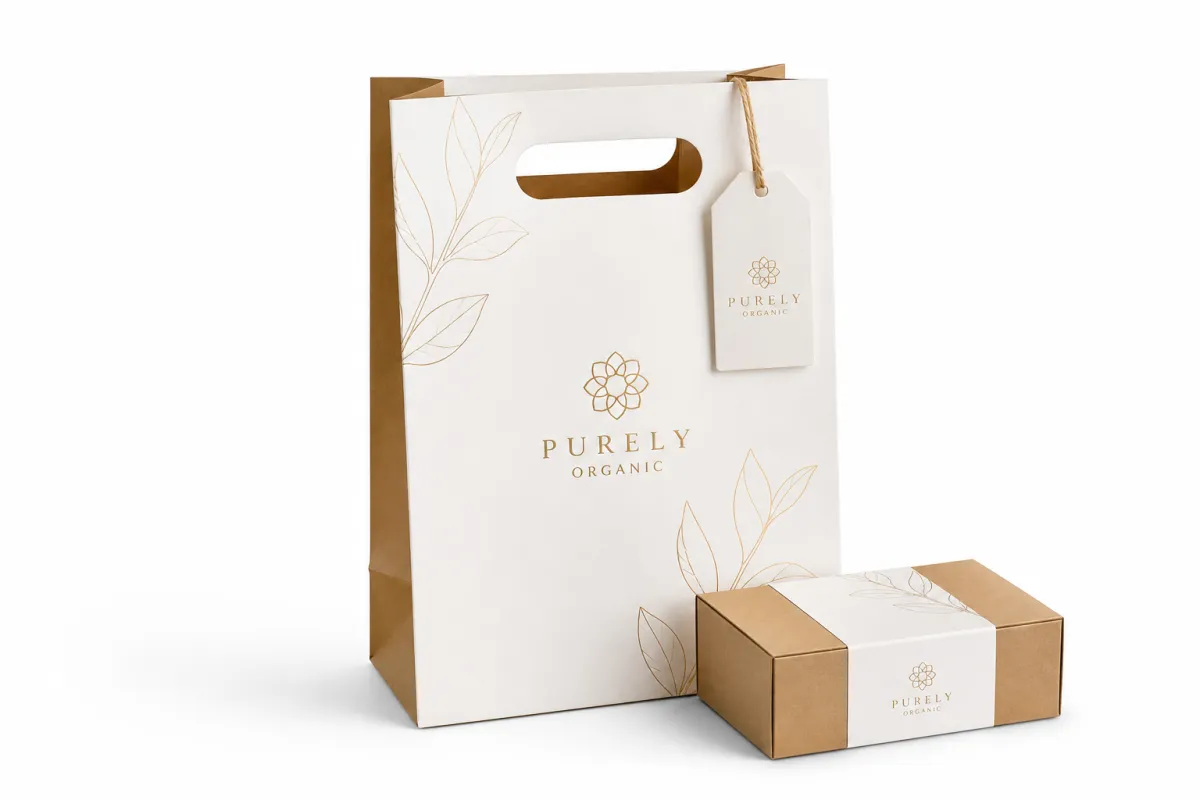
Custom Die Cut paper bags are Paper Shopping Bags with a built-in handle opening or shaped cutout created from a custom dieline. The handle is cut into the body of the bag instead of being added later with rope, ribbon, or a glued insert. That small-looking choice changes comfort, strength, and the final unit cost.
They show up everywhere retail and presentation overlap: boutique shopping, event handouts, gift packaging, and light carryout. A clothing brand may use custom die cut paper bags for folded apparel and tissue. A beauty shop may use them for boxed kits. A trade show team may choose them for literature and samples because the bags stack flat before the doors open.
Brands usually choose custom die cut paper bags for three reasons: presentation, speed, and fit. A custom size holds the product without stuffing, and the cutout handle makes distribution easier for staff. Compared with a generic paper sack, the result feels more intentional, which helps package branding without pushing the budget into theatrical territory.
There is a practical surprise hidden in the structure. A basic paper bag can become weak at the handle if the paper grade or cut geometry is wrong. Thin stock paired with a wide handle opening is asking for tears. A beautiful print job also means little if the bag folds awkwardly or opens itself in the carton. Custom die cut paper bags should be designed as working packaging first and visual branding second.
From a packaging buyer's point of view, they sit in a useful middle ground. They are more polished than plain kraft carriers, yet usually less expensive than rigid boxes or specialty cartons with heavy finishing. That makes them a fit for brands that need branded packaging with a real use case, not just a polished image. If you need to compare formats across a larger mix, Custom Packaging Products can be a practical starting point before you lock in a spec.
I have watched more than one buyer approve a bag based on a mockup, then discover the handle sat too close to the top fold or the paper was lighter than expected. The print still looked good. The bag did not. That is the part people miss when they only judge from a screen, and it is why a physical sample matters so much.
How Do Custom Die Cut Paper Bags Work?
Custom die cut paper bags are built from a dieline that defines flat sheet size, fold lines, glue areas, handle cutout, and the bottom structure. The dieline is the blueprint. If it is off by a few millimeters, the bag may print cleanly and still feel wrong in hand. Suppliers who know what they are doing spend real time on the dieline before the press ever starts.
The construction usually includes paper stock, a folding pattern, glued seams, a die-cut handle area, and sometimes reinforcement around stress points. Handle shapes can be simple ovals, rounded rectangles, or more decorative cutouts. Each shape shifts where pressure lands in the hand and where tearing tends to begin. Custom die cut paper bags with reinforcement around the handle usually hold up better for repeated carrying or slightly heavier loads.
Production often follows a clear sequence: print the sheets, cut the shape, fold, glue, finish, and pack. Some suppliers print on sheets before converting. Others work from rolls for certain formats. The idea stays the same. Every extra design choice adds setup time. More ink coverage, more precise die cutting, more finishing steps, more labor. That is why custom die cut paper bags are not priced like plain brown sacks with a logo on them.
The dieline controls more than appearance. It sets the product cavity, the gusset depth, the handle placement, and the bleed and safe zones for artwork. A boxed cosmetic set needs enough room for easy insertion without crushing the corners. A bag that is too tight frustrates staff. One that is too loose makes the product slide around and the whole piece feel cheap. Custom die cut paper bags reward precise sizing.
The tradeoff is easy to spot. More complex shapes and finishes look stronger on the shelf, but they add setup time and usually raise the unit price. That does not mean the fancier version is the right one. It means the spec should fit the job. A promo handout bag has different needs than a premium retail bag carrying a boxed fragrance set.
Key Factors That Change Quality, Fit, and Finish
Paper stock is the biggest quality driver in custom die cut paper bags. Kraft is common because it is economical, durable, and fits a natural retail look. Coated paper sharpens print and improves color density. Premium art paper gives a smoother finish and supports high-impact visuals. If the bag carries light goods and the brand wants an eco-leaning look, kraft usually makes sense. If the artwork depends on tight registration and saturated colors, coated stock can earn its place.
Paper weight matters just as much. Typical ranges often land around 150gsm to 300gsm depending on the bag size and load. Lighter stock can work for event inserts, folded apparel, and sample kits. Heavier stock helps the bag keep its shape and resist tearing around the handle. On custom die cut paper bags, the wrong weight shows itself quickly: handles stretch, the top edge curls, and side panels deform after a few uses.
Handle comfort is not a cosmetic detail. It is a usability issue. A narrow or sharply cut handle can dig into the hand, especially if the bag carries a rigid box or a bottle with weight behind it. Tear resistance around the handle opening matters too. If the cut shape is too aggressive, the stress point concentrates in the wrong place. A smooth oval or rounded cut usually behaves better than a decorative shape that looks appealing on a mockup and irritating in real life. That is the difference between decent custom die cut paper bags and the ones people quietly resent.
Artwork changes the bag more than many buyers expect. Full-bleed coverage, rich blacks, metallic accents, and multi-color print all affect cost and finish. Color consistency also depends on the paper stock and the ink system. If a brand uses a deep red on the bag and a slightly different red on custom printed boxes and paper packaging, the mismatch can make the whole display feel careless. In branded packaging, the eye catches that faster than the sales team likes to admit.
Sizing should follow the actual product, not a guess. Measure the length, width, and height of the packed item, then add room for insertion and hand clearance. A bag for a folded tee can stay tight and clean. A bag for a boxed product needs more breathing room. If the load shifts, add gusset depth. If the product is tall and narrow, think about top clearance so the handle cut does not crowd the contents. Good custom die cut paper bags should feel snug, not pinched.
Finishes sit at the end of the decision chain, and they can make or break the spend. Matte lamination creates a restrained look. Gloss makes colors pop. Soft-touch feels premium, though it can add cost and fingerprint sensitivity. Embossing and foil stamping can lift a logo if the bag belongs to a higher-end retail program. Adding every finish because it exists makes little sense. Use them where the customer sees or touches the bag first, usually the logo, the top panel, and the handle area. Anything else is decoration for decoration's sake.
Paper certification can matter during sourcing. If your buyer asks for FSC material, check the paperwork early instead of trying to repair the order after proof approval. The same logic applies to transit performance. If the finished bags will ship inside cartons to stores or event venues, think about transportation stress and carton testing standards such as ISTA. A bag that looks polished but arrives crushed helps nobody. For recycled-content and waste-reduction context, the EPA's materials guidance is also worth a look at EPA recycling resources.
- Kraft paper: best for natural branding, lighter loads, and lower unit cost.
- Coated paper: better for sharp artwork, rich color, and a cleaner retail finish.
- Heavy art paper: useful for premium custom die cut paper bags that need more structure.
- Soft-touch or lamination: adds a higher-end feel, but increases cost and lead time.
- Reinforced handle zones: worth considering if the bag will carry anything heavier than the average gift set.
Custom Die Cut Paper Bags Pricing: What Drives Cost?
Pricing for custom die cut paper bags usually comes down to five things: quantity, paper type, bag size, print complexity, and finishing. Give a supplier those five specs before asking for a quote, and the number becomes useful. Leave them out, and you get a fuzzy estimate that can’t support a buying decision. Fuzzy pricing is how budgets wander.
Setup costs matter because they spread across the order. That is why a small run can look expensive per unit and a larger run can lower the price sharply. A 500-piece order may need the same dieline work, prepress setup, and tooling attention as a 5,000-piece run, but the setup cost gets divided across far fewer bags. Custom die cut paper bags reward volume. That is not sales language. It is arithmetic.
Here are practical ranges buyers often discuss, assuming standard print and no unusual structural features:
| Option | Typical Spec | Best Use | Approx. Unit Cost Range |
|---|---|---|---|
| Basic kraft | 150gsm-180gsm, 1-2 color print | Events, handouts, light retail | $0.18-$0.45 at 5,000+ pcs |
| Printed coated stock | 200gsm-250gsm, full-bleed artwork | Boutique retail, gift packaging | $0.35-$0.85 at 5,000+ pcs |
| Premium laminated | 250gsm-300gsm, matte or gloss lamination | High-touch branded packaging | $0.60-$1.40 at 5,000+ pcs |
| Small run special | 500-1,000 pcs, custom dieline, premium finish | Launches, pop-ups, seasonal campaigns | $1.20-$3.50 per unit |
Those numbers are not a promise. They are discussion ranges, and they move with paper market conditions, print coverage, size, freight, and whether the supplier is quoting from a stock format or a custom structure. Still, they are useful because they keep buyers from assuming all custom die cut paper bags should cost the same as a grocery bag with a logo on it. That assumption burns money.
Hidden costs can be just as annoying as the unit price. Artwork cleanup is one. If the logo file is low resolution or not vector-based, someone needs to rebuild it. Proofing is another. Physical samples may cost extra, but they can prevent a bad production run. Shipping weight matters too, especially if the bags are laminated or packed in dense cartons. Rush production can also add a premium, and that premium is often far from small. With custom die cut paper bags, speed rarely comes free.
Compare quotes using the same dieline, same stock, same print count, and same finish list. Otherwise you are not comparing suppliers. You are comparing guesses. Buyers often chase a low quote that leaves out lamination, handle reinforcement, or freight. Then the “cheap” bag becomes the expensive one. If you need to compare package branding formats across a wider product mix, branded packaging options on one supplier page can make the tradeoffs easier to see.
One more practical point: if the bag is part of a broader product packaging program, think about carton counts and warehouse handling. Fifty bags per carton is easier to move than a loosely packed master case that crushes at the corners. Packaging design is not just about the front of the bag. It also covers how the bags survive storage, pick-and-pack, and delivery. That is boring until it costs real money.
Step-by-Step Process and Timeline From Artwork to Delivery
The cleanest custom die cut paper bags projects begin with a short but specific brief. Define the packed product size, estimated load weight, quantity, brand goals, and any must-have finish. If the bag is for a holiday kit, say so. If it has to match existing custom printed boxes or a wider retail packaging system, say that too. A strong brief cuts back-and-forth and keeps the quote grounded in reality.
Then comes dieline setup and artwork placement. The supplier should confirm the cut line, bleed, safe zone, fold placement, and handle opening. At this stage, small errors become expensive. A logo too close to the cut line can get nicked. A barcode near a fold can become hard to scan. With custom die cut paper bags, the artwork should be built to the bag, not dropped onto it after the fact.
- Brief the bag: size, load, quantity, paper weight, and finish.
- Review the dieline: confirm handle placement, folds, and print-safe zones.
- Approve the proof: check color, spelling, barcode placement, and logo scale.
- Request a sample: especially if the bag carries a real retail item or premium product.
- Move into production: print, cut, fold, glue, finish, and pack.
Proofing is not a box to tick and forget. If handle comfort matters, ask for a physical sample. If the artwork uses fine text or a dark background, ask for a color-managed proof. If the product is heavy enough to stress the handle cut, test the sample with the actual item. A digital mockup of custom die cut paper bags can show proportions. It will not show how the hand feels after three trips across a parking lot.
A realistic timeline from approval to delivery can sit anywhere from 10 to 25 business days for many custom projects, depending on quantity and finish. Simple paper bags move faster. Custom lamination, foil, embossing, or a new dieline adds time. Shipping can add another few days if the bags are moving cross-country or overseas. Faster timelines cost more, and complicated bags need more lead time than plain stock bags. That is just how production works.
A useful rule of thumb: the more custom the custom die cut paper bags are, the more the calendar needs protection. Leave room for revisions, sample approval, and freight delays. The worst orders are the ones rushed because nobody wanted to admit the launch date was unrealistic.
In practice, I tell buyers to think in two clocks. The first clock is the one on the quote sheet. The second clock is the one that includes proofing, comments, re-proofing, carton packing, and transit. Those two clocks rarely match on the first try. If the launch date is fixed, the schedule should be built around the second clock, not the optimistic one.
Common Mistakes When Ordering Custom Die Cut Paper Bags
The most expensive mistake is choosing the wrong size. A bag that is too small wrinkles, bends at the top, or forces staff to cram the product in. A bag that is too large wastes material and looks sloppy. With custom die cut paper bags, the dieline should match the item and the hand motion that loads it. Not the other way around.
Weak handle specs show up fast. Buyers often focus on print quality and ignore what happens when the bag is lifted. Then the handle stretches, the cut edge tears, or the top panel starts to split. Customers do not remember that the logo printed beautifully. They remember the bag that pinched or failed. That is a quick way to make branded packaging feel cheap.
"The bag looked great on the counter, but the handle felt wrong the second we loaded it." That is a normal complaint, and it usually means the structure was designed for a photo, not for use.
Skipping proof review creates preventable problems. Small text near the cut line, barcodes near folds, and thin reverse type can all become unreadable or messy in production. If the artwork includes legal copy, product details, or a campaign URL, check every line. The same applies to custom die cut paper bags with a lot of white space. Empty space makes mistakes easier to spot, which is not always flattering.
Shipping and storage get underestimated more often than they should. A bag that looks cheap per unit but is bulky in carton form may cost more to move and warehouse than expected. That matters for seasonal buys, pop-up programs, and multi-location retail packaging. If the bags will sit in back rooms for months, ask how they stack and whether the carton count works with your inventory system.
Do not order the bare minimum without testing. If the bag will carry real retail weight, a promo prototype is not enough. Test the structure with the actual product or a close load match. Custom die cut paper bags are easy to overestimate and irritating to fix after launch. A small pilot run costs less than replacing a weak order.
Another mistake is treating all paper as interchangeable. It is not. Two samples can look almost identical on a table and perform very differently once loaded. One may crease cleanly while the other scuffs or frays at the fold. That kind of difference is small on paper and loud in use.
Expert Tips and Next Steps for Better Orders
Start with the five specs that matter most: dimensions, paper weight, handle style, print count, and target quantity. Those five numbers do most of the heavy lifting on cost and performance. Get them right and the rest of the custom die cut paper bags process becomes easier. Get them wrong and the quote, sample, and final bag all drift in the wrong direction.
Ask for a sample or prototype any time the bag carries heavier items or needs to feel premium in hand. That is not overkill. It is good buying. A physical sample shows whether the handle is comfortable, the opening shape is easy to use, and the paper weight supports the load without going limp. On paper, many custom die cut paper bags look fine. In real life, some feel like a compromise nobody wants to admit to.
Compare at least two supplier quotes using the same dieline and finish list. That makes the numbers useful. If one quote includes lamination, reinforced seams, and freight while another leaves those items out, the cheaper number is just bait. A clean comparison should show whether the bag is intended for event handouts, retail packaging, or premium gifting. Those are different jobs, and custom die cut paper bags should be spec'd accordingly.
Focus on the details customers touch first: handle comfort, opening shape, and how the bag holds its form after loading. Fancy print helps. It is not enough. The bag should stand upright, load easily, and survive the trip from counter to car. That is what makes the package feel thoughtful instead of decorative. Good custom die cut paper bags support the brand without getting in the way of the product.
It also pays to think in terms of the full packaging system. If your brand already uses matching cartons, mailers, or inserts, keep the bag aligned with the rest of the custom printed boxes and packaging program. Consistency in materials, color tone, and print style builds trust faster than a random mix of styles. That is package branding doing real work, not just filling shelf space.
One more practical move: ask your supplier how the bags are packed, what the carton counts are, and whether they can survive transit testing appropriate to the route. That matters if orders move through distribution centers or ship to multiple stores. If you are sourcing FSC paper, request the proof early. If you need transit validation, review ISTA testing guidance before production starts. It is easier to fix a spec on a screen than a warehouse full of the wrong bags.
For brands choosing between formats, custom die cut paper bags are strongest where presentation and light-to-medium carry performance both matter. They are not the answer for every load, and nobody should pretend they are. For retail handoffs, gift packaging, event kits, and lightweight takeaway, they can be the right mix of form and function. Spend on the parts people touch. Save on the parts they never see. That is usually the smartest way to buy custom die cut paper bags.
Frequently Asked Questions
What are custom die cut paper bags used for?
They are used for retail purchases, gift packaging, event giveaways, and lightweight takeaway where presentation matters. Custom die cut paper bags work best when the bag needs a clean built-in handle and a custom size that fits the product without extra filler.
Are custom die cut paper bags strong enough for shopping?
Yes, if the paper weight, cutout shape, and reinforcement are matched to the product weight. They are a better fit for light to medium loads than bulky or heavy items, which need stronger handle structures. A well-spec'd custom die cut paper bag can handle normal retail carry use without trouble.
How much do custom die cut paper bags cost?
Cost depends on quantity, paper stock, print coverage, finishes, and setup complexity. Small runs usually cost more per bag, while larger orders spread setup costs and bring the unit price down. For many buyers, custom die cut paper bags fall somewhere between budget event carriers and premium laminated gift bags.
What artwork do I need for custom die cut paper bags?
You usually need a print-ready file laid out on the supplier's dieline with bleed, safe zones, and exact logo placement. Vector artwork is best for logos and clean type, especially when the design wraps near the cutout or folds. That setup keeps custom die cut paper bags aligned and helps avoid expensive proof revisions.
How long does it take to produce custom die cut paper bags?
Lead time depends on proof approval, quantity, print complexity, and shipping method. Simple orders move faster, but custom finishes, samples, or revisions can add days or weeks. If the project includes new tooling or a complex finish, give custom die cut paper bags a wider production window.
Custom die cut paper bags can look simple, but the good ones are built with real attention to structure, stock, print, and handling. Get those parts right and the bag does its job without wasting money or irritating customers. Get them wrong and the whole thing turns into an expensive lesson in packaging design. For brands that want usable, presentable custom die cut paper bags, the smartest move is still the plain one: measure the product, match the paper weight to the load, approve a physical sample, and compare quotes on identical specs before anything goes to press.

