A Custom Event Hats private label order usually earns more attention than a stack of generic shirts or a bin of loose promo items. Hats are wearable immediately, the branding stays visible all day, and sizing is forgiving enough that buyers are not forced into the usual small-medium-large guessing game. For event teams, that combination is hard to beat: one product, one message, fewer leftovers.
The catch is that hats are deceptively sensitive to specification choices. A Custom Event Hats private label order can feel like a retail accessory or a bargain-bin giveaway, and the difference is not subtle once the product is on a table. If the goal is sell-through at a trade show, concert, festival, or internal launch, the silhouette, labeling, and finishing details matter almost as much as the logo itself.
"A cap that feels intentional sells faster than one that merely carries a logo."
Event buyers usually judge hats on three things: how they look at first glance, how they wear for more than an hour, and whether they feel consistent with the brand. If the cap fits poorly, the decoration is crowded, or the packaging looks improvised, the item starts losing value before it leaves the booth. That is the part many first-time buyers underestimate.
Why event hats sell when other swag stalls
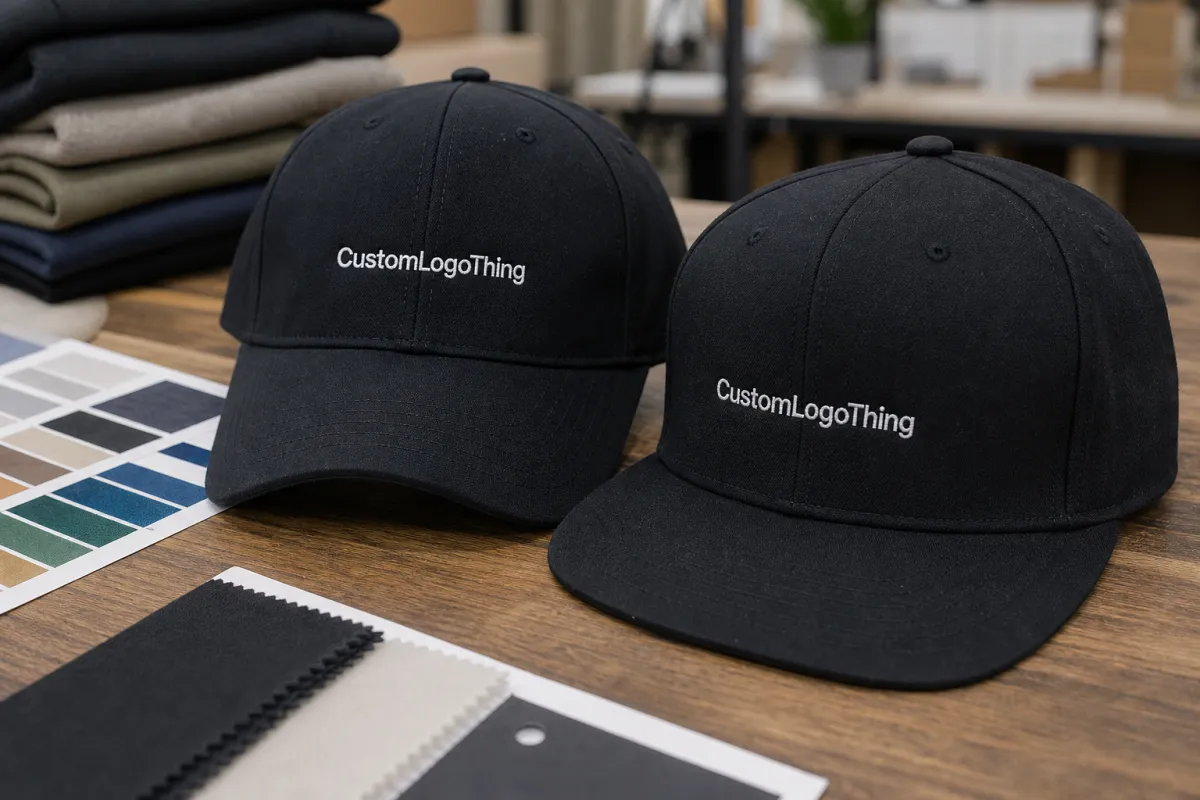
Hats have a visibility advantage that other merchandise rarely matches. They sit on a head, not in a drawer, and they travel through the venue without any extra effort from the wearer. A tote bag may be carried once and forgotten. A shirt often waits until someone gets home. A cap starts advertising the minute it goes on.
From a merchandising perspective, hats also create less friction. They are easier to hand out, easier to stack, and easier to show in a small footprint. That matters at events where tables are crowded and attention spans are short. A few well-chosen colorways can look like a considered product line rather than a random assortment of giveaways.
Private label changes the equation. Inside labels, sweatband printing, hang tags, and branded packaging move the item from generic promo merchandise into something that reads as owned inventory. A hat in a polybag with a consistent label system feels like product. The same cap tossed loose into a carton feels like overstock.
There is also a useful comparison here: hats usually deliver a better visible return per unit than many small-format items because they occupy face-level real estate. That does not mean they are always the cheapest option. It means their branding has a longer exposure window. For buyers trying to justify spend, that is a practical distinction, not a marketing claim. If you are building a Custom Event Hats private label order, think in terms of shelf presence and wear time, not just unit price.
They are also surprisingly good for mixed-use programs. The same cap can work for staff, sponsors, and resale, provided the design is restrained enough. That flexibility is one reason hats remain a staple in Wholesale Programs and in event merchandising calendars that need repeatable inventory rather than one-off novelty items.
Private-label hat styles that fit events and budgets
Silhouette is the first decision that affects cost, audience fit, and decoration options. The styles that get used most often are dad hats, truckers, structured snapbacks, five-panels, rope hats, and foam fronts. They are not interchangeable. Each one carries different visual cues, and each one behaves differently in production.
Dad hats are usually the safest all-purpose choice. They sit lower, feel relaxed, and suit broad audiences without looking too aggressive. Truckers are still strong when airflow matters or when the event leans casual and outdoors. Structured snapbacks hold shape well and give embroidery a cleaner surface, which is useful when the artwork needs definition. Five-panels work well for music merch, creative campaigns, and newer streetwear-led brands. Rope hats lean vintage sport. Foam fronts are loud by design and can carry large graphics without looking crowded.
| Style | Best for | Typical MOQ feel | Common unit range |
|---|---|---|---|
| Dad hat | Corporate events, lifestyle brands, general giveaways | Lower | $2.80-$5.50 |
| Trucker | Outdoor events, festivals, casual merch | Lower to medium | $2.60-$5.20 |
| Structured snapback | Retail-style branding, sports, youth audiences | Medium | $3.20-$6.50 |
| Five-panel | Streetwear, creative launches, music merch | Medium | $3.50-$7.00 |
| Foam front | Bold event graphics, high-visibility promotions | Medium | $3.00-$6.00 |
Decoration method matters just as much as the silhouette. Embroidery is still the most dependable default because it wears well and looks clean at a distance. Woven patches give a more finished retail appearance and can handle fine detail without the texture of direct stitching. PVC patches and leather patches move the cap toward premium territory, which makes sense when the hat is meant to sell rather than simply circulate. Printed panels can work, but only when the base style supports them; otherwise, they flatten the product visually.
Color choice should follow the event and the buyer, not the mood board. Black, navy, charcoal, and khaki remain the easiest bases for corporate or sponsor-facing programs because they hold logos without visual noise. Cream with a single accent color can look intentional for lifestyle launches. Bright contrast combinations are more natural for music, sports, or youth events, where visibility matters more than restraint. Fewer colors also reduce approval friction, and that usually shortens the quote cycle.
Private-label details are where the cap starts behaving like a product line. Branded sweatbands, inside labels, hang tags, and retail-ready packaging all change how the item reads on the table and in a buyer's hand. If the hat program sits alongside matching Custom Labels & Tags or other Custom Packaging Products, the entire package feels more deliberate. That consistency is often worth more than one extra decoration position.
Build specs that control fit, feel, and branding
Most hat problems start with spec decisions, not design files. Crown height, panel count, brim curve, fabric weight, closure type, and front structure all affect the way the cap sits and the way the branding reads. If any one of those is mismatched to the event, the finished item can feel off even when the artwork is technically correct.
Crown height is the first variable I would look at. Too shallow and the cap sits awkwardly; too tall and it can look stiff or dated, depending on the style. Panel count matters because it changes the front canvas. Six-panel hats remain the standard and are easy to decorate. Five-panel hats read differently and often suit modern branding better. The brim curve also changes the tone. A flat brim says something different from a pre-curved visor, and that choice should be intentional rather than inherited from a template.
Fabric weight affects both feel and durability. A lighter cotton twill around 220-260gsm is usually comfortable for casual event wear. Heavier twill or brushed cotton holds shape better, but it can push the price up and make the cap feel warmer. For summer events or outdoor activations, mesh-backed truckers are still practical because airflow improves wear time. That may sound obvious, but the difference shows up quickly once the hat is on someone’s head for several hours.
Closure type is one of those small choices that changes the perceived quality more than buyers expect. Plastic snaps are common and efficient. Fabric straps with metal buckles read a bit more premium. Velcro is fast, but it can make a hat feel cheaper if the rest of the build is trying to look retail. Fitted hats eliminate adjustment questions, though they introduce sizing risk and can create inventory headaches. Adjustable styles are usually the safer buy when dead stock is a concern.
Branding placement
The front panel does the heavy lifting. Side embroidery, back hits, under-brim print, woven labels, and inside tape can all add value, but they should support the primary mark rather than compete with it. If the objective is subtle branding, smaller placement on the side or back can be enough. If the event needs visibility from a distance, keep the front mark simple and readable at six feet or more.
Proofing should be more exacting than many buyers expect. Confirm Pantone references, stitch density, patch dimensions, and label position before production starts. Ask for mockups that show the cap color, thread color, label location, and packaging format in the same view. A layout that looks fine on a white background can hide balance problems once it lands on a dark twill or a bright mesh back.
Quality control should also extend beyond the decoration itself. Check seam alignment, closure function, patch adhesion, and thread tails before approval. On paper, those issues look small. In a carton of 500 units, they become expensive. Packaging testing standards such as ISTA can help buyers think about transit durability in a more structured way. If the packaging or inserts use paper-based components, FSC certification is a cleaner sustainability signal than vague eco language.
Cost, MOQ, and quote factors for custom event hats
Pricing usually comes down to a handful of variables: fabric, stitch count, patch type, decoration colors, labeling, packaging, and the number of decorated positions. Buyers often ask for a clean quote, then add detail after detail until the item is no longer simple. That is how budgets drift. A hat can be inexpensive to make, or it can become a custom package with enough labor to behave like a higher-end retail item. The difference is in the spec sheet.
MOQ ranges follow the same logic. A stock-base hat with straightforward embroidery may start around 100-200 pieces. Add custom labels, special packing, or a fully custom build, and the minimum often moves into the 300-500 range. Multiple colorways can also increase complexity because each color behaves almost like its own order in scheduling and approval. If the budget is tight, one colorway with one strong graphic usually gives the best balance of price and clarity.
There are a few price levers worth watching. Fewer thread colors often reduce cost and simplify approvals. Patches can be cheaper than dense embroidery on some designs, but not always; it depends on stitch count and shape complexity. Packaging upgrades such as custom inserts or retail cartons can improve presentation, yet they only make sense if they support sell-through or a stronger unboxing experience. Otherwise, they are just extra spend with a nicer label.
The hidden costs are what usually surprise first-time buyers. Sample fees, artwork revisions, freight, duties, rush production, split shipments, and packaging changes can all move the total. If the order needs to arrive at multiple event locations, ask about split-shipment charges before approval. Do not assume distribution is included just because the quote looks tidy.
For planning, it helps to request landed pricing at 100, 300, and 500 units. That shows where the unit cost drops and whether it is worth simplifying the build or increasing quantity. If the design is still unsettled, this is the point where the numbers matter more than the mood board. A Custom Event Hats private label order is easiest to control when the budget is fixed before art revisions begin.
Production steps, lead time, and shipment planning
A solid production flow usually follows the same sequence: artwork review, spec confirmation, mockup approval, sample or pre-production check, mass production, inspection, packing, and shipment. If one of those steps is vague, the schedule gets soft. That is not an issue with the concept of private label. It is an issue with process discipline.
Stock-base hats with standard embroidery can often move faster than more customized programs. In practical terms, a simpler run may finish in about 10-15 business days after proof approval, depending on quantity and queue. A more involved Custom Event Hats private label order usually needs 15-25 business days or more because label replacement, packing, and extra approval steps add real labor. Rush production exists, but rush production usually costs more and leaves less room for corrections.
Several things slow the timeline. Missing artwork is one. Late proof edits are another. Fabric substitutions can pause the line if the preferred color or material is unavailable. Holiday congestion affects freight just as much as manufacturing. The annoying part is that an order can be technically finished while still being functionally late because it is sitting in transit. That is why lead time should always include shipment planning, not just factory time.
For event-driven buys, backward planning works better than optimistic scheduling. Start with the hard date, then subtract transit time, approval time, and one extra cushion for real-world delays. A buyer who leaves no buffer usually ends up paying for speed after production is already locked. That is the expensive way to learn how timelines work.
Packaging matters here too. A hat packed loose takes different carton dimensions than one packed in a polybag with a hang tag or insert card. Add custom printed boxes or branded inserts, and freight calculations change again. The practical consequence is simple: packaging decisions do not live in a design vacuum. They affect carton count, warehouse handling, and the final shipping bill.
If the hats are part of a larger launch, aligning them with the broader product packaging system saves headaches later. The cap, insert, and outer box should tell the same story. Otherwise, the order reads as disconnected, even if each component is individually well made.
What a reliable private-label partner should deliver next
A useful partner does more than quote a number. They should provide accurate mockups, clear spec sheets, transparent pricing, pre-production samples when the order is complex, and a traceable approval trail. If the explanation for the cost is vague, the quote probably hides something. Good buyers notice that quickly.
The order of decisions matters. First, choose the hat style. Second, choose the decoration method. Third, set quantity. Fourth, lock color and packaging. That sequence works because the style sets the technical limits and the decoration method affects both cost and lead time. Reversing the order usually means revisiting the quote and the proof more than once.
For a clean quote, send logo files, target quantity, delivery destination, preferred silhouette, brand colors, and any labeling or packaging requirements. If you need hang tags, woven labels, polybags, or retail cartons, say so early. If the artwork is still undecided, ask for a mockup on an actual cap color instead of a white placeholder. White backgrounds make problems harder to see, not easier to solve.
A good Custom Event Hats private label order should look like a finished product line rather than a mixed batch of caps with a logo attached. That difference shows up in the proof, in the carton labels, and in how the hats present on a merch table. A buyer who compares two or three build options, checks landed cost, and confirms the timeline before approval usually ends up with fewer surprises and a better sell-through rate.
For programs tied to a broader launch, it helps to coordinate the hats with Custom Packaging Products so the insert cards, outer packaging, and product presentation all point in the same direction. The goal is not decoration for its own sake. The goal is a merchandise package that feels coherent from the first glance to the final handoff.
How many units do I need for a custom event hats private label order?
Minimums depend on the style and how much customization you add. Stock-base caps with standard embroidery often start lower than fully custom builds, while private-label work can push the MOQ higher because of labels, packaging, or special finishing. A useful starting point is to compare pricing at 100, 300, and 500 units so you can see the break between small-run and better-volume economics.
What is the typical lead time for private-label event hats?
Simple orders with stock blanks and standard embroidery can move faster than fully custom programs. Private-label work usually adds time for label replacement, sampling, approval, and packing. Build extra cushion if the hats need to arrive before a launch, trade show, or festival, because freight rarely behaves as neatly as the factory schedule.
Which decoration method is best for custom event hats private label order?
Embroidery is the most durable default and usually the easiest to approve. Patches are better when you want a more retail-style finish or more detail than stitching can hold comfortably. Print works when exact color or graphic impact matters more than texture, though it does not always read as premium on every silhouette.
Can I mix colors or styles in one private-label hat order?
Often yes, but mixed styles can raise complexity and change the MOQ for each silhouette or colorway. More variables usually mean more quote adjustments and longer lead times. If the budget is tight, one core style with one or two controlled color changes is usually the cleaner move.
What do you need to quote a custom event hats private label order?
Send the hat style, target quantity, logo files, color references, delivery location, and any labeling or packaging notes. Include details like hang tags, woven labels, polybags, or retail cartons if they matter to the program. The more complete the brief, the fewer revisions later.

