printed Frosted Zipper Bags quote for fitness products should tell you more than a unit price. It should show how the bag will look on shelf, how it will hold up in shipping, and where the cost changes if you move from a sample run to a larger retail order. For brands packing supplements, bands, wipes, recovery items, or small apparel accessories, frosted PE bags often sit in a useful middle ground: they feel premium, stay light, and protect the product without adding unnecessary bulk.
Why frosted zipper bags work so well for fitness packaging
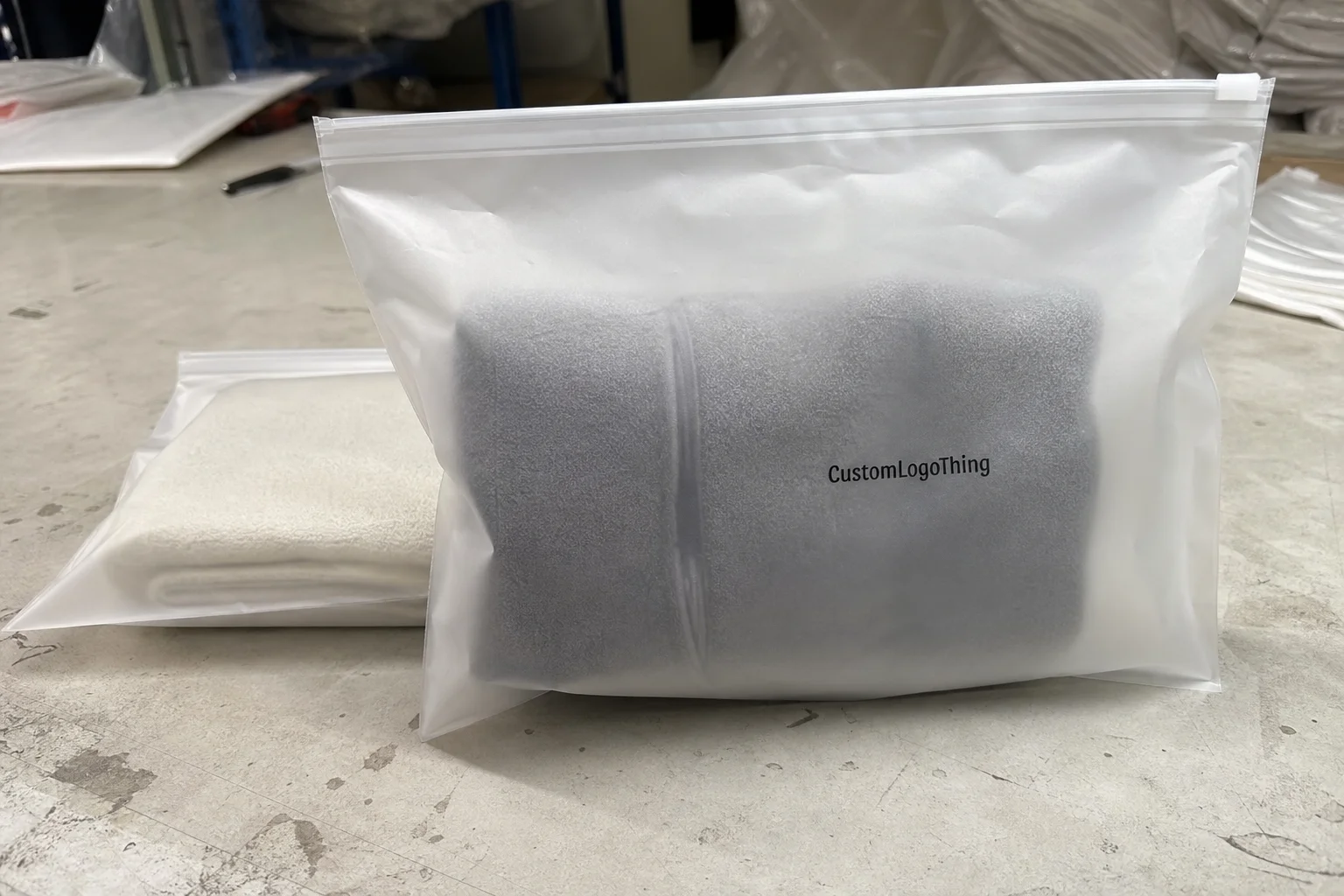
Fitness packaging has a specific job. It needs to look clean enough for retail display, stay practical for shipping, and handle products that are touched often, moved between gym bags, and sometimes reopened many times. Frosted Zipper Bags do that well because the semi-translucent PE surface softens the view of the contents while still letting customers recognize shape, color, and volume. That is useful for protein accessories, resistance bands, wipes, sample kits, and compact apparel like wraps or socks.
The zipper closure adds another practical benefit. A resealable bag is easier to use, easier to store, and less likely to spill product during transit or in a locker room. For direct-to-consumer brands, that matters just as much as appearance. A bag that opens cleanly and closes again without frustration makes the whole package feel more considered.
Printing on frosted film also has a visual advantage. The background naturally tones down the artwork, so a logo, dosage panel, or barcode does not need to fight a bright white plastic surface. The result is restrained and upscale, not loud. In practice, that works well for minimalist fitness branding, where a clear logo and a few sharp details often outperform busy graphics.
A good frosted zipper bag gives the brand a clean surface, gives the customer a reusable closure, and keeps the package light enough to ship without wasting money on avoidable volume.
From a materials point of view, this style also keeps the package adaptable. A single bag format can support multiple SKUs if you keep the width and print area consistent, which helps when a fitness brand wants one packaging family for several flavors, sizes, or accessory types.
Printed frosted zipper bags quote for fitness
A useful Printed Frosted Zipper Bags Quote for fitness should break down the exact build, not just the per-unit price. That means bag dimensions, film thickness, zipper style, print colors, sides printed, and order quantity. Without those details, two quotes can look similar while covering completely different specs.
For most fitness buyers, the right quote starts with the product use. A sample kit for a supplement launch does not need the same structure as a heavier resistance accessory or a retail apparel pack. If the bag must sit upright on a shelf, you may want a wider bottom gusset. If it travels in bulk cartons, you may care more about seal strength and puncture resistance. If the artwork carries warnings or dosage instructions, you need more usable print space than a simple logo bag.
Here is a practical way to think about common build choices:
- Frosted LDPE or composite PE film for a soft matte look with decent flexibility.
- Bag thickness often ranges from about 60 to 120 microns, depending on the product weight and feel you want.
- Press-to-close zippers for everyday resealing, or slider zippers when the user experience needs a more premium opening action.
- Spot white underprint when you want logos and text to stay crisp on translucent film.
- Clear windows when the brand wants a partial view of the contents without giving up the frosted look.
Printing method matters too. Gravure and flexographic printing are common for larger runs because they handle consistent repeat production well and usually bring unit cost down as volume increases. Digital printing is often better for smaller runs, test launches, or multi-SKU programs where the artwork changes frequently. If you are comparing short-run and long-run options, ask whether the quote includes plates or cylinders, because tooling can change the economics quickly.
A Printed Frosted Zipper Bags Quote for fitness should also reflect the artwork itself. Bold typography, strong contrast, and generous spacing tend to read better on frosted film than thin decorative lines. Barcode zones, ingredient copy, and usage directions should be checked carefully because the translucent surface can slightly change how inks appear once printed.
Specifications buyers should confirm before requesting a quote
Most quote delays come from missing specifications, not from pricing itself. The cleaner your brief, the easier it is for the factory to price accurately and avoid revisions later. Before you send a request, lock down these core items:
- Bag dimensions in width, height, and gusset if needed.
- Film thickness, especially if the bag will carry heavier accessories or ship in bulk cartons.
- Zipper style, including press-to-close, slider, or tear-notch features.
- Print coverage, meaning one side or both sides, and whether any area must remain clear.
- Number of colors and whether the design needs white underprint.
- Artwork format, including vector files, bleed, and safe area.
The intended use changes the right spec. A small supplement sample may only need a modest flat pouch, while a resistance band set or recovery accessory could require a wider format and stronger seal area. If the bag holds a product that may be handled repeatedly, give more weight to zipper performance and film stiffness than to a tiny savings on material cost. A bag that feels flimsy can hurt the brand even if the print is good.
It also helps to think about storage and shipping conditions. Warm warehouses, crowded pallets, and long transit lanes can expose weak seals and poor film consistency. If the order will sit in a distribution center before it reaches customers, ask for a structure that can tolerate temperature swings without warping or opening prematurely.
Artwork review deserves the same attention. Translucent film can change contrast, and thin fonts can disappear fast. Check line thickness, small text size, logo placement, and any warning language before approval. If your package needs lot coding, batch identification, or regulatory copy, reserve that space early so you do not end up shrinking the brand mark to make room for operational text.
For buyers who need structured packaging support, a clear brief sent through our contact page usually saves a round or two of revision.
Cost, MOQ, and unit price drivers
Pricing for printed frosted zipper bags is usually driven by five variables: size, material thickness, print colors, zipper type, and quantity. Order size is the biggest lever. A 5,000-piece run can land in a very different unit-cost band than a 20,000-piece run because setup, plate work, and machine preparation are spread across more bags.
As a rough market guide, a Custom Printed Frosted PE zipper bag for fitness packaging might fall around $0.18-$0.42 per unit at 5,000 pieces, depending on bag size, print coverage, and zipper style. Larger runs can move lower, while smaller or highly decorated runs can move higher. Tooling or plate charges may add $80-$250 per color in some print methods, though the exact structure depends on the factory and process.
MOQ logic matters. Short-run printing exists, but lower quantities usually carry a higher per-piece cost because setup gets spread across fewer units. If you are launching a new supplement or testing a seasonal fitness promo, a smaller minimum may make sense. If the design is stable and the product will repeat, larger quantities usually bring better economics and fewer production interruptions.
Request pricing in tiers so you can see where the break points sit. Also ask for freight separately. A quote that includes only ex-factory pricing can look attractive until shipping is added. The most useful comparison is landed cost, not just factory cost.
| Production option | Typical MOQ | Usual unit price range | Best fit | Notes |
|---|---|---|---|---|
| Digital short run | 500-2,000 pcs | $0.32-$0.75 | Testing, limited launches, multi-SKU programs | Lower setup burden, usually higher unit cost |
| Flexographic run | 3,000-10,000 pcs | $0.18-$0.42 | Standard branded fitness packaging | Good balance of cost and repeatability |
| Gravure run | 10,000+ pcs | $0.14-$0.30 | Higher-volume, stable artwork programs | Best when the same art repeats over multiple orders |
Compare like with like. One supplier may quote a thinner film, one-sided print, and a basic zipper, while another includes thicker material, white underprint, and a better closure. Those are not equivalent offers. A spec sheet removes a lot of noise and makes the decision much more straightforward.
One more point that buyers sometimes miss: if the bags need special finishing, such as a clear window, custom tear notch, or stronger zipper style, those choices can matter as much as print coverage. Small structure changes can move the cost more than a single extra ink color.
Process and timeline from artwork review to shipment
The production process is straightforward, but each step has a purpose. A good supplier will move through inquiry, spec confirmation, artwork review, proof approval, prepress, production, inspection, packing, and shipment. Skipping a step usually shows up later as a print issue, fit problem, or timeline slip.
Proof approval is where most mistakes are prevented. This is the moment to confirm logo placement, zipper orientation, color expectations, text size, barcode readability, and exact bag dimensions. If the bag will be used in a fitness subscription box or a retail launch, a small layout error can create a chain of delays because the packaging often has to coordinate with labels, inserts, and cartons.
Typical production timing depends on method and quantity. Short-run digital jobs may finish in about 7-12 business days after proof approval. Flexographic or gravure jobs often run closer to 12-18 business days, and complex work can take longer if it requires sampling, custom tooling, or special inspection. Transit time is separate, so build that into the schedule before you commit to a launch date.
A practical schedule tip: give yourself a buffer for artwork revisions, especially if the line includes multiple flavors, sizes, or product functions. Fitness brands often manage more than one SKU at once, and a packaging delay on one item can hold up the whole release.
How to compare suppliers for quality and reliability
Price gets attention, but quality control is what protects the order. A dependable manufacturer should be able to speak clearly about film gauge, ink adhesion, zipper function, seal quality, and repeatability across batches. If the answer is only a low number, that is not enough information for a packaging buy.
Ask for physical samples when possible. Photos can show graphics, but they do not tell you how the bag feels in hand, how the zipper closes, or whether the print edges stay clean. For fitness packaging, tactile quality matters because the customer often handles the bag before and after opening. A rough seal or weak closure can undermine an otherwise strong brand presentation.
Communication also matters. Brands running launch calendars, subscription replenishment, or seasonal campaigns need a supplier who answers practical questions fast: Can the artwork be resized? Is the seal line wide enough? Does the quote include freight? Can the same color be matched on repeat orders? Those details save time and keep production predictable.
Look at the way the supplier handles risk. A good partner will flag oversized artwork, thin fonts, weak seal areas, and unrealistic due dates before production starts. That kind of honesty is more valuable than a quick yes. It reduces rework, protects margins, and keeps the packaging from becoming a bottleneck.
For many buyers, the best comparison is not “cheap versus expensive.” It is “clear spec control versus vague spec control.” If the supplier can document the material, confirm the structure, and explain the print method, you are usually dealing with a more reliable quoting process.
Next steps to request a quote and move into production
The fastest way to get an accurate printed frosted zipper bags quote for fitness is to send a clean quote package. Include the bag size, target quantity, product use, zipper type, print colors, artwork file, and shipping destination. If you already know the product weight or the retail environment, mention that too. Those details influence film thickness and closure choice.
Ask for a line-by-line quote. You want to see unit cost, tooling or plate charges if applicable, sampling, and freight as separate entries. That format makes comparison much easier and prevents the usual problem where one quote looks cheaper until the hidden costs are added in later.
If this is a new SKU, request a digital proof and a sample bag before full production. That extra step is worth it when the packaging must match a new fitness formula, a new accessory size, or a higher-end retail position.
Share your launch date or replenishment window up front. Factories can usually work with a range, but they need the target delivery date to build the right schedule. If your order includes several SKUs, tell the supplier which one is time-sensitive so the production plan can be set realistically.
If you are ready to price a custom run, send the spec sheet and artwork together through Contact Us.
What affects a printed frosted zipper bags quote for fitness products?
The biggest drivers are bag size, film thickness, print colors, zipper style, total quantity, and whether one or both sides are printed. Artwork complexity and special features like tear notches or clear windows can also change the price.
Can I get a printed frosted zipper bags quote for fitness with a low MOQ?
Yes. Lower quantities are possible, especially with short-run methods, but the unit price is usually higher because setup costs are spread across fewer bags. Small runs work well for launches, samples, and test marketing.
What artwork works best on frosted zipper bags for fitness brands?
Bold logos, strong contrast, and simple typography tend to print best because frosted film softens the visual edge of the ink. Keep barcode areas, ingredient text, and usage instructions clear and well spaced.
How long does production usually take after artwork approval?
Timing depends on quantity, print method, and any special finishing details. As a general guide, shorter digital runs may take about 7-12 business days after proof approval, while larger printed runs often need 12-18 business days before shipping.
What should I send to get an accurate printed frosted zipper bags quote for fitness?
Send the bag dimensions, quantity, print colors, zipper type, product use, artwork file, and destination zip code or port. The more complete the brief, the fewer revisions you will need before production starts.


