Buyer Fit Snapshot
| Best fit | Custom Mailer Box Manufacturer projects where brand print, material claims, artwork control, MOQ, and repeat-order consistency need to be specified before quoting. |
|---|---|
| Quote inputs | Share finished size, material target, print colors, finish, packing count, annual reorder estimate, ship-to region, and any compliance wording. |
| Proofing check | Approve dieline scale, logo placement, barcode or warning zones, color tolerance, closure strength, and carton packing before bulk production. |
| Main risk | Vague material claims, crowded artwork, missing packing details, or unclear freight terms can make a low unit price expensive after revisions. |
Fast answer: Custom Mailer Box Manufacturer: Branding, Cost & Process should be specified like a repeatable production item. The safest quote records material, print method, finish, artwork proof, packing count, and reorder notes in one written spec.
Production checks before approval
Compare the actual filled-product size with the drawing, then confirm tolerance on folds, seals, hang holes, label areas, and retail display edges. Reserve space for logos, QR codes, warning copy, and material claims before decorative graphics fill the panel.
Quote comparison points
Review material grade, print process, finish, sampling route, tooling charges, carton quantity, and freight assumptions side by side. A quote is only useful when the supplier can repeat the same color, closure quality, and packing count on the next order.
Custom Mailer Box Manufacturer: Branding, Cost & Process
A customer often meets the box before they meet the product, and that first touch says a lot. A custom mailer box manufacturer shapes that moment through board selection, print quality, structural fit, and the way the package opens in the hand. Those choices may look small on a spec sheet, but in real life they change how the whole brand is perceived.
From the buying side, the box has to do two jobs at once. It needs to survive carrier handling, then arrive with enough polish that the opening feels intentional rather than routine. That balance is where a custom mailer box manufacturer earns its keep.
For brands investing in branded packaging, a corrugated mailer can carry a surprising amount of weight. It affects perceived value, protects the contents, and gives package branding a physical form that a plain shipper rarely matches. If the box is designed well, the customer feels that care before they even see the product.
Custom Logo Things works in that space every day, where product packaging has to be practical, presentable, and cost-conscious all at once. The right structure, artwork, and board choice can turn a mailer into one of the most memorable forms of retail packaging a brand uses, and honestly, that part never gets old.
What a Custom Mailer Box Manufacturer Actually Does
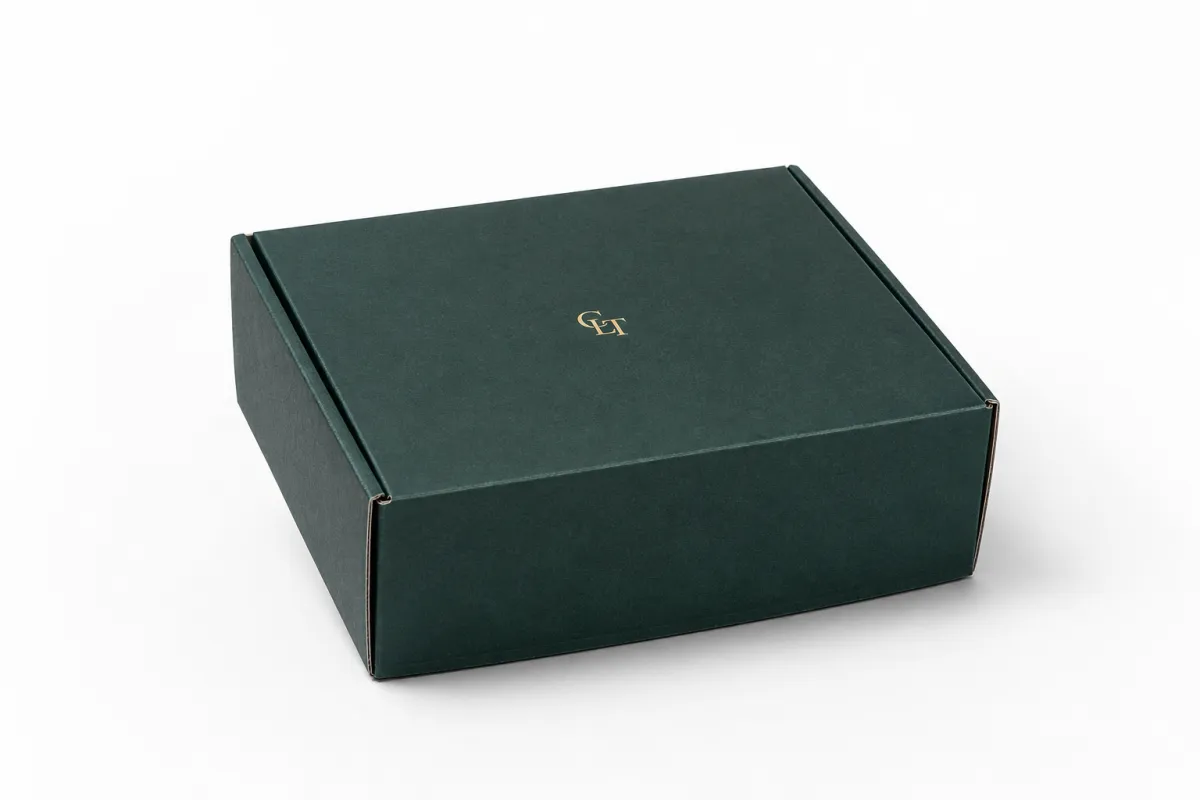
A custom mailer box manufacturer does much more than put a logo on corrugated stock. The work starts with structure, because a mailer box needs to open cleanly, close securely, and protect the product without wasting material in places that never get seen.
The difference between a plain transit carton and a Branded Mailer Box starts there. A shipping box made only for movement may rely on generic kraft board, basic print, and no attention to the opening experience. A mailer designed with a custom mailer box manufacturer usually tries to protect the product and present the brand in the same motion.
Most projects use corrugated board, and the details matter more than many buyers expect. E-flute is often chosen for tighter print detail and a smoother surface, while B-flute or a B/E combination may be selected when crush resistance needs to carry more of the load. Kraft liners can create a natural look, while white liners usually support brighter color reproduction and sharper graphics. A skilled custom mailer box manufacturer will talk in terms of board grade, liner color, flute profile, and the tradeoff between print clarity and shipping strength.
That is why these boxes show up in so many different programs. Ecommerce brands use them for direct-to-consumer orders, subscription programs use them for repeatable reveals, influencer kits rely on them for visual impact, and product launches use them to make a first shipment feel coordinated. A thoughtful custom mailer box manufacturer understands that the same structure can serve all of those goals if the spec matches the channel.
Opening experience matters too. The outside panel acts like the first billboard. The inside panel creates the reveal. A thumb notch, tuck style, or insert fit can all change how memorable the box feels. A good custom mailer box manufacturer treats the mailer as part of the brand system, not as a disposable shell around a product.
A mailer box is often judged in seconds, then remembered for days. If the structure feels sturdy and the print feels intentional, the customer usually assumes the brand made the same level of effort everywhere else.
How a Custom Mailer Box Manufacturer Handles Process and Timeline
The process usually begins with dimensions, product weight, and shipping method. A custom mailer box manufacturer needs enough information to recommend the right structure before anyone spends time on artwork. If the product ships with an insert, tissue wrap, or accessory pack, those details belong in the first conversation, not as a late correction.
Next comes the dieline. That template defines the folds, tucks, panel sizes, and print areas. A capable custom mailer box manufacturer will review the dieline with the product in mind, since a nice-looking layout that ignores the real size of the item can lead to wasted paperboard or awkward assembly on the packing line.
Artwork placement then gets mapped to the structure. Proofing matters here because it catches expensive mistakes early. A proof shows whether the logo sits too close to a fold, whether inside print lands on the right panel, and whether barcodes, compliance marks, or shipping labels have enough clean space. A physical sample can reveal issues that a screen proof hides. In many cases, a custom mailer box manufacturer can also produce a structural sample so the team can test fit before the full run begins.
Once the design is approved, production usually moves through printing, die-cutting, folding, gluing, and packing. Each stage depends on the material and finish. Heavier boards may need different scoring pressure. Full-coverage print may call for tighter color control. Laminated or coated surfaces may need a different drying or curing window. A custom mailer box manufacturer that knows corrugated production will explain those variables directly instead of offering a generic turnaround.
Lead time changes for a few predictable reasons: order size, artwork complexity, special coatings, insert requirements, and whether the job needs a custom structural sample. If a customer needs multiple proof rounds, the calendar can stretch quickly. Early file approval helps a lot, especially when the launch date is fixed and the packaging has to land on time.
For parcel programs that need extra testing, teams often look at shipment standards such as ISTA methods, especially when compression, vibration, or drop performance matters. Not every mailer needs formal testing, but real handling conditions should still guide approval. A custom mailer box manufacturer that understands distribution testing can help reduce damage and returns later.
Typical timing, assuming artwork is ready, often looks like this: samples in about 7-14 business days, production in about 10-20 business days after approval, and longer if the job includes structural changes or specialty finishing. A custom mailer box manufacturer can move faster on simpler jobs, but only when files are complete and the buyer responds quickly to proofs.
Custom Mailer Box Manufacturer Pricing: What Drives Cost
Pricing starts with size and board selection. Larger boxes use more paperboard, more ink coverage, and more freight space. Heavier board grades add strength, and they also raise material cost. A custom mailer box manufacturer usually prices this first because box geometry sets the base economics of the job.
Print coverage comes next. A simple one-color logo on a kraft liner is easier to run than full exterior print with interior branding, detailed photography, or multiple spot colors. The more the artwork wraps the box, the more setup and registration precision the job usually needs. A custom mailer box manufacturer can often suggest ways to keep the design visually rich without paying for coverage that does not change the customer experience.
Finish choices also move the price. Soft-touch lamination, aqueous coating, foil stamping, embossing, and specialty inks improve perceived value, and they usually bring extra setup and unit cost with them. That does not make them bad choices. It means they should support a real branding goal. A custom mailer box manufacturer will usually tell you whether a finish supports the product story or just adds cost.
Quantity matters a great deal. Lower quantities carry more setup cost per box because prepress, tooling, and press preparation are spread across fewer units. Higher quantities usually bring the unit price down, but they also ask the buyer to commit more cash and more storage. A custom mailer box manufacturer that works with both short runs and larger programs should be able to explain where the breakpoints sit.
Inserts, dividers, labels, and kitting also affect cost. A custom insert may keep the product from moving, improve unboxing, and reduce damage, but it adds another component to source and assemble. That extra spend can be worth it when the product is fragile or when presentation matters enough to justify the labor. A custom mailer box manufacturer can usually quote the box alone and the box-plus-insert version so the buyer can see the difference clearly.
Freight is another piece that gets overlooked too often. Corrugated takes space, and mailer boxes are not always compact in pallet form. Palletization, storage, split shipments, and landed freight all affect real cost more than the quoted box price does. A careful custom mailer box manufacturer will help the buyer think in landed cost, not just unit price.
| Order Type | Typical Use | Approx. Unit Cost | What Drives It |
|---|---|---|---|
| Short run, simple print | Test launches, seasonal drops | $1.40-$3.25 | Setup spread over fewer boxes, lighter artwork, fewer finishing steps |
| Mid-volume branded run | Established ecommerce or subscription packaging | $0.85-$1.80 | Better spread of setup cost, moderate print coverage, standard inserts |
| Higher-volume program | Repeatable fulfillment with stable demand | $0.45-$1.15 | Lower per-unit setup burden, efficient press time, palletized shipping |
Those ranges are not fixed quotes, and they should not be treated as a promise. A bigger box, heavier board, more print coverage, or premium finish can move the numbers quickly. Still, the table gives a realistic sense of what a custom mailer box manufacturer is balancing every time a buyer asks for a price.
There is also an environmental side to pricing that many brands care about. If recycled content, responsible sourcing, or chain-of-custody documentation matters, ask whether the board can support FSC claims or other sourcing requirements. A custom mailer box manufacturer that handles sustainability questions well can help a brand align packaging design with procurement goals, not just visual goals.
Design Choices That Strengthen Branding and Unboxing
A mailer box is a small surface with a big job. The outer panel has to act like a billboard in transit, which means hierarchy matters. Logo placement, contrast, and spacing should still read clearly when the box sits on a cart, appears in a photo, or gets held in one hand. A custom mailer box manufacturer will often recommend keeping the top panel simple and the side panels more expressive when the brand wants stronger visual impact.
The inside is where a package can feel personal without becoming expensive. A short welcome line, a pattern, a care message, or a product origin note can turn a simple opening into a memorable reveal. That is one reason Custom Printed Boxes often outperform plain shipping cartons in brand recall. A good custom mailer box manufacturer can help decide how much inside print is enough to create that moment without overcomplicating the job.
Structure shapes emotion more than many teams realize. A snug tuck, a well-cut thumb notch, or an insert that holds the product just right can make the package feel considered. Too much empty space can feel cheap. Too tight a fit can feel frustrating. A custom mailer box manufacturer that understands packaging design will usually think about product movement, opening force, and visual reveal at the same time.
There is also a practical side to branding. Shipping labels, barcode zones, and compliance marks need room. If the artwork fights with those functional areas, the box becomes harder to use in fulfillment. The best custom mailer box manufacturer designs leave enough white space, or at least quiet space, where operations need it, especially for teams packing at scale.
Smart brands often build a system instead of a one-off design. That might mean a core box with seasonal sleeves, a neutral base with modular artwork, or a repeat structure that can support limited-edition graphics. A custom mailer box manufacturer can keep the base spec stable while adjusting the creative layer for campaigns, launches, or holiday pushes. That keeps the tooling familiar and the brand language consistent.
For teams comparing packaging formats, it helps to look at how mailers fit beside other solutions. You can review broader Custom Packaging Products if the program also needs retail-ready cartons, then compare add-on formats like Custom Poly Mailers when the outer shipper is only one part of the system. A strong custom mailer box manufacturer should think across that full packaging mix.
Simple choices often do the heaviest lifting: a clear logo lockup, one or two brand colors, and a structure that feels sturdy in the hand. A custom mailer box manufacturer can produce more elaborate effects, but the box usually works better when the design is sharp rather than crowded.
Step-by-Step Guide to Working With a Custom Mailer Box Manufacturer
The cleanest projects begin with precise input. Before asking for a quote, define the finished product dimensions, any insert or accessory needs, expected ship method, target quantity, and budget range. A custom mailer box manufacturer can make a far better recommendation when those basics are clear from the start.
Then send the artwork files, dieline preferences, brand colors, and any unboxing goals. If the box needs a certain reveal sequence or interior message, say so early. The fewer assumptions the supplier has to make, the fewer revision rounds the project usually needs. A custom mailer box manufacturer tends to respond faster when the brief is complete and practical.
Ask for an estimate that separates tooling, print, finishing, and freight. That makes comparison easier, especially when multiple vendors quote the same project in different ways. A custom mailer box manufacturer that breaks costs into pieces is usually giving you a clearer read on where the money is going, which helps when procurement and creative teams both need to sign off.
Review the proof carefully. Check copy, orientation, bleed, fold lines, panel alignment, and where the product lands inside the box. If possible, compare the proof against a physical sample or at least the actual product dimensions. A custom mailer box manufacturer can usually correct a lot before print; after production begins, the room for mistakes gets small fast.
Schedule production around launch dates with a safety buffer. A smart calendar leaves room for proofing, packing, freight, and receiving, because the fastest quote is not always the best outcome. A custom mailer box manufacturer may finish earlier than expected, but the brand still needs time for warehouse intake and inventory placement.
After approval, plan for receiving and reordering. Good packaging becomes a system once it is repeatable. Keep a simple spec sheet with dimensions, board choice, print notes, and reorder triggers so the next run is not a fresh start. A custom mailer box manufacturer should be part of that repeatable process, not just a one-time vendor.
Common Mistakes When Ordering Custom Mailer Boxes
The first mistake is measuring the product only. Boxes need room for tissue, protective wrap, inserts, closures, and accessories. If that extra space is not counted, the result can be a crushed product or a box that bows at the seams. A custom mailer box manufacturer can help adjust the fit, but only if the full packing stack is known upfront.
Another common mistake is overdesigning the print spec. More inks and more effects do not always create a better customer experience. Sometimes they just add cost and slow the schedule. A custom mailer box manufacturer will usually know when a simpler print plan looks better in practice than a crowded layout full of tiny details.
Skipping performance thinking is risky too. A box that looks great on a desk can still fail in shipping if the corners crush or the product rattles. Compression, drop, and vibration concerns should be part of the discussion, especially for ecommerce parcel routes. A custom mailer box manufacturer that ignores distribution reality is not saving money; it is pushing the cost into returns and replacements.
Artwork approval gets rushed more often than it should. Missing bleeds, low-resolution graphics, incorrect panel orientation, or tiny legal text can create expensive delays. A custom mailer box manufacturer may catch some of these issues, but the brand should still review the proof like a production document, not a mood board.
A beautiful box that slows packing or fails in transit is a costly box, even if the unit price looked good on the quote sheet.
Fulfillment workflow is the last trap. A mailer that is hard to assemble, awkward to store, or slow to label can raise labor costs every day it is in use. The right custom mailer box manufacturer helps the brand think about the whole process, from pallet delivery to packed shipment, because a packaging win on paper can still become a warehouse headache.
Expert Tips for Choosing the Right Custom Mailer Box Manufacturer
Ask for material specs, board strength guidance, and sample photos so quotes can be compared fairly. Apples-to-apples comparison matters more than a low number on the first line of an estimate. A custom mailer box manufacturer that explains the material stack clearly is usually easier to trust when the order gets more complex.
Start with a pilot run if the program is new. A smaller order lets the team test fit, print quality, assembly speed, and customer response before inventory gets too large. A custom mailer box manufacturer can then refine the structure or print details based on real feedback instead of guesses.
Think in systems, not isolated components. The box should work with inserts, tissue, stickers, seals, and warehouse handling. If one piece changes, the others may need to shift too. A custom mailer box manufacturer that sees the full packaging stack usually creates a cleaner result than one focused only on the outer shell.
Keep a spec sheet current. Include dimensions, board choice, print notes, finish requirements, and reorder triggers. That one document prevents a lot of confusion when the same box is reordered months later. A custom mailer box manufacturer can then reproduce the job with less back-and-forth, which saves time on both sides.
Use the relationship as a packaging partnership, not just a purchase order. Good results come from sample review, shipment feedback, and honest discussion about what worked and what did not. Custom Logo Things takes that practical view because the best custom mailer box manufacturer is the one that helps a brand improve the pack over time, not just ship a carton once.
If you want to see how a packaging program can be built out around more than one format, the team at About Custom Logo Things can help frame the bigger picture, and the broader Custom Packaging Products range makes it easier to match the right packaging to the right use case. For shipping programs that need flexible outer layers, Custom Poly Mailers can also be part of the mix.
Choosing the Right Custom Mailer Box Manufacturer
The best choice is rarely the loudest one. It is usually the custom mailer box manufacturer that asks the right questions, explains the tradeoffs, and gives you a structure that protects the product without wasting board or budget. That balance is what separates an ordinary carton from Packaging That Actually supports the brand.
If you are comparing options, focus on fit, print method, board strength, sample quality, and the way the supplier handles approvals. A reliable custom mailer box manufacturer should be able to talk about pricing ranges, timeline risks, and real shipment conditions with the same confidence, because branded packaging only works when the process behind it is solid.
The practical next step is simple: lock down the product dimensions, shipping method, and presentation goals before you ask for quotes. That keeps the conversation focused on the right structure, the right board, and the right cost range, which is usually where better decisions start. If you do that, you are already ahead of the pack, and you will usually get a cleaner result with fewer surprises.
FAQ
What should I send to a custom mailer box manufacturer for an accurate quote?
Send finished product dimensions, insert details, target quantity, and any print or finish preferences so the quote reflects the real build. Include ship-to location, desired lead time, and whether you need samples or freight support, because those factors change landed cost. A custom mailer box manufacturer can price far more accurately when the brief includes the full packing stack.
How long does a custom mailer box manufacturer usually need for samples and production?
Sample timing depends on structure and print complexity, while production timing depends on quantity, finishing, and approval speed. Build in extra time if the design is new, the dieline needs adjustment, or the order includes special coatings or inserts. A custom mailer box manufacturer will usually move faster when artwork is complete and the proof cycle stays short.
What is the minimum order quantity for custom mailer boxes?
MOQ varies by material, print method, and setup requirements, so a simple short run can be very different from a fully custom production order. If quantity is tight, ask about digital options, simplified print, or staged reorders to keep cash flow and inventory balanced. A custom mailer box manufacturer should be able to explain where lower volumes still make sense.
How do I choose between kraft and white mailer board?
Kraft usually fits natural, earthy, or eco-forward branding and can hide scuffs well during shipping. White board usually gives cleaner color reproduction and a more polished presentation when bright graphics matter most. A custom mailer box manufacturer can recommend the liner that best fits both the look and the shipping environment.
Can a custom mailer box manufacturer help with inserts and kitting?
Yes, many can recommend insert styles, product spacing, and assembly approaches that make the box more protective and easier to pack. Share every component that ships together so the insert design supports both presentation and warehouse efficiency. A custom mailer box manufacturer that handles inserts well can improve both unboxing and fulfillment speed.

