For skincare brands, Poly Mailer Bags unit cost for skincare is not just a line item. It affects damage rates, packing speed, postage efficiency, and the first impression a customer gets before they ever open the package. A bag that saves three cents but splits at the seal is not a savings decision. It is a refund, a replacement shipment, and a service ticket waiting to happen.
Most buyers begin by asking for a low price and end up paying for the wrong features. Skincare ships in glass bottles, pumps, droppers, jars, sachets, and bundled kits, so the cheapest mailer is rarely the cheapest solution overall. The goal is not to buy the fanciest packaging on the market. It is to find the lowest unit cost that still protects the product and fits the brand.
For many teams, the smarter approach is to treat mailers as a controlled shipping component rather than decorative packaging. The right Custom Poly Mailers can reduce dimensional weight, speed pack-out, and cut down on secondary cartons for smaller orders. Those are real savings, but they only show up when the spec is matched to the product instead of guessed in a rush.
Why Skincare Brands Care About Unit Cost, Not Just Packaging
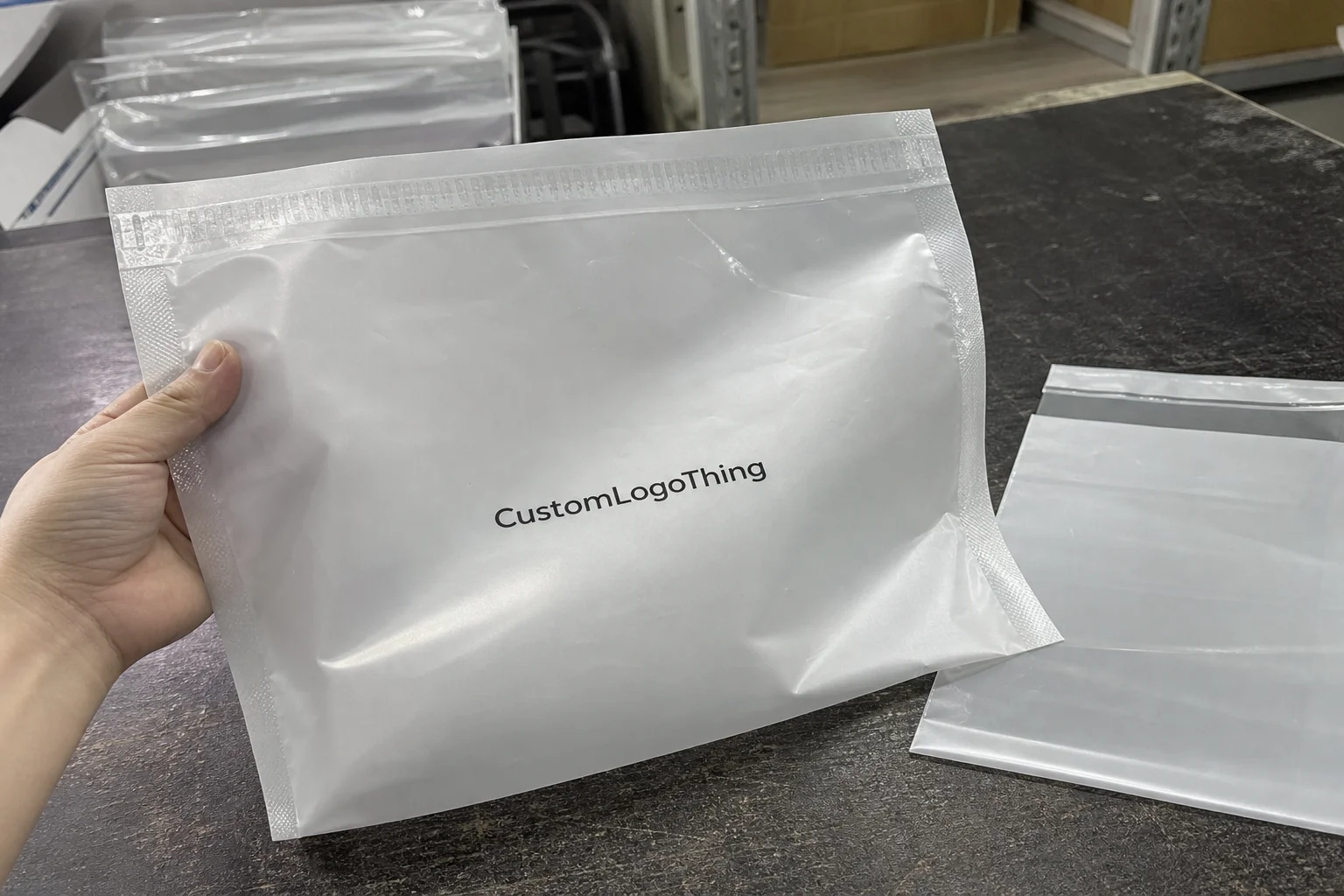
A three-cent difference sounds minor until you ship tens of thousands of orders each month. On 20,000 shipments, that is $600 a month, and that figure grows quickly once you add replacements, support time, and the labor involved in fixing avoidable packing problems. A cheap bag can become an expensive problem if it creates damage or looks so thin that customers question the quality of what is inside.
Skincare is not apparel. A T-shirt can be folded into a basic mailer with little risk, but skincare is often liquid, brittle, pressure-sensitive, or leak-prone. Glass serum bottles, airless pumps, and heavier jars all need more careful handling than a generic mailer buyer usually expects. Even sample programs can create trouble if the bag is too light or the adhesive loses grip in transit.
The hidden cost drivers are easy to overlook. Film thickness changes the price. Adhesive quality changes the price. Print coverage changes the price. Opaque coverage changes the price. Even the shape of the bag matters because gusseted structures use more film than flat pouches. None of that is glamorous, and all of it affects the final quote.
Customer perception matters too. A flimsy-looking mailer can make a premium cleanser or facial oil feel less valuable before the product is even opened. A clean printed bag with the right opacity and a reliable closure supports the brand without pushing the budget into wasteful territory.
“The best packaging usually disappears into the operation: low damage, quick packing, sensible freight, and no surprises at receiving.”
That is the real buying question. Not “What is the prettiest bag?” The practical question is: what is the lowest Poly Mailer Bags Unit Cost for skincare that still protects product integrity, supports the unboxing, and keeps returns under control?
What Actually Changes the Price of Skincare Mailers
Material choice is usually the first pricing lever. LDPE is common because it is flexible, easy to seal, and cost-effective. Co-extruded film can improve puncture resistance and print performance, which helps when the mailer needs to look cleaner or carry a little more abuse in transit. Recycled-content film may support sustainability goals, but the cost can shift with resin availability, certification requirements, and performance targets. If the wider packaging program includes paper inserts or outer cartons, those pieces affect the total packaging budget even when the mailer itself is plastic. For broader material standards and packaging references, Packaging School / packaging.org is a useful starting point.
Structure matters just as much as resin type. A standard flat mailer is usually the lowest-cost option and works well for lightweight skincare accessories, sample kits, and non-breakable items. A gusseted mailer costs more because it carries more volume and gives thicker items a better fit. Bubble-lined mailers add cushioning and are worth considering for glass bottles, jars, and fragile bundles, but the extra protection increases both unit cost and package weight.
Print method is another meaningful driver. A simple one-color logo on one side is usually the least expensive branded option. Multi-color print, full-bleed artwork, metallic inks, matte lamination, and specialty finishes all add setup complexity and cost. If the goal is a premium look, that can be done. It just should not be mistaken for a low-cost option.
For skincare shipping, the best spec sheet usually includes a few performance points that directly affect damage rates:
- Tear resistance so the bag does not split at corners or seams.
- Seam strength to hold up under parcel handling and compression.
- Opacity for privacy and a cleaner brand presentation.
- Water resistance for delivery exposure and warehouse handling.
- Adhesive seal quality so the flap actually stays closed.
Some brands add features that are practical rather than flashy: tear strips, return adhesive strips, tamper-evident closures, warning copy for liquid products, and custom sizing that reduces empty space. Those details often deliver more value than another print color or a more complicated logo layout.
Testing should also match the shipment reality. If the product is fragile, ask for transit testing that references ISTA methods or similar parcel distribution procedures rather than a quick hand squeeze in the office. ASTM methods can also help define film strength and seal performance. Buyers who skip this step usually discover the problem after launch, when the fix costs more than the packaging upgrade would have.
Poly Mailer Bags Unit Cost for Skincare: Pricing, MOQ, and Quote Factors
Pricing only makes sense when every quote is based on the same assumptions. A low-volume custom order can look expensive per piece because the supplier has to cover setup, tooling, proofing, and changeover time. As the quantity rises, that overhead gets spread across more bags, which is why the price usually falls sharply after the first volume break.
For budgeting, these are realistic market-style ranges for custom skincare mailers when the specification stays reasonably consistent. They are not guarantees, and they move with material markets, size, and print details.
| Mailer Type | Typical Use | Approx. Cost per Piece | Notes |
|---|---|---|---|
| Plain stock-style poly mailer | Lightweight, non-fragile skincare items | $0.05-$0.12 | Lowest unit cost, minimal branding |
| Custom printed flat mailer | Most DTC skincare shipments | $0.12-$0.28 | Balanced option for branding and protection |
| Heavy-duty or bubble-lined mailer | Glass, droppers, premium bundles | $0.22-$0.55 | Higher protection, higher freight weight |
MOQ has a big influence on the final number. A 1,000-piece order often carries a noticeably higher unit cost than a 10,000-piece order because setup is spread across fewer units. If you want to understand the real pricing curve, ask for two or three volume breaks at once. A quote at 2,000 pieces and another at 5,000 pieces tells you much more than a single price point.
Several factors affect the quote at the same time: size, thickness, print coverage, color count, and whether the bag needs special finishes. Shipping method matters too. Air freight can erase any unit-price savings if the order is urgent, while ocean freight may lower inbound cost but increase the planning window. If your supplier includes inserts, outer cartons, or branded seals in the same estimate, compare carefully. Mixed packaging lines can make a quote look better until the items are separated.
Sample charges also deserve attention. Some suppliers charge for samples, some absorb the cost on larger orders, and some roll the expense into tooling fees. None of that is unusual. What matters is whether the first-order price reflects real production setup or a temporary introductory rate. If the supplier will not separate tooling from per-piece cost, the quote is harder to trust.
For recurring shipments, the best answer is often a mid-spec mailer with a realistic MOQ rather than the most elaborate version on the sheet. That usually gives the best balance of unit cost, reliability, and brand control. Spend where failure is expensive. Save where no customer will notice the difference.
Specification Checklist for Leak-Prone Skincare Shipments
Leak-prone skincare needs a tighter specification than a normal retail mailer. Start with internal dimensions. The bag should fit the packed item with enough room for easy insertion, but not so much room that the product slides around during handling. Fit matters more than many buyers expect. A sloppy fit creates seam stress, corner punctures, and poor pack-out appearance.
Ask for thickness in microns or mils, not vague descriptions like “thick” or “strong.” Those words sound useful, but they are not specifications. A thinner film can work for lightweight samples, yet a glass jar or pump bottle may need a heavier gauge to handle puncture and compression. The right number depends on the product, the packing method, and the transit lane.
Different skincare formats need different sizing logic:
- Bottles with pumps need clearance for pump height and a wider seal zone.
- Droppers need extra protection at the neck and cap.
- Glass jars often benefit from bubble lining or a secondary sleeve.
- Sachets usually need less protection but careful fit to avoid wrinkling.
- Bundled kits often need gusseting or custom sizing to stop movement.
Opacity is another important decision. Fully opaque mailers protect privacy and give a cleaner premium look. Semi-transparent film can work if the brand wants a lighter aesthetic or needs to show internal organization, but it can make a high-end skincare brand feel less polished if the contents look disordered. That is a branding choice as much as a production one.
For moisture, compression, and repeated handling, do not spec the lightest possible film and hope for the best. That is how damage rates creep up while everyone argues over packaging savings. A slightly heavier mailer often costs less in the long run because it reduces claims and keeps customer complaints from piling up.
Useful add-ons include dual adhesive strips for returns, reinforced seams, and a matte surface that prints cleanly. Matte often reads more premium than glossy in skincare, especially for minimal brand systems, and it tends to hide handling marks better. Small detail. Real difference.
Production Steps, Proofing, and Lead Time Expectations
The buyer workflow should stay disciplined: brief, size confirmation, artwork setup, digital proof, sample approval, mass production, and shipment. If any step is rushed, the order usually gets slower later. That sounds backwards, but it is a normal outcome in print production when the specification is not fully settled.
Most delays come from familiar problems. The dieline is incomplete. Artwork resolution is too low. The brand changes the size after proof approval. Someone decides the logo should move after the plate or print file is already built. Each revision adds time, and in custom packaging that time is rarely free.
Lead times vary with complexity. Plain or stock-style bags usually move faster because there is less setup. Custom printed mailers with special finishes, multiple colors, or custom sizing take longer. A reasonable planning window is often 12 to 20 business days after proof approval for many custom runs, although urgent jobs can move faster if capacity is available and the freight method fits the schedule.
Fast-turn orders are possible, but they usually force tradeoffs. You may lose finish options. You may pay more for shipping. You may have to accept tighter artwork limits. If the order is tied to a product launch, subscription drop, or seasonal skincare campaign, the approval deadline needs to be set early. Waiting until the last minute is a reliable way to make a production team sound less friendly than it really is.
Keep the quote and proof process tied to the same specification sheet. If thickness, size, or print coverage changes after approval, that is not a minor tweak. It is a product change. That is where setup charges and schedule slips begin to stack up.
How to Compare Suppliers Beyond the First Quote
Do not chase the lowest number on the first page. Compare like for like or the pricing is not meaningful. One quote may include thicker film, better adhesive, and clearer print, while another leaves every one of those details vague. The cheaper option often only looks cheaper because the specification has been stripped down.
Ask for samples whenever possible. Then check print consistency, seal performance, bag alignment, and how the mailer behaves when filled with the actual skincare product. A supplier that can send a clean sample and answer production questions quickly is usually easier to work with at scale. That matters more than many buyers admit.
Transparency is another useful filter. Good suppliers provide material specs, honest MOQ terms, and realistic timelines. They will tell you when a finish raises the unit price. They will flag artwork that is too busy for a small mailer. That kind of pushback is useful because it prevents expensive mistakes before production starts.
For skincare brands, supplier support should include size guidance, print optimization, and order planning that matches sales volume. If you are shipping 2,000 units this month and 8,000 next month, the supplier should help you plan around that instead of pushing a huge overrun. That is a sign of practical packaging support rather than a transactional sales approach.
A simple scoring method helps keep the comparison honest:
- Price for the same specification and MOQ.
- Quality from samples and print consistency.
- Speed from proof to shipment.
- Reliability from communication and on-time delivery.
If one supplier is cheap but vague, the quote is not dependable. Good pricing makes sense both on paper and in production. Anything else is a guess dressed up as procurement.
How to Lock the Right Mailer Size and Control Unit Cost
Start with the packed product, not the mailer. Measure the item after it is boxed, sleeved, wrapped, or kitted the way it will actually ship. Then define the shipping lane. A local parcel route is not the same as long-distance fulfillment with more handling and more opportunities for compression damage. That difference affects the minimum safe thickness and the right structure.
After that, request two or three pricing tiers. Ask for plain, mid-level branded, and premium heavy-duty options so you can see where the cost jumps occur. That gives you a far better read on Poly Mailer Bags unit cost for skincare than a single quote ever will.
Prepare artwork and volume data before asking for pricing. Suppliers can give sharper numbers when they know the exact size, print area, order quantity, and any special features. Without that information, the quote is only a placeholder. Sometimes it is a useful placeholder, but it still is not a production-ready number.
Always request a sample or pre-production proof before full production, especially for glass or leak-prone products. If the brand is new to custom mailers, run a test order first. Watch the damage rate. Watch pack-out speed. Watch customer feedback. Then scale based on data instead of optimism.
The best Poly Mailer Bags Unit Cost for skincare is the one that protects margins, products, and brand presentation at the same time. Cheap is only cheap if it survives the trip and keeps the customer satisfied.
What affects poly mailer bags unit cost for skincare the most?
Size, thickness, print coverage, and MOQ usually have the biggest impact. Special finishes, reinforced seals, and custom colors can raise the price quickly. Higher order quantities usually reduce unit cost more than small spec changes.
What MOQ should I expect for custom skincare mailers?
MOQ varies by material, print complexity, and supplier setup. Lower MOQs are often available, but the unit price is higher. For a better balance, ask for pricing at two or three volume breaks.
Are bubble poly mailers worth it for skincare products?
Yes, if you ship fragile jars, glass droppers, or premium sets that need extra cushioning. They cost more than standard mailers, but they can reduce damage claims. For non-breakable skincare items, a thicker flat mailer is often the better choice.
How do I keep shipping costs down without using flimsy bags?
Choose the smallest safe size for the packed product. Use the lightest material that still passes puncture and seal tests. Avoid oversized mailers, since wasted space can increase postage and packing time.
How long does custom poly mailer production usually take?
Plain or stock-style orders move faster than fully custom printed bags. Artwork approval and sampling can add time before production starts. The fastest way to avoid delays is to lock specs early and submit clean artwork.
If you are comparing packaging across formats, you can review other Custom Packaging Products to match the mailer with the rest of the shipment. The best choice is not the fanciest bag on the market. It is the one that gives you the best Poly Mailer Bags Unit Cost for skincare without creating problems downstream.


