Custom Pom Pom Beanies for holiday market sellers work because they solve three problems at once: they are warm, easy to gift, and easy to spot from across a crowded booth. The customer does not need a long explanation. A good beanie reads as seasonal merchandise in a second, then keeps earning its place after the market ends because people actually wear it.
That simplicity is deceptive. The knit weight, yarn blend, cuff shape, pom style, and decoration method all affect comfort, price, and sell-through. A hat that looks strong on a product sheet can underperform if the logo is too small, the cuff collapses, or the pom sits awkwardly on the crown. Holiday market sellers need the product to pull its weight on the table, in photos, and in the bag on the way home.
The best orders usually start with a practical question: what will this beanie need to do at the booth? If the answer is "look polished, stay warm, and justify a $24 to $32 retail price," then every decision should support that goal. That means treating the hat like a retail item, not a novelty add-on.
The strongest beanies are usually the ones that look calm, not crowded: one clear logo, one coherent color story, and a pom that feels built for the hat instead of glued on as an afterthought.
Why custom pom pom beanies sell fast at holiday markets
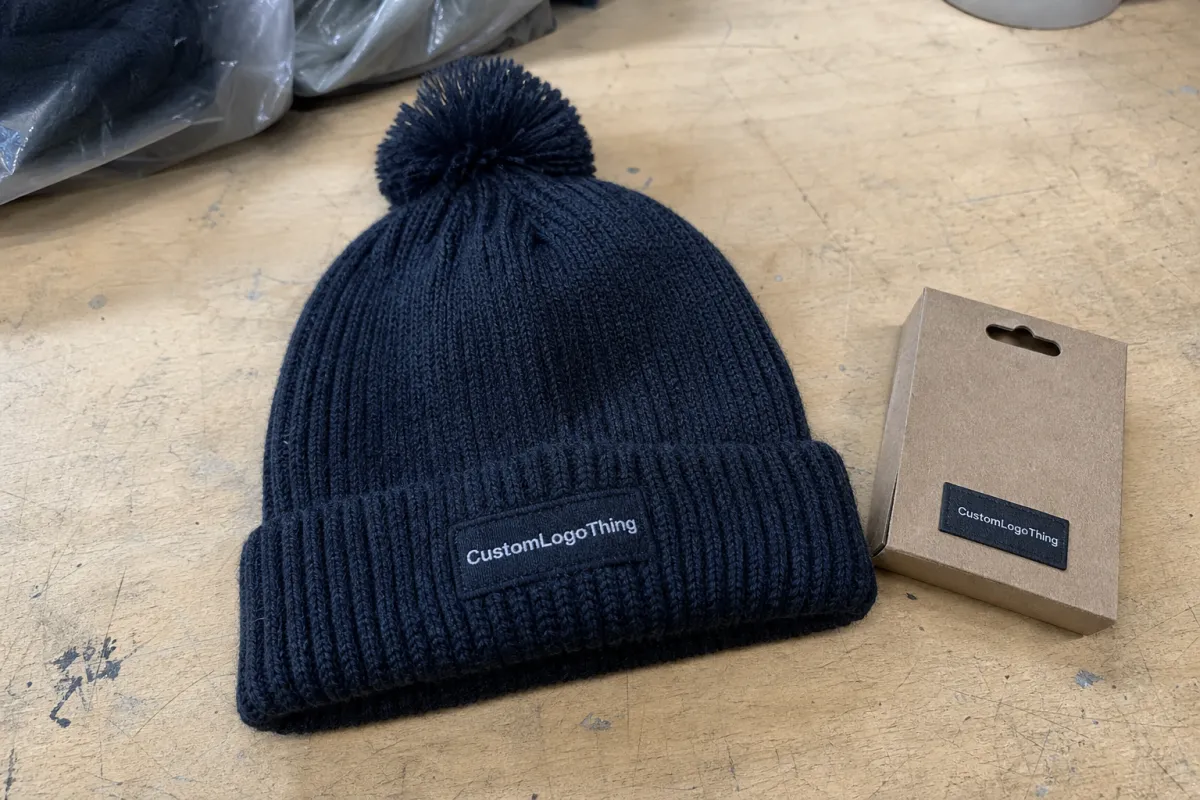
Holiday markets reward products that communicate quickly. Shoppers move through cold air, carry bags, and often decide before they stop walking. A pom pom beanie helps because the silhouette is unmistakable: the pom adds motion, the cuff creates branding space, and the whole piece feels seasonal without tipping into costume territory.
That matters more than many sellers expect. A plain winter cap can feel anonymous on a crowded display, while a pom pom version gives the eye something to remember. The item also sits in a rare middle ground. It is useful enough to justify a purchase, but expressive enough to feel like a treat. That combination is why it performs well for holiday market sellers who need fast-moving seasonal inventory.
The strongest versions are rarely the loudest. A clean embroidered cuff, a balanced pom, and a color that works with coats, scarves, and gloves often outsell a design that tries to cram in every seasonal cue at once. Buyers are not only choosing a hat; they are choosing how it will fit into their winter wardrobe. If the beanie feels easy to wear tomorrow, the sale gets easier today.
There is also a packaging lesson here. Even soft goods benefit from a tidy presentation. Hang tags, folded inserts, and coordinated product packaging can make the item feel deliberate rather than mass-produced. That does not mean overbuilding the display. It means making sure the hat, the tag, and the booth all tell the same story.
A custom pom pom beanie is simply a knit winter hat with a pom at the crown and some kind of branding on the cuff, patch area, or sewn label. The difference is not the basic shape. It is the mix of texture, height, and usable decoration space. Those features help the product photograph well, show well from a distance, and still function as real cold-weather gear.
For sellers, the best part is reorderability. If the first run proves a certain color and decoration combo, the second order can move faster because the design decisions are already tested. That makes custom Pom Pom Beanies one of the few seasonal products that can start as a cautious trial and turn into a repeat line without much reinvention.
Production process and timeline for small holiday runs
Small holiday runs still follow a real production chain, and every step takes time. The sequence usually starts with blank beanie selection, moves into artwork or logo approval, then into sampling or digital proofing, then production, finishing, packing, and shipment. If one step slips, the whole order can miss the market date.
The blank hat choice comes first because it affects every other decision. Yarn color, knit gauge, cuff structure, and pom type need to work together before decoration starts. A supplier may have an acrylic rib knit ready immediately, but a wool-blend option or a custom heather shade can add sourcing time. Faux-fur poms often need separate attachment work and are not always available in every color.
Decoration time varies more than people expect. Embroidery is usually durable and straightforward, but dense stitching can slow production. Woven labels need clean sewing or heat application. Patches require size control and a flat enough surface to sit properly on the knit. If the artwork includes small text or multiple thread colors, the proof stage becomes more important than the order form.
For a straightforward seasonal order, 10-20 business days after proof approval is a realistic planning window if the blank style is in stock and the decoration is simple. Add time for custom colors, sample rounds, or specialty pom styles. Rush work is sometimes available, but it narrows material choices and often raises the price. That tradeoff should be clear before the order is locked.
The most common planning error is building around the event date and forgetting the approval date. If the market starts the first week of December, the artwork should usually be approved weeks earlier, not days before. Leave time for one revision, shipment, and the kind of freight delay that shows up without warning. Soft goods are more forgiving than rigid packaging, but they still arrive late if the calendar is too tight.
Seasonal buying also gets less flexible as event dates approach. Earlier orders usually mean better color selection and fewer compromises. If your line depends on a very specific red, cream, forest green, or heather gray, early approval is the simplest way to protect the assortment. It also reduces the risk of ending up with a color that clashes with your table setup or existing merchandise.
Cost, pricing, and MOQ basics for small-batch orders
Unit price for Custom Pom Pom Beanies for holiday market sellers usually depends on five variables: blank quality, pom style, decoration method, order quantity, and how many colors or placements are customized. A basic acrylic cuffed beanie with single-color embroidery will usually cost less than a wool-blend hat with a faux-fur pom and a sewn patch. The difference follows labor, materials, and setup.
As a working range, simpler small runs may land around $4.50-$8.50 per unit at higher quantities, while premium materials or more complex decoration can move the range to $8.00-$14.00 or more. That does not include every possible setup charge, but it is a sensible starting point for comparison. The number that matters most is landed cost, not just the factory quote.
Landed cost should include the hat, decoration, sample or setup fee if one applies, packaging, freight, and any extra handling. If the order includes Custom Packaging Products such as hang tags, folded inserts, or retail-ready cartons, those items need to be folded into the margin from the beginning. Otherwise, the spreadsheet looks healthier than the booth does.
MOQ stands for minimum order quantity, and it is simply the smallest run a supplier will make for a given style or decoration method. Lower MOQs reduce inventory risk, but they usually increase the unit price. Higher MOQs can lower the unit price, but they also tie up cash in stock that may not move after the season slows. The right quantity is rarely the biggest one. It is the quantity that lets the product earn back its cost without leaving you with boxes of unsold hats.
| Decoration Option | Typical MOQ | Common Unit Price Range | Best Fit |
|---|---|---|---|
| Embroidery on cuff | 50-100 pieces | $4.50-$9.00 | Clean branding, durable wear, classic retail look |
| Woven label or sew-on patch | 100-200 pieces | $5.50-$11.00 | Sharper logo edges and stronger visual contrast |
| Faux-fur pom upgrade | 100+ pieces | $6.50-$13.00 | Giftable feel and higher perceived value |
| Heat-applied branding | 100-250 pieces | $4.00-$8.50 | Simpler graphics and faster setup in some cases |
Retail math matters here. If the beanie sells for $24 to $32, the landed cost has to leave room for booth fees, payment processing, shrinkage, and the simple fact that not every item will sell at full pace. Better packaging can support that margin because the product looks more finished on the table. The same logic applies to custom printed boxes and any other retail packaging that strengthens the presentation.
It also helps to compare the hat against the rest of the table rather than against blank wholesale inventory. The real question is not, "Is this cheap?" It is, "What does this item return per square foot of display space?" Holiday market sellers usually do better with a tighter assortment of stronger-looking pieces than with a broad spread of low-cost items that all fight for attention.
Materials, fit, and decoration choices that hold up in cold weather
Material choice changes the customer experience immediately. Acrylic blends are common because they are warm, light, and easy to knit in reliable colors. Wool-rich options feel more premium and usually hold shape well, but they can irritate some wearers if the hand is coarse. For many holiday market sellers, a soft rib knit or a well-finished acrylic blend hits the best balance of price, comfort, and warmth.
Fit matters just as much. A cuffed beanie gives a clean branding zone and usually reads as more structured on the table. A slouch style feels more relaxed and can fit a fashion-forward booth, but the branding area may sit lower and read less clearly from a distance. A fitted style is tidy and simple, though it leaves less room for decoration. None of those choices is wrong. They just sell differently.
Decoration should match the knit texture. Embroidery gives a stitched, dependable look and usually holds up through repeated wear and packing. Woven labels are useful for clean lines and small logos because they preserve detail without fighting the knit surface. Patches can add contrast, which helps in a crowded or dimly lit market aisle. Very fine artwork or tiny text may disappear on the cuff, so the decoration method has to be chosen with the knit in mind, not the screen.
Pom construction is another detail buyers often underestimate. A pom should be attached firmly enough to survive packing, display, and repeated use. A loose pom makes the whole product feel unfinished. Faux-fur poms can look rich, but they need the right attachment so the crown does not sag. Yarn poms are more understated and can fit a rustic or handmade aesthetic more naturally.
Color strategy is also more practical than decorative. One festive palette, one neutral palette, and one high-contrast option usually create a cleaner display than a rack full of clashing shades. If the booth already uses kraft paper, wood tones, or muted signage, a cream, pine, or heather gray beanie may sell better than a bright novelty color. The hat should belong to the rest of the booth, not fight it.
If you are adding paper hang tags, care cards, or belly bands, ask whether the paper stock is FSC-certified. The FSC standard is not a fashion detail, but it does show that the packaging choices were made with care. That kind of detail can strengthen the overall brand presentation without turning the product into something overly engineered.
If the line needs a more coordinated presentation, packaging should be part of the plan rather than an afterthought. Our custom printed boxes and related Custom Packaging Products can carry the same color palette from the shelf to the customer’s hands and keep the product line visually consistent.
How to plan artwork, samples, and assortment step by step
The cleanest orders start with a short brief. Before artwork is sent, decide who the buyer is, what price point the hat needs to hit, and what role the beanie plays visually at the booth. A piece aimed at a cozy artisan market is not the same as one aimed at a high-traffic downtown fair. The art, the color, and the decoration method should all support the same audience.
Then finalize the artwork with the knit surface in mind. Logos that look crisp on a screen can shrink badly on a cuff, especially when the texture of the knit adds visual noise. Choose placement early, confirm thread colors, and check how much negative space remains around the mark. If the design needs a label, verify the size and location before approval, because a label that is too wide can pull awkwardly on a soft knit.
Samples are worth the time if the order is meaningful or the design is delicate. Even one pre-production sample can reveal stitch density problems, patch scale issues, or a pom style that feels too heavy for the hat body. That matters for custom Pom Pom Beanies for holiday market sellers because small visual differences can change how premium the product feels on the table. A sample is not just a checkbox. It is a chance to avoid a product that looks good in theory but weak in person.
Use a simple order flow to keep the project under control:
- Write a one-paragraph brief with target price, target customer, and preferred color family.
- Choose one primary style and one backup style so production does not stall if a shade is unavailable.
- Approve logo placement, thread colors, and any label or patch dimensions.
- Request a sample or proof if the artwork is complex or the order is large enough to justify it.
- Lock quantity only after the delivery date still fits the booth calendar.
Assortment planning should stay tighter than instinct suggests. A first order with two strong colors often performs better than a five-color lineup that dilutes attention. Holiday shoppers like choice, but not confusion. If the display starts to feel crowded, the product loses the quick-read quality that helps it sell. A focused assortment also makes reorders easier because you can tell which color and decoration combo actually moved.
Expert tip: keep the logo size consistent if you are testing multiple colors or styles. That way, you can judge which beanie is winning because of the product, not because one version accidentally got a stronger decoration scale. It is a small control, but it makes sales feedback much cleaner.
Common mistakes, expert tips, and next steps before you order
The most common mistake is ordering around the unit price alone. A cheaper beanie that feels scratchy, slouches badly, or carries a weak logo often sells slower than a slightly better piece with a stronger first impression. If the product sits on your table for long booth hours, quality is not decorative. It is part of the sales plan.
Another mistake is choosing colors without thinking through the rest of the display. If your table uses warm craft paper, dark wood, or matte black signage, a clashing color can make the booth feel less cohesive. Good packaging works the same way. The product, the display, and the branded packaging should look like they belong to one family.
People also underestimate how much time is lost by approving artwork too quickly. A logo that is technically correct can still read too small, too high, or too low once it reaches the knit surface. In cold-weather retail, readability matters because shoppers often scan a table first and inspect the item second. If the beanie does not communicate clearly from a short distance, it has to work much harder to earn the sale.
A few habits save a lot of trouble on the production side:
- Keep the logo simple enough to read in winter light.
- Use sturdy outer cartons if the order will travel far or sit in storage before the market.
- Match the pom style to the hat weight so the crown does not look lopsided.
- Check the final quantity against your busiest market weekend, not your average weekend.
- Leave room for one reprint or remake if a proof changes late in the process.
Transport matters more than many sellers expect. If hats arrive crushed, damp, or tangled, the customer sees that mess before they see the knit. That is why product packaging and shipping cartons still matter for soft goods. Clean pack-out protects the hat, but it also protects the sense that the seller pays attention to details.
If you are deciding whether to place the order now or wait, ask three questions: do I know my target price point, do I know my best-selling color family, and do I have enough buffer before the first event? If any answer is uncertain, tighten the brief before sending it out. That is the most practical way to reduce risk on custom Pom Pom Beanies for holiday market sellers.
Start with one clear style, one sensible color range, and a delivery buffer that respects the season. That approach usually beats a larger, looser order because it protects cash flow, keeps the booth looking intentional, and leaves room to reorder once customers reveal what they actually pick up.
How many custom pom pom beanies should holiday market sellers order first?
Start with the smallest quantity that still covers your busiest weekend plus one backup market. A first run of 50 to 100 pieces is common for sellers testing a new design, but the right number depends on booth traffic, average ticket size, and how quickly your best items usually move. If the choice is between a wide assortment and a tighter color mix, the tighter mix usually wins because it is easier to stock, count, and reorder.
What affects the price of custom pom pom beanies for holiday market sellers?
Blank quality, pom style, and decoration method usually drive the biggest price differences. Setup fees, proofs, sample requests, freight, and packaging can add more to the landed cost than many sellers expect. Higher MOQ levels may lower the unit price, but they also increase inventory risk if the design does not perform the way you hoped at the booth.
What is the typical lead time for custom pom pom beanies before a holiday market?
Lead time depends on artwork approval, decoration method, and whether the blank style is already available. A straightforward order often takes about 10-20 business days after proof approval, but sample rounds and shipping can add more time. For seasonal selling, earlier ordering is safer because queues tighten as event dates approach.
Which decoration method lasts best on custom pom pom beanies?
Embroidery is usually a strong choice if you want a stitched, durable look that can handle repeated wear. Woven labels and sewn patches also perform well when the design needs cleaner edges or stronger brand visibility. The best method depends on knit texture, logo detail, and how boldly you want the hat to read from across a crowded market aisle.
How do I choose colors for custom pom pom beanies sold at holiday markets?
Pick one main holiday palette, one neutral option, and one high-contrast style so the display feels intentional rather than busy. Match the beanie colors to your table setup, packaging, and other merchandise so the booth looks cohesive from a distance. For a first order, fewer shades usually work better because they are easier to stock, easier to reorder, and easier to sell through cleanly.

