Pom Pom Beanies Wholesale Supplier for Coffee Roasters
For a coffee brand, a Pom Pom Beanies wholesale supplier for coffee roaster buyers is not just selling winter hats. The product has to work on staff, on a retail wall, and in the kind of photos that end up online before the first shift is over. That sounds simple. It usually is not. The beanie needs enough structure to look premium, enough stretch to fit real heads, and enough branding space to justify a wholesale order instead of a one-off promo run.
Most roasters want the same three outcomes: a staff uniform that feels on-brand, a merch piece that earns shelf space, and a seasonal add-on that moves without a hard sell. Get those right and the hat earns its place beside beans, mugs, and aprons. Miss the mark and you are left with cheap-looking inventory that nobody wants to wear outside the shop.
Winter accessories are a small category with a lot of hidden variables. Yarn feel, cuff recovery, pom balance, logo placement, and carton compression can all change whether a beanie looks like a retail item or a giveaway. Coffee buyers usually know the difference within seconds.
Why coffee roasters buy pom pom beanies wholesale
A Pom Pom Beanies wholesale supplier for coffee roasters solves a specific problem: winter merch has to look good without a long explanation. The hat sits on a barista, hangs beside bags of beans, and shows up in cold-weather photos. One item. Three jobs. That is why it keeps coming back into the mix.
In practice, the best beanies do more than cover heads. They create a cleaner staff look than a random hoodie, and they sell better than a generic cap because the seasonal appeal is obvious. People understand a beanie in November. They do not need a pitch. For cafes with a distinct visual language, the same design can work as an impulse purchase, a holiday gift, and a loyalty reward for regulars who already buy whole beans every week.
The buying standard should be blunt: if the hat does not feel premium on the head and on the shelf, it does not deserve a wholesale order. A soft cuff, a tidy pom, and a knit that holds shape matter more than a flashy mockup. Coffee buyers know texture matters. So does retail. Under shop lighting, cheap yarn looks cheap. That is usually enough to kill sell-through before the season starts.
There is also a timing angle. Cold-weather T-shirts fade fast. Beanies keep moving longer, especially in places where mornings stay cold and visitors keep grabbing one more gift on the way out. That makes the category useful for first orders and reorders alike. It is not exotic. It is practical, which is why it works.
Product details that affect retail sell-through
The first things buyers notice are visual, not technical. Pom size, crown shape, cuff height, and how the beanie sits when folded all affect whether a customer picks it up. A large pom can look fun on a display hook, but if it throws off balance or makes the crown sag, the product stops looking tidy. A well-proportioned pom, usually around 2.5 to 4 inches across depending on knit density, tends to read cleaner on shelf.
Fit matters just as much. Most roastery teams need unisex sizing with enough stretch to cover a range of head sizes without feeling tight after a full shift. A knit with roughly 10 to 20 percent give is usually comfortable for staff wear, but the exact hand feel depends on yarn and gauge. The beanie should sit secure without squeezing. If it leaves a deep mark on the forehead, people will stop wearing it, which is a shame because merch that never leaves the back room does not sell anything.
Soft retail-ready finishing is a real advantage here. Smooth stitching, clean joins, and a cuff that folds evenly make the hat look intentional under bright cafe lighting. Rough promotional beanies can work for a fundraiser or a giveaway, but they often read as cheap the second they are compared with mugs, aprons, or higher-end beans on the same wall.
Color choice also drives sell-through. Strong coffee brands usually do better with one main body color and one accent that ties back to bags, labels, or apron trim. If the hat fights the brand wall, it loses. If it sits beside the rest of the product line without screaming for attention, it feels like it belongs there. That is what shoppers notice in three seconds or less.
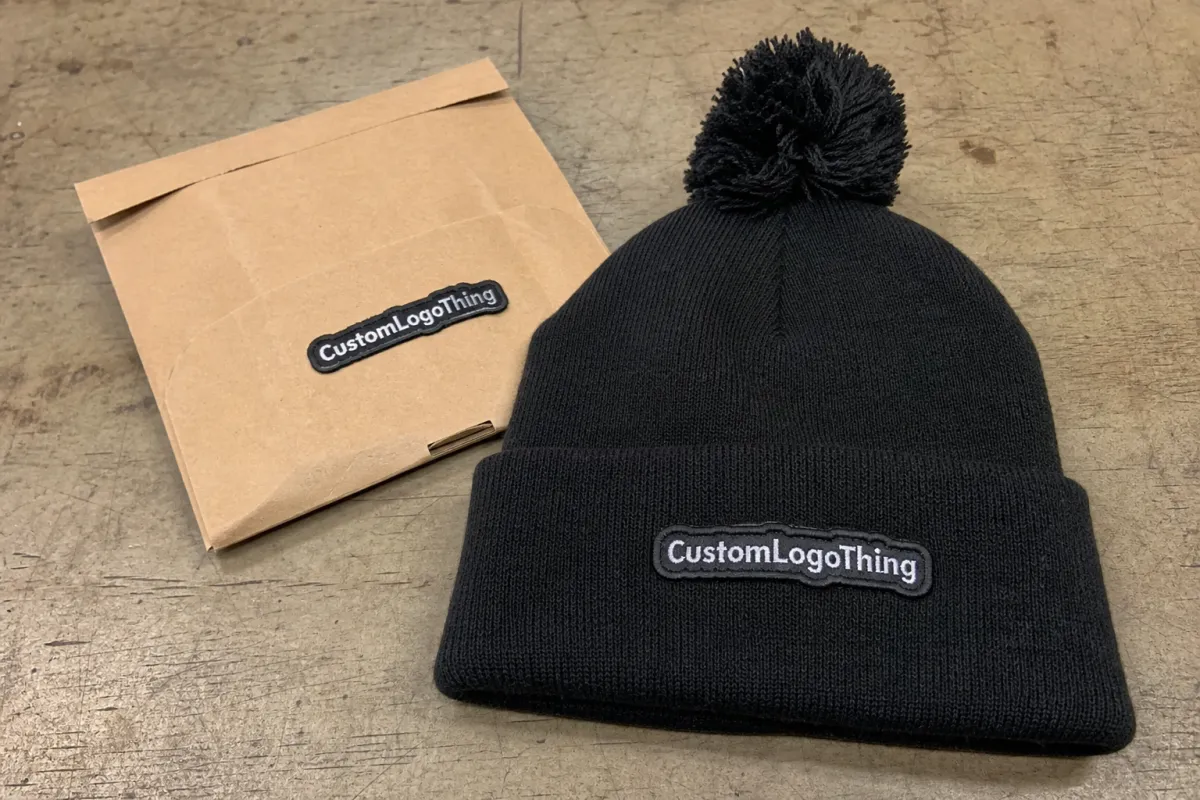
Packaging changes the read as well. A beanie folded into a clean belly band or a small branded pouch feels like merchandise. Toss it into a generic polybag and the perceived value drops, even if the knit itself is solid. That difference matters because coffee retail is built on presentation as much as function.
Materials, knit build, and decoration specs
Material choice sets the price and the feel. Standard acrylic is the value option. It is light, warm enough for casual winter merch, and easier to hit lower price points with. Acrylic-wool blends cost more, but they usually feel better in the hand and sit nicer in retail. For colder markets or brands that want a more premium hand feel, a heavier knit with a tighter gauge usually holds shape better than a loose, chunky build.
There is a practical trade-off here. Acrylic resists price pressure and gives more room for margin on entry-level merch. Wool blends bring a better story for buyers who care about warmth and texture, but they can be more sensitive to pilling, laundering, and inconsistent dye lots if the supplier is not careful. A roaster that wants to resell the item should ask about fiber content by percentage, not just by category. "Acrylic blend" can mean very different things from one supplier to the next.
Cuff construction matters too. A folded cuff gives more space for decoration and gives the hat a stronger silhouette. A slouchy crown can work for fashion-led brands, but coffee buyers usually want something that looks tidy on staff and on display. Loose knit can look bulky. Tight knit keeps the surface cleaner, which helps logos stay readable.
Decoration choices for Pom Pom Beanies are fairly straightforward:
- Woven label for clean branding and good durability.
- Embroidery for a classic look that holds up with normal wear.
- Patch or sewn-on badge for a more merch-forward finish.
- Leather-style tag for brands that want a rugged, premium cue.
What to avoid? Oversized artwork, low-contrast thread, and placements that sit too close to the cuff edge where stretch can distort the logo. A beanie is not a billboard. Small, clear marks usually outperform loud graphics because the hat has movement and texture. Buyers who want real product testing should ask whether samples were checked for wear, stretch recovery, and transit damage. Standards such as ISTA transit testing are useful here because bent poms, crushed packaging, and distorted cuffs are not theoretical problems. They happen during shipment all the time.
For repeat orders, ask how the supplier controls shade consistency across dye lots. A one-tone navy that arrives slightly lighter on the second run can be hard to spot on a monitor and easy to spot on a shop wall. That kind of mismatch does not always ruin the product, but it weakens the line if you are building a seasonal series.
If a supplier also uses packaging sourced to responsible forestry standards, ask about FSC-certified inserts or tags. That does not make the beanie better by itself. It does make the full merchandise package cleaner for brands that care about presentation and paper waste.
Cost, pricing, MOQ, and quote comparisons
Pricing changes with the usual suspects: yarn type, knit density, decoration method, and order size. The math is not mysterious. A simple acrylic beanie with a woven label will usually land lower than a heavier knit with embroidery and a custom paper belly band. Lower MOQ means higher unit cost. Larger runs usually improve margin, especially if the beanie is meant to resell at a retail price that needs room for the cafe's markup.
For a real buying decision, compare quotes on the same basis. Do not look only at the unit number. Ask what is included. Sample charge. Setup fee. Decoration. Packaging. Freight. If one supplier looks cheaper but excludes packaging and international shipping, the comparison is fake. That mistake shows up late, usually after artwork is approved and the order is already moving.
Freight can change the economics more than buyers expect. A small order shipped by air can erase a lot of margin, while a larger sea shipment may lower landed cost but require a longer planning window. The right choice depends on how quickly the beanies need to hit the shelf and whether the winter selling period is short in your region. A cheap product that misses the season is not cheap.
| Option | Typical MOQ | Common unit range | Best for |
|---|---|---|---|
| Stock acrylic beanie with label | 100-300 pcs | $3.20-$5.00 | Fast seasonal drops and staff use |
| Custom color beanie with woven label | 300-500 pcs | $4.50-$7.50 | Core retail merch with a cleaner branded look |
| Acrylic-wool blend with embroidery | 500-1,000 pcs | $6.50-$10.50 | Premium resale and higher perceived value |
| Fully custom knit with badge or patch | 1,000 pcs+ | $8.00-$13.00 | Large programs and repeat winter rollout |
Those numbers are working ranges, not promises. A tight artwork setup, unusual yarn demand, or a heavy trim package can move the quote. So can packaging that looks minor on paper but adds real labor in production. Buyers should also ask whether the quote includes carton markings, hangtags, or individual polybagging, because those details affect both cost and shelf readiness.
One more issue: a low minimum order is helpful for testing, but small runs rarely produce the best unit economics. If a roaster already knows the design will likely repeat, a larger first order can be smarter than buying a tiny batch twice. The second setup, second freight booking, and second sample round all add cost.
Process, timeline, and sample approval
The cleanest buying flow starts with a short brief: color, logo method, target retail price, and whether the order is for staff, resale, or both. From there, the supplier should prepare artwork, confirm yarn options, and send a sample or digital proof. The sample stage is not a formality. It is where the project either gets safer or gets expensive.
Check the sample in hand, not just in photos. Look at fit, pom shape, knit texture, logo placement, cuff balance, and color under actual shop light. A flat mockup hides too much. I would rather see a buyer reject a sample early than approve a bad one and try to fix it later with production already scheduled.
There are a few checks that matter more than most buyers expect. Tug the cuff lightly and see whether it snaps back evenly. Inspect the pom attachment point for loose stitching. Hold the beanie at arm's length and see whether the logo still reads clearly. Fold and refold the cuff to check whether it keeps its shape. These are small tests, but they reveal whether the product will look good after a month of wear, not just on the day it arrives.
Lead time depends on the build. Stock-style beanies can move faster because the body is already available and only decoration needs to be added. Custom colors, custom labels, and embroidery need more runway. A realistic window is often 12 to 15 business days after sample approval for simpler runs, and longer for fully custom builds or larger quantities. If the order is tied to a holiday release, that buffer matters. Miss it and you are merchandising spring stock in December, which is not a great plan.
Ask for a written approval point. That should include final color callouts, decoration position, packaging, carton count, and shipment method. If the supplier cannot keep those details straight, the order will drift. Good production management is boring, and that is exactly what you want.
Reorder timing matters too. Many coffee brands place the first run too late and the repeat too early, then wonder why the line looks inconsistent. A simple record of approved yarn codes, label specs, and carton counts prevents that problem.
Branding choices that fit cafes, bars, and events
Coffee brands use beanies in a few different ways, and the choice changes the design brief. Staff uniforms need comfort and repeatability. Retail merch needs stronger shelf presence. Event giveaways need a lower price point and easy sizing. Subscription gifts sit somewhere in between because they have to feel premium enough to justify the box opening moment.
The safest branding is usually the simplest. Clean marks. Strong contrast. One or two colors that connect to the rest of the product range. A beanie with a subtle woven label often does better than a crowded front panel because it works at arm's length and in photos. Customers buy what they can recognize quickly. Nobody leans in to inspect a tiny joke that only makes sense to the marketing team.
There is also a packaging angle. If the beanie is part of a winter bundle, pair it with a mug, a bag of coffee, or a sleeve-tagged gift set. That lifts order value without adding much complexity. Matching apron colors can help staff photos, while a simple winter gift box can make the merch feel like a product instead of a promo item.
One caution: avoid art that is too event-specific. A beanie that says "holiday pop-up night" may sell fast for a week, then sit around all winter. More timeless branding gives the item a longer shelf life. That matters because a good beanie should keep moving long after the launch buzz fades.
When the brand identity is already strong, the beanie does not need to carry the entire message. A small, consistent mark can do more work than a loud graphic. That is especially true in a cafe, where the product sits beside other tactile items and competes with smell, lighting, and packaging all at once.
What a reliable supplier should prove before you order
A real supplier proves control, not just enthusiasm. Start with the basics: material specs, sample photos, decoration close-ups, stitch consistency, and freight terms in writing. If the supplier only sends a pretty mockup and a vague promise, keep walking. Pretty is cheap. Consistency is what you pay for.
Communication matters as much as the product. Fast answers on revisions, color matching, and timeline changes keep the order moving. Slow replies are a warning sign because custom merch projects always need one or two corrections. The supplier should be able to explain why a yarn color is close but not exact, how a label will sit on the cuff, and whether the run can be repeated later without color drift.
Ask for proof that the supplier can repeat the order. That means the same knit, the same shade, and the same decoration position on reorder. The best wholesale partner is not just selling a first run. They are reducing future risk. That matters for coffee roaster buyers who need branded goods that reflect the shop well on day one and still look right after a second or third season.
Quality control should cover the parts most likely to fail in use or transit: pom attachment, cuff symmetry, edge finish, thread tension, and packaging compression. If the supplier cannot describe how those points are checked, they are probably relying on visual approval alone. That works until the order hits a rough shipping route or a busy retail wall.
Good suppliers also understand where the real production limits are. For example, very fine embroidery can get lost in thick knit, and certain yarns show lint faster than expected. Honest answers on those constraints are more useful than overpromising a perfect result that will not hold up in production.
Next steps: sample, quote, and rollout plan
Start with one short internal brief. Set the target retail price. Choose the colors. Decide on decoration. Confirm whether the beanie is for staff, resale, or both. That keeps the conversation focused and stops the project from turning into a design committee meeting, which nobody needs before lunch.
Next, request a sample and a written quote at the same time. You want to compare fit, finish, and landed cost before money is committed. If the sample looks good but the freight terms are unclear, the order is not ready. If the quote looks good but the sample feels cheap, the order is not ready either. Simple enough.
Then lock the rollout plan: approval date, production slot, delivery window, and reorder trigger. For coffee brands, timing is often the difference between a healthy winter sell-through and dead stock in a storeroom. The best results usually come from a short list of non-negotiables: clean fit, clear branding, stable color, and a finish that still looks good after the box is opened and the hat has been worn a few times.
A Pom Pom Beanies wholesale supplier for coffee roaster buyers should help protect those details. If the product is built well, the shelf presentation stays strong, the staff actually wears it, and the merch line feels connected instead of improvised.
What is the usual MOQ for pom pom beanies wholesale for coffee roaster buyers?
MOQ depends on the build. Stock beanies can start around 100-300 pieces, while custom colors or fully custom knit runs often start closer to 300-1,000 pieces. Smaller orders usually carry a higher unit cost, so the best value often comes from a larger run if the retail plan is solid.
Can I match pom pom beanies to my coffee brand colors?
Yes, but exact color matching depends on yarn availability and the supplier's color library. The cleanest result usually comes from choosing one main body color and one contrast pom or cuff color. That gives the merch a branded look without turning the hat into a color experiment.
Which decoration method lasts longest on wholesale beanies?
Woven labels and quality embroidery usually hold up best for repeated wear. Patches and badge options can also last well if they are placed away from the most stretched parts of the cuff. Cheap thread, weak backing, or rushed stitching will show fast.
How long does production usually take after sample approval?
Simple stock-style orders can move faster than fully custom knit builds. A realistic window is often 12 to 15 business days after sample approval for straightforward runs, with more time needed for custom yarn, custom labels, or larger quantities. Seasonal orders should be approved early so they do not miss the selling window.
Can I mix colors or sizes in one wholesale order?
Often yes, but the exact split depends on the factory setup and the order volume. Ask for the mix before you approve because too many variants can push unit cost higher and slow production. A cleaner mix usually gives better pricing and less room for mistakes.
Winter merch works best when it behaves like a real product, not an afterthought. Keep the brief tight, inspect the sample in person, and push for clear specs instead of optimistic promises. That is usually what separates a useful seasonal item from a box of leftovers.