Recyclable Poly Bags Wholesale b2b sourcing works best as a packaging decision, not a branding exercise. The appeal is practical: less corrugate moving through the pack line, lighter outbound parcels, fewer components to stage, and a format that stores flat instead of consuming pallet space. For apparel, accessories, small parts, and many e-commerce programs, a well-specified bag can improve handling speed without giving up protection or presentation.
That is why procurement teams keep coming back to it. A recyclable polyethylene bag gives you repeatability: the same gauge, the same seal behavior, the same carton count, order after order. If the bag is built correctly, it supports throughput and reduces rework. If it is not, the savings evaporate in split seals, punctures, and repacking. Packaging is full of options that look efficient on paper and fail under a shift's worth of use. This one is no exception.
There is also a useful reality check here. A recyclable film does not solve every packaging problem. Sharp edges, heavy point loads, oily parts, and products with odd geometry can need a thicker gauge, a different bag construction, or a different outer pack entirely. The buyers who get the best results are usually the ones who qualify the use case early, before the quote turns into an order.
Why Recyclable Poly Bags Make Sense for High-Volume Buyers
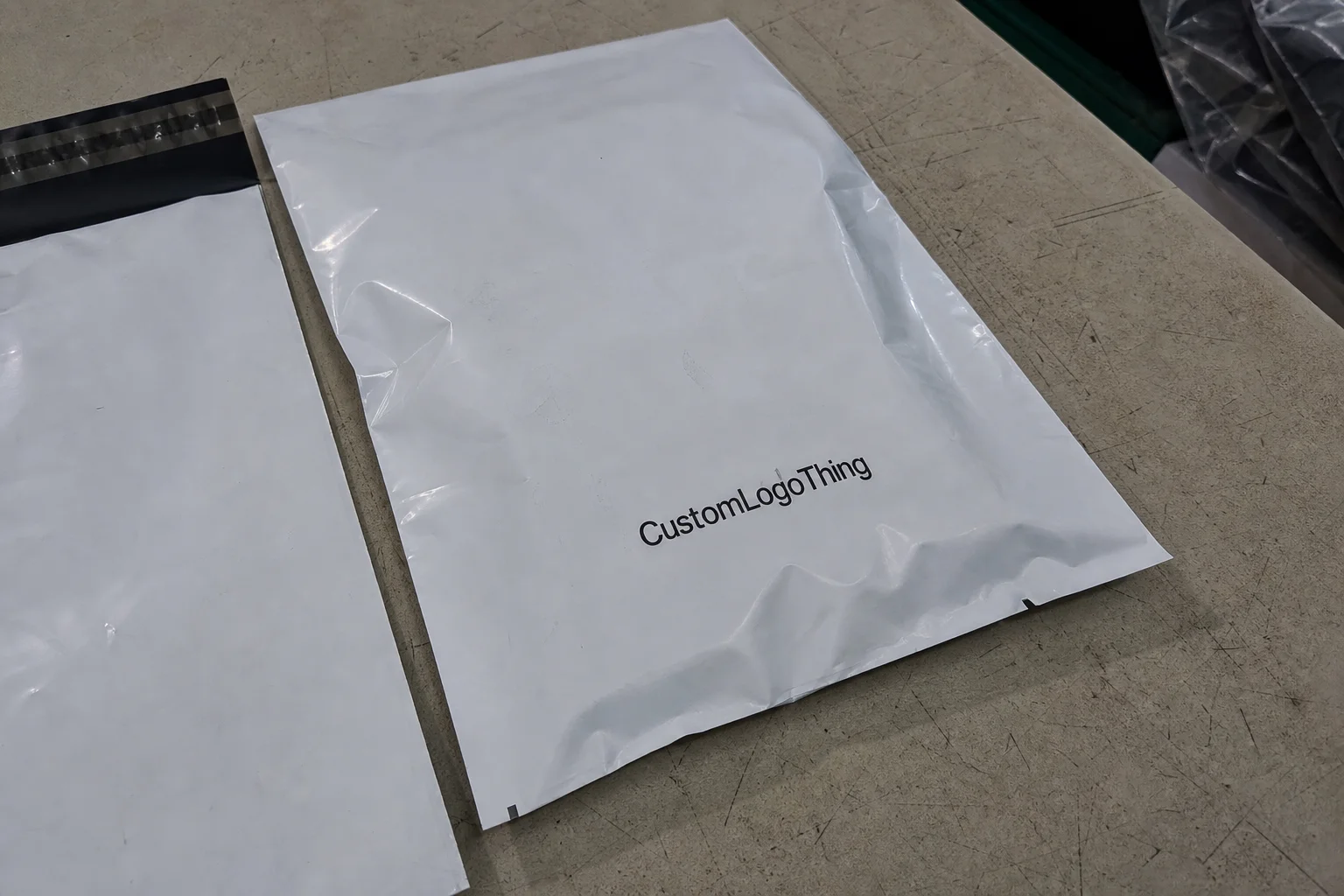
High-volume buyers usually start with a simple pressure point: too much package weight, too much labor at the station, or too much storage space tied up in bulky formats. A recyclable polyethylene bag can ease all three. A flat film bag is lighter than a carton-based pack, faster to handle, and easier to stage in volume. That matters whether the product is soft goods, replacement components, or boxed items that still need a clean outer layer for dust control or transit protection.
From a buyer's perspective, the value is consistency. The operator should be able to open the bag without fighting the film, fill it without distortion, and seal it without second-guessing the closure. That sounds basic, but it is the difference between a package that improves line speed and one that creates its own small delays all day long. In a 10,000-unit run, even a few seconds per pack adds up fast.
There is a second reason procurement teams care: storage and replenishment. Film bags compress into a much smaller footprint than cartons, which can matter in cramped distribution centers or seasonal programs that need inventory buffered ahead of peak demand. If the bag spec is stable, the reorder is simpler too. The buyer is not re-litigating dimensions every cycle; they are replenishing a known format.
It helps to think of the bag as a process tool, not a trend purchase. A good spec reduces handling friction. A weak one shifts cost into labor and damage. That is the actual tradeoff.
"If the bag does not open fast, seal cleanly, and survive the trip, the invoice is not the real cost."
Product Construction, Resin Options, and Printable Surface
Most Recyclable Poly Bags are made from polyethylene film, commonly LDPE, LLDPE, or a blend selected for clarity, flexibility, and toughness. The resin mix matters more than many buyers expect. A softer film tends to drape better around apparel and flexible goods. A slightly stiffer film may feed more predictably, stack better in cartons, and hold its shape when operators are moving quickly. Neither is universally better. The right answer depends on the product and the pack line.
The most common formats are plain bags, gusseted bags, and wicketed bags. Plain bags are simple and often lower in cost. Gusseted bags add depth, which helps with bulkier products or items that do not fit flat. Wicketed bags are designed for faster hand packing because they dispense in a controlled stack. That makes them useful where operators need a clean pickup point and minimal wasted motion. If your team is packing by hand, wicketing can justify the added setup. If the application is mainly storage or retail presentation, a flat plain bag may be enough.
Printable surface is another practical issue. Corona treatment or another surface-prep process helps ink adhere properly, which matters if the bag carries a logo, size panel, handling note, barcode window, or compliance mark. Single-color print is usually the lowest-cost option, and for many buyers it is the sensible one. Two- or three-color printing can still make sense if the order volume is large enough to absorb the added setup and press time. As coverage and color count rise, so do price and lead time.
For durability, ask about seal style, puncture resistance, tear behavior, and whether the bag is intended for manual packing or automation. A sample that looks clean on a desk can still fail on a line if the seal is too narrow or the gauge is too light. That is why the test should match the real use case, not an idealized one.
- Plain bags: lowest complexity, useful for stable SKUs and lower setup costs.
- Gusseted bags: better for depth, bulk, and irregular product profiles.
- Wicketed bags: suited to fast hand packing and controlled dispensing.
- Printed bags: useful for branding, handling instructions, and identification.
Recycling claims deserve a careful read. A recyclable polyethylene bag may be compatible with store-drop film collection, but that does not mean every local recovery stream handles it the same way. The EPA recycling guidance is a useful baseline, and for distribution programs that want a package-performance reference, ISTA is a practical place to sanity-check transport expectations.
Specification Checklist for Recyclable Poly Bags
Before asking for pricing, lock the spec. That single step saves time and prevents the sort of quote churn that slows procurement down. A request built around "standard size" is almost always ambiguous. A request that includes the actual production details is easier to price, easier to compare, and easier to convert into a usable purchase order.
The core variables are straightforward: width, length, gauge, film type, seal type, print coverage, and carton pack. If the bag needs gussets, wicket holes, perforation, or a special closure, include that too. The more clearly the use case is defined, the less likely the supplier is to quote a bag that looks right but performs wrong.
- Width and length: define the fit around the product, not just the product itself.
- Gauge: match puncture resistance and hand feel to the item's weight and edge profile.
- Seal style: bottom seal, side seal, or custom closure depending on the application.
- Print details: color count, logo placement, artwork format, and coverage area.
- Carton pack: units per carton and cartons per pallet affect receiving and storage.
- Use environment: hand packing, semi-automatic, or full automation.
Product type changes the spec in ways buyers sometimes underestimate. Apparel usually needs better clarity and a smoother hand feel because appearance matters as much as protection. Industrial parts may need a heavier gauge and stronger tear resistance. Mailer-style programs often favor cleaner seals and compact carton counts so the fulfillment team can move quickly without losing control of the pack. If your operation already runs film-based packaging, compare the bag against Custom Poly Mailers before settling on a final format.
Two questions should always be part of the request. First, does the bag align with any internal test requirement such as dart impact, tensile strength, or seal strength? Second, does the recycling claim match the intended collection path? A recyclable polyethylene bag can still be a poor fit if the film is too complex, bundled with non-film components, or simply not accepted in the recovery route your customers will actually use.
For shipping, ask whether the packed cartons fit your pallet dimensions and whether the bundle count supports easy receiving. A custom size that wastes carton space can quietly add cost even when the unit price looks attractive. If you are standardizing a film format across multiple programs, keep the category structure visible through Custom Packaging Products so the spec does not drift from one order to the next.
Sample the bag under the same packing conditions you use in production. Bench tests are useful, but they do not replace real operator behavior.
Pricing, MOQ, and Unit Cost Drivers
Pricing for Recyclable Poly Bags is driven by a few variables, and buyers get better quotes when they understand them. Resin cost is the first lever. Film gauge is the second. Size, print complexity, and order volume do the rest. A larger bag with heavier gauge and multi-color print will cost more than a simple unprinted stock item. That is normal. The real question is whether the higher price buys a measurable improvement in packing speed, presentation, or damage reduction.
MOQ depends on whether the bag is stock, custom-sized, or printed. Stock items may be available in smaller runs. Custom dimensions and printed jobs usually need higher minimums to justify setup, film conversion, and press time. In many buyer programs, custom printed bags begin around 5,000 to 10,000 pieces, while higher-volume industrial runs can start at 25,000 pieces or more. Those figures are directional, not universal. The point is that low MOQ can be useful, but it can also increase unit cost if the run is too small to absorb the setup properly.
| Option | Typical MOQ | Indicative Unit Cost | Typical Lead Time | Best Fit |
|---|---|---|---|---|
| Stock unprinted poly bags | Low to moderate | $0.04-$0.10 | 3-7 business days | Fast replacement, stable sizes, testing |
| Custom size, unprinted | Moderate | $0.06-$0.16 | 10-15 business days | Standardized pack-outs, better fit |
| Custom printed, recyclable film | Moderate to high | $0.10-$0.28 | 12-20 business days | Branding, labeling, retail-facing programs |
Those numbers move with resin market conditions, print coverage, carton efficiency, and freight terms. A buyer should compare quotes on the same basis: unit price, setup fees, freight, carton pack, and whether proofing is included. A quote can look lower and still end up more expensive once freight, packing changes, or rework enter the picture.
The cheapest option is rarely the best one if the film stretches badly, seals inconsistently, or arrives in cartons that waste warehouse space. Hidden cost shows up in labor, damage, and re-handling. That is often where packaging decisions get misread. The line item is small; the operational effect is not.
Production Steps, Lead Time, and Order Timeline
A clean order follows a predictable sequence: spec confirmation, artwork or sample approval, film sourcing or extrusion, converting, inspection, packing, and shipment. Stock-supported programs compress some of those steps. Custom runs move more slowly because the film, print, and carton details all need to align before the line can run with confidence.
For stock orders, lead times can be just a few business days if inventory is already on hand. For custom-size bags without print, 10 to 15 business days is a common planning range once the spec is approved. For printed programs, 12 to 20 business days is more realistic, especially if the artwork needs revision or if approval passes through several departments. If a supplier promises a short turnaround on a printed custom bag, ask what is already stocked and what still needs to be produced.
The usual delay points are predictable. Missing dielines. Unclear artwork. A gauge change after sampling. A late correction to carton count. A shipping destination that changes after the quote is already in motion. None of that is unusual, but each item adds time. Packaging, procurement, and receiving often see different parts of the order, which is why an approved master spec matters more than it sounds like it should.
The smoothest handoff has one decision maker, one approved spec set, and one production-ready artwork file. If a sample is needed, ask for it before the run starts, not after the cartons are sealed. A slightly longer approval window is often cheaper than correcting an entire lot because one detail was assumed rather than confirmed.
There is a practical tradeoff here. Saving two days on approval is not helpful if the bags arrive with a print shift, a weak seal, or a gusset that does not hold the product properly. Speed matters, but accuracy is what protects the order.
How to Compare Wholesale Suppliers Without Guesswork
A dependable supplier does more than send a quote. They clarify the spec, explain tolerances, show sample-to-production consistency, and communicate clearly when a detail needs to change. That sounds obvious. In practice, it is one of the easiest ways to tell whether a vendor is set up for repeat programs or only for quick estimates. In recyclable Poly Bags Wholesale b2b sourcing, that difference matters because the bag is usually a recurring item, not a one-off purchase.
Ask for documentation that supports the quote: spec sheet, sample confirmation, tolerance range, carton pack, pallet count, and freight handling notes. If the bag will be used in a line that also fills cartons or ships at scale, ask how the supplier verifies production against the approved sample. A low quote without process control is not a stable supply relationship.
Continuity matters, especially for seasonal peaks and repeat replenishment. If your pack operation runs the same bag every week, consistency is part of the value. A supplier that can hold dimensions, print placement, and carton counts over multiple orders is saving more than the invoice shows. That becomes even more important once the bag is part of a broader packaging system. A supplier who understands labels, mailers, and shipper formats usually reduces coordination work because they see the full pack-out instead of one isolated line item.
For larger organizations, it is worth checking how the supplier handles reorders. Can they pull the previous spec quickly? Do they keep production records long enough to match the last approved version? Do they alert you if resin substitution affects feel or seal performance? Those details tell you whether the supplier is merely transactional or actually suitable for a continuing program.
From a buyer's point of view, the right supplier gives you three things: a quote you can trust, samples that match the run, and a reorder path that does not require rebuilding the spec every time. If those are missing, the sourcing process will stay noisy no matter how attractive the first price looks.
Next Steps to Move a Recyclable Poly Bag Order Forward
If you want a clean quote, start with the full spec package: dimensions, gauge, bag style, print needs, carton count, and delivery location. Add product weight, any sharp edges, and whether the bag will be packed by hand or on a machine. Those details let the supplier quote the actual production cost instead of guessing at a generic film item.
If you already have a current sample, drawing, or carton specification, send that too. Matching an existing workflow is easier when the supplier can compare the requested bag against what is already running in your operation. That is especially useful for retail fulfillment, contract packing, and distribution environments where a small size change can affect line speed or warehouse storage.
The cleanest purchasing handoff usually has one decision maker, one approved spec set, and one production-ready artwork file. If those three items are in place, the order moves faster and with fewer revisions. If they are not, expect delays, even when the bag itself is simple. That is not a supplier problem; it is a process problem.
For buyers trying to standardize a repeatable film format, Recyclable Poly Bags Wholesale b2b sourcing should end in a spec that fits the product, the line, and the distribution model. Once that is clear, request pricing, compare the quotes on the same terms, and move only after the sample and production details are aligned. That is the cleanest way to buy.
What details do I need for recyclable poly bags wholesale pricing?
Provide exact dimensions, gauge, bag style, print requirements, quantity, and shipping destination so the quote reflects the real production cost. Include carton pack and any special handling notes if the bags must fit a specific packing line or distribution method.
What is a typical MOQ for recyclable poly bags in B2B sourcing?
MOQ depends on whether the bag is stock, custom-sized, or printed, with custom programs generally requiring higher minimums. Larger volumes usually lower unit cost, but setup and run efficiency still affect the final price break.
How long does wholesale production usually take for recyclable poly bags?
Lead time depends on whether the order is stock or custom and whether print approval is required before production starts. Artwork delays and spec changes are the most common reasons a shipment moves later than planned.
Can recyclable poly bags be printed with a logo?
Yes, most wholesale programs can add logo printing, but print count, color count, and coverage affect price and turnaround. Share artwork early so proofing and production do not delay the order.
How do I know if a recyclable poly bag is right for my product?
Match the bag spec to the product weight, surface finish, sharp edges, and packing method before approving the order. If the application needs a specific level of clarity, stiffness, or puncture resistance, request samples first.


