Custom Slider Lock Clothing Bags Bulk Order Pricing
A custom slider lock clothing Bags Bulk Order is a packaging decision, but it affects much more than the carton cost. It changes packing speed, shelf presentation, and how often a line has to stop to fix a bag that does not close cleanly. Those issues are minor on a sample order and expensive on a high-volume run.
Slider-lock bags are useful because they open and reclose without tearing the top edge. That makes them practical for folded garments that are inspected, tagged, or repacked before shipping. The right bag keeps the product protected and the workflow steady. The wrong one creates rework, inconsistent presentation, and avoidable damage.
The best quote is rarely the cheapest first quote. Buyers usually get better value by matching the bag to garment weight, fold depth, print needs, and handling process. If those pieces are not aligned, a bag can look fine in a spec sheet and fail in the warehouse.
Why Slider-Lock Bags Speed Up Apparel Packing
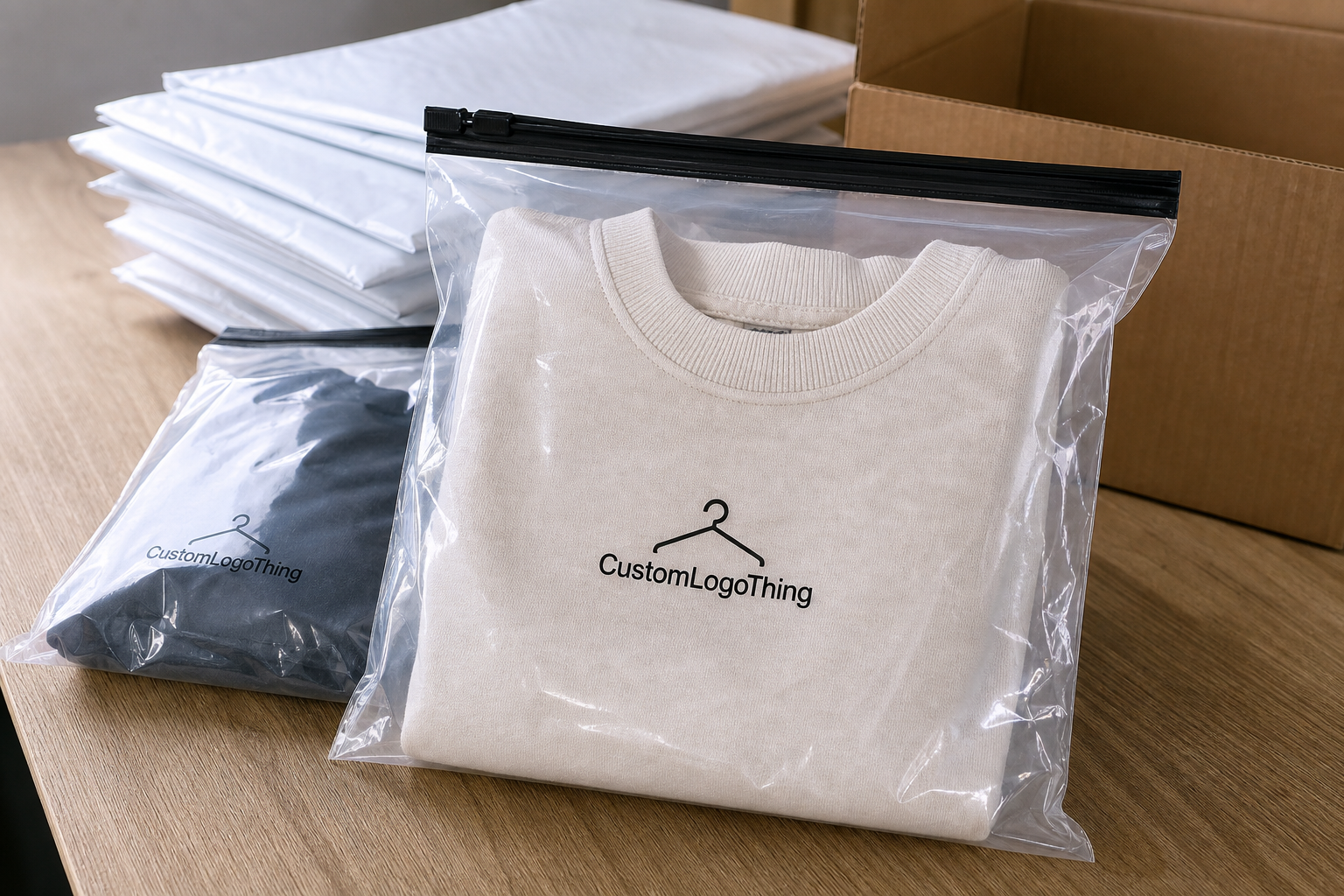
Apparel teams use slider-lock bags because they reduce friction in the packing flow. A packer can load the garment, close the bag, reopen it for inspection, and shut it again without fighting the closure. That saves seconds per unit, which matters when the line is running thousands of pieces a week.
The speed benefit is only part of the value. A bag that closes cleanly also helps garments stay flat and presentable. Retail buyers notice that, and so do warehouse teams that need cartons to stack neatly. When the edges stay even and the track stays aligned, the package looks more controlled.
There is also a protection angle. Thin bags with weak tracks can split at the top when workers pull too hard. That leads to waste and sometimes damages the garment inside. A slider closure with enough body in the film is less likely to fail during normal handling.
For brands using coordinated retail packaging, the bag becomes part of the visual system. It should support the product, not compete with labels, tissue, or cartons. If the bag is cloudy, wrinkled, or hard to close, the presentation loses the clean look buyers are paying for.
A clear spec saves more money than a cheap quote. Once the size, film gauge, print count, and carton pack are fixed, the price is easier to compare and the order is easier to repeat.
Materials and Closure Details That Affect Fit
Most slider-Lock Clothing Bags use clear polyethylene film because apparel buyers want visibility and a neat retail look. Clear film lets the garment color, size label, and branding show through, which helps in retail, e-commerce prep, and distribution centers.
Film gauge is one of the first choices that changes how the bag behaves. Lighter film can work for tees, light knits, and underlayers. Heavier film is better for hoodies, sweaters, and layered sets that need more support. For many apparel programs, the working range is around 2.5 to 4.5 mil, though the right number depends on garment weight and handling stress.
Too thin, and the bag wrinkles, stretches, or tears at the corners. Too thick, and the package starts looking bulky and costs more than necessary. The goal is a bag that protects the garment without feeling overbuilt.
The slider itself matters more than many first-time buyers expect. It should glide without snagging and lock shut with steady pressure. If the track feels loose or catches in the same spot every few bags, that usually points to a production or tooling issue. The closure has to behave the same way across the run, not only on a perfect sample.
Useful options buyers often request include:
- Hang holes for peg display and retail merchandising.
- Venting to release trapped air when folded garments are packed tight.
- Anti-static treatment for styles that attract dust or cling easily.
- Frosted or soft-touch finishes for a more premium presentation.
- Printed size marks or logos for faster sorting and brand visibility.
These extras are only useful if they match the actual use case. A plain clear bag is often the right answer for internal packing or simple retail programs. Once the branding or display requirement grows, the spec usually grows with it.
What to Confirm Before You Request a Quote
Size is the first detail to lock. Not approximate size. Actual finished width, height, and gusset if there is one. The bag has to fit the folded garment with enough room for closure and enough tension control so the top does not bulge. A T-shirt bag and a sweater bag can look similar in photos and behave very differently on the line.
Buyers should also define the folded garment dimensions, because that tells the supplier whether the closure will be stressed. If the fold is deep, the slider track may sit under more pressure than expected. If the garment is light and flat, a thinner film may be enough. Good quoting starts with the product, not a guess.
Print requirements need the same level of clarity. Confirm logo placement, print colors, barcode space, and any product copy that must stay readable after folding. If the bag is part of a larger branding system, the artwork has to work with labels, inserts, and outer cartons. Weak artwork setup is a common reason for delays.
There is no shortcut here. The more exact the spec sheet, the less likely the quote will change later. At minimum, send:
- Bag width, height, and gusset.
- Folded garment size and approximate weight.
- Film gauge target or performance expectation.
- Artwork file, print colors, and barcode layout.
- Carton pack count and shipping destination.
If your team is comparing package options, the Custom Packaging Products page is useful for lining up the bag with the rest of the assortment, and the FAQ page can clear up setup questions before a quote is issued. That reduces the usual back-and-forth.
Pricing, MOQ, and the Real Cost Drivers
For a custom Slider Lock Clothing Bags bulk order, pricing usually moves with five variables: size, film gauge, print coverage, quantity, and finishing requirements. Bigger bags use more material. Heavier film costs more. More print colors add setup time. Lower quantities spread those fixed costs across fewer units, which pushes the unit price up.
As a planning range, plain clear bags often land around $0.12-$0.22 per unit at larger volumes. Printed bags are commonly around $0.18-$0.45 per unit, depending on coverage, size, and color count. Premium presentation versions, thicker film, or more complex pack-outs can run higher. Those numbers are directional, not a promise.
MOQ follows the same logic. A small test run can be useful, but it usually costs more per bag. Once the order size increases, the unit cost typically drops because setup charges are spread over a larger run. Buyers need to know the volume break points, not just a single quote.
| Option | Typical MOQ | Indicative Unit Cost | Best Fit |
|---|---|---|---|
| Plain clear slider bag | 1,000-2,000 | $0.12-$0.22 | Samples, internal use, simple retail packaging |
| Printed logo bag | 3,000-5,000 | $0.18-$0.35 | Branded apparel programs and repeat orders |
| Heavier-gauge custom bag | 3,000+ | $0.25-$0.45 | Thicker garments and higher handling stress |
| Premium presentation spec | 5,000+ | $0.35-$0.65 | Retail display and value-added sets |
Watch the hidden costs too. Samples, plate or cylinder charges, freight, carton labels, and special packing instructions can change the landed cost more than a small unit-price gap. If the quote does not mention repeat-order conditions, ask before approving.
Production, Proofing, and Lead Time
A proper order usually moves through spec review, artwork confirmation, proof approval, production, quality checks, and final packing. Skip one step and the risk goes up. Most problems come from a bad dimension, an unclear file, or a proof that was approved too quickly.
For a first-time custom run, lead time is often 12-18 business days after proof approval. New artwork, new tooling, or a change in structure can add time. Repeat runs are usually faster because the size, print file, and carton pack already exist in the system.
Material availability also affects timing. If the right film, slider component, or ink is in stock, production moves faster. If the job needs a special color match or a nonstandard film, the schedule stretches. Buyers should ask whether the quote includes factory time only or factory time plus transit.
Ask for a timeline that separates proofing, production, and shipping. That one habit prevents most schedule disputes.
A common production mistake is approving artwork before the bag dimensions are final. Another is changing the fold depth after the proof is signed off. Either one can force a reproof or replate, which adds time and cost. The cleanest orders are the boring ones: clear dimensions, clear art, no late surprises.
Quality-Control Checks That Prevent Rework
The best supplier is not the one that sounds polished. It is the one that checks the right things before the order ships. For slider-Lock Apparel Bags, that usually means dimensional accuracy, closure consistency, film clarity, print registration, and carton count. If those checks are weak, the order can look acceptable on arrival and still create problems on the packing floor.
Sample approval matters more than many buyers admit. The sample should show the actual closure feel, the actual print placement, and the actual fit around the folded garment. A bag can look acceptable flat and still perform badly once it is loaded. The sample also tells you whether the film hazes at the fold line or whether the slider track feels too stiff.
For branded packaging, print registration needs a close look. Small logos and size marks can shift if the press setup is loose. Color consistency matters too, but it should be judged with a practical eye. Minor variation is normal. Major drift is not. If the supplier cannot describe the tolerance range, that is a warning sign.
Repeat-order control is another weak spot in many programs. The approved size, gauge, print version, and carton pack should be documented so someone else can retrieve them later without guessing. That matters when orders are split across multiple stores or distribution centers, and it matters when the same bag is reprinted months later.
Good suppliers also say where the bag has limits. A closure designed for light folded tees may not be the right answer for heavy outerwear. A thin clear film may look better on the shelf but be less forgiving in transit. Honest caveats save time and prevent rework.
How to Prepare a Clean Bulk Order Spec
The fastest way to get a solid quote is to send a spec that already reflects how the bag will be used. Start with the garment type, folded size, quantity, and whether the pack is for internal handling, retail display, or both. Then add print requirements, destination, and carton pack count. That gives the supplier enough information to price the job without guessing.
If the program is premium or size-sensitive, request a sample before final approval. That extra step is usually worth it. It lets your team see the closure behavior, confirm the fit, and catch obvious issues before production starts. It is cheaper to change a proof than a full run.
A clean bulk order spec also makes the next reorder easier. Once the dimensions, artwork, and pack-out instructions are documented, the job becomes repeatable. That is the point. A custom Slider Lock Clothing Bags bulk order should not require a fresh round of guesswork every time someone needs more stock.
For buyers comparing packaging across a line, the best approach is simple: match the bag to the garment, define the print clearly, and compare quotes using landed cost rather than unit price alone. That gives a much better read on whether the order is actually good value.
What is the usual MOQ for custom slider lock clothing bags bulk order?
MOQ depends on size, film gauge, print coverage, and whether the bag is plain or printed. Small test runs are possible, but larger runs usually lower the unit price. Ask for quantity tiers so you can see the price breaks.
Which material works best for folded apparel?
Clear polyethylene film is the most common choice because it keeps the garment visible and gives the package a clean retail look. Light apparel can use a thinner gauge, while heavier knits and layered sets usually need more body in the film.
Can the bags be printed with a logo or size information?
Yes. Many orders include logos, size marks, barcodes, or short product details. Keep the artwork simple if the print area is small. Clean layout matters more than decorative complexity on a narrow bag panel.
How long does production usually take after artwork approval?
First-time runs often take about 12-18 business days after proof approval, though complex artwork or material sourcing can extend that. Repeat orders are usually faster because the dimensions and print files are already established.
What should I send to get an accurate quote?
Send the bag dimensions, folded garment size, estimated quantity, film preference, print details, carton pack count, and shipping destination. If you have a sample photo or spec sheet, include that too. Better inputs usually mean fewer revisions.