Buyer Fit Snapshot
| Best fit | Custom Window Cartons with Printed Logo projects where brand print, material claims, artwork control, MOQ, and repeat-order consistency need to be specified before quoting. |
|---|---|
| Quote inputs | Share finished size, material target, print colors, finish, packing count, annual reorder estimate, ship-to region, and any compliance wording. |
| Proofing check | Approve dieline scale, logo placement, barcode or warning zones, color tolerance, closure strength, and carton packing before bulk production. |
| Main risk | Vague material claims, crowded artwork, missing packing details, or unclear freight terms can make a low unit price expensive after revisions. |
Fast answer: Custom Window Cartons with Printed Logo: Board, Finish, Dieline, and Unit Cost should be specified like a repeatable production item. The safest quote records material, print method, finish, artwork proof, packing count, and reorder notes in one written spec.
Production checks before approval
Compare the actual filled-product size with the drawing, then confirm tolerance on folds, seals, hang holes, label areas, and retail display edges. Reserve space for logos, QR codes, warning copy, and material claims before decorative graphics fill the panel.
Quote comparison points
Review material grade, print process, finish, sampling route, tooling charges, carton quantity, and freight assumptions side by side. A quote is only useful when the supplier can repeat the same color, closure quality, and packing count on the next order.
Custom Window Cartons with Printed Logo: What to Know
Custom Window Cartons with printed logo do something many packaging formats struggle to do at once: they show the product and still keep the brand in charge. That matters in food, cosmetics, candles, apparel, and gift sets, where packaging has to earn trust before the box is opened.
From a buyer's perspective, the logic is plain. A die-cut window gives proof, and the printed logo gives structure. The combination keeps the carton from feeling improvised. It also explains why Custom Window Cartons with printed logo keep showing up in retail packaging programs that need shelf presence without hiding the item inside.
Why custom window cartons with printed logo win attention fast
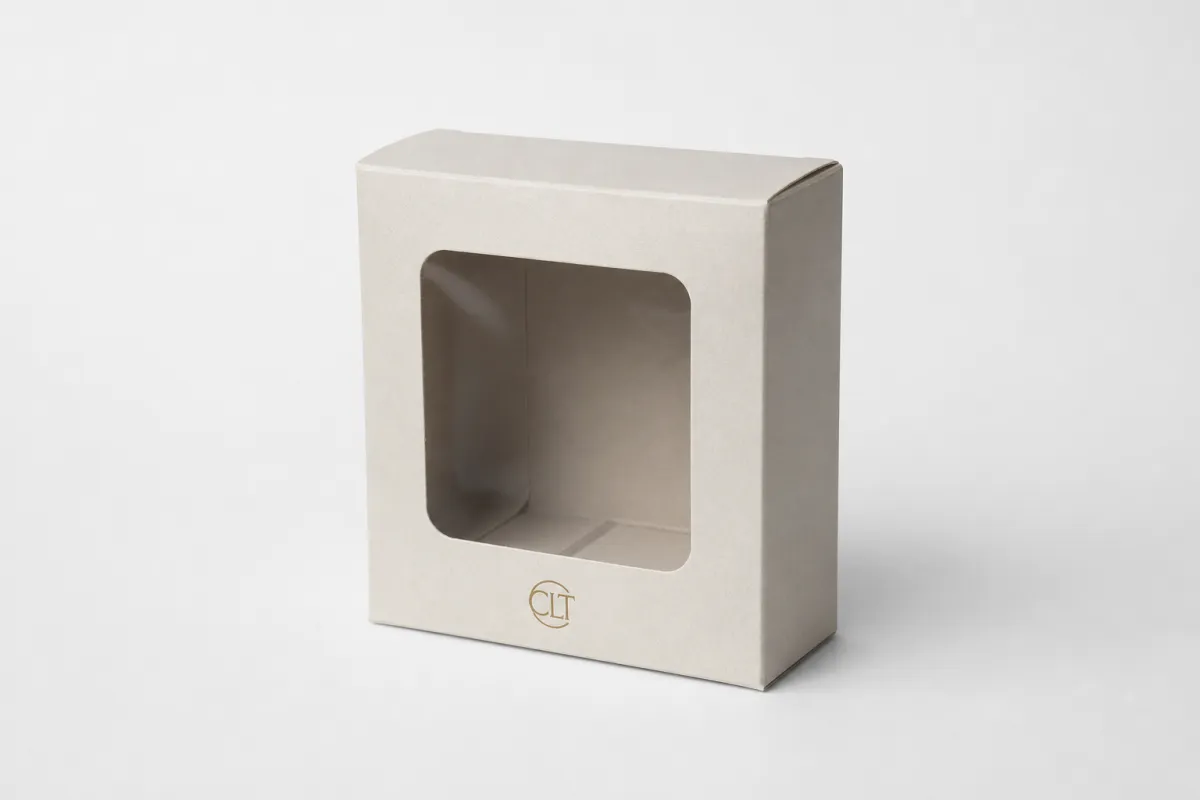
Shoppers rarely get to touch a product before they buy it. They cannot always smell it, weigh it, or turn it in their hands. That is where custom window cartons with printed logo earn their place. A small cutout often does more for confidence than a crowded front panel because the buyer can see color, texture, quantity, or freshness without asking for permission. Packaging studies have long shown that people decide fast at shelf level. Visibility cuts through hesitation in a way copy alone cannot.
Walk through a grocery aisle or a boutique shelf and the pattern becomes obvious. A printed carton can look polished, but if the customer still cannot tell what is inside, the package has to work twice as hard. Custom window cartons with printed logo reduce that burden. The window acts as proof. The logo acts as a frame. One tells the eye where to look. The other tells the eye who is speaking.
The format is simple, which is part of the appeal. The applications are broad. Brands use custom window cartons with printed logo for baked goods, soap bars, lip balms, socks, candles, tea sets, electronics accessories, and small promotional kits. That range explains why the format has become a steady presence in custom printed boxes. It can feel playful or premium, spare or decorative. The structure stays familiar even when the artwork changes.
There is a quieter brand effect too. A window on its own can look unfinished. Add the logo in the right position and the box suddenly feels deliberate. That is package branding doing real work. The product remains visible, but the carton still carries identity, color, and hierarchy. A strong mark on custom window cartons with printed logo helps the package look designed rather than merely assembled.
In retail, the window sells reassurance, and the logo sells memory. Put them together well, and custom window cartons with printed logo become part of the decision, not just the container around it.
The tradeoff is real. The more you reveal, the less room you have for imagery and copy. That forces the packaging design to make sharper choices about hierarchy. The logo should not fight the cutout. The artwork should support the item instead of crowding it. For many brands, that balance separates a carton That Feels Premium from one that feels overworked.
Construction matters too. Weight, shelf conditions, and assembly tolerance all shape the right solution. A lightweight candle insert has different needs from a food carton that may sit under bright lights for hours. Custom window cartons with printed logo have to protect the product, present it clearly, and fit the line speed or hand assembly process your team can actually support. If you want to compare formats, our Custom Packaging Products page is a useful starting point.
How custom window cartons with printed logo are produced: process and timeline
People often say they want custom window cartons with printed logo as if the work stops at printing. It does not. The structure needs a workable dieline, the window needs the right placement, and the print layout needs to survive folding, gluing, and shipping. If any of those pieces slips, the carton can buckle, tear, or reveal more of the product than you intended.
The production flow usually begins with a brief: product dimensions, weight, finish preference, and the display environment. After that comes the dieline selection or a custom structure if the pack needs one. Artwork setup follows, including bleeds, safe zones, logo placement, barcode placement, and the exact relationship between the window and the printed front panel. Then the supplier reviews proof files, cuts a sample or prototype, and moves into die cutting, printing, finishing, and assembly checks.
That approval stage matters more than many teams expect. A clean digital proof does not always translate into a clean finished pack. Custom window cartons with printed logo often need more than one round of sign-off because the window changes the visual balance. If the cutout lands too high, the item can look cramped. Too low, and the logo can feel detached from the product. Add coating decisions and film choices, and the schedule can stretch further.
Timeline depends on the job. Standard sizes, stock boards, and basic print finishes tend to move faster. Custom sizes, specialty coatings, foil, embossing, or unusual window shapes add steps. If a supplier needs a new die, that adds time too. Most delays do not come from printing itself; they come from the back-and-forth before press approval. For custom window cartons with printed logo, a realistic plan usually includes time for samples, production, and freight rather than assuming the carton will appear on demand.
- Brief and sizing: confirm dimensions, product weight, and storage conditions.
- Dieline and artwork: map the logo, copy, barcode, and window position.
- Proofing: review digital proofs and sample builds before mass production.
- Production: print, die cut, finish, and fold or glue.
- Shipping: allow extra time for transit, especially for launch dates and retailer onboarding.
If your product has to survive distribution testing, ask about standards early. Many brands reference ISTA methods for transport performance, and some also use ASTM-based internal checks for compression or handling. That is not overkill for every SKU, but it is smarter than discovering late that custom window cartons with printed logo fail after one stacking cycle in the warehouse.
One more planning note: build buffer time around photo shoots, retailer reviews, and launch promotions. The box is rarely the only moving part. The content team wants images, the sales team wants samples, and the ops team wants pallets that arrive before the first shipment window closes. Custom window cartons with printed logo work best when the schedule accounts for all of that, not only the print run.
Cost, pricing, and quote factors for custom window cartons with printed logo
Pricing for custom window cartons with printed logo comes down to a handful of variables, and most are easy to miss if you only look at the unit quote. Size matters. Board grade matters. Print coverage matters. Window shape, film type, finishing, and order quantity matter too. The more the carton moves away from a standard structure, the more setup work you are paying for.
The biggest misconception is that price drops only because the supplier is "cheaper." More often, unit cost falls because setup and tooling are spread across more pieces. A run of 500 cartons carries more overhead per box than a run of 5,000 or 10,000. Minimum order quantities still shape the budget, though. If you need a test run, custom window cartons with printed logo can be expensive at low volume, and that is normal.
Buyers should also ask about hidden cost items. Die charges, plate charges, proofing, special glues, inserts, kitting, and freight can move the landed cost more than the packaging itself. If the quote does not separate those parts clearly, comparison shopping gets messy. Apples-to-apples comparisons only work if the dimensions, material, print method, finish, and delivery terms match exactly.
| Option | Typical structure | Relative cost | Best use | Notes |
|---|---|---|---|---|
| Stock-size paperboard carton | Basic print, small window, simple fold | $0.18-$0.32 per unit at 5,000 pieces | Light retail goods and test launches | Fastest path if the size already fits the product |
| Custom paperboard carton | Custom dieline, standard film window, 4-color print | $0.26-$0.48 per unit at 5,000 pieces | Brand launches and shelf-facing product packaging | Most common choice for custom window cartons with printed logo |
| Premium printed carton | Heavy board, specialty coating, foil or embossing | $0.42-$0.85 per unit at 5,000 pieces | Gift sets and higher-margin retail packaging | Looks strong, but only if the design justifies the extra spend |
| Corrugated window carton | Stronger structure, larger item support, printed exterior | $0.55-$1.10 per unit at 5,000 pieces | Bulkier goods and protective branded packaging | Useful when presentation and transit strength both matter |
Those figures are planning ranges, not promises. A small change in print coverage or window size can shift the numbers quickly. If a carton needs a more complex die cut, a thicker board, or an upgraded coating, custom window cartons with printed logo can jump into a different budget tier. That is why it usually makes sense to quote several versions of the same pack before committing.
Simplicity is a strategy, not a compromise. Reducing the number of print colors, limiting special finishes, or using a standard dieline can protect margin without making the carton dull. In fact, many brands find that a restrained box looks more expensive than a heavily decorated one. The window already delivers visual interest. The logo should support that, not overwhelm it.
For teams comparing suppliers, our custom retail packaging options can help frame the discussion around structure, finish, and print complexity. The point is not to buy the fanciest carton. The point is to buy the carton that supports sell-through without creating waste in the budget.
Choosing materials, window shape, and print finishes
Material selection changes everything. Paperboard is common for lighter goods because it prints cleanly and folds well. Corrugated construction is usually better for heavier or bulkier items that need more structure. Custom window cartons with printed logo can use either, but the board has to match the product weight and the way the pack will be handled. A pretty carton that crushes in transit is not a win.
The window shape is more than a decorative choice. A rectangle feels disciplined and straightforward. An oval softens the look. A circle often feels friendly or artisanal. A heart can suit gift sets or seasonal retail packaging. A Custom Die Cut can reinforce the product story if the shape echoes the item inside. That said, the more unusual the window, the more carefully the structure has to be checked.
Window film is another decision with practical consequences. Clear film helps protect the product while keeping it visible, which is a common choice for custom window cartons with printed logo. In some applications, film may be skipped if direct touch matters more or ventilation is a concern. Food and fragrance packs, for example, may need different approaches depending on the contents and shelf life.
Finish changes the tone. Matte can make the carton feel quieter and more premium. Gloss increases contrast and color punch. Soft-touch adds a tactile layer that some brands love and others find too expensive for the role it plays. Spot UV, foil, embossing, and uncoated natural stocks all tell different stories. A carton for handmade soap may want a warm, natural look. A gift set may want more shine. Custom window cartons with printed logo should match the story, not just the trend.
One caution deserves emphasis: finishes and adhesives should not interfere with folding, sealing, or product safety requirements. That sounds obvious until a coating changes glue performance or a foil area lands where a fold line should have flexed cleanly. The box has to assemble properly first. The branding comes second. That is especially true for custom window cartons with printed logo in high-volume product packaging lines.
Environmental claims also deserve care. If recycled board or FSC-certified stock matters to your brand, ask for documentation rather than taking a verbal promise at face value. The Forest Stewardship Council is the reference point many buyers use for chain-of-custody questions. If sustainability messaging is printed on the pack, make sure the supply chain can support it. Otherwise the claim becomes a liability instead of an asset.
I have seen one small coating change turn a decent carton into a headache. A matte aqueous finish looked perfect on screen, then grabbed dust in the warehouse and dulled the logo more than the brand team expected. That is the kind of detail people only learn once, and usually not happily. The lesson is simple: request a real sample, not just a mockup, before you lock the spec.
Step-by-step buying guide for custom window cartons with printed logo
If you want a cleaner sourcing process, start with the product itself. Define the dimensions, weight, and display environment before you ask for artwork revisions. That sounds basic, yet many packaging projects begin with design ideas and only later discover that the carton must hold an insert, a sealed pouch, or a taller item than expected. Custom window cartons with printed logo are easier to buy when the physical facts come first.
Step 1: decide what the window is supposed to prove. Is it showing color, texture, quantity, freshness, or a premium detail on the product? If the answer is unclear, the cutout can feel arbitrary. For custom window cartons with printed logo, the window should have a reason to exist. When it does, the whole package looks sharper.
Step 2: prepare artwork with safe zones, bleeds, barcode placement, and logo placement around the cutout. The logo should feel anchored. If the die cut interrupts the focal point, the carton can feel awkward. A good rule is to treat the window as part of the composition, not as a hole added later. That one decision saves a lot of backtracking.
Step 3: compare structural options before approving the layout. If the product has inserts, compartments, or an odd silhouette, a standard dieline may not be enough. This is where packaging design becomes operational. Custom window cartons with printed logo have to survive flat packing, assembly, and shelf display. A structure that looks elegant on screen but fails in hand is not the right choice.
Step 4: ask for samples or prototypes. Check fit. Check visibility. Check how the box looks under retail lighting. I would especially look at the edges of the window and the relationship between the logo and the visible product. In custom window cartons with printed logo, a good prototype can reveal problems that no digital mockup will catch. If you skip this step, you're gonna learn the hard way later.
Step 5: confirm production details in writing. That means quantity, lead time, packaging method, shipping expectations, and whether the cartons ship flat or pre-glued. If your internal labor is limited, assembly time matters. If your warehouse is tight on space, flat shipping matters. If the retail deadline is fixed, freight timing matters. These details sound administrative, but they decide whether the project succeeds.
- Product facts: dimensions, weight, and any inserts or accessories.
- Presentation goal: what the window should reveal and what the logo should signal.
- Artwork readiness: files, bleeds, copy, and barcode placement.
- Sample review: check structure, print, and finish before full production.
- Operational plan: assembly labor, storage space, and shipping schedule.
If you want to avoid surprises, request a sample pack that shows the board stock, print finish, and window treatment together. Too many buyers review those elements separately and only later learn that the combined look is different from expectations. Custom window cartons with printed logo should be assessed as a full system, not as three isolated parts.
Common mistakes brands make with window cartons
The first mistake is making the window too large. Yes, shoppers want visibility. No, that does not mean the front panel should become a giant opening. Too much cutout area can weaken the structure and expose rough edges, folds, or product surfaces that were never meant to be front and center. Custom window cartons with printed logo work best when the window reveals enough to build trust without compromising the carton.
The second mistake is visual clutter. Busy graphics can compete with the product instead of framing it. I see this most often in package branding projects where the team wants every selling point visible at once. The result is a carton that says too much and leaves no clear focal point. A clean composition usually performs better because the window already brings attention.
Poor logo placement is another common problem. If the die cut slices through the mark or forces the logo into a cramped corner, the branding can feel accidental. That stands out even more on custom window cartons with printed logo because the eye naturally lands on the opening first. The logo should guide the eye, not fight the die line.
Then there is the shelf-condition mistake. Humidity, stacking pressure, and temperature changes all affect carton performance. A design that looks fine on a desk can behave differently in distribution. If the product is likely to sit in a warm warehouse or a damp retail back room, test accordingly. Packaging that performs on paper but not in practice is a false economy. That is true for custom window cartons with printed logo just as much as it is for any other product packaging.
Skipping sample testing is a close cousin to that issue. A render cannot tell you whether the window film will wrinkle, whether the adhesive will hold, or whether the fold line will stay crisp after repeated handling. For custom window cartons with printed logo, the sample is the truth serum. It exposes weak spots fast.
The last mistake is over-specifying too early. Some teams add foil, embossing, soft-touch coating, and a custom insert before they have proved the carton improves sell-through. That is expensive to discover after the first order. A better approach is to test the simplest version that still looks credible, then add complexity if the market response justifies it. In many cases, a disciplined carton with custom window cartons with printed logo is enough.
One more thing: don't let the sample approval get rushed because the launch calendar is tight. I have watched teams wave through a good-enough proof and then spend weeks fixing tiny problems that should have been caught on day one. Packaging is a little unforgiving that way. The short delay up front is usually cheaper than the correction after cartons are printed.
Expert tips and next steps before you place an order
Start with the product story. Not the artwork. Not the finish. The story. What should the customer notice first? If that answer is clear, custom window cartons with printed logo become easier to design because the hierarchy is already defined. The window can reveal the product, and the logo can confirm the brand without stealing attention from the item itself.
Next, compare at least two construction options. One should be optimized for speed and cost. The other should be optimized for presentation. That comparison is useful because it shows where the real tradeoffs live. A simpler carton may save money and reduce lead time. A more elaborate one may improve shelf presence. You need both options on the table before you can decide which version of custom window cartons with printed logo fits the business case.
I also recommend requesting a sample pack rather than a single loose sample. The combination of board stock, print finish, and window treatment tells a more honest story than any one element alone. If the carton is meant to support branded packaging at retail, the full visual and tactile effect matters. Sometimes the box feels premium because of the finish. Sometimes it feels premium because the window is restrained. Sometimes it is the logo placement. You cannot know that from a spec sheet alone.
Before you request a quote, build a checklist. Include dimensions, quantity, budget, target launch date, storage conditions, and whether you can handle assembly in-house. If the supplier offers flat shipping, ask how many cartons fit per case or pallet. If the supplier offers insertion or kitting, ask how that changes labor cost. These questions save time. They also help separate true suppliers from people who only look competitive on paper.
- Confirm the product facts: size, weight, and display environment.
- Decide on the reveal: color, texture, quantity, or freshness.
- Lock the visual hierarchy: logo first, window second, copy third.
- Test before volume: ask for a sample pack and review it under real lighting.
- Match labor to capacity: flat shipping, pre-gluing, or assembly support should fit your operation.
Finally, make sure the supplier can actually support the way you work. Some teams need pre-glued cartons. Others need flat packs because warehouse space is tight. Some need inserts installed. Others want the cartons ready for manual assembly. The best custom window cartons with printed logo are the ones that fit both the brand image and the operational reality. If you are narrowing options, our Custom Packaging Products page can help you compare structures before you request samples.
Done well, custom window cartons with printed logo make the product easier to trust, easier to notice, and easier to remember. Done poorly, they turn into a cost line with little return. That is why smart buyers treat custom window cartons with printed logo as a packaging system, not just a printed box. Review the product, request the specs, compare samples, and choose the version that supports your brand and your fulfillment plan.
FAQs
How much do custom window cartons with printed logo usually cost?
Price depends on box size, board grade, window shape, print coverage, and quantity. For planning, a simple stock-size carton with a small window may land around $0.18-$0.32 per unit at 5,000 pieces, while a more customized build can move much higher. Setup, die cutting, coatings, and freight can change the final landed cost more than buyers expect, so ask for a quote that separates unit cost, tooling, samples, and shipping.
What is the typical turnaround for custom window cartons with printed logo?
Turnaround usually includes artwork review, proof approval, production, and shipping, so the approval stage matters a lot. Standard dielines and simpler finishes move faster than highly customized structures or specialty coatings. If you need samples, retail compliance checks, or seasonal delivery windows, plan extra time. Custom window cartons with printed logo are rarely delayed by printing alone; most delays happen before the job reaches the press.
Do I need a custom dieline for custom window cartons with printed logo?
Not always. A stock dieline can work for common sizes and helps shorten development time. You usually need a custom dieline when the product is an unusual shape, requires inserts, or needs a specific window position. A dieline also helps keep the logo and cutout aligned so the front panel looks intentional, which is a major part of strong package branding.
Which materials work best for custom window cartons with printed logo?
Light products often work well with paperboard, while heavier or bulkier items may need corrugated construction. Choose coatings based on shelf conditions, handling, and whether the package needs moisture resistance or a premium feel. The best material is the one that balances product protection, print quality, and budget. That is true for food, cosmetics, gifts, and most retail packaging categories.
Can I order small quantities of custom window cartons with printed logo?
Yes, but small runs usually come with a higher unit cost because setup is spread across fewer boxes. Ask about minimum order quantities, digital print options, or stock-size formats if you are testing a new product. If you expect to scale, choose a structure that can move from small-batch to larger production without redesign. That makes custom window cartons with printed logo easier to grow into later.
If you're planning a run, the cleanest next move is to lock the product dimensions, choose a window that actually earns its keep, and review a physical sample under the same lighting your customer will see. That one pass catches most of the problems before they become expensive, and it keeps custom window cartons with printed logo doing the job they were meant to do: prove the product, carry the brand, and hold up in real use.

