Die Cut Handle Bags for museum shops moq planning is not glamorous work, but it prevents waste and avoids bad surprises. A museum bag is more than a carrier. It protects the purchase, carries the brand, and quietly does marketing long after the customer has left the building.
If the handles tear, the print looks muddy, or the size is wrong for a catalog and a framed print, the bag is working against the shop. Buyers for museum stores, bookstores, and exhibit retail counters need packaging that is sturdy, presentable, and easy to replenish. That means planning size, film, print method, and MOQ before anyone signs off on a quote.
There is also the annoying but real part of the job: storage. Bags take up space. Badly planned orders create back-room clutter and cash tied up in cartons nobody wants to touch. The right order balances presentation, durability, and inventory control without pretending every shop has endless shelf room.
Why museum shops need bags that do more than carry a purchase
Museum retail is a strange mix of fragile, small, and awkwardly shaped items. Visitors buy postcards, ceramics, ornaments, pins, books, rolled prints, boxed gifts, and the occasional thing that looks simple until you try to bag it. A weak bag turns a good checkout into a nuisance. A proper bag makes the sale feel finished.
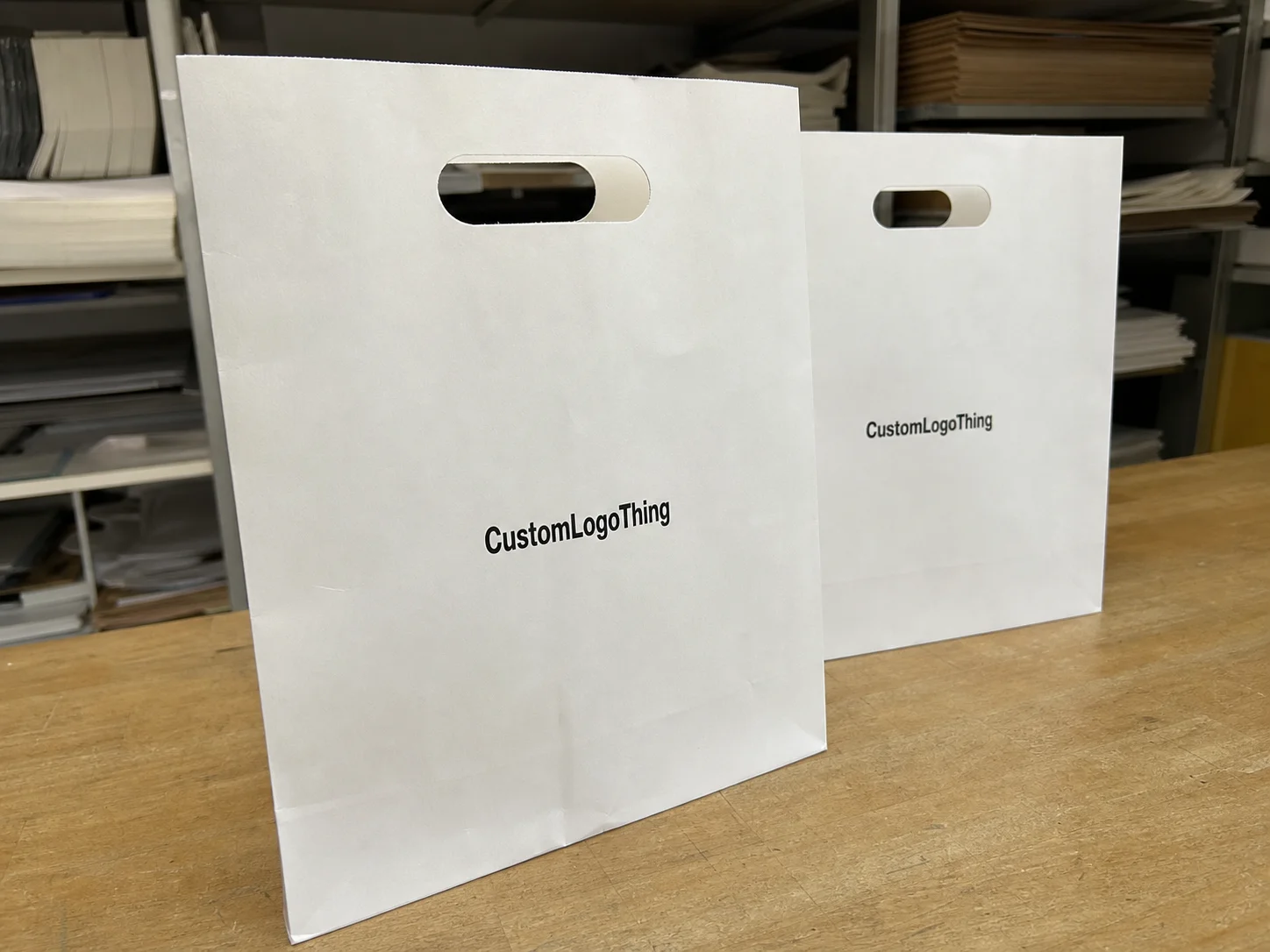
Die Cut Handle Bags have a cleaner look than many generic carrier bags because the handle is built into the film. No separate loop. No extra attachment point. Fewer moving parts means fewer failure points, which is exactly what you want when a customer is juggling coffee, tickets, and a tote full of purchases on the way out.
For museum shops, the bag also keeps moving after the transaction is over. It travels through the lobby, onto public transport, into offices, and sometimes onto kitchen counters at home. Every time it moves, your logo moves with it. That is why the bag needs to look intentional, not like the lowest bid won a dare.
“The cheapest bag is expensive if it tears in front of a customer. The prettiest bag is pointless if it doesn’t fit the sale.”
There is a branding side too. Art museums, science centers, and historical societies often want packaging that feels more premium than a basic store sack. The bag becomes part of the visitor experience. That matters because museum retail is rarely just retail. It is extension work for the institution’s identity.
From a planning standpoint, Die Cut Handle Bags for museum shops moq planning is really about matching the bag to traffic patterns. A temporary exhibit can spike demand for a few weeks. Holiday shopping can chew through stock faster than anyone expects. If the order is too small, the shop runs short at the worst moment. If the order is too large, cartons sit around until the next fiscal headache arrives.
Die cut handle bag styles, materials, and print choices
Most Die Cut Handle bags for museum shops are made from LDPE, HDPE, or a thicker recyclable film blend, depending on the required feel and strength. LDPE usually feels softer and smoother. HDPE is lighter and crisper, though it can look more utilitarian. Thicker recyclable film is often chosen when the shop wants a sturdier, more premium presentation without moving into heavy-gauge packaging that pushes costs up fast.
For medium-weight retail purchases, die cut construction is practical. The handle is cut directly into the bag, often with reinforcement around the top edge to reduce stress. That works well for books, folded apparel, boxed souvenirs, and combinations of smaller items. It is not the answer for every load, but for typical museum gift shop use, it lands in the sweet spot between cost and function.
Size choice matters more than people admit. Small bags fit jewelry, postcards, and compact accessories. Medium bags work for books, journals, and folded apparel. Larger bags are better for framed prints, bundle sets, or multiple items from one transaction. Match the bag to the most common purchase, not the rare oversized item. Otherwise you are paying for air.
Printing options range from a simple one-color logo to full-color artwork across the bag surface. Matte finish gives a softer, more restrained look. Gloss finish makes color pop more and can suit bolder museum branding. Either can work. Poor artwork looks poor on either finish. Packaging does not perform miracles, despite what some quotes imply.
| Option | Best for | Typical feel | Common use case |
|---|---|---|---|
| LDPE die cut handle bag | Gift shops, bookstores, light apparel | Softer, smoother | Brand-forward retail packaging |
| HDPE die cut handle bag | Light to medium purchases | Crisper, lighter | Practical, budget-conscious retail use |
| Thicker recyclable film | Premium museum retail | Heavier, sturdier | Higher perceived value and stronger carry |
Pay attention to the bottom seal, side seals, and handle reinforcement. A nice print cannot rescue a weak seal. In practice, seal quality and film thickness do more for customer satisfaction than a fancy graphic ever will. A bag that splits at the bottom destroys trust fast, and museum visitors remember that kind of annoyance.
Specifications that matter before you request a quote
Before anyone sends a price, lock down the specs. The essentials are bag dimensions, film thickness, handle cutout size, print area, and color count. If those five items are vague, the quote will be vague too. And vague quotes are how buyers end up with surprise costs and awkward follow-up emails.
Bag dimensions should reflect the actual merchandise mix. A museum shop selling more books than jewelry needs a different footprint than a shop focused on small collectibles. Film thickness usually ranges from about 50 to 100 microns for many retail applications, though the right number depends on what the bag carries and how rough the checkout flow is. Thicker film increases strength and unit cost. Thin film lowers cost but can feel flimsy once customers load it up.
Handle cutout size is another small detail that causes big problems. Too narrow and customers get finger strain. Too wide and the handle can feel weak or unfinished. Ask for a sample or digital proof that shows the handle geometry clearly. A bag can look fine on screen and feel terrible in hand, which is why the proof stage is not paperwork theater. It is part of quality control.
If the museum has sustainability targets, say so early. Some buyers want recyclable film, FSC references for outer cartons, or documentation that aligns with internal procurement standards. If you need standards support, there is useful guidance from the FSC and broader packaging resources from the Institute of Packaging Professionals. Not every order needs a certification essay, but the material conversation should happen before production starts.
Artwork prep is where many orders stall. Ask for vector files, clear PMS color references, and a defined safe zone so the logo does not drift into the handle or edge seal. If the museum uses a strict brand system, request a proof that shows exact logo placement and print scale. This is also where you check bleed, especially for full-coverage graphics or patterns that reach the bag edge.
Useful questions before you approve a sample or proof:
- What are the exact finished dimensions?
- What film thickness is quoted?
- How large is the printable area?
- Are setup charges or tooling fees included?
- How many colors are in the print?
- Will the bags arrive flat-packed or boxed in a specific way?
The last point matters more than many buyers expect. Packing format affects storage, receiving, and restocking speed. A stack that is easy to move helps staff. A sloppy pack-out creates friction for months, usually in the middle of a busy weekend when nobody has time to fix it.
Cost, pricing, and MOQ planning for museum inventory
Here is the part people want hidden behind a smile: price is driven by size, thickness, print complexity, and order volume. More color means more setup. Larger bags use more material. Thicker film raises cost per piece. Higher volume usually improves bulk pricing, but only if the rest of the spec stays stable. Change the size halfway through, and the quote stops meaning much.
For die cut handle bags for museum shops moq planning, MOQ usually moves with customization. A small one-color bag may start at a lower minimum than a large full-color bag. Some factories can support modest runs, while others want a higher threshold because setup time has to be recovered somewhere. That is not a mystery. It is basic production economics.
Typical custom retail bag pricing can land around $0.10 to $0.30 per unit for simpler runs at higher quantities, and more for thicker film, larger sizes, or multi-color print. Smaller orders can be noticeably higher on a cost per piece basis because the fixed setup spreads across fewer units. If you ask for a quote without acknowledging that, you will probably blame the wrong number.
Here is a practical way to think about it:
| Order style | Price pressure | MOQ tendency | Buyer takeaway |
|---|---|---|---|
| One-color logo, standard size | Lowest | Lower MOQ | Best for first-time orders or test runs |
| Two to four color print | Moderate | Mid MOQ | Good for stronger branding, but cost rises |
| Large bag, premium film, full coverage | Highest | Higher MOQ | Best only if the shop has steady demand |
Budgeting should follow sales patterns, not hope. If the museum sees heavier foot traffic during exhibit openings, holiday periods, or tourist peaks, order enough to cover those spikes plus a cushion. If the bag is tied to a temporary exhibit, do not overbuy just to chase a lower unit cost. A cheap bag sitting in storage for 14 months is not cheap. It is inventory with an attitude.
Ask for tiered pricing. Give the supplier two or three quantity options so you can compare unit cost, MOQ, and landed cost side by side. Sometimes the best move is not the absolute lowest per-piece price. Sometimes it is the volume that fits storage, cash flow, and the shop calendar without creating a second problem.
Freight matters too. A low factory price can be erased by shipping if the bag is bulky or the timeline is rushed. Also confirm whether tooling fees or setup charges are included in the quote. If they are not, you need those numbers before comparing suppliers. Otherwise the “cheap” option keeps getting less cheap.
Process and lead time from artwork to delivery
The standard workflow is predictable if both sides stay organized: inquiry, spec confirmation, quote, artwork proof, sample approval, production, inspection, and shipping. That sounds orderly because it should be. Problems start when a buyer changes the bag size after proof approval or sends a logo file that is not print-ready.
Lead time depends on print complexity, seasonal factory load, and whether custom colors are involved. A straightforward run may take roughly 12 to 18 business days after proof approval, while more complex orders can take longer. Add freight time on top. If you need the bags for a holiday restock, a new exhibit, or a tourism peak, build in room for proof revisions and shipping delays.
Common delay points are boring, which is exactly why they keep happening:
- Artwork is missing bleed or a vector file.
- Color references are unclear.
- Proof approval sits in someone’s inbox for days.
- The buyer changes the spec after production has started.
That is why the production schedule should be in writing. Ask for the estimated ship date, the freight method, and the point at which the order locks. If you are buying for a chain of museum locations, one late shipment can affect multiple departments. A written schedule keeps everyone aligned and gives the receiving team something real to plan around.
Inspection is part of the process too, not an optional extra. At minimum, check print registration, seal strength, film gauge consistency, and overall count. If the order is large, request carton labeling details and pack-out specs as well. A clean production run can still create problems if the finished cartons are wrong for the store’s receiving workflow.
For quick packaging buying questions before a formal quote, the FAQ page can help with basic timing and spec issues.
How we keep custom bag orders predictable for museum buyers
Predictable orders are not about flashy promises. They come from clear spec guidance, honest MOQ discussion, and proofing that catches issues before the run starts. That is the whole job. No mystery, no drama, no pretending a rushed order becomes perfect because everyone wants it to.
For museum buyers managing multiple shops or departments, standardizing a few bag sizes reduces reordering headaches. One small size for accessories. One medium size for books and boxed gifts. One larger format for prints or bundled purchases. Fewer SKUs usually mean easier inventory control and fewer mistakes during replenishment. It also makes forecasting less ridiculous.
Repeat ordering is where consistency matters most. If the bag spec is locked, the brand color is approved, and the packaging format stays the same season to season, reorder risk drops. That helps buyers plan cash flow, shelf space, and receiving schedules more accurately. It also prevents the familiar conversation about why one batch suddenly looks different from the last one.
Good proofing catches three common problems:
- Logo placement drifting too close to the handle cutout
- Color shift from the approved brand reference
- Bag size that looks fine on paper but feels wrong in hand
There is a QC angle here that gets overlooked. Check the handles under load, not just empty. Check the bottom seam for consistent sealing. Check whether the film scratches easily if the artwork sits on a darker background. None of that is glamorous. It is also the stuff that decides whether the bag feels like part of the museum or like a rushed afterthought.
Reliability is the real value. Clear communication, consistent quality, and bags that arrive when promised matter more to museum retail teams than a long brochure full of adjectives. Buyers remember the supplier who got the spec right the first time and did not turn a simple reorder into a scavenger hunt.
Next steps for ordering die cut handle bags without overbuying
If you are ready to move, gather these five things before you request a quote: estimated quantity, bag size, print colors, target delivery date, and the type of merchandise the bag will carry. That gives the supplier enough information to quote accurately and tell you where the MOQ boundary sits.
Check current inventory first. Then review peak-month sales. Then decide whether the first order should be a test run or a fuller replenishment. That sequence is boring, yes. It also prevents dead stock, which is far more boring once you have paid for it and have nowhere to put it.
Ask for two or three volume options. Compare MOQ, unit cost, and landed cost, not just the headline price. Request a digital proof or sample if the bag has to match a museum brand standard. If the color matters, send PMS references. If the artwork is detailed, send the vector file. If the deadline is fixed, say so before the quote is approved.
Die cut handle bags for museum shops moq planning works best when the buyer and supplier treat the order like a retail tool, not a guess. Send the artwork and specs together, confirm the schedule in writing, and choose the quantity that fits both inventory and cash flow. That is how you avoid overbuying and still get Bags That Make the museum look organized, professional, and worth the visit.
What MOQ should I expect for die cut handle bags for museum shops?
MOQ usually depends on size, film thickness, and print complexity. Smaller one-color bags often have lower minimums than larger or multi-color orders. Ask for tiered quantities so you can see the MOQ breakpoint and unit cost clearly before you commit.
How do I choose the right size bag for a museum gift shop?
Match the bag to the most common purchase, not the rare oversized item. Small sizes work for jewelry, postcards, and accessories. Medium sizes fit books and boxed gifts. Larger sizes suit framed prints or bundled merchandise that needs extra room.
What affects the price of custom die cut handle bags the most?
Material thickness, bag dimensions, and the number of print colors are the biggest drivers. Higher volumes usually lower cost per piece, but custom artwork and special finishes can raise the quote. Freight and rush timing also affect total landed cost.
How long does production usually take after artwork approval?
Lead time depends on order size, print setup, and current factory load. For a straightforward run, 12 to 18 business days after proof approval is a common planning window, but freight time still needs to be added. Ask for a written production schedule before you place the order so your restock date is realistic.
Can I order die cut handle bags that match our museum branding exactly?
Yes, if you provide correct artwork, PMS references, and approved logo placement. Request a proof before production to check color, layout, and print area. If brand matching is critical, confirm the specification sheet before you approve the quote.


