If you are building an ecommerce brand Custom Poly Mailer bags material spec guide, the first thing to understand is that appearance is only one part of the job. A thin mailer that is engineered well can outperform a heavier one that was chosen by instinct. That seems counterintuitive until you compare a clean, intact delivery with a thicker bag that split at the seam because the seal geometry was weak.
For ecommerce brands, the mailer has to do several jobs at once. It needs to protect the product, carry the brand, survive handling, and stay cost-effective across repeated orders. Those goals pull in different directions, so the spec sheet has to make tradeoffs explicit instead of hiding them behind a pretty render.
Ecommerce Brand Custom Poly Mailers: What Buyers Miss
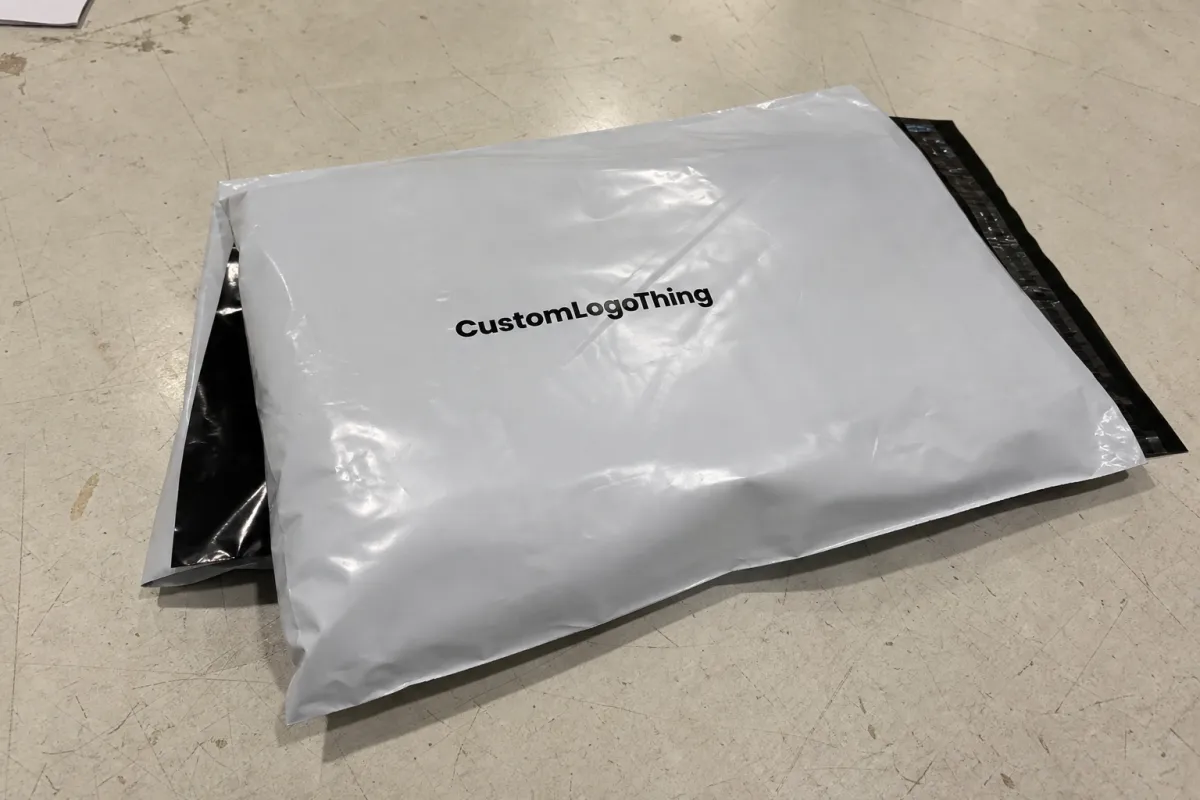
A poly mailer is a lightweight plastic shipping bag used for apparel, soft goods, and other non-fragile orders. That definition is accurate and still incomplete. Most buyers start with size and color, then discover that the real performance differences come from film structure, seal quality, adhesive width, and how the bag behaves after it is folded, stacked, and run through a carrier network.
Two mailers can look nearly identical on screen and perform very differently in the field. A matte white bag may hide scuffs better. A gloss black bag may print more sharply. A co-extruded film may hold up better than a single-layer film even at the same thickness. These differences matter because customers do not judge packaging in a lab. They judge it after transit, after sorting, and after the parcel has rubbed against ten other parcels.
The mistake I see most often is treating thickness as the only durability metric. Thickness matters, but it is not the whole story. A 3 mil bag with a narrow seal and poor adhesive can fail faster than a 2.5 mil bag with a better structure. That is why the best ecommerce brand custom poly mailer Bags Material Spec guide should compare the whole system, not just the film gauge.
The cheapest mailer is the one that arrives intact, protects the product, and does not force a reprint.
That is also why a buyer should ask for material detail instead of only asking for a price. For example, if a supplier says a bag is “durable,” that may describe the feel, not the actual shipping behavior. Ask what the film is made of, whether it is mono-layer or co-extruded, how wide the closure zone is, and whether the seal has been tested against the kind of product you actually ship. If you need a starting point for formats and dimensions, compare your brief against Custom Poly Mailers so the bag size and print format are aligned before quoting begins.
There is another practical point buyers often miss: the mailer is part of package branding, but it is also part of freight economics. Oversized bags can increase material usage and waste. Too much artwork coverage can raise print cost. A bag that looks premium but causes damage or returns is not premium at all. It is expensive.
How Custom Poly Mailers Protect Products in Transit
Protection in transit is not one feature. It is a chain. The film resists abrasion, the seal holds under pressure, the closure keeps the package shut, and the surface finish determines how visible wear becomes. If one link is weak, the whole mailer starts to fail in ways that are hard to predict from a sample sitting on a desk.
Shipping subjects the bag to very different stresses: drops, conveyor friction, compression inside bins, and moisture exposure on loading docks. That means the best material for a product is not always the thickest one. Lightweight apparel usually needs tear resistance and clean sealing more than brute thickness. A folded hoodie with cords, a product with metal hardware, or a two-item bundle behaves differently and needs more margin at the seams.
For many apparel shipments, co-extruded polyethylene offers a better balance than a basic single-layer film. The outer layer can be tuned for print and appearance while the inner layer handles toughness and seal performance. The result is usually a more consistent bag, especially when artwork coverage is high or when the package will spend time in carrier sorting.
Finish also affects perceived quality. Gloss shows color well but can reveal scuffs faster. Matte often hides handling marks and can feel more restrained, which helps when the parcel is tossed into the premium category by the customer’s eye. That matters because the brand experience starts at the door, not on the product page.
One thing worth testing early is how the bag behaves with your heaviest or sharpest SKU. A zipper, clasp, button, or hang tag can create a puncture point even when the bag seems strong in general. If you ship multiple categories, test the worst-case item first. If that passes, the rest usually become much easier to approve.
That approach is more reliable than judging by appearance alone. A mailer can look premium and still fail in the wrong lane, on the wrong route, or under the wrong stacking pressure. The field is less forgiving than a proof screen.
Film Gauge, Seals, and Other Spec Decisions
This is where a proper ecommerce brand custom Poly Mailer Bags material spec guide earns its keep. Buyers usually start with gauge, but the smarter question is how gauge, seal width, closure style, and finish work together. The answer depends on the item, the route, and the level of risk you are willing to absorb.
Film gauge is still the most visible spec. In practice, many apparel mailers fall around 2 to 3 mil for light garments and 3 to 4 mil for heavier items or mixed orders. Those ranges are not rules. They are starting points. A thin film can work well if the product is soft and the handling is controlled. A thicker film can still fail if the seal is narrow or the closure is weak.
Seal width and seam construction deserve more attention than they usually get. A wider seal often reduces split failures, especially at the lip where pressure accumulates during sorting. If the adhesive strip is too close to the edge, the bag can peel open after repeated handling. Small geometry changes can do more than adding another fraction of a mil to the film.
Closure type changes both function and cost. A single adhesive strip is enough for many one-way shipments. Dual adhesive closures help when the mailer must support returns. Tamper-evident tear strips make more sense for higher-value or higher-trust orders. Each one adds a different user experience, and each one changes the production setup in its own way.
Finish and opacity are part of the same decision. Opaque film protects privacy and helps branding, while translucent film can reduce cost in some applications. Full-bleed printing can hide surface wear, but it also raises ink coverage and setup complexity. That is the tradeoff buyers should see on paper before they see it in a warehouse.
| Option | Typical Use | Approx. Unit Cost at 5,000 pcs | Strength and Print Notes | Best Fit |
|---|---|---|---|---|
| Economy LDPE mailer, 2-2.5 mil | Light apparel, low-risk orders | $0.10-$0.16 | Lowest material cost; print is simpler and surface wear shows more easily | Single-item soft goods with steady SKU size |
| Standard co-ex mailer, 2.5-3 mil | Most ecommerce apparel | $0.16-$0.28 | Better tear balance, better graphics, more consistent transit behavior | General branded packaging for recurring orders |
| Premium co-ex mailer, 3-4 mil, matte finish | Heavier garments, higher-touch presentation | $0.24-$0.42 | More durable feel, better at hiding wear, usually stronger visual impact | Launch lines, premium retail packaging, returns-sensitive programs |
These are typical ranges, not locked prices. Total quantity, print coverage, color count, carton pack-out, and freight structure can move the number quickly. If the quote includes special finishes, the pricing logic changes again. The important thing is to compare like with like, not compare one supplier’s premium spec with another supplier’s stripped-down spec and call it a fair race.
For buyers who want a reality check on testing language, ISTA parcel testing standards give a useful framework for thinking about drops, vibration, and compression. They do not replace product-specific testing, but they do help teams ask better questions. If the packaging includes paper-based components, FSC documentation can also matter when sustainability claims need to be traceable.
Cost, Pricing, MOQ, and Unit Cost Signals
Poly mailer pricing is usually a bundle of setup costs, material costs, print costs, and shipping costs. If two quotes differ a lot, the first question should be whether the specifications actually match. Size, gauge, number of colors, closure style, and carton quantity all affect the number. A “cheaper” quote often hides a different assumption.
MOQ exists because setup costs do not shrink very much at small volumes. Plates, press time, proofing, and color matching all need to be paid for. That is why a 1,000-unit order often costs noticeably more per bag than a 5,000-unit order, even when the material is nearly identical. Buyers who understand that pattern can plan reorder timing better and avoid rushed purchases.
The hidden cost drivers are usually the ones that feel cosmetic. Oversized dimensions use more film and may raise shipping charges. Heavy ink coverage takes more press time. Specialty finishes can improve package branding but add steps and slow production. Rush orders almost always cost extra because they interrupt the schedule and reduce room for error correction.
A good pricing review should look beyond unit price. Landed cost matters more. That means the bag price, freight, expected damage rate, and reorder stability all belong in the same comparison. A slightly higher bag price can still be the better choice if it cuts return claims, protects print quality, and avoids rework on the packing line.
For brands growing quickly, one useful habit is to track price by order size band. The difference between 3,000 and 10,000 units can be large enough to change the packaging strategy entirely. Sometimes the right move is to standardize one bag across several SKUs instead of making each SKU its own special project.
Production Steps, Lead Time, and Turnaround
The production sequence is usually simple on paper: confirm the spec, prepare artwork, issue proofs, approve a sample, run production, inspect, and ship. The delays usually happen in the handoffs. A missing dieline, an unclear color target, or a late artwork change can push everything back even when the factory slot itself is available.
Simple one-color jobs generally move faster than multi-color prints or special finishes. A standard turnaround is often around 12 to 15 business days after proof approval, although the actual schedule depends on the supplier’s capacity and the order complexity. A clean, well-defined job can move faster. A vague one usually moves slower, and not by a little.
Before approving a date, ask when the production clock starts. Some suppliers count from order confirmation, others from proof approval, and some only begin after the sample is signed off. Those distinctions sound administrative, but they affect delivery more than most people expect. If the schedule matters, the start date matters too.
Sample approval is where quality issues get cheaper to fix. A physical sample or a production-like proof can reveal print contrast problems, closure alignment issues, and awkward dimension choices that a digital render will never show. That is especially true for dark ink on colored film, small typography, or artwork that wraps across the bag.
Fast jobs are usually clean jobs. The fewer open questions at the beginning, the fewer surprises later. That is not a slogan; it is a production constraint.
Common Mistakes That Cause Damage, Delays, and Reprints
The most expensive packaging mistakes are often ordinary ones. Undersizing the mailer is a classic. A tight bag creates seal stress, corner wear, and poor presentation even before the parcel leaves the warehouse. Customers notice a strained package immediately, even if they cannot explain why it looks wrong.
Artwork errors create a different kind of delay. Low-resolution files, incorrect color expectations, or logos placed too close to the edge can trigger another proof cycle or a full reprint. That means the launch slips, inventory gets stuck, and the team spends time correcting things that should have been locked before quoting.
Another common mistake is testing with the wrong product. A folded T-shirt does not tell you much about how a zipper, a hook, or a stiff hang tag will behave under pressure. If the item has anything sharp, the test sample should use that exact item. Mockups are useful for layout. They are not enough for durability.
Storage gets ignored too often. Poly mailers should be kept clean and dry, away from UV exposure and excessive heat. If bags sit near dock doors, windows, or hot equipment, film quality can degrade over time. That does not always show up immediately, which is why storage conditions matter more than most buyers realize.
There is also a brand mistake that shows up in customer perception. A mailer can technically perform and still feel off if it arrives wrinkled, badly printed, or too large for the item. Customers may never mention the packaging directly, but they often absorb that detail into their overall view of the brand.
That gap between technical success and emotional effect is one reason package branding deserves the same scrutiny as the product itself.
Expert Tips for Sourcing, Samples, and Final Approval
Test with the heaviest and most awkward item you ship. Not the easiest one. A mailer that handles a soft, light SKU well may fail on the one that matters most. The sample should reflect the real product mix, including zippers, buttons, hardware, and any other edge that could create puncture risk.
Ask for a physical sample or a production-like proof before approval. A digital mockup helps with layout, but it does not show ink density, contrast, or how the film will actually look under warehouse lighting. If the artwork includes fine type or light ink on a dark substrate, the sample becomes even more important.
Standardize your spec template across vendors. Use the same fields, the same units, and the same order of information. That makes comparison faster and reduces misunderstandings when you reorder. It also prevents the quiet drift that happens when one supplier describes a material as 75 micron and another calls a similar one 3 mil without clarifying the actual structure.
Ask for quality-control checkpoints in plain language. Film thickness tolerance, seal integrity, print registration, adhesive performance, and carton count should all be checked before shipment. None of those checks are exotic. They are basic, and that is exactly why they matter. Packaging failures are rarely mysterious; they are usually missed details.
If you are deciding between a mailer, a branded carton, or a mixed packaging approach, compare the options against the product and the margin, not against habit. Sometimes the lightest, simplest mailer is the right answer. Sometimes a more substantial format earns its keep by lowering returns and improving presentation. The spec should support the channel, not the other way around.
Next Steps: Build a Quote-Ready Spec Sheet
If you want faster quotes and fewer revisions, gather the details before you send the brief. A supplier can work from a rough outline, but a complete spec sheet reduces back-and-forth and lowers the risk of misquoted jobs.
- Bag dimensions: finished width, length, and flap depth.
- Film thickness: gauge or micron, plus whether the structure is mono-layer or co-extruded.
- Closure type: single adhesive, dual adhesive, or tamper-evident tear strip.
- Print details: number of colors, coverage area, and any special ink requirements.
- Order volume: forecast quantity, reorder rhythm, and MOQ flexibility.
- Pack-out: carton quantity, pallet preference, and delivery location.
- Product risk: item weight, sharp edges, zippers, buttons, or hardware.
- Branding notes: matte or gloss, opaque or translucent, and whether the mailer must match other branded packaging.
Before you send the brief, run one internal sample test with the heaviest or least forgiving SKU. That single step catches more problems than a long email thread usually does. It also gives you a better sense of whether the current spec is realistic or just visually appealing.
If you are unsure about thickness, start with two or three versions and compare them on damage risk, unit cost, and customer presentation. The best ecommerce brand Custom Poly Mailer bags material spec guide is not static. It should help you quote cleanly, buy with confidence, and avoid paying for film you do not actually need.
What film thickness is best for ecommerce brand custom poly mailer bags?
Choose thickness based on product weight, edge sharpness, and transit handling rather than defaulting to the thickest bag available. Light apparel often works in the 2 to 3 mil range, while heavier garments or multi-item orders may need 3 to 4 mil. If the product includes zippers, buttons, or rigid tags, test a sample before locking the spec.
How do I compare quotes for custom poly mailer bags fairly?
Make sure every quote uses the same dimensions, gauge, print coverage, closure type, and carton quantity. Then confirm whether setup, plates, proofing, freight, and taxes are included. The better comparison is landed cost plus expected damage rate, not the lowest headline price.
What is a realistic lead time for custom poly mailer bags?
Lead time depends on artwork approval, sample signoff, and production complexity. Simple runs usually move faster than multi-color prints or special finishes. Ask when production starts and what triggers the schedule so the delivery date is clear.
Which print method works best for ecommerce brand custom poly mailer bags?
The right print method depends on artwork complexity, color count, and order size. Simple logos usually suit efficient production methods, while detailed graphics need more setup and proofing. Request a proof on the actual film color so contrast and readability are accurate.
What should be on my spec sheet before I request a quote?
Include bag dimensions, film thickness, closure style, print colors, quantity, and carton pack-out. Add product weight, any sharp edges, and whether the mailer must be opaque or translucent. State your delivery deadline and target unit cost so suppliers can quote against the ecommerce brand Custom Poly Mailer Bags Material spec guide you plan to use.

