Two Frosted Zipper Bags can sit on the same desk and appear close enough to pass a quick glance. Then one survives handling, stacking, and retail lighting without complaint, while the other scuffs early, closes unevenly, and starts looking tired before the first replenishment cycle ends. That gap is exactly why a hotel retail Frosted Zipper Plastic Bags material spec guide matters. It turns a visual impression into a purchasing decision with measurable inputs: resin, thickness, zipper construction, finish, tolerances, and packing format.
For hotel retail buyers, the bag is doing more than holding an item. It supports shelf presentation, protects the contents during shipping and storage, and carries the brand impression every time a customer picks it up. A vague spec sheet makes those jobs harder, because suppliers will fill in missing details with their own assumptions. That is where quote comparisons go off the rails.
There is a practical reason experienced buyers insist on tighter specs. A bag that is slightly underbuilt might still look fine in a sample photo. It can fail later under repeated opening, carton compression, or exposure to abrasive product edges. The real cost is not always the bag itself; it is the reorder inconsistency, the returns, and the time spent re-approving something that should have been defined on day one.
Hotel retail frosted zipper plastic bags material spec guide: what buyers miss
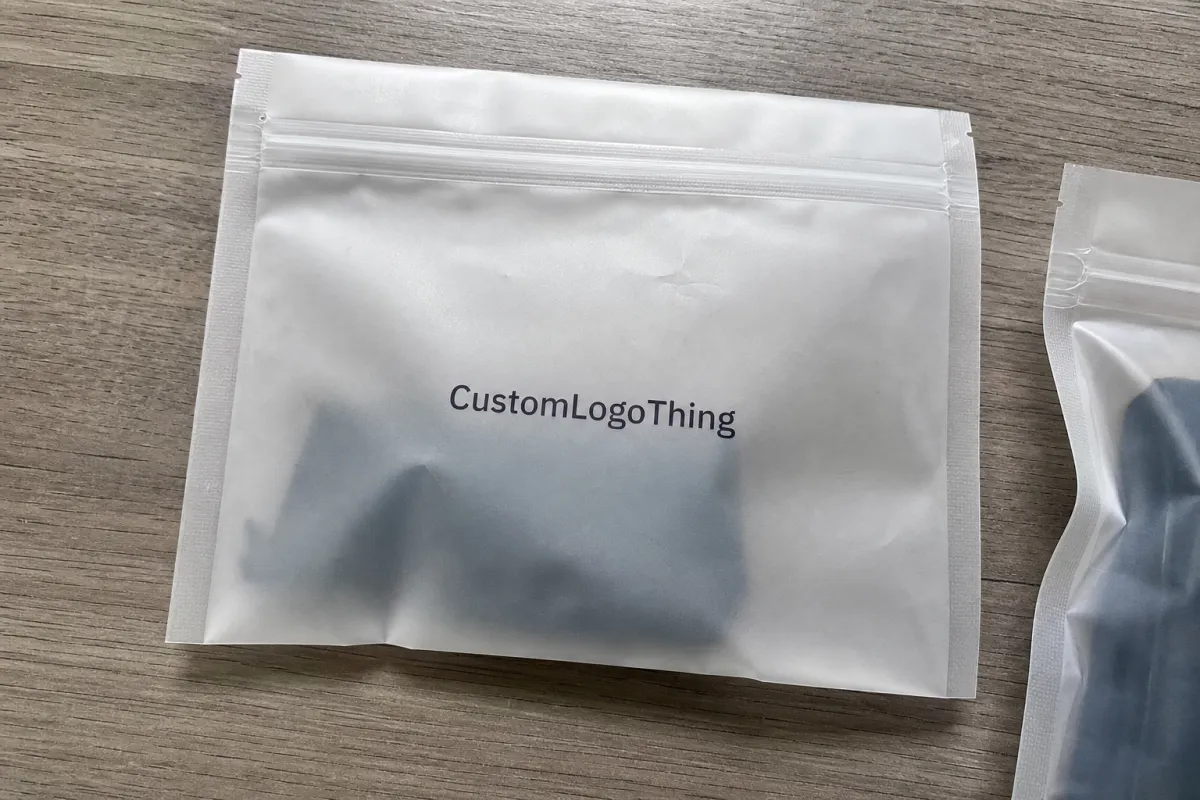
The mistake most buyers make is treating frosted zipper pouches like generic plastic bags. They are not. A pouch used in hotel retail sits closer to boutique packaging than to storage packaging. It may hold amenity kits, travel-size skincare, stationery, gift sets, or souvenir goods, and each use case changes the material and closure requirements.
What looks like a minor spec difference on paper often becomes obvious on the shelf. One pouch hides scuffs better under bright lighting. Another shows drag marks after a few handlings. One zipper feels aligned and crisp; another closes with a soft, uneven bite that makes the whole package feel less deliberate. Buyers notice those things quickly, even if the product inside is identical.
The reason spec discipline matters is simple: price alone does not reveal the real product. If one supplier quotes 2.0 mil film with a basic press-to-close zipper and another quotes 3.0 mil film with a reinforced profile, those are not interchangeable offers. They are different levels of packaging performance, and the lower unit price can be misleading if the bag needs to survive retail use rather than a single storage cycle.
A useful spec sheet locks the variables that affect comparison. Dimensions, gusset style, thickness, zipper type, seal width, finish, and print area all need to be explicit. If the bag will be packed in a certain carton count or paired with inserts, that belongs in the same document. Without that discipline, the factory can only quote a guess.
“The expensive mistake is not the bag price. It is approving a spec you cannot reorder consistently.”
How the frosted film and zipper closure work together
Frosted film softens transparency and lowers glare. Under retail lighting, that matte haze can make a simple pouch look more curated and less like commodity packaging. The effect is subtle, but it matters because customers read surface quality quickly. A bag that diffuses light well usually feels calmer, cleaner, and more premium.
The zipper does a different job. It signals quality every time the bag is opened and closed. If the zipper tracks smoothly and seals with a clear tactile snap, the package feels considered. If it catches, waves, or closes with uneven resistance, the whole bag drops a tier in perceived quality, even if the print is good.
These two parts interact more than people expect. A strong zipper cannot compensate for flimsy film. A heavier film cannot hide a poor seal margin or an inconsistent cut line. When the opening is uneven, the zipper can feel strained. That is why a pouch should be designed as one system, not as a zipper added to a film tube at the end of production.
Hotel retail makes that relationship more visible because the bag is handled in multiple stages. It may be packed in bulk, shelved by staff, reopened by customers, and reused for small carry items. A thicker film can improve hand-feel and resistance to creasing, but it also raises resin use and unit cost. That tradeoff is real, and it should be priced honestly rather than hidden in vague language about “better quality.”
Ask suppliers to describe film gauge, zipper profile, and seal width in the same terms. If one factory uses millimeters, another uses mil, and a third gives a marketing phrase instead of a number, the quote cannot be compared cleanly. Good buyers insist on language that can be measured.
Material specs that change clarity, strength, and feel
Most Frosted Zipper Bags are made from LDPE or an LDPE/LLDPE blend. LDPE tends to feel softer and more flexible. LLDPE usually improves puncture resistance and tear strength. A blend often gives the best middle ground for hotel retail: enough structure to present well, enough softness for a premium hand-feel, and enough toughness to survive repeated handling.
Thickness is one of the easiest specs to discuss and one of the most misunderstood. Roughly speaking, 2.0 mil can work for light items and low-touch use, 2.5 mil is a practical baseline for many retail pouches, and 3.0 mil or more suits heavier products or packaging that will be opened often. That range is only a starting point. Weight distribution matters as much as total weight. A dense item with hard edges can punish a bag that looks thick enough on paper.
Finish variables are harder to price, yet they change the result more than many buyers expect. Frost level affects opacity. Slip changes how the bags stack and slide. Scuff resistance determines whether the pouch still looks clean after distribution and shelf display. Seal consistency affects the feel of every opening and closing cycle. Those details are invisible in a quote unless you ask for them explicitly.
Decoration adds another layer. A plain frosted pouch can look refined if the product and fold are right. If branding is needed, a one-color logo, a clear panel, or a full-bleed print can change both appearance and production complexity. Ink adhesion, registration tolerance, and color repeatability should all be specified before sampling. Otherwise, the finished bag may look acceptable in isolation but inconsistent across the run.
Sustainability claims deserve more discipline than packaging marketing usually gives them. A polyethylene-based zipper pouch should not be called biodegradable unless there is clear technical proof. What often improves the environmental profile is the secondary pack: FSC certified corrugated cardboard cartons, kraft paper inserts, recycled-content shippers, and tighter pack counts that reduce empty space. Those are concrete changes. Vague green language is not.
For packaging standards and sourcing checks, references from ISTA and FSC help buyers align claims, transit expectations, and material choices with recognized frameworks rather than supplier shorthand.
| Spec tier | Film and zipper | What it usually feels like | Best fit |
|---|---|---|---|
| Cost-optimized | 2.0 mil LDPE, standard press-to-close zipper | Lighter hand-feel, acceptable for simple use, more sensitive to scuffing | Light items, short display windows, tighter margins |
| Standard retail | 2.5 mil LDPE/LLDPE blend, improved zipper alignment | Balanced feel, better stacking, more reliable opening and closing | Most hotel retail pouches and amenity sets |
| Premium display | 3.0 mil blend, reinforced zipper, tighter finish control | Substantial hand-feel, cleaner shelf presence, stronger repeat-use performance | Heavier items, visible merchandising, frequent handling |
Process and timeline: from brief to approved production
A quote is only as good as the brief that produces it. The supplier needs dimensions, quantity, thickness, zipper type, print coverage, and packing format. If one of those inputs is missing, the factory will assume a default. That is how two quotes for the “same” bag end up being impossible to compare.
The usual path is straightforward: brief, quote, artwork proof, physical sample, revision if needed, then production approval. The quote stage can move quickly. The sample stage takes longer because the bag has to exist in actual film, not on screen. If the zipper needs adjustment or the film thickness changes, expect another round.
Production itself has a visible sequence: film making, printing, slitting, bag forming, zipper insertion, sealing, inspection, then carton packing. Each stage introduces a chance for variation. Buyers who understand the flow are less likely to expect a custom pouch with print and special packing to land in a day or two. Material supply alone can affect lead time, especially when the film color or frosted level is not a stock item.
Rushed schedules compress the part of the process that catches problems. That is the wrong place to save time. If the order must arrive before a store reset or seasonal launch, build in room for sample adjustments and freight delays. A one-week buffer often costs less than an emergency rework.
For distribution, ask how the product is packed and shipped. If the bags are boxed in corrugated cartons with kraft paper separators or mixed with other retail components, a basic handling check matters. ISTA-style thinking is useful here even when you are not commissioning a full lab program. You want enough confidence that the bag, the carton, and the packing count survive normal transit abuse.
Cost, pricing, MOQ, and quote drivers
Price is shaped by a handful of predictable variables: bag size, film gauge, zipper upgrade, print coverage, special finish, and packing complexity. A custom carton insert, a retail label, or a multi-item set can raise the landed cost even if the pouch itself looks simple. The bag is often only part of the bill.
MOQ changes the economics faster than most first-time buyers expect. A small run spreads setup costs over fewer units, so the unit price can look high even when the factory is working efficiently. Larger runs usually reduce the piece price. That does not mean larger is always better, only that low volumes pay more for setup and changeover.
Freight and secondary packaging can distort the apparent deal. A quote that looks inexpensive on paper may become the priciest option once cartons, labels, inserts, and shipping are added. Landed cost is the comparison that matters. The cheapest ex-works figure is often the least useful number in the room.
A practical quoting method is to request three versions of the same pouch: cost-optimized, standard, and premium. That makes tradeoffs visible. Buyers can see how much the upgrade in thickness, zipper quality, or finish control really costs, instead of relying on generic claims that one bag is “better.”
Directional pricing for custom Frosted Zipper Bags often falls into these bands, depending on size and decoration:
- 2.0 mil, standard zipper: about $0.12 to $0.20 per piece at moderate volumes.
- 2.5 mil blend, better alignment: about $0.18 to $0.30 per piece for mainstream hotel retail runs.
- 3.0 mil blend, reinforced zipper: about $0.28 to $0.45 per piece for premium or heavier-duty use.
Those figures are directional only. Artwork complexity, plate charges, labor rates, packaging format, and shipping distance can shift the final number quickly. A lower unit price can be offset by a poor carton pack or a higher rejection rate. Buyers who only compare bag price often miss the real cost.
Step-by-step checklist for choosing the right bag spec
Start with the product itself. Measure the item with enough allowance for insertion, removal, and zipper clearance. Too tight, and the pouch becomes awkward to use. Too loose, and the contents shift around, which makes the bag look less premium and can place stress on the seal area.
Next, define the use case. A hotel amenity pouch opened once or twice does not need the same spec as a retail pouch that is handled repeatedly by customers. Once the use case is clear, thickness selection becomes much easier. Without that context, buyers often over-specify for a light item or under-specify for a product that needs real puncture resistance.
Choose the zipper style and finish after the size and function are fixed. This order matters. Bags get overbuilt when an aesthetic preference is allowed to drive the whole design. That can push the price above the margin structure before anyone notices. A premium look should come from disciplined choices, not from adding thickness everywhere.
Build one master spec sheet before requesting samples. Include dimensions, material, thickness, zipper type, print area, carton pack count, and any packing notes. If the order uses FSC certified corrugated cardboard cartons or kraft paper inserts, note those too. The point is to create a single reference document that survives staff turnover and reorder cycles.
That one document should answer the same question for every supplier. Then the differences in response become useful instead of confusing. If one factory recommends a thicker film, another suggests a different zipper profile, and a third cannot explain its tolerance range, the buyer can spot the gap immediately.
Common mistakes that create weak quotes or rejected samples
Mixing up outer size and usable interior size is a classic mistake. A pouch can look fine on the spec sheet and still fail because the closure consumes more space than expected. A few millimeters matter, especially for products with rigid edges or unusual shapes. Packaging tolerance is boring until it causes a rejection.
Vague briefs create another layer of trouble. If the request omits zipper type, film thickness, or finish details, the supplier has to guess. Those guesses show up later as rework, price changes, or samples that do not match the intended order. A fast quote is not useful if it is based on assumptions nobody documented.
Appearance-only approvals are also risky. A sample should pass visual review, but it should also pass zipper pull checks, scuff checks, and basic handling tests. If it opens well once and then starts feeling weak, it is not ready. It is only photogenic.
Reorder drift is the quiet failure that causes the most friction. If the approved spec is not written clearly, the next purchase can slip by a small amount in thickness, seal width, or zipper style. Over time, the inconsistency becomes visible in inventory, shelf presentation, and customer perception. Store teams notice faster than buyers do.
One practical rule helps here: if the spec cannot be handed to a different buyer six months later and still make sense, it is incomplete.
Expert checks before you approve the final order
Before release, compare at least three versions: cost-optimized, standard, and premium. That comparison makes the value gap visible instead of abstract. If the upgraded bag solves a zipper issue or raises the shelf appearance for only a small increase in cost, the decision is easier to justify.
Then confirm the details that usually create expensive surprises: print placement, zipper action, seal strength, and carton count. A bag can be perfect and still arrive in the wrong handling format if the cartons are wrong. That matters in hotel retail, where storage, merchandising, and replenishment all have to work together.
Testing language helps too. Ask whether the supplier checks against tensile, seal, or transit-style methods. ASTM methods for film and seal performance are useful references, and ISTA-style handling checks are relevant for packed goods. A factory does not need a laboratory for every order, but it should understand the difference between a sample that looks good and a run that is ready to ship.
Keep the final approved spec in one place and use it as the master reference for reorders, warehouse checks, and future supplier conversations. If the buyer changes, the document should still tell the story. That is where a careful hotel retail Frosted Zipper Plastic Bags material spec guide becomes a working purchasing tool rather than a one-time read.
The result is usually better than buyers expect. Clear specs narrow the quote spread, reduce sample churn, and make the final order more consistent. That saves money in places that do not show up on the first invoice.
FAQ
What material is best for hotel retail frosted zipper plastic bags?
LDPE or an LDPE/LLDPE blend is usually the strongest starting point. LDPE gives softness and flexibility, while LLDPE improves puncture resistance and tear strength. For retail use, the best choice depends on product weight, how often the bag will be opened, and how polished the shelf presentation needs to feel.
How thick should hotel retail frosted zipper bags be for retail use?
Lighter items often work in the 2.0 to 2.5 mil range. Heavier or premium items usually need 3.0 mil or more. If the pouch will be handled repeatedly, thicker film generally performs better, but product shape matters too. A narrow, rigid item can stress the bag more than a heavier but softer one.
What MOQ should I expect for custom frosted zipper plastic bags?
MOQ depends on size, print method, and how much setup the factory needs for the order. Smaller runs often carry a higher unit price because setup costs are spread across fewer pieces. Ask for several quantity tiers so you can see where the cost curve improves and where it flattens.
How long does sampling and production usually take?
Artwork proofing can move quickly, but physical sampling usually takes longer because the bag has to be made in actual film. Production lead time depends on material availability, print complexity, and whether the sample needs revisions. Add shipping time as well, especially for launch-driven orders.
What should be on the spec sheet before requesting a quote?
Include dimensions, thickness, material type, zipper style, print coverage, quantity, and carton pack count. Add the intended use so the supplier understands whether the pouch needs display appeal, storage protection, or repeated opening. The cleaner the spec sheet, the easier it is to compare quotes without hidden assumptions.


