Ecommerce Brand Frosted Zipper Plastic Bags Print Method Comparison
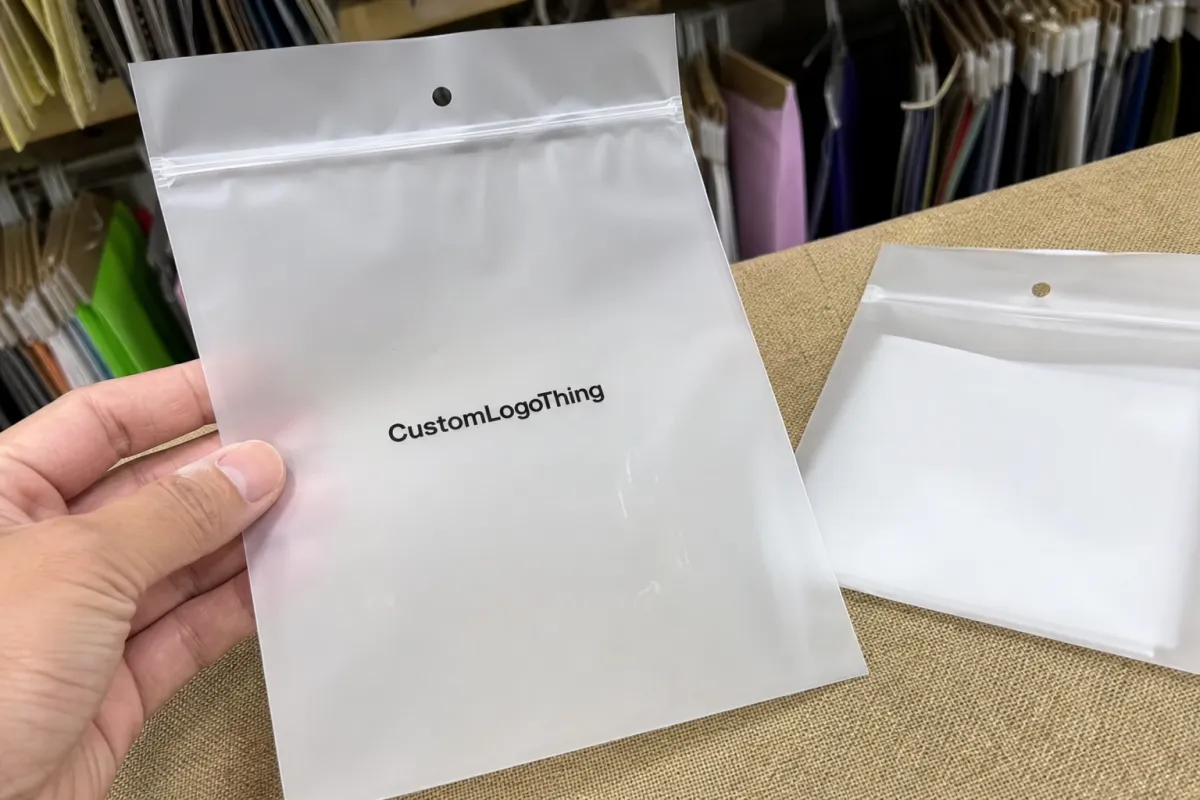
The most useful ecommerce brand frosted zipper plastic bags Print Method Comparison starts with the film, not the artwork. Frosted polyethylene scatters light and softens edges, so a logo that looks crisp on a screen may appear lighter or hazier on the actual bag. That matters because these bags often show up in unboxing, storage, returns, and resale packaging.
The right print method is usually the one that matches the artwork, run size, and required opacity, not the one with the most polished sales pitch. For buyers, the decision is less about decoration and more about unit cost, lead time, proof risk, and how reliably the print survives handling.
Why Frosted Zipper Bags Change the Print Conversation
Frosted Zipper Bags are typically made from LDPE or LLDPE with a matte finish. That finish gives them a softer, more premium look than clear glossy film, but it also changes how ink behaves. Fine detail can lose definition, and pale colors can sink into the surface unless the print has enough coverage.
That is why this decision should start with contrast and readability. Thin lines, small text, and tight registration are less forgiving on frosted film. A black logo can still read as gray if the ink deposit is light, and a brand color may need a white base to stay visible.
Lighting matters too. In a studio, frosted film can look refined because it diffuses glare. In a warehouse or office, the same bag may look flatter. Buyers should review samples under the conditions where the bag will actually be used, not only under ideal proof lighting.
Practical checkpoint: if the bag supports retail, subscriptions, returns, or premium storage, treat print clarity and consistency as functional requirements.
How Screen, Digital, and Flexographic Printing Work
For a serious method comparison, the three options that matter most are screen printing, digital printing, and flexographic printing. They handle ink, detail, and setup very differently, which is why the same artwork can perform well in one process and poorly in another.
Screen printing lays down a thicker ink film through a mesh stencil. That extra coverage helps on frosted film because it improves opacity and makes spot colors stand out. It is a strong fit for simple logos, bold graphics, and designs that need to stay readable from a distance. The tradeoff is setup: each color adds time and cost.
Digital printing is the most flexible option. It is often the easiest choice for short runs, fast revisions, and seasonal packaging. Proofing is usually faster, and the artwork can move to production with less setup. The main limitation is ink density, especially if the design needs strong white support or precise color control on translucent film.
Flexographic printing is built for volume. It uses plates, so the upfront work is higher, but once the job is set it can produce stable repeat orders at a lower unit cost. It makes the most sense when the artwork is fixed, the quantity is high, and the brand expects ongoing replenishment.
| Method | Best run size | Typical setup burden | Typical unit band | Strengths | Watch-outs |
|---|---|---|---|---|---|
| Digital printing | 200-3,000 bags | Low to moderate | $0.18-$0.45 per bag | Fast artwork changes, short lead time, easier revisions | Less opaque white, more sensitive to file quality on frosted film |
| Screen printing | 1,000-10,000+ bags | Moderate per color | $0.10-$0.30 per bag | Bold spot color, heavier ink deposit, strong contrast | Slower for multi-color artwork, more setup per color |
| Flexographic printing | 5,000-50,000+ bags | Higher upfront plates | $0.06-$0.18 per bag | Efficient at scale, consistent repeat orders | Less flexible for artwork changes, more prepress work |
These figures are directional. A low unit quote is not always the cheapest finished order once setup, plate costs, white ink, freight, and reprint risk are included. Offset printing is usually not the right comparison here because flexible Frosted Zipper Bags are better matched to methods designed for film.
Cost, MOQ, and Unit Cost
Cost is usually shaped by quantity, artwork complexity, and how often the design changes. In an ecommerce brand Frosted Zipper Plastic Bags print method comparison, MOQ is often the factor that changes the answer before the buyer finishes reviewing the quote.
Screen printing often charges by color. Flexography usually requires plates and prepress work. Digital can reduce upfront setup, but the unit price may be higher on small orders or when the artwork uses a lot of coverage. If a design needs a heavy white underprint, that adds material and labor too.
Freight can distort the comparison as well. Frosted Zipper Bags are light, but cartons still take space, and air shipping for a launch can quickly change the economics. A quote should separate production cost from shipping so the buyer can see the true total.
A practical way to compare suppliers is to request three price breaks: a pilot run, a working replenishment run, and a larger repeat order. That shows whether a method becomes cheaper because it is genuinely efficient or only because the first quote looks attractive.
Another hidden cost is rework. If the first proof fails on frosted film, the brand may pay for new files, a delayed launch, or a rushed remake. A bad approval can cost more than the difference between two printing methods.
Ink is rarely the expensive part. The expensive part is finding out too late that the file, the film, and the print method were mismatched.
For teams that need a technical baseline, packaging and transit-testing guidance from organizations such as ISTA can help frame durability expectations before launch. Material handling guidance from public agencies can also be useful if the bag is part of a wider packaging review.
Production Steps, Lead Time, and Proof Approval
Most jobs follow the same sequence: artwork prep, proofing, plate or screen creation, test print, bulk production, inspection, and packing. The method changes the timeline, but not the overall workflow.
Artwork prep is where many projects slow down. Suppliers often need vector files, a dieline, separate layers for white ink, and clear safe zones around the zipper and seals. If the file uses gradients, small text, or elements too close to a fold line, it may need cleanup before production can start.
Material choice also affects timing. Some frosted bags print better after surface treatment, and ink may need proper drying or curing before packing. Screen printing often needs more drying time because of the heavier ink layer. Flexography may take longer to set up because of plates, but it can run quickly once started. Digital usually reaches proofing faster.
Typical production windows often look like this:
- Digital: 7-12 business days after proof approval for straightforward jobs.
- Screen: 12-18 business days, depending on color count, ink coverage, and curing time.
- Flexo: 15-25 business days when plates, sampling, and repeat checks are included.
Those numbers are production windows, not always delivery windows. Shipping can add another week or more depending on route and mode. A quote should state whether the lead time ends at factory handoff or includes delivery.
Proof approval deserves more attention than it usually gets. A flat mockup is not the same as a print on actual frosted film. A useful proof shows contrast, line weight, white ink behavior, and how the bag looks under realistic lighting. When possible, ask for a production-minded sample rather than a simple render.
Design Variables That Decide Which Print Method Wins
The print method is only half the decision. Artwork structure and bag geometry often matter just as much. In practice, the best choice depends on the design first, the process second, and the quote third.
Color count is a good starting point. Two- or three-color spot artwork usually fits screen printing well. Full CMYK graphics with gradients or photographic effects often point toward digital or flexo. If the brand relies on a fixed spot color across product lines, the method should support stable color control and a reliable white base.
Physical constraints matter too:
- Zipper placement: keep key text away from the seal line.
- Gusset depth: deeper gussets reduce usable front-panel space.
- Bag size: smaller formats leave less room for bleed and quiet zones.
- Print area: the usable space is often smaller than the visible face of the bag.
Fine type needs special caution. Frosted film softens small elements, and the effect gets worse near seams or zipper tracks. A logo may stay readable while a tagline or barcode breaks down if the layout is too tight.
Use case matters as well. A premium apparel bag may benefit from a softer translucent look, while a warehouse-facing bag needs direct readability and scan reliability. Seasonal packaging often justifies digital because artwork changes too often for plate-heavy production. Evergreen packaging usually favors screen or flexo because consistency becomes easier to manage over time.
Common Mistakes When Ordering Printed Frosted Zipper Bags
The most expensive mistakes usually come from treating frosted film like paper. That assumption fails quickly. The weak points are usually opacity, registration, and bag geometry.
The first mistake is skipping a white underprint when the design needs it. Pale ink without a solid base can look washed out, especially under warehouse lighting or in ecommerce photos. If a muted effect is intentional, that is fine; if strong readability is the goal, it is a problem.
The second mistake is ignoring the shape of the bag. Zippers, side seals, and gussets reduce the usable print zone. Artwork placed too close to those areas can distort or disappear once the bag is filled and handled. A logo that looks centered in the proof may shift once the bag is formed.
The third mistake is approving a mockup as if it were a sample. A render can hide glare, opacity, and subtle registration drift. The proof should reflect the actual film, not just a clean screen image.
There is also too much faith placed in CMYK for brand colors that really need tighter control. CMYK can work well, but it is not always perfect on translucent film. If the shade matters, a spot color or stronger white support is often safer.
Finally, do not ignore durability. A zipper bag is handled, folded, opened, stacked, and shipped. Ink that looks fine on day one can scuff or fade if curing or adhesion is weak. Print quality here is about how the bag survives normal use, not just how it looks in a photo.
Expert Tips for Sharper Artwork and Lower Reprint Risk
The best ordering habits reduce uncertainty. Three moves matter most: ask for a real sample, define the spec clearly, and test one SKU before scaling the full line.
Start with the sample. A useful sample shows the actual film, not just the artwork on a screen. Compare the print with and without white underprint if the supplier can show both. That side-by-side view often reveals whether the design needs more opacity, a stronger outline, or a simpler layout.
Then specify the details that often get hand-waved. Define Pantone targets if brand color matters. State barcode requirements if the bag needs to pass through scanning systems. Include acceptable variance for placement and color shift before quoting begins. Vague expectations create avoidable disputes later.
Production checks should be practical. A good QC pass looks for color consistency, scuff resistance, zipper function, seal integrity, and alignment against the dieline. If the bag will move through retail or warehouse systems, scan tests matter too. If the artwork sits near an edge, verify that the print still holds once the bag is filled.
Printing the hero SKU first is often the smartest move. A pilot run can expose whether the frosted finish reads too dark, whether the logo is too small, or whether the chosen process holds detail well enough. If the test fails, the correction is still manageable. If the full order fails, the cleanup is much more expensive.
Next Steps: Build a Spec Sheet Before Requesting Quotes
A complete brief makes better quotes. For the final stage of the comparison, gather the bag size, film finish, zipper style, gusset depth, quantity bands, artwork format, target launch date, and whether the bag needs a white underprint before requesting pricing.
Then ask the questions that expose the real differences between methods:
- What setup charges apply by method and by color?
- What MOQ applies to each price tier?
- How does unit cost change at 1,000, 5,000, and 10,000 pieces?
- What proof process is included before production starts?
- Which inks, white underprint options, and color limits apply?
- What is the reprint policy if the approved proof does not match the run?
Once the same brief is sent to two or three suppliers, the decision becomes much easier to read. One quote may be lower, but another may offer better opacity, fewer setup risks, or a lead time that fits the launch schedule. That is the comparison that matters.
A spec sheet also keeps the conversation honest. It turns vague packaging language into measurable requirements, which is usually the difference between a bag that supports the brand and one that creates friction in production.
Which print method is best for ecommerce brand frosted zipper plastic bags?
There is no single best method for every job. Digital printing is often the most practical for short runs or frequent artwork changes. Screen printing usually produces the strongest opacity and spot-color control on frosted film. Flexographic printing tends to win on repeat orders and larger quantities when the design is stable.
Does screen printing work better than digital on frosted zipper bags?
Screen printing usually performs better when the artwork needs thicker ink, stronger contrast, or a more tactile finish. Digital printing can still be the better choice for fast proofing, low volume, or seasonal changes. The surface quality of the frosted film and the amount of white underprint often decide the result.
How does MOQ affect the cost of printed frosted zipper bags?
Lower MOQs usually raise the unit cost because setup fees get spread over fewer bags. Higher MOQs often reduce the per-bag price, especially with screen or flexographic printing. A useful quote should include several volume breaks so the cost curve is visible instead of hidden inside one number.
What lead time should I expect after artwork approval?
Simple digital jobs can often move in about 7-12 business days after proof approval. Screen and flexo jobs usually need more time for plates, drying, or sampling, so 12-25 business days is a common planning range before shipping. Always ask whether the quoted lead time includes freight or stops at factory handoff.
Should I use white ink underprint on frosted zipper plastic bags?
Use a white underprint when the logo needs stronger contrast, brighter color, or better readability. Skip it only when the design intentionally calls for a softer, more translucent effect. If the brand goal is unclear, request both versions in proof form and compare them on the actual film.


