The ecommerce brand Frosted Zipper Plastic Bags material spec guide starts with a small contradiction. A bag that is basically a thin plastic pouch can influence how premium a product feels, how fast a warehouse moves, and how often a customer reuses the package after delivery. That is a lot to ask from something many teams treat as a last-mile accessory.
Frosted zipper bags show up in apparel, beauty, accessories, subscription kits, and returns. Brands like them because they sit between plain poly bags and rigid boxes: lighter than a carton, cleaner-looking than a basic clear sleeve, and easier to reuse than a one-way mailer. They also hide scuffs better than glossy film, which matters more after a few handling cycles than it does on a polished mockup screen.
For packaging teams, the real question is not whether the bag looks good in a render. It is whether the film thickness, seal geometry, zipper profile, and usable size match the product and the handling environment. Miss those details and the bag can split, distort, or slow down fulfillment. Get them right and the packaging becomes almost invisible in the best way: it does its job without getting in the way.
This ecommerce brand Frosted Zipper Plastic Bags material spec guide is meant to help buyers compare samples, read quotes with less optimism and more clarity, and write specs that suppliers can actually produce without guesswork.
Why frosted zipper bags punch above their weight
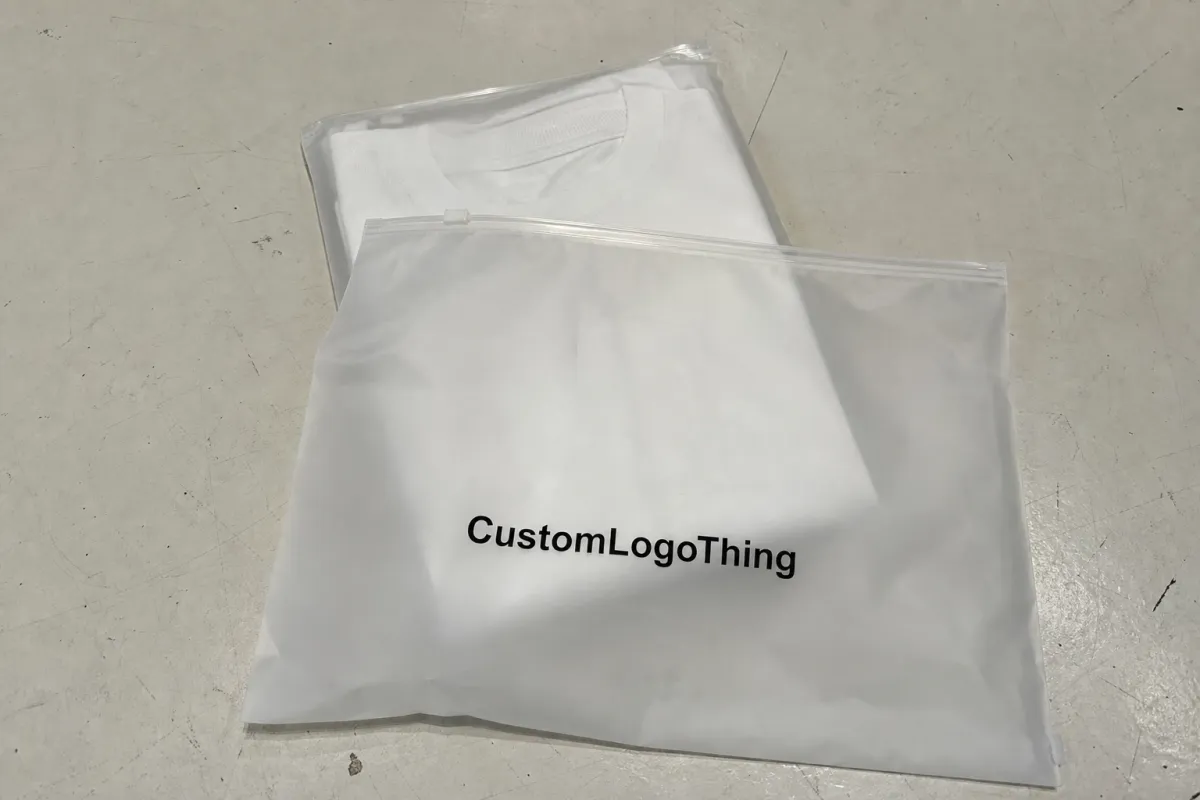
A frosted zipper bag is usually a polyethylene pouch with a press-to-close or slide closure, a matte or semi-matte finish, and heat-sealed edges that keep the contents contained under routine packing and shipping stress. That frosted surface is not just decorative. It changes how light hits the bag, softens reflections, and hides minor warehouse wear that would be obvious on a fully clear finish.
For ecommerce brands, that visual softness can do real work. It makes a package feel more deliberate. It reduces the contrast between high and low-value items in a line sheet. It can make a simple one-color logo read more upscale than the same logo on a shiny bag. In categories like apparel and beauty, where presentation is part of the product experience, that matters.
There is also a practical reason these bags remain popular: they are a middle-ground solution. Compared with printed cartons, they usually cost less, weigh less, and take up less storage space. Compared with a plain clear bag, they are more forgiving in transit and easier to present on a shelf or in an unboxing photo. Some brands even use them to reduce internal paper filler or to keep outer corrugated packaging cleaner and more consistent.
The catch is that appearance can mask weak construction. A sample can look premium in hand and still fail when a fulfillment team runs hundreds of units through a shift. If the seal is narrow, the zipper track is inconsistent, or the film is too thin for the packed item, the bag will announce its weakness quickly. That is why the ecommerce brand Frosted Zipper Plastic Bags material spec guide has to be about durability first and aesthetics second.
How the film, seal, and zipper work
Every frosted zipper bag is really three parts doing separate jobs. The film carries the load. The seals hold the shape and resist splitting. The zipper or press-close track controls opening and resealing. If any one of those parts is under-specified, the bag may still look fine in a photo but fail in actual use.
The frosted effect is usually created during extrusion or through a resin blend that diffuses light. That surface treatment changes the bag's look and feel more than most buyers expect. It can reduce fingerprints, minimize visible scratches, and soften the appearance of the product inside. That is useful for apparel, accessories, and curated kits. It is less useful when the product itself needs to be highly visible through the packaging.
Film choice affects flexibility and puncture resistance. Low-density polyethylene tends to feel softer and more forgiving. Blends may add stiffness or improve optical behavior. Thickness helps, but thickness alone is not a guarantee of performance. A 4 mil bag with a weak heat seal can fail sooner than a well-made 3 mil bag with stronger edge control and a better zipper profile.
The zipper is also a use-cycle component, not a decorative line item. If the tracks do not align cleanly, the bag can pop open during handling. If the closure feels mushy, workers slow down. If the closure sits too close to the opening, overfilled bags can split near the seal line. In a warehouse, those failures are not abstract; they are labor, waste, and rework.
For an ecommerce brand Frosted Zipper Plastic Bags Material spec guide, the basic test is simple: do you need presentation, repeated resealability, or enough protection to keep the product clean through the chain? The answer changes the spec.
Which spec details actually change the outcome
Some fields on a spec sheet matter far more than others. If you only have time to focus on a few, start with film thickness, usable interior size, zipper style, finish, and whether you need a tear notch or hang hole. Those decisions influence fit, packing speed, appearance, and how the bag behaves after repeated handling.
Film thickness. Buyers often talk about gauge as if bigger is always better. It is not that simple. A lightweight accessory may work in a 2.5-3 mil bag, while a heavier kit or a product with sharp corners may need 4-6 mil to reduce stretching and pinholes. Product weight, shape, and edge profile matter more than the category name. A hoodie and a folded knit sweater can need very different treatment even if both are called apparel.
Usable size. The listed dimensions are often not the usable dimensions. Heat seals and zipper zones take up space. A bag sold as 10 x 12 inches might have noticeably less room once the closure area is included. Too tight and packing slows down. Too loose and the product shifts inside the bag, which makes the package look sloppy even if the print is crisp.
Zipper style. Press-to-close tracks are common and economical. Slide zippers feel more premium, but they add cost and can increase production complexity. Tear notches improve opening. Hang holes help when the bag is displayed on hooks or integrated into a retail flow. Finish matters too: a soft frost often reads as more thoughtful than a gloss surface, especially when the artwork is minimal.
Seals and edges. These are easy to miss in photographs and expensive to ignore later. Wider, cleaner seals usually improve durability. Irregular edges can create a cheap look even if the printed artwork is strong. Ask for close-up photos of the seal line, not just full-bag shots.
One useful way to sort options is by intended use:
- Presentation first if the bag is part of the unboxing moment or shelf display.
- Reuse first if the bag will be opened and closed many times for returns or storage.
- Protection first if the product is heavy, sharp, or handled roughly in transit.
Most brands want a mix of all three, but the weighting changes. A beauty kit and a heavyweight sweatshirt do not need the same closure behavior. A subscription set and an accessory pouch do not need the same film. The best ecommerce brand Frosted Zipper Plastic Bags material spec guide is the one tied to the product, not the trend chart.
Production steps and lead time: from quote to ship
Good packaging quotes begin with specific inputs. Suppliers need dimensions, quantity, film thickness, zipper type, print method, packing method, and destination. Leave those out and the quote will be vague, which makes it hard to compare. Give complete information and the price usually gets more honest immediately.
The production path is usually predictable: sample or prototype, proof approval, manufacturing, quality checks, packing, and freight booking. The machine time is rarely the bottleneck. Clarification is. A missing measurement, an artwork change, or a sample revision can cost several days, and during peak season that delay can stretch longer than anyone planned.
For planning, many custom zipper bag orders land around 12-20 business days after proof approval, depending on complexity and factory workload. More complex print, special finishes, or multiple rounds of revision can push that out. Ocean freight adds a different calendar altogether. Air freight can move faster, but the landed cost often changes enough that the quote needs a second look.
Work backward from the launch date, not forward from the order date. Subtract proofing time, production time, transit time, and a cushion for customs or trucking. That simple exercise prevents the common mistake of approving a packaging spec too late and then accepting compromises that show up later as wrinkles, print drift, or zipper inconsistency.
One more production constraint is often overlooked: packaging format. If bags are packed individually, costs rise, but the bag arrives cleaner and easier to distribute. If they are bulk packed, the unit price may be lower, but warehouse handling can get messier. The right answer depends on how the bags enter your operation.
The cheapest quote is often the one with the most missing context. Once you add sample charges, freight, and rework risk, the lowest number can move up fast. That is why experienced buyers read lead time and quality assumptions alongside price, not after.
Cost, MOQ, and unit price levers
Pricing for frosted zipper bags usually moves with five levers: material weight, zipper construction, print coverage, packaging format, and shipping distance. Change one and the unit cost changes with it. Two quotes that look similar at first glance can land far apart once the missing variables are added back in.
MOQ shifts the economics too. A 5,000-piece order usually carries a higher unit price than a 20,000-piece order because setup cost is spread across fewer units. That said, the lowest factory quote is not always the best landed cost. A slightly higher quote with fewer defects, clearer approvals, and more reliable packing can be cheaper in the end.
| Option | Typical Use | Indicative Unit Price | Notes |
|---|---|---|---|
| 2.5-3 mil press-close frosted bag | Light apparel, accessories | $0.12-$0.22 at 5,000 pcs | Good for lighter items; check closure durability |
| 3.5-4 mil frosted zipper bag | DTC apparel, kits, returns | $0.18-$0.32 at 5,000 pcs | Balanced for presentation and handling |
| 5-6 mil heavy-duty zipper bag | Bulkier or sharper products | $0.28-$0.48 at 5,000 pcs | Higher material cost, stronger feel, better reuse potential |
Those figures are directional, not universal. Print coverage, slide zipper upgrades, custom hang holes, individual poly wrapping, and stricter quality control all move the number. Freight can matter just as much as the factory quote. A lower ex-factory price can become the higher landed cost after transit, duties, carton inefficiency, and rework are included.
When comparing suppliers, normalize the quote before deciding anything. Confirm the size, thickness, print count, packaging method, sample fees, and freight assumptions are identical. If one supplier includes physical samples and another does not, write that down. If one quote assumes bulk packing and the other assumes retail-ready sleeves, the comparison is already off. The ecommerce brand frosted zipper plastic bags material spec guide is most useful when it forces the same yardstick across all options.
How to write a spec sheet that suppliers can use
A supplier-ready spec sheet does not need to be elaborate. It needs to be specific. Start with the product description, then define the packed item size and weight. From there, translate that into the bag dimensions the supplier should quote. Many buyers skip this step and size by product label instead of actual packed footprint, which is how underfit bags get approved in the first round.
Then list the technical requirements. Include film thickness, zipper style, finish, whether you want a tear notch, whether you need a hang hole, and how the print should look. If the bag should read more matte than frosted, say that. If the product needs to remain visible, say that too. Do not assume the supplier will infer what you mean by "premium."
Add evidence whenever you can. A reference photo, an existing sample, or a simple pass/fail note saves time. For example: "Pass if the zipper can be opened and closed 10 times without separating, and the bag remains flat after packing a 1.2 lb folded garment." That is more actionable than "must feel high-end."
Use the same template for every supplier inquiry. Ask each vendor to quote the same dimensions, same thickness, same print coverage, same packaging format, and same approval process. If the sample is included, note it. If the supplier wants separate mold or plate fees, note that too. The goal is not just a cheaper quote; it is a quote you can trust without decoding it twice.
For brands building a broader packaging system, the bag should work with the rest of the pack, not against it. A frosted zipper pouch, a corrugated mailer, and a paper insert should feel like one system, not three unrelated items. That coordination matters because customers rarely experience packaging in pieces. They experience the whole stack at once.
A practical spec sheet also includes tolerance. If a bag can vary by a few millimeters without causing problems, say so. If the artwork must align precisely with a logo window or a hang hole, say that too. Tight tolerance raises cost, but vague tolerance raises risk. Buyers who spell this out early usually spend less time fixing avoidable mistakes later.
Mistakes that cause leaks, wrinkles, and reprints
The most expensive packaging mistakes are often the quietest. The sample looked acceptable. The price seemed fair. The launch date felt far enough away. Then the order went into production, and the hidden problems surfaced.
Sizing by product name. A medium hoodie is not a measurement. Neither is a three-piece beauty set. Measure the actual packed footprint, including fold height and closure space. If you skip that step, the bag can be too tight at the zipper or too loose in the body.
Weak seals and flimsy zippers. These failures do not always show up in a tabletop sample. They show up when workers are moving quickly, when cartons are compressed, or when the bag is opened and closed several times. If the closure separates too easily or the seal wrinkles under pressure, the bag stops helping the operation.
Approving color from a screen only. Monitors vary. Lighting varies. Print on frosted film can shift the way color reads, especially on lighter or desaturated artwork. If brand color matters, ask for a physical proof or a controlled sample. Otherwise a logo that looked sharp on a laptop can come back muddy or too flat on the real bag.
Ignoring shipping stress. A bag that survives gentle handling can still fail after carton compression, vibration, and mixed transit conditions. If the product is going through a rough route, ask for sample testing that reflects that reality. Packaging labs and transport tests tied to ISTA protocols are worth understanding here; the International Safe Transit Association is a useful starting point at ista.org.
Forgetting operations. Product weight, reuse expectations, insertion speed, and defect tolerance all matter. A beautiful bag that slows the line is a cost. A bag that saves seconds per unit may be worth more than a slightly lower unit price. That is especially true at scale, where a small handling difference compounds across thousands of packs.
Over-ordering features. Slide zippers, custom windows, heavy print coverage, and retail-ready packaging all add cost. Some are worth it. Some are just noise. If the bag lives inside a shipping box and never touches a shelf, a premium slide closure may be less useful than a stronger seal and better dimensional tolerance.
This is where the ecommerce brand frosted zipper plastic bags material spec guide earns its keep: it replaces vague packaging language with decisions that can be tested, checked, and repeated.
Expert checks and next steps
Before production, request one final sample using the actual fill weight. The sample should show the real hand feel, the true closure behavior, and how the film looks once the product is inside it. A bag can photograph well and still feel wrong in the hand. That gap matters more than many teams expect.
Then run a short checklist. Check seal strength. Count zipper cycles. Look for haze variation, scuffs, or uneven edges. Confirm that the bag sits flat enough for packing and that the product does not push too hard against the closure. If the bag will be reused, repeat the test several times instead of once. Five extra minutes here can prevent a reprint later.
Internally, compare lead time, unit cost, and defect tolerance on one sheet. Procurement usually focuses on price, operations on speed, and marketing on presentation. If those groups are working from different assumptions, the packaging decision gets noisy fast. A single worksheet keeps the discussion grounded in the same facts.
For sustainability claims, stay precise. If the material includes recycled content, ask for documentation. If the outer system uses FSC certified paper components or other lower-impact materials, make sure claims stay attached to the right layer. Buyers lose credibility fast when recycled content, compostability, and general green language get blurred together.
The best frosted zipper bag is rarely the fanciest one. It is the one that matches the product, the route, the warehouse flow, and the level of presentation the brand actually needs. When the dimensions are right, the closure behaves, the finish is consistent, and the quote is built on the same assumptions as the sample, the decision becomes much less speculative. That is the practical value of a real ecommerce brand frosted zipper plastic bags material spec guide: fewer surprises, fewer revisions, and a package that behaves as well as it looks.
What material thickness works best for frosted zipper plastic bags in ecommerce?
Choose thickness based on product weight, edge sharpness, and how the bag will be handled after packing. Light apparel and accessories often work in the 2.5-3 mil range, while heavier kits or repeated-use bags may need 4-6 mil. Test with the actual fill weight before approving the spec, because thickness by itself does not guarantee performance.
How do I compare frosted zipper plastic bag quotes without missing hidden costs?
Put every quote on the same basis: same size, thickness, print coverage, zipper style, and packaging format. Then check whether sample fees, freight, plate fees, and rush charges are included or billed separately. The number that matters most is landed cost per usable bag, not just the factory unit price.
What affects lead time the most for custom frosted zipper plastic bags?
Artwork revisions, sample changes, and factory load usually affect timing more than machine time does. Missing measurements or unclear specs can also add days because suppliers need clarification before production starts. Build buffer into the schedule if the bags are tied to a launch, holiday order, or subscription drop.
Are frosted zipper plastic bags reusable enough for returns and repeat shipments?
They can be, if the zipper track is durable and the film thickness is suitable for repeated use. Ask for cycle testing or sample reuse testing if the bag will be opened and closed many times. If reuse matters, prioritize closure quality and seam strength over decorative extras.
What should be in a spec sheet before I request samples for frosted zipper plastic bags?
Include dimensions, packed product weight, film thickness, zipper style, finish, print requirements, and target quantity. Add a reference photo or sample so the supplier can match the look and function more closely. State what counts as a pass or fail so the sample review is quick and consistent.

