For ecommerce brand frosted zipper plastic Bags Wholesale Order Planning, the package has to protect the product, present it cleanly, and survive packing, shipping, and customer handling. That is why Frosted Zipper Bags show up so often in apparel, accessories, beauty kits, and subscription packaging. They are controlled, not decorative.
A frosted surface hides fingerprints and small scuffs better than clear film, which matters once bags move through production and fulfillment. Clear bags can look neat on a sample table and messy after packing. Frosted film softens that visual noise while keeping the product visible.
A bag that looks good in a mockup but fails during packing is not a bargain. It is an avoidable operational problem with a low upfront number.
Ecommerce brand frosted zipper plastic bags wholesale order planning: why the format works
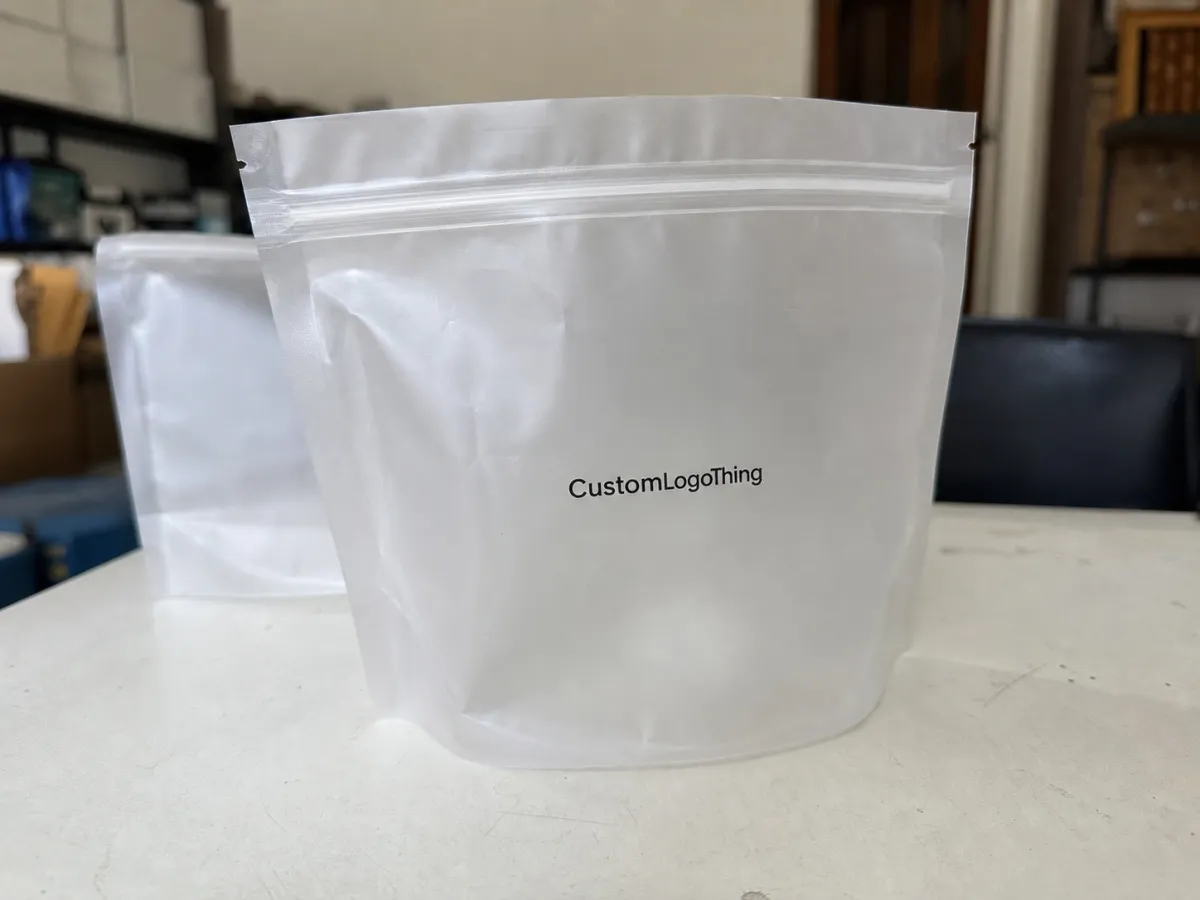
Frosted Zipper Bags sit between a plain poly sleeve and decorative packaging that adds cost without helping the SKU. For ecommerce brands, that balance matters. The bag needs to be clean enough for presentation, plain enough to stay flexible, and durable enough to keep its shape through pack-out and shipping.
The format is practical for products that are folded, stacked, or bundled. Apparel is the obvious case, but not the only one. Small accessory sets, refill packs, cable kits, beauty sample collections, and starter bundles all benefit from a package that keeps pieces together and makes inventory easier to handle. A bag that stacks well in cartons also saves labor.
Reuse is another reason brands keep returning to Frosted Zipper Bags. Customers often keep them for travel, sorting, or storage. That does not make the packaging magical, but it extends its life beyond delivery day and can quietly support the brand after unboxing.
The look only works if the execution holds together. Frosted film should feel even, not patchy. The zipper should open and close without snagging. The seams should be straight, and the dimensions should match the packed item rather than the catalog picture. If any of those pieces drift, the bag stops feeling considered.
Bag construction, sizes, and finish choices that affect usability
Construction determines how the bag behaves in the warehouse and in the customer’s hands. Most frosted zipper bags use PE-based flexible film, heat-sealed seams, and a zipper track. Some add a hang hole, a tear notch, or a gusset. Each choice changes fit, stackability, and handling.
A flat bag is simple, light, and easy to store. It works well for items that are already low profile. A gusseted bag buys more depth and can improve fit for bulkier items, but it also changes how the bag stacks and how much room it takes in cartons. That extra volume matters when pallet space is tight or freight is being watched line by line.
Size should be measured from the packed product, not the product alone. Folded apparel needs room for fabric thickness, edge folds, and the zipper closure. Inserts need enough clearance not to warp. A bag that fits the naked product on paper may become too tight once the item is packed the way customers actually receive it.
Finish choices shape how premium the packaging feels. Full frosted film produces a soft, even look and usually gives the logo a cleaner stage. Partial frost with a clear window can be useful if the product itself is part of the presentation. A more matte appearance can read as premium, but only when print and sealing are consistent.
Common fit categories
- Apparel: folded tees, socks, swimwear, sleepwear, and lightweight activewear.
- Beauty: sample sets, travel kits, accessory bundles, and refill packs.
- Tech accessories: cables, chargers, earbuds, small sleeves, and cable organizers.
- Subscription kits: recurring bundles that need repeatable pack-out and easy inventory control.
There is no universal best size. The right bag is the one that matches the actual packed dimensions, the closure style, and the shipping environment. If a bag only works before it goes through the packing line, it is not sized correctly.
Thickness, zipper strength, print method, and other specs to lock in
Thickness is one of the few specs buyers can feel immediately. For light retail items, 2.5 to 3.5 mil can be enough. For bags that will be handled repeatedly or reused by the customer, 4 to 6 mil is usually safer. Thin film can lower the quote, but it also wrinkles more and can make the packaging seem fragile.
More thickness usually means better structure, but it can also increase cost and reduce flexibility if the product is small or soft. The goal is not maximum stiffness. The goal is enough body that the bag presents well and survives the actual use case.
Ask for both inner and outer dimensions. They are not interchangeable. You also want the usable opening width, especially for folded apparel or products with rigid inserts. A bag can appear large on a drawing and still feel too tight at the zipper line.
Zipper quality deserves more attention than it usually gets. Standard zippers are fine for many orders. A reinforced or upgraded closure is worth considering for heavier loads, repeated opening, or higher-value items where the customer is likely to reuse the bag. Weak zippers are one of those low-cost failures that turn into complaints.
Printing is where brand accuracy becomes visible. On frosted film, logo opacity matters as much as artwork size. White ink often helps if the brand color is dark or saturated. Pantone matching is worth asking for when color consistency matters across product lines, because “close enough” is how branding starts drifting from one reorder to the next.
| Spec choice | Typical fit | Approx. impact on unit cost | Best use |
|---|---|---|---|
| 2.5-3.5 mil, standard zipper | Light apparel, inserts, small accessories | Lowest | Simple pack-out and lower-value items |
| 4-5 mil, standard or upgraded zipper | Most ecommerce products | Moderate | Reusable retail presentation and general fulfillment |
| 5-6 mil, reinforced zipper, print with white ink | Heavier bundles and premium kits | Higher | Stronger presentation and longer reuse |
| Custom size, gusset, multi-color print | Specialty pack-outs | Highest | Launches and brand-forward packaging |
Quality control should cover seam alignment, zipper engagement, film uniformity, print registration, and odor if the product will sit near sensitive goods. For transit stress, standards such as ISTA are useful references. If recycled or paper-based components are part of the broader packaging system, FSC remains a familiar benchmark for sourcing discussions.
Pricing, MOQ, and quote variables that move the unit cost
Price is shaped by a short list of variables: size, thickness, zipper style, print coverage, pack count, and shipping terms. Those are the real levers. A standard unprinted bag in a common size will always cost less than a custom-sized, white-ink printed bag with a reinforced zipper. If a quote ignores those differences, the quote is incomplete.
MOQ changes depending on whether the order is stock-style or custom printed. Stock-style packaging can start in the low hundreds. Custom printed wholesale orders often begin around 1,000 to 3,000 units, and heavier or more complex specs can push higher. Setup, print alignment, and material waste all cost money whether the order is small or large.
Lower MOQ feels attractive until the unit price rises enough to make the total spend harder to justify. Larger runs usually reduce the per-bag cost, sometimes enough to make sense if the SKU is stable and sell-through is predictable. The more useful question is whether the order size fits your inventory cycle and cash flow without forcing a rushed reorder.
In rough terms, the market often lands somewhere near these bands for common ecommerce packaging, though freight and material swings can move them quickly:
| Order type | Typical MOQ | Indicative unit price | Comments |
|---|---|---|---|
| Stock-style, unprinted | 500-1,000 | $0.10-$0.18 | Fastest and simplest, with limited branding |
| Custom printed, one-color logo | 1,000-3,000 | $0.18-$0.32 | Common range for ecommerce packaging |
| Custom printed, white ink or multi-color | 3,000+ | $0.28-$0.45 | Better branding control, higher setup cost |
| Heavy-duty custom size | 3,000+ | $0.35-$0.60 | For larger, reusable, or premium pack-outs |
Those numbers are directional, not fixed. Resin costs, print coverage, carton packing, and freight can move them enough to matter. The useful part is understanding why one bag is priced at a level that makes sense and another is priced higher for reasons visible in the spec sheet.
When requesting a quote, send the supplier enough information to price the job properly:
- final bag dimensions and any gusset requirement
- target quantity and tiered quantity breaks
- film thickness preference
- logo file and print placement
- zipper style
- ship-to location or port
- target delivery date
If any of those items are missing, the first quote is usually just a placeholder. That is not the number to build a purchasing decision around.
Production steps, proofs, and lead time from approval to shipment
The production path should be clear before the deposit is sent: quote, confirm the spec, review the proof, approve a sample if needed, run production, inspect the batch, then ship. If a supplier cannot explain that sequence clearly, the process is not as controlled as it should be.
Typical timing is straightforward, though not always fast. Proofing can happen quickly. Sample production often takes 5 to 7 business days. Full production commonly falls around 10 to 20 business days after final approval. Complex print work, large quantities, or custom dimensions can stretch that. Freight adds its own clock.
Most delays come from avoidable issues: missing Pantone references, late artwork changes, unclear zipper requirements, or a buyer discovering the size problem after the proof is already drawn. Every revision restarts part of the process. Orders move fastest when the buyer has already measured the product in its packed state.
Physical samples matter most when the packaging is customer-facing, the product value is high, or the brand relies on a specific first impression. A sample is cheaper than a full run that prints correctly but feels wrong in hand. That is especially true for frosted film, where finish, opacity, and zipper feel can be judged immediately.
For planning, work backward from the replenishment date, not the out-of-stock date. If production and freight together need 30 to 45 days, a reorder placed with ten days left is already late. That is how brands end up paying for urgent shipping and accepting weaker terms because the calendar gave them no room.
Why a supplier is worth keeping for repeat ecommerce orders
Repeat orders reveal whether a supplier is consistent or merely lucky. The first batch can look fine even when the process is loose. The second and third runs are where the truth shows up. Does the frosted finish stay consistent? Does the zipper line up the same way? Do the dimensions remain within tolerance?
A low quote is not much help if the packaging changes from one run to the next. Color drift, uneven film, and sloppy sealing can make the same SKU feel like a different product. That can trigger rework, slower pack-out, and confusion across warehouses or fulfillment partners. In ecommerce, consistency is part of the product.
The best supplier relationships are built on specificity. Good suppliers answer in specs, not general assurances. They can explain sample support, batch checks, carton packing, labeling, and what happens if an order lands short. Those details matter because ecommerce order planning is rarely a one-time event.
There is also a hidden operational benefit to a supplier that keeps records well. Reorders get faster when the previous spec, artwork placement, and carton counts are already documented. That reduces the number of small mistakes that usually creep into repeat purchases.
What to confirm before you place the first wholesale order
Before you approve a first wholesale run, confirm six things: size, thickness, print area, zipper style, quantity breaks, and delivery target. If any one of those is fuzzy, the order is not ready. A surprising number of packaging problems begin with an assumption that the spec sheet was obvious.
Ask for a digital proof or a physical sample when the product is high value, the artwork needs accurate color, or the bag is part of the first impression. You do not need a sample for every reorder, but you do need one when the packaging carries brand weight.
Build the reorder trigger around lead time instead of panic. If production and freight together need several weeks, do not wait until inventory is nearly gone. Brands that reorder too late often end up paying for expedited freight, accepting weaker specs, or splitting shipments to patch a stockout.
The practical version of ecommerce brand Frosted Zipper Plastic Bags wholesale order planning is simple: measure the packed product, choose a thickness that fits the use case, lock the zipper and print requirements, compare MOQ tiers, and leave room for proofing and freight. Get those decisions right early, and the bag becomes part of the brand system instead of a recurring distraction.
What MOQ should I expect for frosted zipper plastic bags wholesale orders?
Custom printed runs often start around 1,000 to 3,000 bags, while stock-style orders can be lower. Heavier specs, multiple print colors, or custom sizing usually push MOQ higher. Ask for tiered pricing so you can see how the unit cost shifts as the order gets larger.
How do I choose the right size for ecommerce packaging?
Measure the item in its final packed state, not just as a bare product. Add room for folds, inserts, and the zipper closure so the bag does not bulge or split. Ask for inner dimensions and usable opening width before approving the spec sheet.
Can I print a logo on frosted zipper plastic bags?
Yes, most custom runs support one-color or multi-color logo printing. White ink often helps logos stand out on frosted film, especially with darker brand colors. Approve a proof or sample because opacity and placement can look different on the finished material.
How long does production take after proof approval?
Many wholesale orders run 10 to 20 business days after final approval, depending on size and complexity. Sample making or revised proofs can add several days before production begins. Freight then determines the final delivery date.
What should I send for the fastest accurate quote?
Send product dimensions, bag quantity, print file, thickness preference, zipper style, and target ship date. Include the destination zip code or port if you want a more reliable freight estimate. If the product has special pack-out needs, mention those before the first quote is drafted.

