Hotel Retail Frosted Zipper Plastic Bags Quote Guide
The hotel retail Frosted Zipper Plastic Bags factory quote checklist matters because packaging can change how a product is judged before it is opened. A frosted finish softens glare, hides minor contents noise, and makes simple film look more deliberate under retail lighting. For hotel amenity kits, travel accessories, refill packs, or counter displays, that visual control is often the point.
Good buying starts with clarity, not price hunting. The factory needs exact dimensions, film thickness, zipper style, print area, and packing format before a quote can be trusted. If those inputs are vague, the price will be vague too, and buyers end up comparing offers for bags that are not actually the same.
Frosted Zipper Bags sit between plain clear pouches and more rigid packaging. Clear film can feel busy or reflective. Frosted film gives branding a cleaner background and usually improves the perceived value of the contents without a large jump in material cost.
Buying Signals That Justify Frosted Zipper Bags
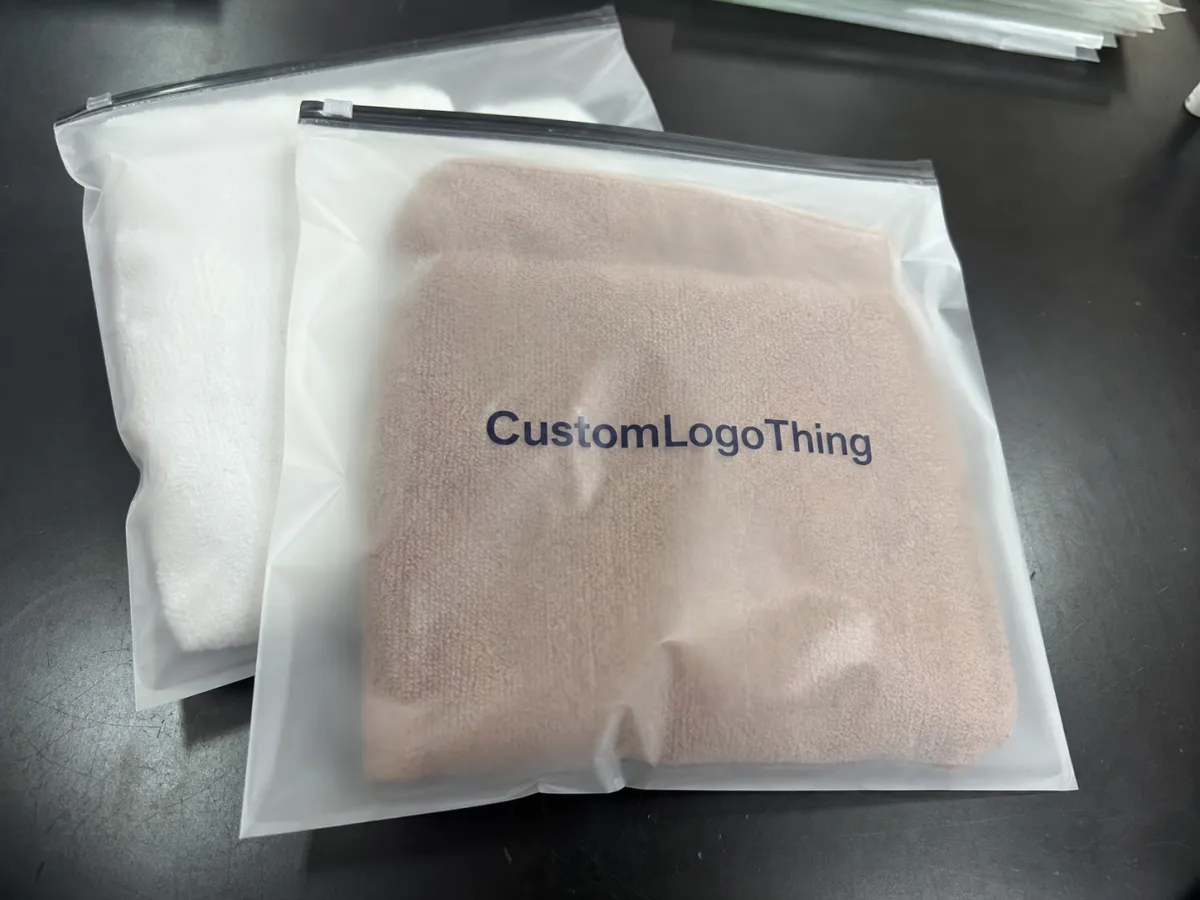
Frosted zipper bags work best when presentation has to feel controlled. In hotels, they help mixed contents look organized. In retail, they make small accessory sets or bundled items feel finished instead of temporary. The bag is doing part of the presentation work, not just holding product.
The frosted surface also reduces the visual noise that clear film can create under bright LEDs or in window displays. Logos print more legibly on a muted background, so even a modest packaging upgrade can make the product read as higher quality. That is why the visual effect often outweighs the material difference.
Frosted film usually earns its keep by improving how the package reads under bad lighting, not by changing the product itself.
That is why the hotel retail Frosted Zipper Plastic Bags factory quote checklist should begin with use case and handling conditions. If the bag will be opened, closed, stacked, and repacked, the zipper and seal need to match that job. If it is only a transit sleeve, a simpler spec may be enough.
Product Details That Shape the Factory Quote
Factory pricing starts with the build. A frosted PE pouch, a softer LDPE version, and a layered bag with more stiffness do not cost the same or perform the same. Small changes in film structure affect folding, sealing, and how the final carton packs.
Thickness is one of the fastest ways to move the quote. Moving from 60 microns to 80 microns can improve puncture resistance and reduce sag, but it also increases resin use and lowers packing efficiency. Thickness is a quality choice, but it is also a cost and logistics choice.
Zipper style changes both durability and price. A standard press-to-close zipper is usually the cheapest practical option. Reinforced closures, dual-track zippers, and specialty seals add performance, but they also add material and line complexity. If the bag will be reused many times, closure quality matters more than a cosmetic difference.
Shape matters too. Flat pouches are simpler and usually more economical. Gusseted bags add capacity, but they also add forming and sealing steps. Hang holes help retail display, yet they add another die-cut or punching step. Tear notches improve opening when they are placed cleanly, but poor placement can weaken the finished look.
Printing is another major variable. A one-color logo is much easier to control than multi-color artwork or full-panel coverage. Screen print works well on frosted film for bold marks, but larger artwork or fine lines may need a different process. If print method is not fixed before quoting, the buyer may compare prices based on different production assumptions.
- Film type: frosted PE, LDPE, or a layered structure with better stiffness
- Thickness: commonly 50-100 microns depending on load and handling
- Closure: standard zipper, reinforced zipper, or specialty seal
- Shape: flat, gusseted, hang-hole, or tear-notch format
- Print: one-color logo, multiple colors, or full artwork coverage
That is the core of a workable hotel retail frosted zipper plastic bags factory quote checklist: quote the build, not just the bag name.
Specifications to Lock Before Sampling
Sampling moves faster when dimensions are fixed before artwork starts. Width, height, side gusset, bottom gusset, zipper position, and usable interior space should all be documented in one spec. A bag that measures 200 x 250 mm on paper can feel smaller once the sealing margin and closure zone are counted.
Thickness should match the product weight and handling pattern. Too thin, and the film may puncture near the corners or zipper track. Too thick, and the pouch may fold badly or take up unnecessary carton volume. For a light amenity set, moderate film often performs better than an overbuilt option.
It helps to define acceptance checks before the sample is made. Seal integrity, zipper cycle behavior, print alignment, opacity consistency, and carton packing density are all worth checking. The zipper should not just close; it should close consistently over repeated use.
Compliance and use environment should also be noted. Some hotel buyers need lower-odor film for guest-facing use. Some retail channels care about material declarations or food-adjacent packaging rules. If the bag touches regulated or sensitive goods, ask what testing can be supported and what documents exist before the order is placed. Shipment testing standards such as ISTA matter when transit damage is a concern.
One simple rule saves rework: if the product can shift, snag, or press against the seal line, sample with the actual product inside. A flat mock-up will not show that problem reliably.
Pricing, MOQ, and Unit Cost Drivers
Price usually moves with five factors first: resin grade, bag size, thickness, zipper style, and print coverage. Quantity comes next. Lower MOQ almost always pushes the unit price upward because setup, waste, and labor are spread across fewer pieces.
A useful quote should separate bag cost, printing, sample charges, tooling if any, inner packing, carton packing, and freight. Without that breakdown, two offers can look similar while hiding different assumptions. One may be ex-factory only; another may include cartons, samples, or partial freight.
| Option | Typical MOQ | Indicative Unit Cost | Best Fit |
|---|---|---|---|
| Plain frosted zipper bag | 3,000-5,000 pcs | $0.06-$0.12 | Internal hotel use, simple packing, low decoration |
| One-color logo print | 5,000-10,000 pcs | $0.09-$0.18 | Retail accessories, branded amenity kits, standard resale |
| Multi-color or larger format print | 10,000+ pcs | $0.14-$0.28 | Premium presentation, stronger shelf impact, multiple SKUs |
These numbers are directional, not universal. They move with thickness, pouch size, print area, resin price, and the factory’s current capacity. Still, they are useful because they expose outliers. If one price is far below the rest, the likely reason is usually thinner film, weaker zipper quality, limited print coverage, or a quote that excludes packaging and freight.
The real number is landed cost. A low ex-factory quote can become less attractive once cartons, shipment volume, destination handling, and transit method are added. Buyers who only compare factory gate price tend to miss the part finance teams care about: the cost of getting a conforming bag to the final door.
Production Process and Lead Time Milestones
The production path is straightforward, but delays usually come from incomplete input. A typical sequence is RFQ review, specification confirmation, artwork check, sample approval, pre-production, bulk manufacturing, inspection, packing, and shipment. Each stage depends on the one before it.
Complete files make a big difference. Exact dimensions, print-ready artwork, a clear target quantity, and one approved sample direction remove the need for repeated interpretation. “Same as before, but better” sounds efficient and usually creates avoidable back-and-forth.
Lead time also depends on whether the required film and zipper components are already available. If the factory has the base material in stock, smaller jobs can move faster. If the structure is custom, if the print area is large, or if the order combines multiple SKUs, the schedule expands. A realistic planning window is often 12-15 business days from proof approval for smaller runs. Larger or more customized orders usually take longer, and shipping time is separate.
Sampling revisions are what stretch timelines most. Artwork changes are usually manageable. Changes to bag size, zipper type, gusset depth, or film thickness may require a new sample and a fresh production plan. Buyers who lock the spec before proof approval usually get the most reliable dates and the fewest surprises.
Use Cases That Justify Frosted Zipper Bags
Hotel buyers usually justify frosted zipper bags because the package feels organized. Amenity kits, spa accessories, sewing sets, and refill items look more intentional in a pouch that holds its shape and keeps the contents visible without exposing every detail.
Retail buyers use the same format for a different reason. Small accessories, travel goods, promotional bundles, and seasonal packs often need a presentation layer that is cleaner than a poly sleeve and cheaper than a rigid box. In a crowded display, frosted film reduces visual noise while preserving product visibility.
Compared with open-top bags, zipper bags cost more, but the extra cost is justified when the package is handled repeatedly. If the end user is expected to open, close, store, and reopen the bag, the zipper is doing real work. In back-of-house hotel operations, that also means fewer spills and easier repacking.
- Hotel amenity kits: toiletries, sewing sets, spa items
- Retail refill packs: travel goods, accessories, bundled products
- Promotional packaging: giveaways, event kits, branded sets
- Back-of-house sorting: housekeeping, inventory, and storage use
Factory Controls That Reduce Rework and Delays
Good factories manage variation early. Incoming checks should cover film consistency, zipper function, and color tone before the line starts running. With frosted film, small variation can hide in plain sight until the bags are stacked under bright light.
In-line checks should cover seal quality, print registration, bag dimensions, and sample-to-bulk consistency. The goal is to catch drift before cartons are closed. Once bags are boxed and palletized, rework becomes expensive quickly.
Traceability matters more than many first-time buyers expect. Batch labels, carton codes, and run records make it easier to reorder the same bag, split shipments across destinations, or separate retail and hotel SKUs. If a problem appears later, the supplier should be able to identify the run and carton range without guessing.
Shipping controls are the last layer and easy to underprice. Carton strength, moisture handling, export packing, and pallet stabilization all affect whether the bags arrive in the same condition they left in. A pouch does not need luxurious shipping, but it does need sensible shipping.
What to Send for a Fast Factory Quote
If speed matters, the factory needs a complete brief on the first pass. Exact dimensions, target thickness, material preference, zipper style, print artwork, quantity, shipping destination, and required delivery date are the minimum inputs. Without them, any response is only an estimate.
Reference photos help. A physical sample helps more. If the buyer wants a certain frosted tone, opacity level, zipper feel, or seal firmness, a photo alone may not be enough. The same applies to print placement. A logo that sits 10 mm too high can make a premium pouch look awkward.
End use should be stated plainly: hotel supply, retail resale, or promotional packaging. The use case changes the recommendation as much as the price. Hotel use usually values consistency and efficient packing. Retail resale may prioritize a stronger visual finish and repeated opening. Promotional use may need the lowest viable cost at a defined appearance threshold.
For comparison shopping, the cleanest method is to send the same request format to every supplier. One spec sheet. One artwork file. One target quantity. One delivery destination. That way, price differences reflect the product, not the paperwork.
What should a hotel retail frosted zipper plastic bags factory quote checklist include?
It should list dimensions, thickness, material, zipper type, print colors, quantity, destination, and target delivery date. Add photos, a reference sample, or artwork files so suppliers quote the same build instead of guessing. Ask for separate pricing on samples, tooling, packaging, and freight.
Which spec changes the unit cost of frosted zipper bags the most?
Size and thickness usually move the price fastest because they change resin usage and production speed. Full-coverage printing, specialty finishes, and unusual zipper styles can add more cost than buyers expect. Order volume matters too; lower MOQ orders usually carry a higher per-unit price.
What MOQ is typical for custom frosted zipper plastic bags?
MOQ depends on size, print complexity, and whether the factory has the base material in stock. Simple unprinted or lightly printed bags often have lower minimums than fully customized retail runs. Buyers should ask for a price ladder at several quantities so they can see the breakpoints.
How long do sampling and production usually take?
Sampling is usually faster when the buyer gives complete specs and print-ready files on the first round. Bulk production starts after sample approval, so revisions add time more than most buyers expect. Shipping time should be included in the plan because lead time is not just factory time.
What is the fastest way to get a comparable factory quote?
Send one spec sheet, one artwork file, one target quantity, and one delivery destination to every supplier. Use the same request format for each quote so differences in price reflect the product, not the paperwork. Confirm whether the quote is ex-factory or landed before comparing suppliers.
The strongest buying process treats the hotel retail frosted zipper plastic bags factory quote checklist as a repeatable sourcing tool. That keeps quotes comparable, shortens sampling, and helps the package support the product instead of distracting from it.


