Ecommerce Unstructured Dad Hats: Digital Proof Checklist
The fastest way to lose money on a hat program is to approve a proof that looks right on a screen and wrong on a head. That risk is bigger with Unstructured Dad Hats because the crown has less support, the front panel relaxes, and the visor curve changes how the logo reads once the cap is worn.
An ecommerce Unstructured Dad Hats digital proof checklist is not just a visual review. It is a production checkpoint. It forces the team to confirm placement, scale, thread color, hat color, and decoration method before those choices harden into inventory. If the proof is treated like a formality, the order usually pays for it later in rework, delayed launches, or returns that should never have happened.
There is a simple reason this category deserves more attention than a flat t-shirt mockup or a rigid cap render: soft structure changes the design. A logo that feels balanced in Illustrator can sit too high, too small, or slightly off-center once stitched onto a cap that collapses a little under its own weight. That is not a defect in the artwork. It is the reality of soft goods.
Good proofing catches those distortions before they become a full run. Better proofing also exposes hidden assumptions: whether the front panel is low-profile or mid-profile, whether the fabric is brushed cotton or washed twill, and whether the decoration method can survive the shape of the hat without pulling the crown out of form.
Ecommerce unstructured dad hats digital proof checklist: what it catches early
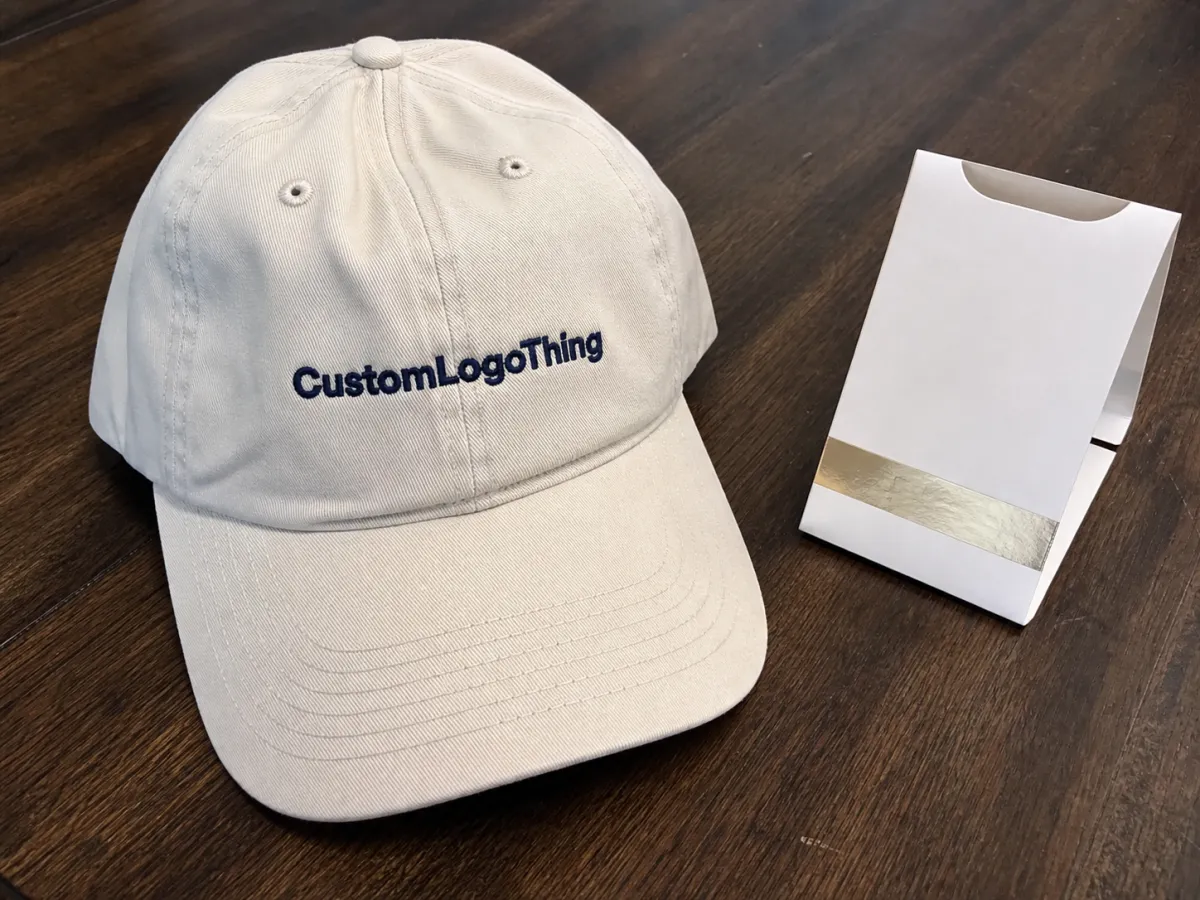
Unstructured dad hats are sensitive in ways buyers do not always expect. Unlike a firm five-panel cap or a structured trucker, the front of an unstructured hat can shift slightly with every handling step. That makes logo placement and stitch density more important than they look in a mockup.
The first thing a proof should answer is whether the art has been translated into a real production position. Is the logo centered to the wearer, not merely centered on a template? Is it far enough above the bill seam to avoid crowding? Does it fit the actual front panel width instead of the clean rectangle of a digital canvas?
The second thing it should answer is whether the hat style matches the visual goal. A washed cotton cap will drape softer than a firmer twill cap. A low-profile crown sits differently than a deeper crown. Even the same logo can look broader, narrower, or more casual depending on those choices. That is not a branding theory problem. It is a manufacturing one.
A proof that is “close enough” is usually the most expensive proof in the chain.
For ecommerce teams, the proof also has to protect the product page. Photography, copy, SKU setup, and warehouse labeling all depend on the finished hat resembling what was approved. One missed measurement can make the final item technically correct and visually wrong, which is how a launch ends up with unhappy buyers and avoidable markdowns.
The checklist should also reflect who owns the decision. If merchandising, design, and operations all weigh in, the final approval has to be grounded in one version of the artwork and one set of specs. Suppliers can move faster when the buyer sends one clear decision rather than a thread full of competing comments.
How the digital proof turns your artwork into a sample-ready spec
A digital proof is not the same thing as a technical spec sheet, but the two have to agree. The proof shows what the hat should look like. The spec tells the production team what to build. If those documents drift apart, the factory can still produce an order that matches the image and misses the real requirements.
The workflow usually begins with vector artwork and ends with a mockup placed on a cap template. In between, the supplier converts brand art into practical instructions: decoration type, placement dimensions, thread colors, panel position, closure style, and any added elements such as labels, patches, or side embroidery.
That translation is where most of the quality control happens. A buyer does not need to become a decorator, but the buyer does need to read the proof like a build sheet. The points below matter more than most first-time buyers realize:
- Orientation: confirm the logo faces the correct way and reads from the wearer’s perspective.
- Scale: check the width and height against the actual front panel, not just the mockup image.
- Spacing: make sure the art clears seams, eyelets, and the bill join with room to spare.
- Construction: verify crown depth, closure type, visor shape, and any washing or distressing.
- Decoration method: confirm whether the artwork is embroidery, patch, print, or a combination.
That last point matters because decoration method changes the result even when the artwork stays the same. Embroidery carries weight and texture. Woven patches can hold detail more cleanly. Printed decoration is faster and often cheaper, but it behaves differently on a soft crown and may not deliver the same shelf presence.
Color proofing needs the same discipline. Screen color is not thread color. Monitor brightness, backlighting, and warehouse lighting all distort perception. If color precision matters, reference thread charts, Pantone numbers, or physical swatches. A screenshot alone is a weak promise.
One practical habit saves time: ask for the proof and the spec notes in the same document or the same email chain. Separating them invites mistakes. A proof with no dimensions or a spec with no visual reference forces the production team to guess. Guessing is how minor issues become full-run problems.
If you need a reference point for what a supplier can actually build, review the decoration and build options before moving into sign-off. A clear capability sheet is better than discovering limitations after the artwork is already approved.
Front-panel size, stitch count, and fabric choices that change the outcome
Three variables drive most of the visual difference on an unstructured dad hat: fabric behavior, stitch density, and front-panel shape. Ignore any one of them and the final piece can drift from the approved mockup in ways that are hard to fix once production starts.
Fabric is the quiet culprit. Washed cotton feels relaxed and broken-in, but it also collapses more easily. Brushed twill is often a little firmer. Garment-dyed caps can vary slightly from dye lot to dye lot. Those differences may look small in isolation, yet they change how a logo sits on the crown.
Stitch count matters because embroidery is physical. A dense fill can pull fabric inward, especially on a soft cap with less internal reinforcement. That can make a logo look heavier or more upright than intended. A lighter stitch pattern may keep the cap softer, but it can also reduce clarity on small text. The right balance depends on the artwork, not on a universal rule.
Placement near seams adds another layer. A design that sits too close to the crown seam can warp as the machine stitches through changing fabric tension. If the proof places a logo in that danger zone, ask for a shift before approving the run. A few millimeters can save a lot of waste.
Below is a practical comparison of common decoration choices for custom dad hats. The numbers are typical add-on ranges at around 500 pieces, not fixed quotes. Artwork complexity, thread count, and supplier setup can move them up or down.
| Decoration option | Best use case | Typical setup impact | Typical add-on at 500 pcs | What to watch in proofing |
|---|---|---|---|---|
| Flat embroidery | Simple logos, brand marks, clean lettering | Moderate | $0.65-$1.25 | Stitch density, centering, thread color |
| 3D puff embroidery | Bold lettering and stronger shelf presence | Higher | $0.90-$1.60 | Height, legibility, crown pull |
| Woven patch | Detailed artwork and cleaner edge control | Higher upfront, stable later | $1.10-$2.00 | Patch size, border shape, placement |
| Printed decoration | Short runs, low-detail graphics, fast turnaround | Lower to moderate | $0.40-$0.95 | Ink opacity, adhesion, wash wear |
Those ranges are useful because they show the tradeoff buyers face. Embroidery usually gives a stronger retail impression, but it also requires more careful proofing. A printed mark may be easier to approve, yet it can look flatter on a soft cap and may not survive wear as well as a stitched finish.
Product teams also need to think about the customer’s eye level. A hat seen on a hanger reads differently from the same hat on a model. A front panel that feels modest in a digital proof can look larger in real life because the head creates a reference point. If the ecommerce image exaggerates the balance, the final product will feel off even if the manufacturing was perfect.
Production steps and turnaround: how long approval and sampling really take
The path from quote to shipment is usually straightforward, but every handoff adds time. A typical sequence looks like this: request quote, review artwork, issue digital proof, gather revisions, approve final proof, sample if needed, produce bulk, inspect, pack, and ship. The fewer times the order bounces between those steps, the better the schedule holds.
Delays tend to come from ordinary things rather than dramatic failures. A file arrives in the wrong format. One stakeholder wants the logo larger while another wants it lower. A proof gets forwarded into a new thread, and the comments split across versions. Then the buyer asks for a “small tweak” that actually changes the stitch layout. Nothing breaks in a single moment; the timeline just stretches.
As a working range, a simple digital proof often turns around in one to two days. Standard embroidery production may take roughly 10 to 20 business days after final approval, depending on quantity, decoration method, and the factory queue. Multi-location decoration, custom labeling, or special packaging can add more time. Rush orders are possible in some cases, but they usually cost more and reduce flexibility.
Sampling deserves its own caution. A plain embroidered dad hat can be approved quickly. A hat with patches, side marks, or unusual closures may need another round of review because each extra feature can affect placement and construction. If the project is tied to a launch date, ask for three dates in writing: proof sign-off, production start, and estimated ship date.
That written timeline matters more than a general promise. Ecommerce teams have tight merchandising windows, and a hat order that misses a campaign by a week can miss the sale window altogether. The market does not wait for production to catch up.
Cost, pricing, and MOQ: what drives the quote on custom dad hats
Pricing is usually shaped by five things: the blank hat, the decoration method, the stitch count, the number of thread colors, and the extras around packaging or shipping. Buyers often focus on the blank cap first, but that is only one line in the total. A cheap blank can become an expensive order if the proof needs repeated revisions or if the decoration is more complicated than expected.
MOQ changes the economics quickly. Lower quantities spread setup costs across fewer hats, which pushes unit pricing up. Larger orders usually lower the per-unit cost, but only if the artwork and production process stay controlled. A 48-piece run and a 500-piece run are not comparable just because the style name is the same.
It also helps to ask what is included in the quote. Is art setup included? Are proof revisions free or billed after the first version? Is the sample separate from bulk? Are rush charges listed? Those details determine the real landed cost, not the first number in the inbox.
For some brands, the least expensive decoration method is not the best value. A simple printed mark may save money up front, but if the goal is a premium retail presentation, embroidery or a woven patch can justify the extra setup because the final hat reads more deliberately made. In contrast, highly detailed artwork may actually be easier to execute as a patch than as direct embroidery.
Packaging is another cost lever people underestimate. Individual polybags, hang tags, sticker labels, carton marks, and retail inserts all add labor or materials. If the order will move through distribution, ask whether the supplier can pack to a transit standard such as ISTA. For paper inserts or swing tags, an FSC-certified substrate can be a sensible requirement; the framework is outlined at FSC.
That is also where a supplier’s build sheet matters. If the vendor cannot clearly separate blank spec, decoration spec, and packing spec, the quote may look clean while hiding expensive assumptions. The cheapest order on paper is not always the cheapest order by the time it lands.
Common proof mistakes that trigger delays, waste, or a bad fit
The most common mistake is approving the wrong artwork version. Teams keep multiple logo files in circulation more often than they realize. One includes an old tagline. One uses a modified mark. One is the right logo in the wrong format. If the proof is built from the wrong file, everything downstream inherits that error.
Color mismatch is the next big problem. Screen color and thread color do not behave the same way. Thread has texture and sheen; screens have brightness and contrast. A shade that looks clean in a mockup can read dull, warm, or slightly off-brand once stitched onto fabric.
Unstructured construction makes both issues more visible. A logo centered on a rigid template can shift a little as the crown relaxes. A mark placed too close to a seam can distort under stitch tension. A design that looks proportional on a flat mockup can feel too bold on a real head because the cap does not hold the same geometry as the file.
Messaging can also go wrong in ways that seem minor until production starts. Phrases like “make it pop” are too vague to be useful. Three separate replies with slightly different instructions are worse. The most effective proof feedback is measurable: move the logo down 5 mm, reduce the width by 10 mm, switch to Pantone 186, or increase the patch border by 2 mm.
Buyers often forget the details that do not appear in the hero image. Check the closure. Check the sweatband. Check any side label or woven tab. Those pieces affect the customer’s experience and the return rate, even if they are not the main design element. A product page can forgive one small imperfection. It rarely forgives multiple mismatches.
There is also the packaging question. A cap can pass visual inspection and still fail in transit if the carton build is weak or the packing sequence is sloppy. That is why some teams ask suppliers about drop testing or standard transit methods before approving a large ecommerce run. A cheap box that crushes easily is not really cheap.
What to do next before you approve the order
Before final approval, read the proof like a production document. Confirm the correct logo file, the exact placement dimensions, the thread colors, the hat color, and the closure style. Then compare the proof against the product page copy and the SKU notes. If the listing says navy and the proof shows washed black, stop and fix it before production starts.
Use one final pass to clear up anything that still feels vague. One revision is cheap. A bulk correction is not. That is the core value of an ecommerce unstructured dad hats Digital Proof Checklist: it catches the mistakes that are easy to ignore and expensive to ship.
It also helps to keep the approval package together. Put the proof, quote, spec notes, timeline, and artwork file in one folder or one thread so operations, design, and merchandising are all reading the same version. Multiple approvals across multiple documents are a common source of rework, especially when launches move quickly.
Ask for the schedule in writing as well. You want the proof sign-off date, the production start date, and the estimated ship date. That matters even more if the order is tied to a campaign or retail date. A verbal estimate is useful only until the queue changes.
Handled this way, the proof stops being a guess and starts acting like a control point. That is the real job of the checklist: not to make the order prettier, but to make the order predictable.
Use the ecommerce unstructured dad hats Digital Proof Checklist on every new run, and the most common problems stay where they belong: in the review stage, not in the warehouse.
What should I check on an ecommerce unstructured dad hats digital proof?
Check logo placement, size, and centering against the front panel shape. Verify thread colors, hat color, and any side or back decoration. Make sure the proof matches the final product page copy, SKU notes, and construction details.
How many revisions are normal for an unstructured dad hats digital proof?
One or two small revisions is common if the artwork and placement are already close. Major changes, such as a new logo, different decoration method, or a different patch shape, usually require a new proof cycle. Consolidating comments into one reply keeps the schedule from slipping.
Does unstructured construction change pricing for custom dad hats?
Yes. Softer crowns often need more careful decoration planning, and stitch density or patch construction can affect the final price more than the blank hat itself. Lower quantities also raise the unit cost because setup expenses are spread across fewer pieces.
How long does the proof and production process usually take for dad hats?
Simple proofs can often be turned around in one to two days. Standard production commonly takes about 10 to 20 business days after approval, depending on the decoration method and order size. Rush work is possible, but it usually costs more and leaves less room for adjustments.
What files make a digital proof more accurate for ecommerce hat orders?
Send vector artwork if possible, plus exact color references such as Pantone values. Include placement notes, logo dimensions, and any reference photos or samples. The cleaner the input, the less room there is for interpretation during proofing.


