Electronics frosted zipper bags material & Thickness Guide
Frosted Zipper Bags look straightforward until a real product goes into them. The film might look clean on a sample table, but once it is packed, shipped, stacked, and opened by a customer, the difference between a workable bag and a poor one usually comes down to film gauge, zipper feel, and fit. This Electronics Frosted Zipper Bags material thickness guide focuses on the decisions that affect protection, cost, and reorder consistency.
For electronics accessories, the bag often has to hold cables, adapters, earbuds, chargers, small tools, or mixed kits. It also shapes the first impression of the product. Buyers notice the frosted appearance first, but the real performance questions are more practical: will the film puncture, will the zipper close cleanly, and will the bag hold up after repeated handling?
Thickness is not a minor detail. It determines whether the package feels deliberate, survives the supply chain, and matches the product it is supposed to protect.
Why Thickness Matters Before You Order
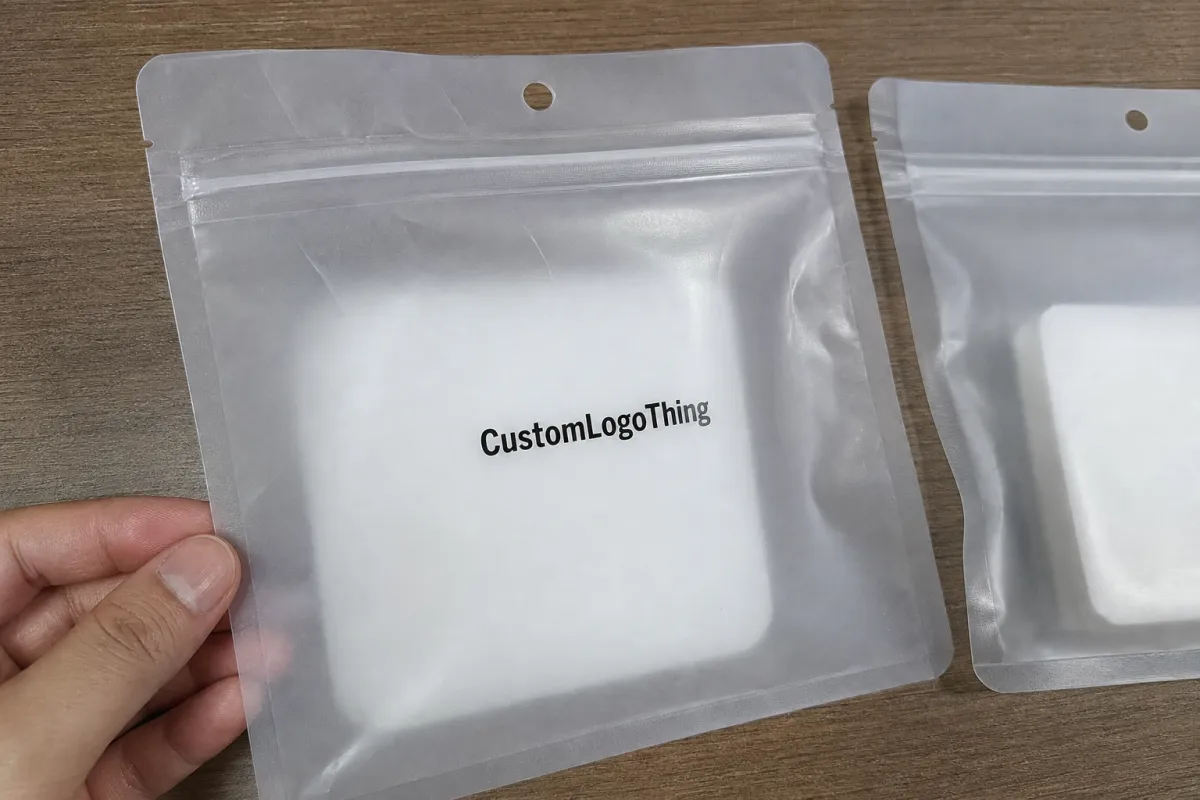
Frosted Zipper Bags are usually made from LDPE or an LDPE/LLDPE blend. The frosted finish softens the look and hides scuffs better than clear film, but it does not change the basic mechanics of the bag. A bag that looks premium can still be too thin for the product inside it.
Geometry matters as much as weight. A flat cable bundle is easy on film. A charger brick, a metal accessory, or a board with connectors can press into the wall and create weak points even if the item is not especially heavy. That is why a “small” product can still require a thicker spec.
The handling path matters too. Internal kitting, shelf display, and e-commerce shipping create very different stress levels. If the bag sits inside a protected retail box, a moderate gauge may be enough. If it is exposed to repeated handling or rough transit, moving up in thickness is often justified.
Many buyers ask for the thickest film available, then discover it slows packing and raises cost without solving a real problem. The better spec is the one matched to the product shape and handling conditions.
A sample helps, but a written spec is what keeps the next order from drifting.
How Film Gauge Changes Protection, Clarity, and Seal Feel
Film gauge affects three things buyers notice right away: puncture resistance, stiffness, and zipper feel. Thinner film is more flexible and easier to handle in some pack-out workflows. Thicker film gives the bag more structure, better shape retention, and stronger resistance to corner stress.
For most sourcing decisions, it is more useful to compare thin, medium, and heavy constructions than to obsess over one number. A 4 mil bag can work for light, low-risk accessories. A 6 mil bag is often the balanced middle choice for mixed kits or retail presentation. An 8 mil bag is firmer and better suited to heavier contents or sharper edges.
Confirm the measurement units early. One mil equals 0.001 inch, or about 25.4 microns. So 6 mil is roughly 152 microns, and 8 mil is about 203 microns. If one quote says 150 microns and another says 6 mil, those are basically equivalent. If the numbers are far apart, they are not the same spec.
The frosted surface changes appearance, not static performance. For static-sensitive components, frosted does not mean anti-static or ESD-safe. If the product is vulnerable to discharge, ask for the right additive or construction and confirm it in writing.
As a practical rule, thin cables, leaflets, and soft accessories often fit in lighter film. Heavier kits, metal housings, and products with corners usually need more body. The product should set the gauge, not the other way around.
Thickness also changes the way the bag looks on the line or shelf. A thicker frosted bag holds shape better and looks cleaner under warehouse lighting. A thinner one may appear softer and less rigid. Neither is wrong, but the choice should match the product price point and handling demands.
Cost, Pricing, and MOQ Tradeoffs by Thickness
Thicker film usually costs more, but the gap is not just in material. Freight weight, packing speed, and defect rates can change the true cost. A bag that protects well and packs efficiently can be cheaper overall than a thinner bag that creates rework or damage.
MOQ changes the equation. Small trial runs often favor standard sizes and moderate gauges because tooling and setup costs are spread across fewer units. Larger programs can absorb a higher-spec film more easily, especially if the bag is part of the customer-facing package.
| Thickness | Typical Use | Handling Feel | Indicative Unit Cost at 5,000 pcs |
|---|---|---|---|
| 4 mil / about 100 microns | Light cables, sleeves, low-risk accessory packs | Flexible, softer, less shelf-stiff | $0.06-$0.10 |
| 6 mil / about 150 microns | Mixed kits, adapters, retail presentation | Balanced, cleaner pack-out, better shape retention | $0.08-$0.13 |
| 8 mil / about 200 microns | Heavier kits, sharp-edged items, return-prone SKUs | Firm, more protective, more premium hand-feel | $0.11-$0.18 |
Those numbers are directional only. Price shifts with bag size, zipper style, custom printing, and order quantity. Two quotes are not truly comparable if one includes inspection, different packing methods, or a different way of measuring thickness.
Labor can matter as much as material. A slightly thicker bag may pack faster and reduce fiddling on the line. If it prevents damage and does not require extra inserts, the added unit price may be offset by smoother assembly.
For large programs, the wrong thickness can become expensive later. A small savings per bag can turn into repacking labor, returns, or replacement units if the film is too light for the product.
Process and Lead Time: From Spec Sheet to Shipment
The fastest supplier conversations start with a clear spec sheet: size, thickness target, quantity, zipper style, product use case, and any print or label requirement. When those details are vague, the supplier has to chase answers and the schedule slips.
The usual path is predictable: requirements, sample or proof, approval, production, inspection, and packing. Delays most often come from changing thickness targets, late artwork revisions, or switching zipper style after the sample stage. If the product has sharp edges, testing is worth doing before bulk production.
For custom runs, a sample can be ready before the full order. That is where the useful information lives. Check whether the item slides around, whether the zipper opens and closes cleanly, and whether the film wrinkles in a way that makes the bag look unfinished.
Lead time depends on complexity, but a straightforward custom order often lands around 12-15 business days after proof approval, before transit. Multiple sample revisions, custom printing, or mixed size runs can extend that window. If the bag is part of a larger packaging set, build time for the outer shipper and inserts into the schedule as well.
For shipping validation, compare the pack against common transport conditions instead of relying only on a bench sample. References from ISTA are useful when discussing vibration, drop, and handling stress in practical terms. That becomes more relevant once the inner bag is riding inside a corrugated shipper and the outer packaging is doing most of the structural work.
Step-by-Step Guide to Choosing the Right Thickness
The right thickness starts with the product, not the bag. Weight matters, but shape usually matters more. A flat cable is easy on film. A charger brick, a metal accessory, or a board with connectors can stress the same bag much harder because of corners and hard points.
- Measure the product profile. Record length, width, depth, and any protrusions that can press into the film.
- Map the handling path. Decide whether the bag sits in retail display, warehouse storage, or shipping cartons.
- Set the protection goal. Choose between cosmetic protection, light abrasion resistance, and puncture defense.
- Pick a starting range. Thin items often begin near 4 mil, mixed accessory kits near 6 mil, and heavier or sharper items near 8 mil.
- Test one step up and one step down. Side-by-side samples show overbuying and underprotection quickly.
That comparison is usually more valuable than chasing the cheapest quote. A bag that is too thin can tear or wear through. A bag that is too thick can slow packing and make the package feel overwrapped. The best spec gives enough structure to protect the contents without becoming awkward or costly.
Outer packaging matters too. If the electronics accessory ships inside a corrugated mailer with inserts or filler, the bag does less of the protective work. If the outer shipper is minimal, the bag has to do more. The full packaging stack should be reviewed together.
This is where teams often go wrong: they evaluate the bag alone. In production, it is only one layer of protection. The carton, insert, fill strategy, and product shape all affect what the bag actually needs to do.
Common Mistakes That Lead to Returns or Overbuying
The most common mistake is choosing based on hand feel alone. Thicker samples feel better because they are firmer and more substantial, but that can push the spec beyond what the application needs. The result is higher cost and a stiffer bag without much added benefit.
The reverse is just as common. A thinner bag may look cleaner and cheaper, then fail at a corner or wear through after repeated opening. Once that happens, the bag stops being packaging and becomes a source of returns or repacking.
Another frequent error is assuming frosted means static-safe. It does not. If the contents are sensitive to electrostatic discharge, specify anti-static or ESD-safe material and confirm the construction in writing.
Fit is easy to underestimate. An undersized bag forces corners against the film and can make the zipper difficult to close. An oversized bag lets the product move around and creates abrasion. In many cases, the right size does more than a jump in thickness.
Over-specifying is another trap. Extra gauge does not automatically improve the outcome. If the outer shipper is doing the protection, thicker film may only add cost. If the product has hard edges, though, saving a small amount on film can create much larger losses later.
Standard frosted PE zipper bags are not biodegradable just because they are frosted or because a supplier describes them as recyclable in some streams. If environmental claims matter, the material family and certification claims need to be checked separately.
Expert Tips for Better Bag Specs and Smoother Approvals
Ask for a material data sheet, not just a sales description. A data sheet gives you the construction, thickness, and any additive package such as anti-static treatment. A phrase like “premium frosted zipper bag” tells you very little.
If you want faster approval, test two thickness levels with the real product inside. Judge them on five points: seal feel, clarity, stiffness, pack-out speed, and resistance to corner stress. That comparison is more useful than a polished sample photo.
Use the use case in the spec. A bag for retail presentation may deserve a different gauge than one for internal storage or shipping protection. Write the final decision down in one line and keep it with the product file so future orders do not reopen the same debate.
If the program includes sustainability claims, separate the bag spec from the outer pack spec. frosted zipper bags can be paired with corrugated cardboard, kraft paper, recycled materials, or FSC-certified outer packaging, but those are different layers with different roles.
For quality control, a simple incoming check helps. Confirm film thickness consistency, zipper alignment, seal integrity, and print registration if there is artwork. If the bag is custom-sized, verify dimensions on a few pieces from the lot, not just one sample from the top of the stack.
Build a Spec, Request Samples, and Compare Quotes
The most efficient next step is a one-page specification. Include dimensions, thickness target, closure style, quantity, product type, and any print or labeling requirement. If the bag is for a cable bundle, say that. If it is for a charger brick, say that. Specificity shortens supplier response time and reduces guesswork.
Then request at least two sample thickness levels. The point is comparison, not decoration. A useful sample should protect the product, seal cleanly, and fit the actual pack-out process your team uses. If the bag is part of a retail set, test it with the outer carton or insert as well so you can see the full presentation together.
When quotes arrive, make sure every supplier is pricing the same assumptions:
- Same bag dimensions and same zipper style
- Same film thickness in mils or microns
- Same MOQ and lead time window
- Same print coverage or no-print assumption
- Same packing format for shipping and storage
A quote can look cheaper because it omits inspection, packing detail, or a better zipper construction. Another can look higher because it includes those items and ends up cheaper once landed cost is counted. A simple scorecard for cost, durability, and appearance usually gives a clearer answer than a lowest-price filter.
Keeping one approved spec on file also helps future reorders. The next round moves faster, the sample conversation gets shorter, and the team does not have to argue over the same thickness decision again. That is the practical value of a well-made guide: fewer surprises, fewer return trips to the drawing board, and a packaging decision that holds up across purchasing, design, and operations.
FAQ
What thickness is best for electronics frosted zipper bags?
There is no single best thickness. Light accessories usually work with thinner film, while heavier kits and sharp-edged items often need thicker construction. The most reliable approach is to compare two sample thicknesses with the real product inside and choose the one that protects well without making the bag too stiff or expensive.
Are electronics frosted zipper bags good for static-sensitive items?
Not by default. A frosted finish does not equal ESD protection. If the contents are static-sensitive, ask for anti-static or ESD-safe material and confirm the construction in writing. For highly sensitive parts, the bag may need to be part of a larger protection strategy rather than the only safeguard.
How do I compare thickness across suppliers?
Ask for the spec in mils or microns and confirm whether the measurement refers to the film or the finished bag. Use the same bag size and closure style across all quotes. Then test closure feel, puncture resistance, and pack-out speed before approving a bulk order.
Do thicker electronics frosted zipper bags always cost more?
Usually yes, because they use more material and can raise freight weight. That higher unit cost can still be the better choice if it reduces damage, returns, or repacking time. Total landed cost tells a more honest story than unit price alone.
What should I confirm before ordering in bulk?
Confirm the size, thickness, closure style, MOQ, lead time, and whether printing is required. Ask for samples and a written spec so the same bag can be reordered later without confusion. It also helps to verify that the bag fits the product with enough room for safe sealing and a clean presentation.


