Electronics Trucker Caps Bulk Order Planning for Buyers
electronics trucker caps Bulk Order Planning gets complicated the moment a buyer treats every trucker cap as interchangeable. It is a familiar mistake. The silhouette looks simple, the pricing looks low, and the first sample can appear fine from arm’s length. Then the run starts, and the problems show up one by one: a foam front that feels flimsy, mesh that scratches, a crown that sits too tall, or a logo that drifts off-center by a few millimeters. None of those issues is dramatic on its own. Together, they turn a “cheap” purchase into a time sink.
For electronics brands, caps usually support a larger job than just merchandise. They appear in trade show kits, distributor giveaways, field-service uniforms, sales onboarding boxes, and launch bundles that sit next to chargers, cables, notebooks, or product sheets. That context changes the standard. A cap that looks fine as generic promo wear may feel out of place beside carefully packaged hardware. Buyers need a cap that fits the brand tier, the audience, and the delivery method.
The real discipline is to define the use case before chasing price. A booth giveaway cap, a partner gift cap, and a weekly field-team cap do not need the same build. If the spec is vague, the quote is meaningless. If the spec is clear, the quote becomes useful.
Quote the cap you actually want, not the cap you hope the supplier infers. The gap between those two versions is where budgets and timelines usually break.
Why electronics trucker caps bulk order planning gets messy fast
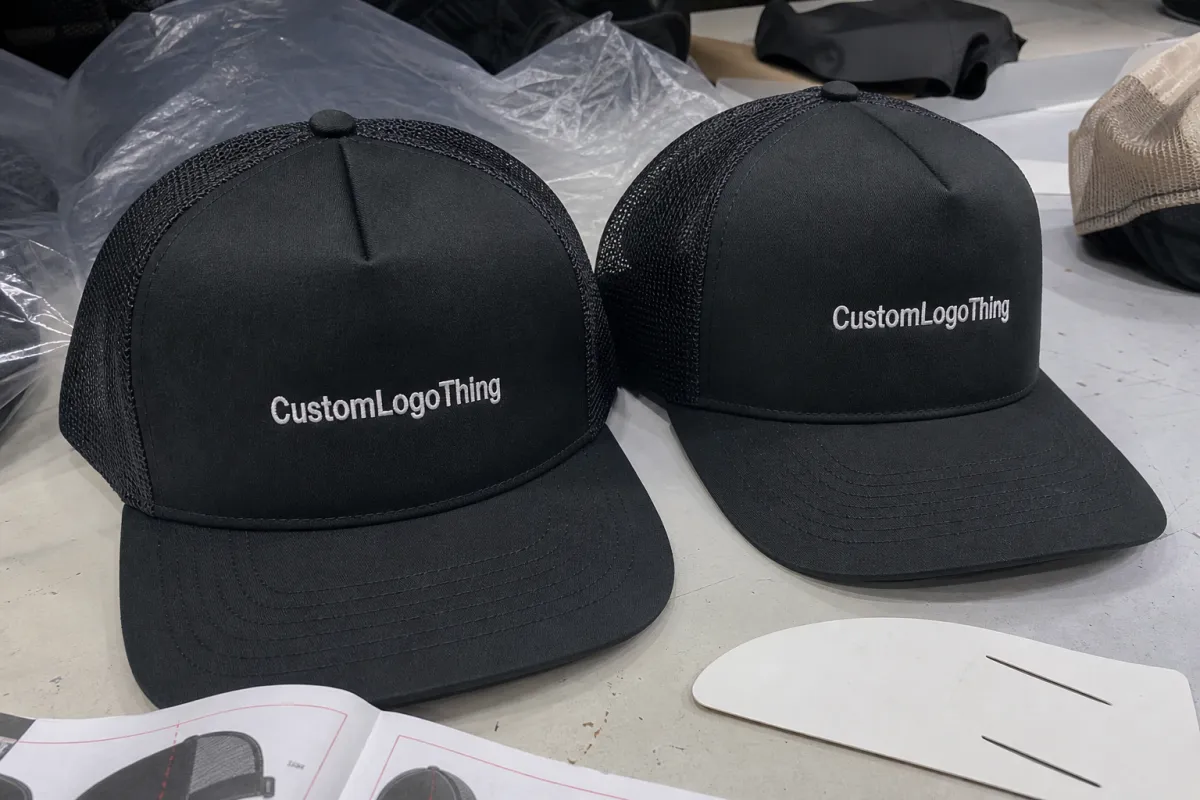
The mess begins with assumptions. A buyer sees a trucker cap and assumes the differences are cosmetic. They are not. Foam-front, 5-panel, 6-panel, structured twill, soft crown, lower crown, high crown, flat bill, pre-curved bill, open mesh, tighter mesh, snapback, strapback, Velcro closure — each choice changes the fit, the feel, the price, and how the logo presents.
Electronics brands feel those differences more sharply than some other categories because the cap often sits inside a controlled brand environment. At a trade show, in a sales kit, or in a field rep’s rotation, the cap is judged beside devices, packaging, and other collateral that already signals quality. A loose-looking cap can drag the whole bundle down. A well-made one does the opposite: it makes the rest of the package feel intentional.
There is also the logistics layer, which buyers sometimes treat as an afterthought. Will the caps ship loose, polybagged, stacked in master cartons, or packed with other kit components? Will they be handed out in a venue, mailed to recipients, or inserted into retail-ready boxes? Each answer affects carton count, damage risk, and freight efficiency. One supplier may quote beautifully until packaging is added; then the unit economics change.
The biggest source of confusion is comparing quotes that do not describe the same item. One supplier may price a soft foam cap with a simple print, while another prices a structured cap with stitched patches and individual bagging. Both can be called “trucker caps.” They are not the same product. Bulk Order Planning works only when the buyer pins down the build first and the quote second.
Trucker cap build details that matter to electronics brands
Not every brand needs the most premium cap, but every brand needs the right cap for the audience. Foam-front truckers are the classic promotional format. They are light, easy to decorate, and recognizable from a distance. They also read as more giveaway than retail. Structured cotton twill or brushed cotton tends to look cleaner and hold shape better. That difference matters if the cap is being given to engineers, channel partners, sales managers, or senior field staff.
Mesh is another detail that buyers underestimate. Thin mesh runs cooler and feels lighter, but if the weave is too open, the cap can look underbuilt. Denser mesh looks more substantial and usually photographs better, though it can feel warmer in long wear. The right answer depends on the climate, the event, and the intended use. A cap for an outdoor summer activation can justify a lighter mesh. A cap for internal uniforms often benefits from a sturdier build.
Crown height and bill shape shift the entire impression. A tall crown can feel loud and promotional; a lower crown looks closer to retail. A flatter bill gives a more modern profile, while a curved bill feels more traditional and is often easier for everyday wear. There is no universal best version. There is only the version that fits the brand and the wearer.
Closure choice matters because it touches both fit and price. Snapback remains the default for bulk orders because it fits a wide range of head sizes and keeps assembly simple. Velcro usually lowers the perceived quality, even when it is functional. Strapback can improve the retail feel, but it can also add cost and a bit of labor. For electronics accounts, I usually see snapback for events, strapback for partner gifts, and sturdier closures for staff who will wear the cap repeatedly.
Color control is where many orders quietly drift. A crown in one shade, a mesh in another, and a brim that is slightly off can make the cap look inconsistent before anyone notices the logo. Keep the palette intentional. If the brand wants a two-tone build, specify both colors clearly. If it wants a tone-on-tone look, require that in writing. Loose language creates loose results.
Decoration specs, panel counts, and artwork rules
Decoration is where a lot of cap orders go off course. A logo that looks crisp on a monitor may warp once it crosses the front panel of a curved cap. That is normal. The solution is to design for the cap, not for the screen. Center-front decoration remains the standard for trucker caps, but side hits, woven patches, PVC patches, embroidery, print, and woven labels all have a place.
Electronics brands usually benefit from cleaner artwork than from busy decoration. If the logo includes tiny text or thin linework, confirm the minimum reproduction size before approval. Embroidery starts to lose clarity when letters shrink too far or line strokes get too fine. As a rule of thumb, small text below roughly 4 mm in height becomes risky in thread, and delicate line details around 0.35 to 0.5 mm can disappear or blur depending on the stitch density. That is not a hard law, but it is a useful warning.
Vector files are the starting point. AI, EPS, or PDF files save time because the supplier can scale them without rebuilding the art. If the brand uses spot colors, send PMS references. If the logo has a gradient, halftone, or shadow treatment, ask early whether the chosen decoration method can reproduce it cleanly. Some art should be simplified before production. Trying to force every detail onto a cap usually creates a worse result.
Panel count affects decoration more than many buyers expect. A 5-panel front gives a cleaner, uninterrupted face for logos because the center panel is a single piece. A 6-panel front introduces a seam that can interrupt artwork or reduce the usable decoration zone. That does not make one structure better than the other. It simply means wide logos, badges, and centered marks need to be matched to the right panel layout. A buyer who checks the seam location before quoting avoids a great deal of revision later.
A useful spec sheet keeps the order from drifting. It does not need to be fancy. It needs to be complete.
- Decoration method: embroidery, woven patch, PVC patch, print, or label
- Artwork size: exact width and height in inches or millimeters
- Logo files: vector file plus a reference image for approval
- Color references: PMS numbers, thread matches, or approved swatches
- Placement: center front, side panel, back, brim, or interior label
- Extras: woven tab, back label, hang tag, or retail packaging
That level of clarity is not overkill. It is what keeps the final cap from turning into a compromise nobody wants to explain.
Cost, MOQ, and unit pricing for trucker cap runs
Price is shaped by more than the blank cap itself. Material choice, panel construction, closure type, decoration method, logo complexity, color count, packing format, and shipping terms all move the number. Buyers often compare headline pricing and miss the landed cost. That is a mistake. A lower per-unit quote can become more expensive once packaging, freight, setup, or proof corrections are added back in.
For electronics trucker caps Bulk Order Planning, MOQ commonly starts around 100 to 300 pieces, though the floor varies by supplier and decoration method. Simple embroidery on a standard blank may allow lower quantities than a custom patch run or a special color match. The smaller the order, the more setup cost is spread across each piece. That is why tiny runs can look disproportionately expensive.
At mid-volume, basic trucker cap blanks often land around $1.10 to $2.40 per unit before decoration. Better structure, heavier fabric, upgraded mesh, or more refined finishing can move a blank into the $2.25 to $4.50 range. Decoration adds on top of that. As a rough planning guide, embroidery may add about $0.35 to $0.80 at 500 pieces, woven patches about $0.60 to $1.20, PVC patches about $0.75 to $1.50, and simple print around $0.25 to $0.65. These are planning ranges, not promises. The final figure depends on stitch count, patch size, color count, and the supplier’s setup method.
Here is the part buyers should watch most closely: the quote basis. FOB, EXW, DDP, and door-to-door pricing do not tell the same story. A quote that excludes freight can look unbeatable until shipping is added. A quote that includes packaging can actually be cheaper than one that excludes it. Ask every supplier to quote the same spec, the same decoration, the same packing, and the same delivery term. Otherwise the comparison is fiction.
Extra charges deserve attention too. Sampling fees, second proofs, rush production, split shipments, mixed cartons, carton labeling, and imported materials can all move the final total. One supplier may charge more upfront and less later. Another may quote low and invoice the remainder through add-ons. The only way to compare apples to apples is to request a line-by-line breakdown.
| Decoration method | Best use | Typical add-on cost at 500 pcs | Tradeoff |
|---|---|---|---|
| Embroidery | Clean logos and corporate giveaways | $0.35-$0.80 | Polished look, but very small text can blur |
| Woven patch | Detailed artwork and sharper edges | $0.60-$1.20 | Better detail, slightly more setup work |
| PVC patch | Bold branding with a premium feel | $0.75-$1.50 | Stronger visual impact, heavier appearance |
| Printed decoration | Flat graphics and simple branding | $0.25-$0.65 | Can look clean, but depends on cap surface |
Process, lead time, and approval checkpoints
The process should be simple enough to manage without guesswork: brief, mockup, sample or proof, approval, production, packing, and delivery. In practice, delays usually happen because one of those steps was left vague. A written spec sheet fixes more problems than a long email chain ever will.
Lead time depends on the complexity of the build and the shipping method. For a straightforward cap with standard embroidery, production can often move in roughly 12 to 18 business days after proof approval. That is a practical range, not a guarantee. A custom patch, a special fabric, a color-matched mesh, or a branded package can extend the schedule. Shipping adds another layer. Domestic delivery and international freight are not interchangeable, even if the factory turns the goods quickly.
The most common delays are unglamorous. A logo file arrives in the wrong format. A buyer changes the quantity after production has begun. The cap color is adjusted after the proof is approved. The shipping address is still being edited while cartons are already being packed. These are small process failures with expensive consequences.
Three checkpoints help keep the order under control:
- Spec approval: confirm cap build, decoration method, quantity, and packaging.
- Proof approval: verify logo size, placement, thread or print colors, and any placement notes.
- Ship approval: confirm carton count, address, delivery window, and any labeling instructions before production starts.
If the order is tied to a launch date or event, share that date early. Not as a wish, but as a constraint. That single detail often determines whether the supplier quotes a standard schedule or a compressed one. It also helps separate realistic factories from ones that simply say yes to everything.
Quality control and supplier checks before you place the order
Quality control on a bulk cap order is not about whether the first photo looks good. It is about repeatability. The front logo should land in the same spot across the run. The mesh should hold the same color. The brim curve should remain stable. The closure should feel consistent from unit to unit. If the first dozen caps look different from the last dozen, the production system is not controlled well enough for a branded order.
Ask how the supplier handles proofing. A clean digital mockup may be enough for a simple embroidery order, especially if the artwork is uncomplicated and the quantity is modest. For larger orders or more complex decoration, a pre-production sample is safer. Some buyers ask for first-run production photos before the factory continues. That can be a sensible middle ground when timing is tight and the order cannot wait for a physical sample to travel back and forth.
Packaging deserves a real check, not a casual yes. If the caps are part of electronics event kits or mailers, ask whether they will be unit bagged, carton-counted, and labeled accurately. Confirm how many caps fit per master carton. Ask whether mixed colors will be packed separately. Confirm whether polybags, tissue, inserts, or hang tags are included. Damage control matters too. Long transit and heavy stacking can flatten bills or crease fronts if the cartons are not packed correctly.
If your team uses packaging standards, reference them directly. The ISTA test methods are useful for validating transit performance, and FSC-certified paper inserts or hang tags can help keep the materials story clean. Those details are not glamorous, but they matter when the cap sits inside a larger branded shipment that has to arrive intact and presentable.
Supplier responsiveness is part of quality. A supplier who answers carton-count questions precisely is usually safer than one who produces attractive mockups but cannot explain how the order will ship. The best partners in this category can repeat the spec back without drifting. That sounds basic. It is also rare enough to matter.
Next steps to lock specs and release the purchase order
Start with the variables that drive everything else: quantity by color or version, decoration method, logo file, packaging needs, and the date that cannot move. If the caps are supporting a product launch, training day, reseller meeting, or trade show, that deadline should be in the first message. A supplier can price a late order differently if they know the schedule is real.
Then request one exact spec sheet and one exact quote from each supplier. Same cap build. Same decoration size. Same placement. Same packaging. Same delivery term. Without that discipline, price comparisons are mostly noise. A cheaper quote that changes the closure type or omits freight is not a better quote. It is a different order.
Use the first inquiry to include the details that matter most:
- Quantity by color, size, or artwork version
- Logo file and preferred decoration method
- Target delivery date and shipping destination
- Packaging needs, such as unit bagging or retail-ready cartons
- Any event or launch deadline that cannot move
From there, move through proof approval, confirm the final spec, and release the purchase order. That sequence keeps the run from wandering into revisions after costs have already been committed. electronics trucker Caps Bulk Order Planning works best when the buyer locks the build early, checks the proof carefully, and treats shipping and packaging as part of the product rather than an afterthought.
FAQ
What MOQ should I expect for electronics trucker cap bulk orders?
Common MOQs often start around 100 to 300 pieces, though the exact floor depends on cap construction and decoration method. Lower quantities usually cost more per unit because setup work is spread across fewer caps. If you want mixed colors or mixed artwork versions, ask for MOQ by variant rather than only the total order.
How long does an electronics trucker cap bulk order usually take?
Artwork proofing is usually the fastest part. Production and shipping drive the real timeline, and a straightforward run often needs a few weeks after approval. Rush orders are possible, but they usually limit decoration choices and raise cost. Late changes to quantity, color, or logo placement are the biggest cause of delays.
Which decoration method works best for tech company trucker caps?
Embroidery works well for clean logos and a polished corporate look. Woven or PVC patches are better when the artwork has small details or sharp edges. Printed decoration can work for flat graphics, but it needs enough front-panel space and a cap style that supports it without distortion.
Can I mix colors and packaging in one trucker cap order?
Yes, but each color or packaging variant may affect MOQ and unit price. Confirm whether the supplier charges extra for split runs, mixed cartons, or custom inserts. If the caps are for events or retail kits, ask how the factory will label and pack each variation so nothing gets mixed up.
What should I send before requesting a quote for bulk trucker caps?
Send your quantity, target delivery date, logo file, decoration method, and preferred cap color. Include the shipping destination and packaging requirements so the quote reflects the real landed cost. If you are comparing suppliers, use the same spec sheet for every quote or the pricing will not mean much.
Is a pre-production sample worth the extra time?
For simple embroidery on a standard build, sometimes not. For custom patches, unusual colors, or orders that have to land on a fixed event date, yes. A sample is cheaper than correcting a run of 1,000 caps after production has started.
What quality checks matter most before approval?
Check logo placement, stitch density or print sharpness, crown shape, closure feel, and color consistency across the sample. If packaging matters, confirm carton counts and unit bagging too. Those are the details that determine whether the order feels controlled or improvised.

