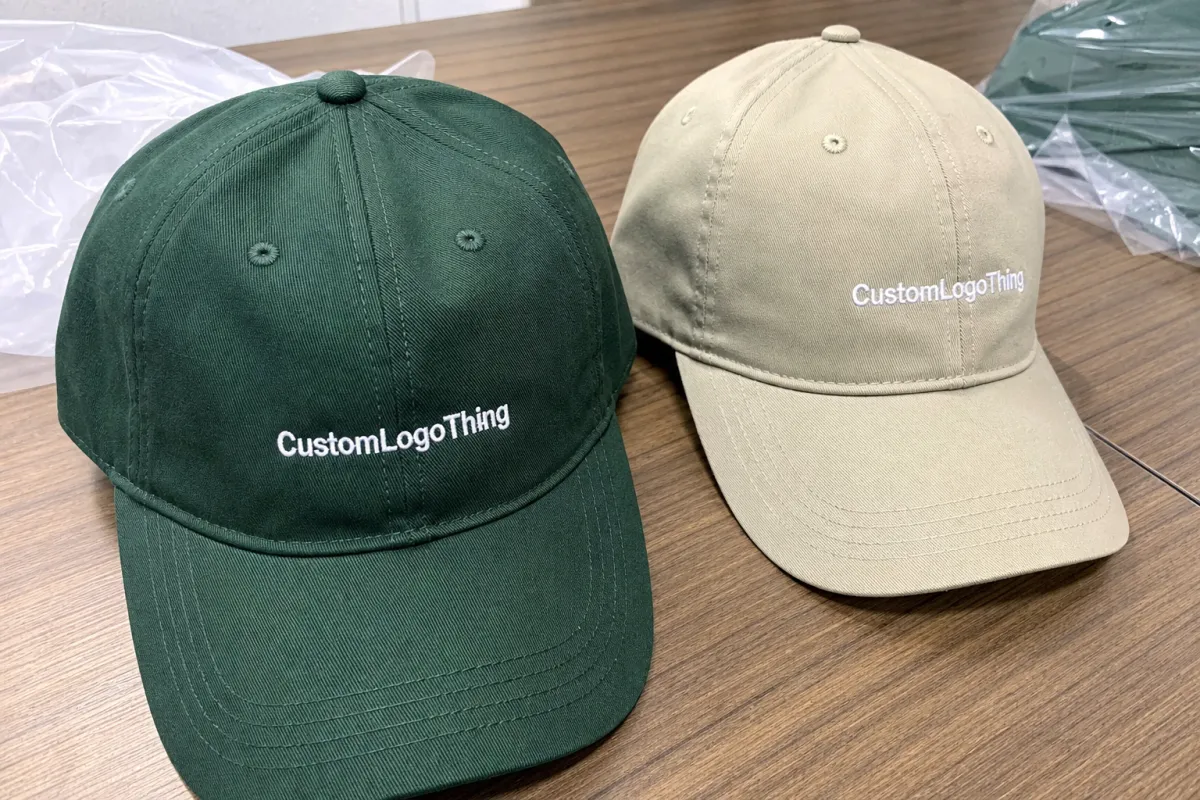
Embroidered Baseball Caps Reorder Plan for Smooth Restocks A reorder is rarely lost on a dramatic mistake. It slips when a note is missing, a sample is misplaced, or a buyer assumes the next run will match the last one by memory alone. A careful embroidered baseball Caps Reorder Plan keeps the second shipment tied to the approved cap, not to a recollection that has already been edited by time. The safest reference is the one that exists in front of production: the last approved sample, the embroidery file, the purchase order, and the pack-out notes that shipped with the first successful run.
That matters because cap reorders look simple until the details are compared side by side. A crown that stands a little taller, a front panel that has less structure, or a thread shade that leans warmer can be enough to make a retailer call the line “different.” The logo may be unchanged, but buyers judge the full object, not just the artwork. The faster a team treats the old sample as the master spec, the less likely the reorder is to drift into rework.
Embroidered baseball caps reorder plan: stop small spec drift from becoming scrap
Most reorder failures are not failures in the obvious sense. They are quiet changes. The bill curve is slightly tighter. The closure sits one notch looser. The front crown loses some stiffness after a blank substitution. Each change is minor in an email thread and visible in hand. That is how inventory becomes a headache: the product is technically close and commercially wrong.
The first order usually defines the working formula. The reorder is supposed to preserve it. For that reason, the last approved sample is more useful than a loose artwork file. A clean sample shows the cap silhouette, the exact logo scale, the placement relative to the seam, the closure type, and the finish details that were accepted before production was released. If the sample is unavailable, the buyer spends time reconstructing a spec that already existed.
Before requesting a quote, keep four records together: the approved sample photo, the purchase order number, the digitized embroidery file, and the packaging notes. Those items answer most of the production team’s questions before they ask them. They also reduce the risk of a reorder being built from partial information, which is how small disagreements turn into corrections, freight delays, and extra handling.
"Treat the last approved sample like the master spec. If it is missing, the reorder starts from uncertainty."
That approach works especially well for an Embroidered Baseball Caps reorder plan because the product is judged visually and tactilely. Buyers compare the body shape, the stitch density, the thread finish, and the way the cap sits on the head. A reorder should answer one question first: will this shipment present the same way the first one did?
Lock the cap style, embroidery, and finish before you place the run
The cap body has to be named clearly before production starts. Structured or unstructured. Six-panel or five-panel. Mid-profile or high-profile. Curved bill or flat bill. Those details change the way the garment sits, and they change how the embroidery behaves on the front panel. A structured crown can support a dense logo that would distort on a softer cap. An unstructured body may need lighter stitch coverage or a slightly different placement to avoid pull.
Material matters just as much. Common repeat bodies include brushed cotton twill, garment-washed cotton, polyester performance fabric, and trucker styles with foam or mesh backs. Heavier cotton bodies often sit around 260 to 320 gsm, while some washed caps are lighter and softer in hand. That softness can be desirable, but it also means the repeat order should be checked against the original sample rather than assumed from the fabric name alone.
Decoration details need the same discipline. Confirm the logo placement, stitch count, thread colors, and whether the file needs any cleanup before the run is released. If the original order included side embroidery, a woven patch, or a small back mark, document that as part of the repeat spec. A reorder should not depend on someone remembering that the mark was “about two fingers above the seam” or that the side hit was “roughly centered.”
Finish details are where many buyers notice the difference first. Closure type, sandwich bill, contrast stitching, woven labels, hangtags, size stickers, and polybagging all change the perceived value of the cap. If the first order was folded in a certain way or packed in specific counts per carton, keep the same approach unless there is a reason to change it. Retail buyers and distributors often care as much about presentation as they do about decoration.
Use a short internal checklist before release:
- Cap body: structure, panel count, profile, bill shape, and fabric content.
- Embroidery: placement, stitch count, thread colors, and digitizing reference.
- Closure: snapback, strapback, hook-and-loop, metal buckle, or fitted finish.
- Pack-out: folded or boxed, polybagged or loose, stickered or not.
The point is not to complicate the reorder. It is to remove ambiguity before production begins. A repeat order is simplest when the cap body, the decoration, and the presentation all remain fixed.
Specification checks that prevent cap-to-cap variation
Cap reorders should be judged by measurement, not memory. A short list of numbers catches problems early: crown depth, front panel support, brim curve, seam alignment, overall circumference, and closure adjustment range. Those measurements are more revealing than a general statement that the cap “looks about right.” If the first run sat properly and the second one feels shallow, the wearer will notice long before the logo is discussed.
Thread color is another place where small differences become visible fast. A screen can make colors appear cleaner than they are. Lighting also changes the way thread reads during inspection. A navy thread that looks balanced beside white on a monitor may lean too bright in a finished cap sample. Physical thread cards and retained swatches are more dependable than memory or screenshots.
Artwork tolerance should be checked against the blank, not treated as fixed forever. A logo that worked on a rigid front panel may need a small adjustment on a softer body. Likewise, dense fine details can break down if the new blank has less structure, because the fabric gives more under the needle. That is not a design error. It is a material change that should be acknowledged in the spec.
The inside of the cap matters too. Sweatband hand-feel, eyelet placement, lining details, and fabric finish all affect how the product is received. Some reorder problems show up only after a buyer handles a few units. The product looks right in the carton, then feels different on the head. A complete spec sheet should include the exterior, the interior, and the packaging standard so the next run does not improvise anything important.
A strong specification control routine keeps the second shipment close to the first. That sounds procedural because it is. The practical result is simple: the reorder should feel like a continuation, not a reinterpretation.
Pricing, MOQ, and unit cost factors that move the quote
Repeat-order pricing is usually driven by a few variables: quantity, stitch complexity, number of embroidery placements, thread count, packaging choice, and whether the order is a true repeat or a revision. A cap with a single front logo and plain packing will price differently from the same cap with multiple hit points, custom labeling, and retail-ready presentation.
Higher quantities still pull the unit cost down because setup and line time are spread across more pieces. A smaller reorder can still be efficient if the blank, the digitizing, and the production settings are already on file. In those cases, the main savings come from avoiding re-digitizing, proof revisions, and another round of approval delays.
| Reorder path | Typical unit impact | Best for | What changes the most |
|---|---|---|---|
| Straight repeat | Lowest quote variance; setup is usually already on file | Exact match to the approved sample | Freight and packaging only |
| Same cap, new color | About $0.15-$0.60 per unit if the shade is stocked | Logo stays the same, shell color changes | Blank availability and dye status |
| Same cap, revised embroidery | About $0.20-$0.80 per unit for extra stitches or color changes | Logo cleanup or a second placement | Digitizing and run time |
| Premium pack-out | About $0.10-$0.45 per unit | Retail display or distribution-ready packing | Labor more than material |
As a working range, a 500-piece repeat may land around $5.75-$9.25 per cap, while 1,000 pieces can move closer to $4.60-$7.25. Larger runs often settle lower, sometimes near $3.85-$6.20 for 2,500-plus units, depending on cap body, stitch density, and packaging. Those figures are directional, not fixed. Blank shortages, specialty fabrics, and freight mode can move the landed cost in either direction.
MOQ is often friendlier on a true repeat because the blank, artwork, and setup can be reused. Change the cap body, shift the logo placement, or add a new label, and the minimum can rise because the line needs a different setup. Rush timing, split shipments, and custom cartons can also lift the final cost even if the base cap price stays stable.
For larger replenishments, buyers should think beyond unit price. Carton count, pallet configuration, and transit method affect the true delivered cost. Some teams use ISTA test procedures as a reference for pack-out durability, while FSC certification standards matter if carton or insert sourcing needs documentation. Those references do not replace a clear cap spec, but they do help frame the order as a product-and-logistics decision rather than just a decoration quote.
Reorder process, proof approval, and turnaround timing
The cleanest workflow usually follows the same sequence every time: review the last order, confirm whether anything changed, issue a proof if needed, approve the sample or mockup, then release production. The speed of that process depends less on the cap itself than on how quickly the buyer answers a few basic questions. Is the blank unchanged? Is the logo the same? Does the pack-out stay the same? Is the ship-to location ready for cartons or pallets?
Lead time is shaped by more than embroidery machine hours. Stock availability matters. So does the production queue. Thread matching can add a little review time if the repeat uses a shade that was not part of the previous run. Packaging can add a day or two if stickers, insert cards, or carton labels need to be assembled. Freight mode also matters. Parcel, LTL, and air all move differently once the order is released.
A no-change reorder is usually the fastest path. Once the buyer changes cap color, embroidery placement, closure type, or label format, the order may need another proof cycle before release. That does not make the job difficult. It just means the order is now a revision, not a repeat. Turnaround is usually most predictable when the proof stage is short and the answer to “what changed?” is either “nothing” or a clearly documented update.
Shipment details should be confirmed before the run starts if the order is going to retail distribution, an event deadline, or multiple warehouse locations. Receiving hours, dock access, pallet requirements, and split destinations all affect timing. A solid embroidered baseball Caps Reorder Plan removes those variables early so the line is not waiting on logistics later.
In many cases, the buyers who move fastest are the ones who keep the record clean from the start. Fewer missing details means fewer proof corrections and fewer stalls once production begins.
How repeat orders stay consistent from run to run
Consistency comes from keeping a complete order history. The useful records are the approved art files, stitch settings, cap style notes, thread references, and packaging instructions. If those items are stored together, the next reorder starts from the same baseline as the last one. If they are scattered across inboxes and folders, the team spends time reconstructing decisions that should already be documented.
Digitizing and thread references deserve special care. A good digitized file can be reused many times, but only when it is tied to the right blank and the right stitch density. A logo that looked clean on a structured six-panel cap may need adjustment on a softer cap or a lower-profile body. That adjustment should be documented, not discovered halfway through production.
In-process inspection matters as much as final inspection. Embroidery placement, panel alignment, and closure assembly should be checked while the order is running, not only after cartons are sealed. Corrections made early are cheaper and faster. Once the box is packed, a problem becomes a logistics issue as well as a production issue.
Pack-out consistency is part of the product. Caps folded one way on the first order should be folded the same way on the second. Cartons should carry the same count, label format, and bundle pattern. Distributors notice these things immediately. So do retail buyers. The cap itself may be identical, but the presentation can still feel off if the packing changes.
The real target is simple: the next shipment should match the previous one in look, fit, and presentation. That is what a repeat order is supposed to do, and it is why the best reorder process is usually the least dramatic one.
What to send for a faster reorder quote and release
The fastest quote request answers the obvious questions before production has to ask them. Start with the prior PO number, a photo of the approved cap, the quantity needed, and the target ship date. That gives the quoting team the reference point, the volume, and the schedule in one pass. If the earlier order sold well, that alone is often enough to move quickly.
Any change should be stated directly. New thread colors, revised placement, a different closure, or alternate packaging should not wait for the proof stage if the buyer already knows they are needed. Late edits are the biggest source of delay because they trigger another round of checking. Even small changes can affect stitch time, blank sourcing, or carton layout.
Shipping details belong in the first message too. Include the destination address, receiving hours, and whether the order needs to split across locations. If the shipment has to land at multiple warehouses, say so early. Freight problems are often created by incomplete delivery notes, not by the cap production itself.
- Confirm the existing spec against the last approved sample.
- Verify pricing tiers before changing quantity or packaging.
- Approve the proof promptly if nothing changed.
- Release the order with the ship date and delivery details locked in.
That sequence keeps the Embroidered Baseball Caps reorder plan moving without unnecessary back-and-forth. The goal is not speed at any cost; it is avoiding preventable revision. If the previous PO, approved sample photo, and target quantity all arrive together, the order usually progresses with fewer surprises.
FAQ
What should I check first on an embroidered cap reorder?
Start with the last approved sample because it shows the cap shape, logo size, thread color, and closure details that actually worked in production. Then confirm whether the current request is a true repeat or a revised spec, since even a small change can affect price and turnaround.
Can I reorder baseball caps with the same embroidery but a different cap color?
Yes, but the new blank color should be checked against the original thread palette so the logo still has enough contrast. A color change can be easy if the shade is stocked, yet it may still add lead time if the blank is not already available.
How does MOQ affect a repeat order of embroidered baseball caps?
MOQ can be lower on a repeat order if the same blank, digitizing, and setup can be reused without rework. If the cap style, logo placement, or packaging changes, the minimum may rise because the factory has to reset the line.
What causes the biggest price jump on a cap reorder?
Extra embroidery complexity, more stitch density, and multiple thread colors are common drivers of higher unit cost. Rush timing, custom packaging, and split shipping can also raise the landed price even when the cap body stays the same.
How can I speed up the next embroidered baseball caps reorder plan?
Send the prior PO, approved sample photo, target quantity, and ship date together so the quoting team can verify everything quickly. Approve proofs promptly and decide early whether any changes are needed, because late edits are the most common source of delay.