Fitness Twisted Handle Paper Bags Bulk Order Planning Guide
Fitness twisted handle paper bags Bulk Order Planning looks simple until the first batch reaches the counter and a handle creases, a base bows, or the bag turns out to be too narrow for the product people actually buy. Most packaging failures are not glamorous. They happen at stress points: the top fold, the glue line, the bottom panel, the gusset. The print usually survives; the structure is what gets exposed.
That is why buyers in gym retail, supplement shops, studio merch programs, and event kits keep circling back to Twisted Handle Paper Bags. They are not the flashiest option, but they hit a useful middle ground. They cost less than rope-handle bags, ship flat, assemble well in volume, and give enough strength for apparel, accessories, and moderate-weight retail packs without pushing the budget into decorative territory.
The real job is not to make the bag look expensive. The job is to make it hold up on a busy counter, match the brand, and reorder without surprises. If you get that part right, the bags do not become a topic. They just work.
A bag is only cheap if it survives the trip from stockroom to customer.
Why Twisted Handles Beat Cheap Rope Handles in Gym Packaging
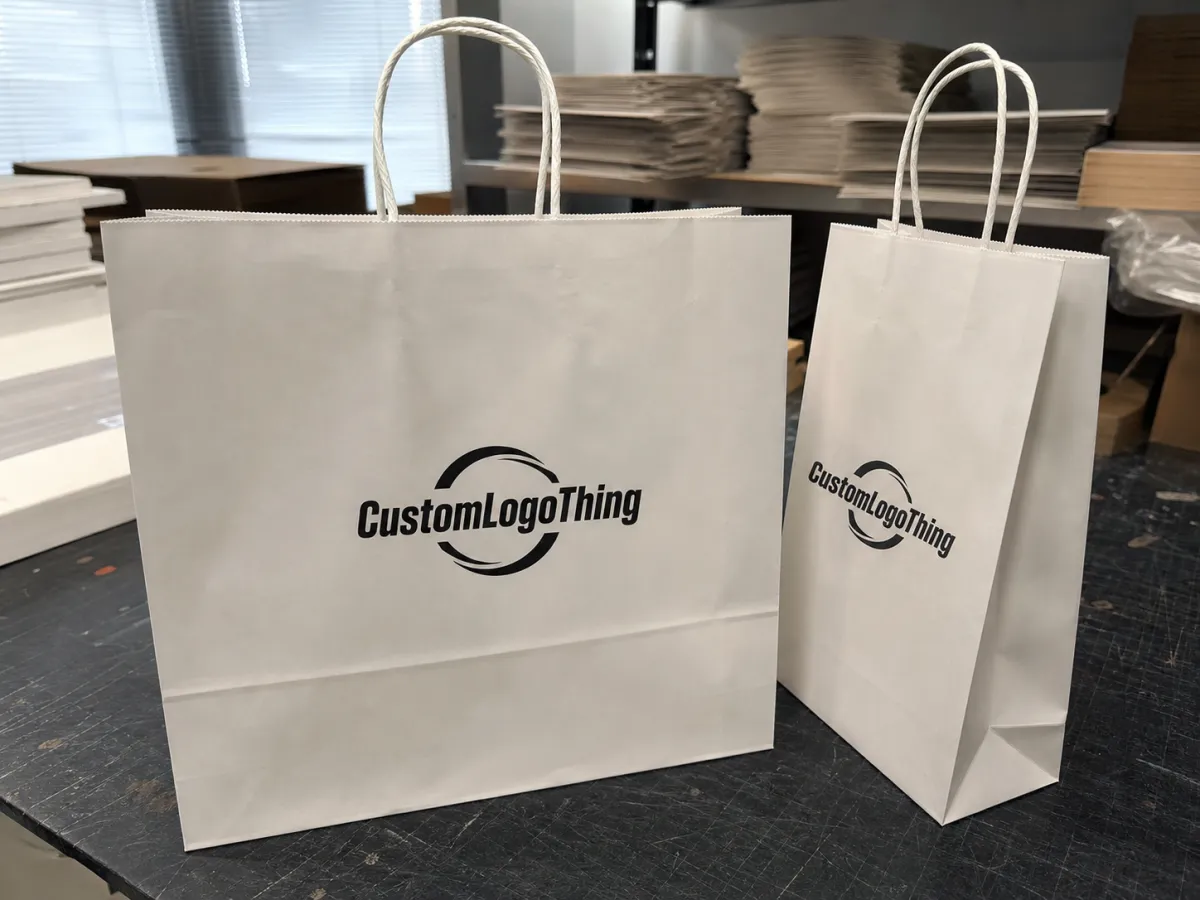
Twisted handles are popular in fitness packaging because they are practical before they are pretty. The handle is formed from paper, folded and glued into the top section, so the load is distributed across the top edge instead of hanging from a narrow cord attachment. That matters more than people expect. A rope handle may feel premium in hand, but if the bag is carrying a shaker bottle and a folded hoodie, the structure underneath the handle matters more than the tactile upgrade.
For bulk ordering, the cost difference becomes obvious fast. Rope handles add material cost, extra assembly steps, and more opportunities for variation between runs. They can make sense for gift packaging or a premium retail drop, but they are rarely the best answer for routine gym packaging. Twisted handles keep the bag in a more predictable price band, which is useful when the order repeats every quarter or every season.
There is also a visual reason buyers like them. Fitness brands often want packaging that feels clean, sturdy, and understated. Twisted handle kraft bags do that well. They hold a logo without looking overdesigned, and they pair naturally with matte inks, one- or two-color print, and the sort of product mix that shows up in a studio reception area.
Paper weight still matters more than handle style alone. A bag in the 120-150gsm range can be enough for lighter apparel and accessories, while 150-180gsm is safer once bottles, boxed bundles, or denser products enter the picture. The handle can only do so much if the body stock is too light or the bottom panel is weak.
- Twisted handles keep unit cost lower in repeat retail programs.
- Reinforced top folds matter more than decorative handle upgrades.
- Kraft stock hides minor scuffs better than glossy finishes.
- Simple print layouts tend to age better in high-turnover environments.
For gym packaging, the best bag is usually the one that disappears into the operation. It carries, it stacks, it reorders, and nobody needs to explain why it is there.
Fitness Twisted Handle Paper Bags Bulk Order Planning Starts with the Product Mix
The fastest way to overspend is to start with a size guess instead of the actual product mix. A fitness business rarely ships one thing. It moves T-shirts, leggings, wraps, resistance bands, supplement tubs, starter kits, vouchers, and event handouts. Some items are flat. Some are dense. Some need height, others need gusset depth, and a few need both.
That is why Bulk Order Planning should begin with the top 2 or 3 use cases, not with a favorite bag dimension. If the bag is mainly for folded apparel and smaller accessories, a compact format can be enough. If it must also carry a shaker bottle, a tub, or a bundled welcome kit, the bag needs more width and more bottom support. A bag that looks neat on a spec sheet but rides open at the top is not a good fit, even if the logo prints beautifully.
A practical way to sort the order is to map each bag size to a real packing profile. One size for lightweight retail items. One for apparel. One for kits or heavier bundles. That keeps the program manageable and helps avoid dead inventory. A buyer who orders six sizes at once often ends up with one runaway SKU and several boxes nobody wants to reorder.
Typical dimensions for fitness retail paper bags often land around 8 x 4 x 10, 10 x 5 x 13, and 12 x 5 x 15, but numbers alone can mislead. Two bags with the same footprint can behave differently if one has a stronger bottom insert, a wider gusset, or heavier stock. The packed item matters more than the name of the item. A thin hoodie and a boxed supplement may both sound like “medium,” but they do not sit in a bag the same way.
There is a budgeting angle too. Choosing one oversized bag for everything may look efficient on paper, but it usually wastes paper on smaller orders and makes the premium bundles feel undersized. Choosing one too-small bag does the opposite: it saves pennies and creates daily friction at the counter. Bulk planning is mostly a trade-off exercise. The numbers get better when the packing behavior is understood first.
Paper Weight, Gusset, and Handle Specs That Actually Matter
Paper spec determines whether a bag feels trustworthy or temporary. Printing can improve appearance, but it cannot rescue a weak structure. Buyers sometimes focus on artwork because that is the visible part. In production, the hidden choices do most of the work: stock weight, glue coverage, handle attachment, gusset depth, and bottom reinforcement.
Kraft paper is usually the smartest baseline for fitness packaging. It keeps cost controlled, handles minor scuffing well, and fits the visual language of health clubs, training studios, and supplement retail. White kraft gives brighter contrast and a cleaner print field, which helps when logos are pale or detailed. Coated paper can improve image sharpness, but it often adds cost without improving carry performance. For a lot of fitness programs, it solves the wrong problem.
Gusset depth is often underestimated. A deeper gusset can reduce the need to increase height, which matters when the product is bulky but not especially tall. Handle strength works the same way: a reinforced twisted handle attached cleanly at the top fold performs better than a bag with slightly heavier paper but weak glue coverage. More grams per square meter do not automatically fix poor construction.
- 110-120gsm can work for light accessories, vouchers, and thin apparel.
- 140-180gsm is safer for heavier retail packs, bottles, and boxed items.
- Wider gussets help bulky products sit flat instead of forcing the bag open.
- Bottom inserts reduce sagging during checkout and carry-out.
- Matte finishes usually show less wear than glossy surfaces.
Two-color printing on kraft is often the cleanest route. It gives enough brand presence without turning the bag into a color-management problem. Full-coverage artwork can look impressive in a mockup and awkward in real handling if the finish scuffs or the stock tone changes the color. If the bag is going to be stacked in cartons, loaded into tubs, or handed across a busy front desk, function should win the argument.
If sustainability claims are part of the brief, ask for documentation rather than slogans. A chain-of-custody claim means something only if it can be verified. FSC certification is a useful reference point, but the deeper question is whether the supplier can identify the paper grade, the coating, and the origin chain without dodging the question. Vague “eco” language is common. Exact paper specs are better.
Humidity is another quiet variable. In warm stockrooms or damp loading areas, paper can soften faster than expected. That is one reason buyers who order for gyms near coastal or high-humidity regions often lean toward slightly heavier stock or stronger base reinforcement. The bag should survive storage before it ever reaches the customer.
Common Failures to Catch Before Production
Most order problems are preventable, but only if someone checks the boring details early. The bag may look fine in a digital proof and still fail in production if the artwork file, size spec, or packing plan is incomplete. The failure usually comes from a mismatch between the intended load and the actual structure, not from the logo itself.
One common mistake is designing to the hero product and forgetting the add-on. A shaker bottle alone is one shape; a shaker bottle plus a supplement tub is another. The same happens with apparel bundles. A T-shirt is not the same as a folded hoodie plus a brochure plus a key tag. Buyers see the bag as a container; production sees it as a geometry problem.
Another common issue is underestimating the stress on the top fold. If the handle sits too close to the edge, or the glue area is narrow, the bag can start to deform after just a few carries. That is why sample checks matter. Lift the bag with the intended load, not with air. Shake it a little. Set it down. Watch the bottom panel and the handle line. Weakness shows quickly.
Quality-control checks that save the most trouble are fairly plain:
- Measure the actual packed product, not just the product name.
- Test the bag with real weight, including inserts and inserts plus packaging.
- Inspect glue lines at the handle and bottom fold for gaps or squeeze-out.
- Check print placement against the final die line, not a cropped artwork file.
- Verify carton packing so the bags do not arrive bent or crushed.
Paper bags can also fail in quieter ways. The handle may survive, but the body may lose stiffness if the stock is too light. Or the printed area may hold up fine while the edges absorb handling marks during transit. These are not dramatic failures, but they are the ones buyers notice when the order lands at the store. A bag that arrives with neat printing but poor standing strength still creates work for the team unpacking it.
The cleanest fix is usually earlier spec discipline. Choose the right size, approve the right stock, and insist on a sample when the load is heavy or the program is high visibility. That saves more money than correcting a bad run after the fact.
Cost, MOQ, and Unit Pricing for Bulk Runs
The quote is never just a unit price. It is stock weight, size, handle style, printing, finishing, quantity, packing method, and shipping destination all folded into one number. That is why two quotes that look close on paper can become very different once freight or tooling is added. Buyers get burned when they compare only the first line and ignore the rest of the sheet.
For fitness twisted handle paper bags Bulk Order Planning, it helps to request the same spec at a few volume tiers. That shows where setup cost starts to spread out and where the order becomes meaningfully cheaper per bag. It also reveals whether the supplier is honest about the economics or just anchoring low and filling the gap later.
| Run Size | Typical Unit Price | Best Use | What Moves the Price Most |
|---|---|---|---|
| 500-999 pieces | $0.45-$0.78 | Launches, small studio drops, sample retail programs | Setup cost, smaller print runs, fewer finish choices |
| 1,000-2,999 pieces | $0.28-$0.48 | Regular retail, membership kits, seasonal promotions | Better setup spread, more stable production economics |
| 5,000+ pieces | $0.16-$0.32 | Chain programs, recurring replenishment, national rollouts | Lowest unit cost, but storage and cash flow pressure rise |
Those ranges are practical, not fixed. Smaller bags with one-color print often sit at the lower end. Larger bags, heavier stock, extra colors, special finishes, or stricter packing requirements move the price up quickly. Freight remains separate, and so do any plates, dies, or setup fees. If a quote does not break those out clearly, ask for the split before comparing anything.
MOQ matters, but it should not be treated like a magic number. A low minimum can be useful for a launch, yet the unit price may be too high to support a repeat program. A larger minimum can improve pricing but tie up inventory and cash. The right answer is usually the point where the run is large enough to make the setup efficient and small enough that the bags will not sit in storage for months.
One detail that gets missed often is box packing. A quote may look good until the supplier says the bags are bulk-packed loosely rather than carton-packed in neat stacks. That matters for storage, damage risk, and receiving time. A cheaper bag that arrives bent or dusty is not really cheaper.
Process, Timeline, and Production Steps from Quote to Delivery
A clean production timeline removes more headaches than any rush fee can fix. The path is usually straightforward: inquiry, spec confirmation, artwork check, proof approval, production, packing, shipping. Each step sounds ordinary. The problems appear when one part of the brief is vague or someone changes the quantity after proofing has already started.
Proofing is usually the fastest part of the job. If the artwork is complete and the die line is correct, a digital proof can come back in a few days. Production is slower. A common window is 10 to 20 business days after approval, though heavier quantities, special finishes, or mixed SKUs can push that longer. Shipping time is a separate clock and should stay separate in every internal plan.
The delays buyers see most often are predictable. Low-resolution logos. Missing dielines. Color changes after proof approval. A team member deciding the quantity should be larger because the budget suddenly loosened. None of that is rare. All of it slows the order.
- Artwork on the wrong template creates print placement problems.
- Unclear finish specs lead to matte-versus-gloss confusion.
- Late quantity edits disrupt material planning and press scheduling.
- Ambiguous delivery windows are risky for events and store openings.
- Unpacked sample approval can hide structural issues until too late.
For programs that will travel through rough handling, carton performance matters as much as the bag itself. Outer packaging needs to protect the bags from crush, moisture, and corner damage. Even a well-made twisted handle paper bag can arrive tired if the cartons are packed loosely or stacked badly in transit. Basic transit testing is worth discussing, especially for event kits and shipped bundles that will be opened in public.
A practical production rhythm is simple: confirm the final size and stock, lock the handle style, approve the artwork, review a sample or proof, then freeze the quantity before production begins. That order prevents the most common mistakes. It also keeps the calendar believable, which matters more than a paper promise that ignores freight time.
What a Reliable Supplier Should Fix Before the Order Goes Live
A reliable supplier does more than confirm the order. They help remove weak assumptions before they become expensive. If a bag is too shallow for the load, they should say so. If the stock is too light for a bottle-heavy kit, they should say that too. Quietly shipping a bad spec is not service. It is future waste.
If every detail is “fine,” the quote is probably hiding the real discussion.
Before production starts, a good supplier should be able to do a few things without drama:
- Check the size against the packed product and flag fit problems early.
- Recommend a stock weight based on load, not just on the lowest-cost option.
- Confirm the print method so the artwork matches the material.
- Explain packing format so you know how the bags will arrive.
- Offer a sample or proof when the order size makes a mistake expensive.
That kind of review is especially useful for mixed fitness programs. A bag that works for apparel might not work for a bottle-and-supplement bundle. A size that looks efficient for a small studio drop may not hold up for a regional membership kit. The supplier should know enough to challenge the brief in a useful way. The best ones protect the order before the press starts.
There is also a communication test hidden inside the process. If the answers are vague at the quote stage, they usually stay vague later. Clear answers about stock, lead time, MOQ, and freight tend to signal a smoother run. Buyers do not need poetry here. They need a spec sheet that leaves fewer openings for error.
FAQ
How do I plan a fitness twisted handle paper bags bulk order without overbuying?
Start with the products that leave your counter most often, then size the bag to the real packed load. Build at least two quantity tiers into the quote so you can compare a conservative run against a better-value run. That gives you a clearer view of the break point before you place the order.
What size works best for gym retail and fitness kit packaging?
Small retail items usually fit compact bags, while apparel, shaker bottles, and bundle kits need wider gussets and taller bodies. The packed volume matters more than the item label. A neat-looking bag that pinches at the top or bows at the base is still the wrong size.
What MOQ should I expect for twisted handle paper bags bulk pricing?
Many custom runs begin around 500 to 1,000 pieces per size or design, though the actual minimum depends on print, stock, and finishing. Unit pricing usually improves as the quantity increases because the setup cost is spread across more bags.
How long does production usually take after artwork approval?
Proofing can take a few days if the files are complete. Production often runs about 10 to 20 business days afterward, depending on quantity and finishing. Shipping is separate, so the final delivery date should always include transit time.
What information do I need for an accurate quote?
Provide size, paper stock, handle type, print colors, quantity, delivery location, and the artwork file format. If you are unsure about the structure, send the packed product dimensions and ask for a recommendation based on fit, not just on price.
Are kraft bags strong enough for fitness products?
Often yes, if the stock weight, gusset, and base reinforcement match the load. Light apparel and accessories are usually straightforward. Heavier kits need more structure, and anything bottle-heavy should be tested with real weight before the order is approved.
Should I choose matte or gloss for a fitness retail bag?
Matte is usually more forgiving. It hides handling marks and keeps the bag looking cleaner after transit. Gloss can give stronger color pop, but it also tends to show scuffs more quickly, which matters if the bags are handled a lot before they reach the customer.

