A woven label usually tells on a beanie long before the knit body does. In a fitness Woven Label Beanies material guide, that small trim is often the first thing a buyer notices after a few sweaty sessions, a wash cycle, and a stretch over a ponytail, headset band, or helmet line. If the label feels rough, curls at the edge, or loses logo clarity, the whole piece reads cheaper than it should.
That is why experienced buyers treat the label as a material decision, not a decoration. A good fitness beanie needs warmth, stretch recovery, and a brand mark that still looks deliberate after wear, whether the order is for gym merch, a training team, winter retail, or a launch that also needs to sit beside Custom Labels & Tags.
The tricky part is that the label is small, but the requirements are not. It has to stay flat on a knit surface that moves, twists, and compresses. It also has to survive handling, storage, packing, and the first wash without turning fuzzy or stiff at the edge. That combination is where a lot of otherwise good beanie programs drift off course.
Why a woven label can make or break a fitness beanie order
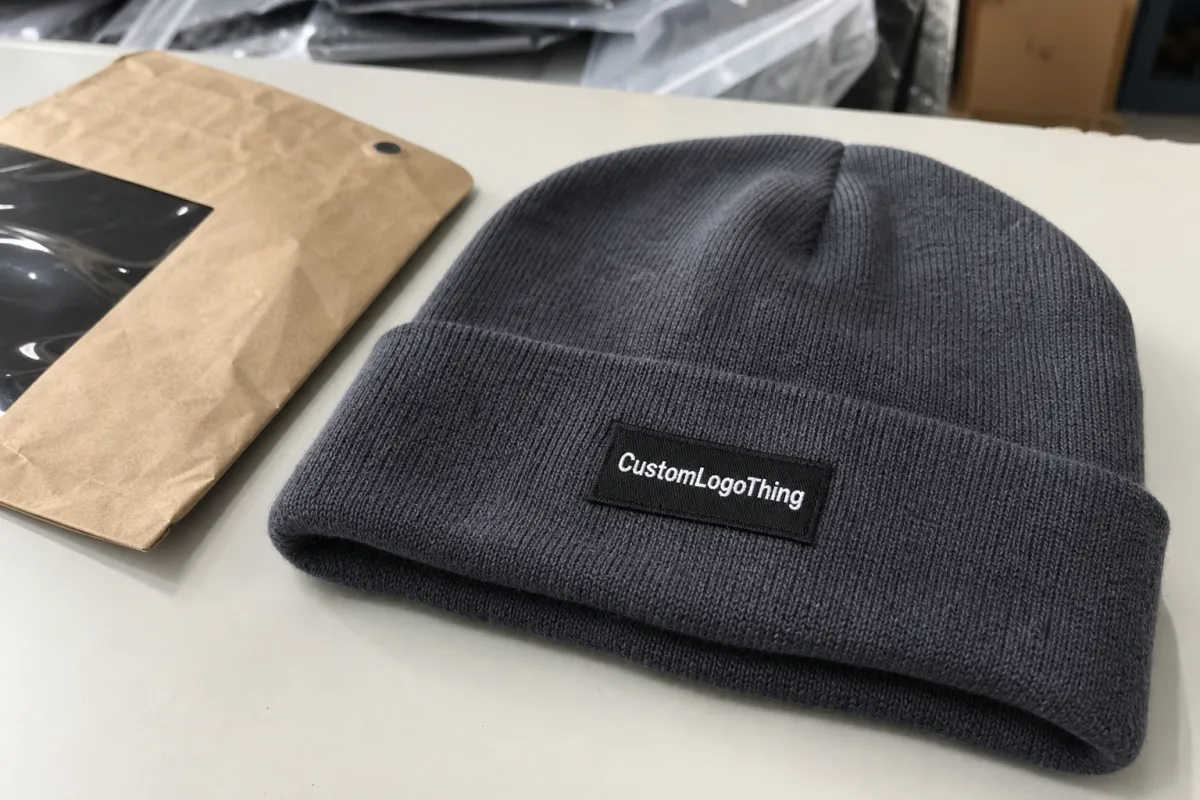
Most people look at the beanie body first. Fair enough; the knit carries the warmth, the fit, and most of the comfort. But on activewear, the label is the part that gets read up close, handled at checkout, and photographed in product listings, so it carries more branding weight than its size suggests.
In practice, woven labels tend to fail in three familiar ways: the edge feels scratchy, the artwork contains more detail than the weave can hold, or the attachment distorts once the beanie is stretched. A fashion buyer may forgive a little roughness in a casual hat. Fitness buyers usually will not. The cuff pulls. The knit rebounds. Sweat adds friction. The label has to stay legible through all of that.
- Woven labels build the logo into the cloth itself, so they usually hold detail better than a basic patch and avoid the thick, raised feel of embroidery.
- Embroidered patches add dimension and texture, but they can feel bulky on a snug beanie and are not always ideal for small text or narrow marks.
- Printed trims can look clean at first, yet they depend on the print system and coating, which matters if the beanie sees repeated wash cycles or friction near the temple line.
That is the practical split buyers should keep in mind. Woven labels are usually chosen for crisp brand presentation and repeat wear, especially when the logo needs to stay tidy on a cuffed beanie. A buyer who understands that tradeoff is much less likely to approve a sample that looks good on a table and tired on the first live wear test.
There is also a retail reality here. Store buyers and e-commerce teams zoom in on trim details because that is what customers do. The hat might be sold as warm, technical, or premium, but the trim either supports that claim or quietly undermines it. On fitness headwear, the wrong label reads as a shortcut.
What the fitness woven label beanies material guide actually covers
The fitness Woven Label Beanies material guide is really about the full stack, not just the label face. You are judging the beanie base fabric, the label yarn, the backing, the thread used to attach it, the fold style, and the exact placement on the knit. Each layer changes how the piece feels in hand and how it behaves after wear.
The beanie body comes first. A medium-gauge acrylic knit behaves differently from cotton or wool. Acrylic is usually lighter, softer, and easier to scale for cold-weather programs, while cotton feels more breathable but can lose some structure if the knit is too loose. Wool adds warmth and resilience, though it raises cost and care expectations. Blends sit in the middle and often give the most workable balance for activewear buyers.
Gauge matters as much as fiber. A tighter rib knit can hold a label more cleanly and make the front panel look intentional. A looser, slouchier knit may feel relaxed and modern, but it can also let the label sag or twist if the placement is not planned carefully. The same woven label can look premium on one beanie and slightly awkward on another simply because the base fabric behaves differently.
The label construction matters just as much. A dense woven face with a tight thread count can hold small type better, but it also asks for cleaner artwork and a more disciplined color palette. If the beanie is cuffed, the label often sits on the front fold, where it is seen most clearly. On slouch styles, the same label may be read at an angle, so the logo needs enough contrast to survive a less formal presentation.
For buyers who are also thinking about packaging, the label and the outer pack should not fight each other. Kraft paper inserts, corrugated mailers, recycled-content cartons, and FSC certified board can all support the same product story if they are specified consistently. If the shipment needs biodegradable packaging claims, those claims should be checked against the exact materials used, not assumed from a supplier description.
Shipping deserves a mention because hat programs rarely stop at the factory carton. Compression during transit can punish an overly stiff label or a thick patch. Programs that use stacking, bagging, or retail cartoning often borrow from ISTA-style thinking about package performance so the hats do not arrive flattened, creased, or misshapen. The label itself may be tiny, but packout determines how the customer meets it.
Material, backing, and stitch density: the choices that change the handfeel
Material selection is where the fine print starts affecting comfort. A soft acrylic beanie with a low-profile woven label can feel almost invisible to the wearer, while a heavier wool blend with a stiff label backing can feel sharp at the edge, especially if it sits near the forehead or temple. That difference is small in the sample room and obvious after ten minutes of wear.
Stitch density matters because fine artwork needs room to breathe. Tight lines, tiny icons, and narrow lettering are the first things to collapse when the label size is too small for the art. A logo with a lot of detail may need a wider label, fewer colors, or a redraw that simplifies the structure so the woven threads can actually resolve the image. Thin hairline rules rarely survive a real knit label; the art has to be adapted, not just scaled down.
There is a limit buyers run into again and again: screen art is not weave art. A vector file can be technically clean and still be unworkable if the negative space is too tight or the smallest letters are too compressed. Good production teams check this early because the fix is usually a design adjustment, not a manufacturing exception.
Common base fabrics and what they imply
- Acrylic: soft, warm, cost-friendly, and forgiving on outdoor training gear; it usually accepts woven labels well because the body knit is stable and easy to place.
- Cotton: breathable and comfortable for milder weather, but it can show more drape and may need smarter label placement to prevent twisting.
- Wool: premium handfeel and strong warmth, though it raises care expectations and can be less forgiving if the label backing is too rigid.
- Blended knits: often the most practical choice for buyers who want stretch, recovery, and a balanced price point without pushing the design too far into either extreme.
Backing choices are another quiet decision with real consequences. No backing gives the softest hand, but it can let a label shift if the stitching is light. Sew-on works well for cleaner, flatter applications. A soft backing can keep the label stable without making it feel like a badge. Iron-on support exists, but on activewear beanies it should be chosen carefully because repeated stretch and washing can reduce long-term hold.
Color count also changes the result. A two- or three-color label is usually easier to keep sharp and readable than a design with six or seven shades. If the brand mark relies on a narrow outline or tiny type, the minimum line thickness becomes the real limit. Buyers often discover that a logo they love on a screen turns fuzzy on thread because the art was drawn for print, not for weave. That is a spec problem, not a manufacturing failure.
There is a reason many buyers review Custom Labels & Tags alongside the beanie spec. Fold style, backing choice, and thread count show up across apparel trims, and the same rules that keep a neck label comfortable also matter on a cuffed hat. The formats are different. The constraints rhyme.
Process and timeline: from artwork to approved beanie sample
A clean approval path saves more time than almost any other step. Start with vector artwork, not a flattened image, because the label maker needs to see line weight, spacing, and exact color breaks. Then lock the label size, fold style, edge finish, and attachment position before the sample is woven. If those choices change halfway through, the sample history gets messy and the schedule slips.
The normal path is straightforward: artwork check, sample development, color confirmation, sample review, and then bulk production. That sounds simple, but each stage can bring back-and-forth if the logo needs redraws or if the brand wants to chase an exact shade that does not translate perfectly into thread. A good supplier should show where the closest thread match will land in real cloth, not just in a mockup.
Timing works best when it is broken into separate steps. Sample development often takes longer than buyers expect because the first round is really about proving the art and construction, not just producing a neat picture. Bulk production can move faster once the label is approved, but only if the file is already clean and the spec sheet is fixed. Shipping time is its own lane and should be planned separately, especially if the beanies are headed for retail cartons or event packs.
Typical lead times vary by complexity, but a useful planning range is two to four weeks for sampling and around three to six weeks for production after approval. Simple runs can come in faster. Complex artwork, unusual yarn blends, or busy seasonal schedules can push both numbers out. Rush orders usually cost more because they compress design review, weaving, attachment, and packing into a tighter window.
For transit-sensitive programs, ask how the finished hats will be packed. A stack of folded beanies in a corrugated carton behaves differently from individually bagged units in kraft paper wrap. If the outer packaging needs environmental claims, confirm whether the paperboard is FSC certified and whether any inserts or sleeves use recycled content. Those details do not change the label itself, but they do change the quality of the final presentation.
Typical hold-ups are predictable: unclear art files, late color changes, and sample revisions that alter the label size after the first proof. The smartest buyers keep revision notes tight and give direct answers early. That approach usually saves a week or more on a standard run, and it keeps the final sample closer to the line item that actually gets quoted.
Cost, MOQ, and unit price: what really drives the quote
Pricing for Woven Label Beanies is never just about the hat body. The quote usually combines setup, weave complexity, backing choice, attachment labor, packaging, and any special finishing. If the order includes retail-ready folding, tagged pairings, or boxed presentation, those extras can matter as much as the base knit.
Minimum order quantity changes the math fast. A simple logo might be inexpensive at scale, but low quantities spread setup costs across fewer hats, so the unit price climbs. That is normal, not a sign that the order is being padded. Buyers who need a small launch run should expect a higher per-piece number and should focus on reducing complexity rather than chasing the lowest headline quote.
As a rough buying reference, simple Woven Label Beanies often sit in a lower range when ordered in volume, while small runs, multi-color labels, and retail packaging can move the unit price up quickly. The base hat material matters too: acrylic usually stays more cost-friendly than wool, and blended knits sit in the middle. The label itself may only add a small amount on paper, but once setup, labor, and inspection are included, the difference becomes visible.
| Spec choice | What it changes | Typical cost impact | Best use |
|---|---|---|---|
| Simple 2-color woven label | Faster weave, clearer edge control | Lowest setup pressure | Gym merch, team basics, promo runs |
| Multi-color label with fine type | More loom time and tighter art checks | Moderate increase | Retail beanies with brand detail |
| Soft backing | Better comfort, slightly more material cost | Small to moderate increase | Snug activewear beanies |
| Iron-on or reinforced support | Extra attachment stability, more process steps | Moderate increase | Programs that need firmer hold |
| Retail pack-out with printed insert | More labor and packaging material | Higher total landed cost | Store shelves and gift bundles |
There are still good places to save money. Standardize the label size across colorways. Cut unnecessary color changes. Simplify the fold. Keep the icon bold enough that it does not need tiny stitching to stay readable. Those changes protect the look of the product while lowering the risk of proof revisions.
Sample charges, rush fees, and rework costs should be part of the buying conversation from the start. A cheap first quote can swell later if the art needs redraws or if the buyer changes the label dimensions after seeing the sample. Honest budgeting means asking what is included, what is not, and which changes trigger a new setup.
"A good beanie spec is not the cheapest path; it is the one that still feels right after the third wear, the first wash, and the first time the customer stretches it over a tired head at the gym."
Common mistakes that make custom beanie labels fail at retail
The biggest mistake is usually artwork that is too small for the weave. A logo can look clean on screen and still turn fuzzy once the thread count is doing the work. If the type is tiny, the edges soften, and the mark stops reading as intentional branding. Buyers should ask for a weave-aware redraw before signing off.
Another common miss is comfort. A backing that feels fine on a looser fashion beanie can be annoying on a snug performance fit. If the hat sits close to the forehead, even a slightly raised edge can rub. That matters more for fitness buyers than for casual merch buyers, because motion exposes every rough point.
Stretch and wash testing should happen before bulk approval, not after the first complaint. A label can look perfect on a flat table and then curl once the beanie is pulled on and off a few times. Heat, moisture, and repeated flex all affect how the cloth relaxes. Buyers who know that ask for a sample they can actually wear.
Placement is the other problem that sneaks up on people. A label stitched too high can disappear under the cuff. Too low, and it may twist into a bad angle or collect seam bulk. The right placement keeps the brand visible without making the beanie feel overdesigned. That is a small detail on paper and a big detail in the hand.
Care labels and size tabs can create their own friction if they are ignored during the trim plan. A great woven front label will not rescue a beanie if the inside trims scratch, bunch, or shift. The most dependable programs treat the full trim stack as one system instead of a pile of independent choices.
For buyers who want a second opinion on trim construction, pairing the beanie spec with the broader range of Custom Labels & Tags is often useful, because the same choices about fold, backing, and thread count show up across apparel and accessory lines.
Expert tips and the next steps to spec your order cleanly
Send more than a logo. The best brief includes the beanie fabric, measurements, target use case, wearer profile, and any packaging expectations. A supplier can only recommend the right label build if they know whether the beanie is for cold-weather training, retail gifting, or a promotional drop that needs to survive a shipping chain built around corrugated cartons and kraft paper outer packs.
A physical swatch or pre-production sample is worth asking for on fitness projects. Comfort and stretch matter more there than on a display-only piece, and a small backing choice can decide whether the label disappears into the knit or sits like a stiff tag. If the order is headed for retail, ask whether the finished pack uses recycled materials, post-consumer waste board, or FSC certified paper stock so the presentation matches the rest of the brand story.
Build a simple spec sheet and keep it honest. Include label size, color codes, fold, backing, attachment method, and acceptable variation. Add the exact placement in millimeters if the logo must sit centered on a cuff or a fixed distance from the seam. The more precise the brief, the less time you spend fixing preventable mistakes.
Two practical checks catch most issues before they go to bulk. First, compare the label against the beanie at full stretch, not just flat on a table. Second, look at the piece under normal retail lighting, because thread contrast can change once the sample leaves a bright production room. Those checks sound basic. They save money anyway.
If a supplier cannot explain why a label is being sized a certain way, or cannot tell you how the yarn, backing, and attachment method will behave after wear, keep asking. The right answer should sound specific: what the weave can hold, how the edge will feel, and what the final piece can survive. That is the difference between a label that looks polished in a mockup and one that still looks deliberate after a season of use.
My practical advice is simple: compare the sample against the finished fit, then approve only when the fitness woven Label Beanies Material guide choices line up with the feel you want on the head, not just the look you want on the screen. That final check is what keeps the order from becoming a nice mockup and a disappointing product.
What fabric blend works best for fitness woven label beanies?
Medium-gauge acrylic or blended knits usually balance warmth, stretch, and label stability better than very loose or very coarse fabrics. Heavily textured beanies need larger labels and simpler artwork so the weave stays readable after wear and washing.
Are woven labels softer than printed labels on beanies?
Woven labels usually feel smoother and last longer than stiff printed patches when the yarn and backing are chosen for low-profile comfort. Printed options can work for simple graphics, but they may crack or peel sooner if the beanie is worn often and washed repeatedly.
How much does a custom woven label beanie order usually cost?
Unit price is driven by label size, stitch complexity, backing, attachment labor, and order volume, not just the logo itself. Low quantities cost more per piece because setup and handling are spread across fewer hats, and sample or rush fees can add to the total.
What lead time should I plan for woven label beanies?
Simple projects can move from artwork approval to bulk production in a few weeks, but sampling and revision rounds extend the schedule fast. Build in extra time for color matching, sample review, and shipping so the order arrives before a launch, event, or seasonal drop.
How do I keep a woven label comfortable on activewear beanies?
Use a soft backing, keep the label low profile, and avoid oversized folds or thick edges that can rub during movement. Place the label where it will not sit directly against the forehead, helmet straps, or any high-friction area.


