A Fleece Lined Beanies sample checklist is not just a quality form. It is the line between approving a beanie that looks right in a photo and approving one that still fits, holds shape, and stays comfortable after packing, wear, and a wash cycle. The lining changes everything. It compresses the crown, alters stretch, and can turn a standard beanie into a noticeably tighter product if the pattern was not adjusted for the extra layer.
That matters because headwear failures are rarely dramatic. They are usually small. A logo that sits a little too high. A cuff that flips differently after stretch. A lining seam that rubs after twenty minutes of wear. None of those sound fatal on their own, but they create reorders, slow approvals, and awkward conversations with sales teams or event buyers.
For fleece-lined knit caps, the sample is doing a lot of heavy lifting. It should confirm material behavior, decoration placement, packaging fit, and repeatability. If the checklist only covers appearance, it leaves out the problems that show up once the product reaches a warehouse shelf or a cold sidewalk.
A good sample answers the questions that are expensive to answer later.
What a Sample Checklist Verifies
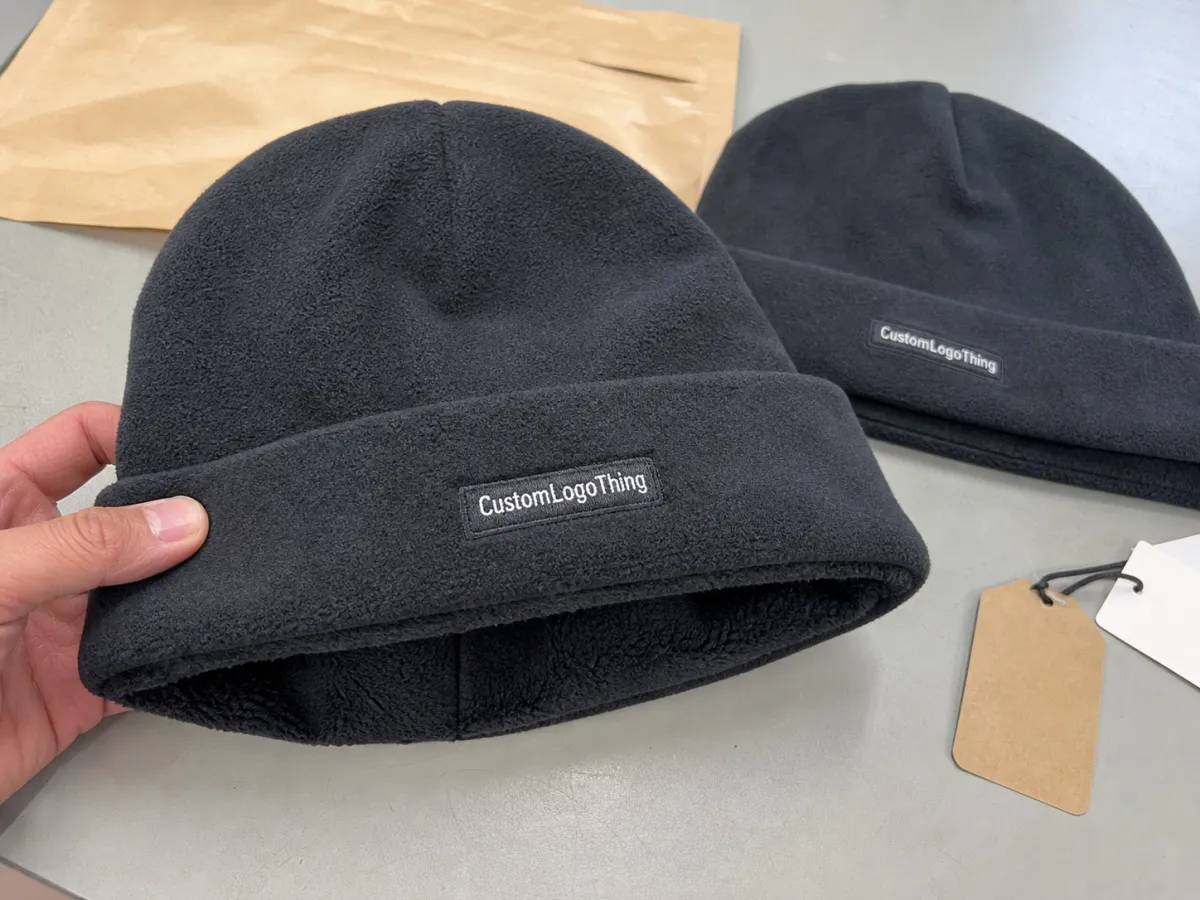
The first job of a Fleece Lined Beanies sample checklist is to separate a decent-looking prototype from a production-safe one. A beanie can pass the eye test while still failing the wear test. Knit shell, fleece lining, cuff depth, and decoration all interact. Change one, and the others shift. That is why the checklist needs to look beyond surface details.
Buyers usually need three kinds of proof. The first is material proof: the shell yarn, fleece, and trim have to behave as a system. The second is fit proof: the hat has to sit comfortably on the head without feeling cramped or sliding out of shape. The third is production proof: the factory needs to show that it can repeat the same result across the bulk run, not just on a hand-finished sample.
Small oversights tend to cause the biggest frustration. A label placed one inch too low can rub. A crown seam with rough backing can itch. A slightly heavier fleece can change the profile enough that a standard embroidery file no longer sits where the buyer approved it. These are not cosmetic details. They affect how the finished product is used.
Good sampling also checks the things people forget because they are not visible in a clean product shot. Stretch recovery, stitch comfort on the inside, fold height, thread color against the knit, and the way the beanie rebounds after being pulled on and off all matter. If the sample never gets tested in motion, the approval is incomplete.
For branded programs, the checklist also protects the schedule. A clear record of pass-fail items makes revisions faster, keeps the supplier aligned with the same standard, and reduces the chance that a conversation about “close enough” slips into bulk production. That is where many orders go sideways.
How the Sample Actually Works on a Real Beanie
Sample terminology is one of the easiest places to get misled. A sales sample usually shows capability. A proto sample tests the idea. A pre-production sample should mirror the bulk run as closely as possible. If those labels get mixed up, a buyer may approve a beanie that was never intended to be the final standard.
The easiest way to judge a sample is to picture it under stress. Flat on a table, a knit cap can look perfect. On a head, the shell opens, the fleece compresses, and the cuff behaves differently depending on stitch density and yarn elasticity. That is the real product. Not the flat one.
Wear testing does more than confirm comfort. It exposes pressure points around the forehead, ear line, and seams. A practical test is simple: pull the sample on and off several times, wear it for 20 to 30 minutes, then check whether the logo sits where it should and whether the lining shifts or bunches. If the fit changes sharply after repeated wear, the pattern needs attention before bulk production.
Wash recovery deserves a look as well. A sample that twists, shrinks, or comes back flattened after one wash is warning you early. So is a shell that loses rebound after stretching. The supplier does not need to promise perfection, but they should be able to explain how the fabric behaves and what tolerance range is realistic.
| Sample type | Typical purpose | What it proves | Common trap |
|---|---|---|---|
| Sales sample | Shows general style and construction | Basic look, hand feel, and decoration style | May not use your exact materials or size spec |
| Proto sample | Tests a custom idea | Shape, logo placement, and first-fit behavior | Often needs at least one revision |
| Pre-production sample | Sets the bulk standard | Closest match to final output | Skipping it can hide repeatability issues |
If the order includes retail packing or warehouse handling, ask whether the sample is packed the same way the bulk units will be packed. Compression can change how the beanie sits in the box and how the cuff recovers after unpacking. For transit durability, many factories use ISTA-style testing logic for drops, vibration, and shipment handling. That matters most when the order is traveling far or being repacked multiple times.
Material, Fit, and Decoration Factors to Confirm
A fleece-lined beanie is not one material. It is a system of parts that affect each other. The outer knit, inner fleece, cuff structure, and decoration method all change the final fit and hand feel. A thick lining can make a beanie feel warmer and tighter at the same time. A dense logo can stiffen the front panel. A small change in yarn can alter how the crown recovers after being stretched.
Start with the shell yarn. Acrylic is common because it is consistent, affordable, and easy to knit at scale. Acrylic blends can change softness, sheen, and pilling behavior. Recycled content may be a good fit for some programs, but it can introduce more variation in texture and dye uptake. That is not automatically bad. It just means the sample has to be checked more carefully under the same light the bulk order will be judged in.
Then look at the fleece. A brushed polyester fleece in the 160gsm to 220gsm range is common for lined beanies, though the right weight depends on the intended use. Lighter fleece is easier to stretch and often works well for mild outdoor use or promotional orders with broad audience fit. Heavier fleece feels warmer, but it can reduce elasticity and make the beanie feel more compact. The difference is easy to miss on a desk and obvious on a head.
Fit needs to be measured, not guessed. Crown depth, cuff height, opening width, and relaxed stretch range should all be recorded. Half an inch can matter more than people expect once the lining is sewn in. If the audience includes larger head sizes, long hair, or a broad retail fit requirement, ask for measurements on a worn sample as well as a flat sample. The flat number does not tell the whole story.
Decoration is the other pressure point. Embroidery on knitwear has to work around stretch and texture. A dense satin stitch can sit proud and distort the surface. Patches add weight and stiffness. Woven labels are cleaner in some cases, but they still have to be placed where the wearer will not feel them constantly. The logo size, stitch density, and placement all need to be judged on the worn sample, not only on the artwork proof.
A practical fleece lined Beanies Sample Checklist should confirm the following in writing:
- Shell yarn: fiber content, gauge, softness, and color consistency.
- Fleece: weight, finish, warmth level, and seam comfort.
- Fit: crown depth, cuff height, stretch, and recovery.
- Decoration: logo size, placement, stitch density, and visibility on the curved surface.
- Labeling: care tag, brand tag, country of origin, and required compliance text where applicable.
Packaging can also affect the final approval. If the sample is shipped loose but the bulk order will be folded and bagged, the product may feel different after compression. That does not always mean the garment is wrong. It means the buyer needs to judge the product in the format the customer will actually receive.
Production Process, Timeline, and Lead Time After Approval
The fastest way to lose control of a project is to treat lead time as one number. It is not. It is a chain. Quote, artwork proof, sample build, revision, pre-production approval, bulk production, packing, and freight booking all take time. Any one of them can slow the order, and the delay usually shows up first in the stage nobody was tracking closely enough.
A straightforward sample can often take about 7 to 14 business days if the materials are already available and the logo is simple. Bulk production commonly runs 20 to 35 business days after approval. Custom yarn sourcing, embroidery digitizing, special labeling, or retail packing can extend that. Those are normal production constraints, not excuses. They just need to be surfaced early.
The checklist should include schedule control, not only product quality. Ask which step is likely to take the longest. In practice, the usual bottlenecks are custom color matching, revision cycles, and approval delays on the buyer side. Packaging changes can add time because the factory may need new inserts, labels, or carton markings. If the order is seasonal, those extra days matter more than they do on a replenishment run.
Milestones are easier to manage than a single delivery promise. A buyer should ask for separate dates for artwork approval, sample completion, revision window, bulk start, packing completion, and ready-to-ship status. That structure makes it much easier to see where the project is drifting. A one-line estimate hides too much.
It also helps to confirm whether the sample came from the same production line or a dedicated sample room. That difference is not always a red flag, but it does affect how much confidence the sample deserves. A polished sample room can mask a looser bulk process. In that case, the pre-production sample becomes the real benchmark.
Cost, Pricing, MOQ, and Quote Details That Change the Number
Pricing for fleece-lined beanies usually turns on a handful of variables rather than one headline figure. Shell yarn, fleece weight, knit complexity, decoration method, packaging format, and order quantity all influence the unit cost. Add one detail, remove another, and the number changes quickly.
For planning purposes, custom fleece-lined beanies at low to mid volumes often land around $3.20 to $7.50 per unit. At higher quantities, the unit cost may fall into the $2.60 to $5.10 range. Those are working estimates, not promises. A heavier lining, full-color embroidery, or specialty packaging can push the price up. So can a small order size that does not spread setup costs very far.
MOQ matters because setup work does not disappear at lower volume. Digitizing, yarn allocation, labeling setup, and sample labor still have to be covered. On a 300-piece order, that overhead is obvious. On a 5,000-piece order, the same overhead gets diluted. Buyers sometimes focus on the unit price and miss that basic math.
The sample checklist should also interrogate the quote itself. Ask for line items, not just a single total. If the numbers are not broken out, comparison becomes messy and hidden costs are easy to miss.
- Sample fee: Ask whether it is credited back on order placement.
- Digitizing or tooling: Confirm whether embroidery setup is separate.
- Revision charges: Ask how many changes are included.
- Freight: Separate sample freight from bulk freight.
- Rush service: Get any expedited fee in writing.
A lower quote with expensive revisions can cost more than a slightly higher quote that includes clearer terms. The same applies to packaging. A simple polybag is not the same cost as a retail-ready setup with a barcode label, insert card, and carton marking. If the supplier cannot quote against the same spec sheet, the comparison is not clean.
The best way to compare prices is to send every supplier the same logo file, same size spec, same packing instructions, and same destination terms. Otherwise the quotes are describing different products, even if the numbers look close.
Common Sampling Mistakes That Lead to Reorders
Most reorders come from small misses that were easy to prevent. A logo scaled a little too large. A lining that makes the beanie feel one size smaller. A color that looks acceptable under warm indoor light and off under neutral light. None of those issues sounds serious in isolation. Together, they can break the order.
The most common mistake is approving a sample flat and never testing it on a head. A knit cap lives in motion. If it is never stretched, worn, and inspected from different angles, the buyer is approving a presentation piece rather than a usable product. That distinction matters more than teams admit.
Another error is skipping comfort checks in conditions closer to real use. A fleece lining can feel soft in a warm room and still trap heat, feel too dense, or create a clammy sensation outside. For outdoor promotions, winter retail, or team merch, that difference affects acceptance. “Feels nice” is not enough. The sample has to hold up during actual wear.
These are the misses that show up again and again in a fleece lined Beanies Sample Checklist review:
- Ignoring stretch recovery after repeated wear.
- Checking embroidery only on a flat sample, not on a worn sample.
- Overlooking seam comfort at the forehead or ear line.
- Reviewing color under one light source only.
- Skipping wash and snag testing before sign-off.
Packaging errors create another layer of risk. If the sample is loose but the bulk order will be compressed in cartons, the shape can change after packing. That is especially relevant for retail programs, where presentation has to survive distribution. Shipment testing standards such as those used by ISTA exist for a reason: transport changes products.
The safest approach is simple. If the sample has not been tested in the condition the bulk order will face, it is still a draft.
Expert Tips for Comparing Samples Like a Buyer
Sample comparison gets far easier once the process is standardized. Same lighting. Same ruler. Same head form, if one is available. Same wear time. Same notes template. Without that discipline, the “best” sample is often just the one that got the easiest test.
A scorecard helps because it keeps the conversation grounded. A Fleece Lined Beanies sample checklist can be scored across warmth, fit, decoration quality, packaging, and communication speed. That last category matters more than teams usually say out loud. Clear, fast responses during sampling often predict smoother correction cycles during production.
One useful habit is to keep a reference sample from a previous order that already performs well. Put the new sample next to it. Differences in crown height, cuff thickness, thread density, and hand feel become visible fast. Memory is not a measurement tool. Fabric punishes loose memory.
Ask for photographs from multiple angles before approval. Close-ups of the logo, inside seam, label placement, and cuff edge can reveal problems that are easy to miss in a single front-facing shot. If the supplier can send measurements with the photos, even better. That combination is easier to audit later if anything changes.
Use a quick comparison sequence:
- Measure the sample flat and worn.
- Inspect the decoration under bright neutral light.
- Check stretch recovery after repeated pulls.
- Review label placement and care instructions.
- Confirm the packaging matches the planned bulk format.
That process is not fancy, but it is efficient. It also helps buyers compare suppliers fairly. A factory that sends a polished but fragile sample is not the same as one that sends a slightly rougher sample with better repeatability. On bulk orders, repeatability usually wins.
Record who approved what, and when. A clean approval trail reduces confusion if changes appear later. The written record tends to matter more than the memory of a phone call, especially once the order reaches production and people start remembering the process differently.
Next Steps Before You Request a Quote
Before asking for pricing, send a spec sheet that does real work. Include target size, shell color, fleece preference, logo file, quantity range, packaging instructions, and destination country. The clearer the brief, the less the supplier has to guess. Guessing is expensive in sampling.
It also helps to ask for confirmation on a few practical points: sample fee, turnaround time, MOQ, revision policy, and freight timing. If the answers are vague, the quote probably is too. If the supplier cannot say whether the sample will match the final bulk method, treat that as a warning sign, not a minor gap.
Use the checklist as a gate, not paperwork. The sample is either ready, needs revision, or needs a rethink before production money is committed. Those are different outcomes and they should be treated that way. A cheap sample that hides fit problems is expensive. A careful sample that surfaces them early is usually the lower-risk choice, even if it costs more at the start.
That is the real value of a fleece lined beanies sample checklist: it turns vague approval into a controlled decision. The order is easier to price, easier to schedule, and far less likely to boomerang back with fit complaints or decoration issues once the cartons are already on the move.
What should be on a fleece lined beanies sample checklist?
Include fit, warmth, lining feel, seam comfort, decoration placement, color match, and wash recovery. Add packaging, labeling, and measurement checks so the sample reflects the final production unit. Document pass-fail notes for each item so the approval decision is easy to defend later.
How many samples should I compare before approving fleece lined beanies?
Compare at least two supplier samples when possible, especially if the logo or lining is custom. Use the same evaluation conditions for each sample so one does not look better just because it was tested more carefully. If the order is large, keep one approved reference sample for the bulk run.
Does fleece lining affect embroidery or patch placement?
Yes, because the lining can make the knit less flexible and change how embroidery sits on the crown. Thicker decoration can feel stiff or distort the fit, especially on smaller beanies or deep cuffs. Check logo size on a worn sample, not only on a flat one, before giving approval.
What lead time should I expect for fleece lined beanies samples and production?
Sample timing usually depends on artwork approval, yarn availability, and decoration complexity. Production lead time can expand if the supplier needs custom colors, new tooling, or packaging changes. Ask for milestone dates so you can track delays before they affect delivery.
How do I judge pricing on fleece lined beanies without missing hidden costs?
Compare line items, not just the headline unit price, because sampling, tooling, freight, and rush fees can change the real total. Check whether MOQ affects the unit cost and whether revisions are included in the quote. Request a fully itemized quote before choosing the lowest number.