Fleece Lined Beanies Unit Cost: Get Bulk Pricing Fast
For a winter promo drop, employee kit, or retail program, fleece lined Beanies Unit Cost is usually shaped less by the lining itself than by the work around it. Decoration, cuff structure, stitch density, packaging, and approval speed tend to move the number more than buyers expect. The lining matters, but it is rarely the main reason a quote rises.
That surprises a lot of teams. A lined beanie looks substantial in hand, so the assumption is that it must be expensive to make. In practice, a clean spec can keep the cost per piece in a fairly tight bulk range. The same style can feel premium on the head and still be practical on a purchase order. The spread comes from decisions that sound small in a meeting and become expensive on the line.
There is also a common mismatch between appearance and production cost. A beanie that looks simple on a product page may require a very specific knit, a precise cuff height, and a lining that does not twist inside the shell. Another hat that looks richer may actually be easier to sew. Bulk pricing is full of those little contradictions.
Fleece Lined Beanies Unit Cost: What Buyers Miss
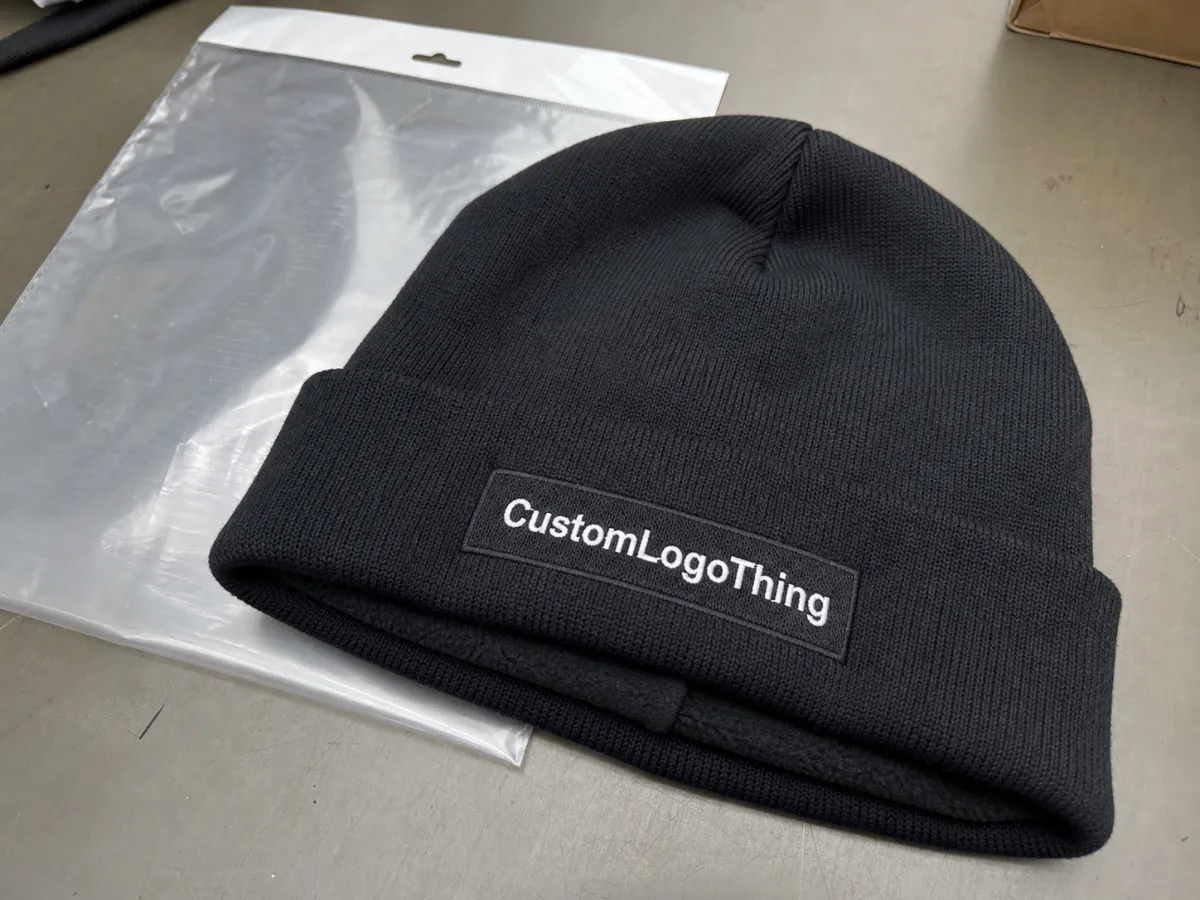
The lining is only one part of the build. Shell yarn, knit gauge, seam finish, and decoration often have a bigger effect on price than the fleece layer does. A standard acrylic shell with a microfleece lining can stay efficient in volume. Add a tall cuff, dense embroidery, a woven patch, or retail folding and the quote moves quickly.
That is why two beanies that look almost identical in a mockup can land in different price brackets. One is a straightforward giveaway with one logo location. The other is built more like a retail item, with cleaner edge finishing, a label, and a presentation standard that takes time to maintain. Same category, different production burden.
Small spec changes matter more than most buyers realize. Tighten the knit, increase cuff depth, request a smoother inside seam, or add a second decoration location, and labor goes up. In many cases, those changes affect Fleece Lined Beanies unit cost faster than a switch between two acceptable shell yarns. The yarn price may move a little; the labor hours move more.
A lined beanie only looks expensive because it feels finished. The real cost appears when the spec starts behaving like a retail product without the order size to support retail-level labor.
Use case changes the equation too. A promo hat can tolerate a simpler build and lighter packaging. Staff gear usually needs durable stitching and a fit that does not collapse after a few wears. Retail resale needs tighter color control, more consistent presentation, and fewer visible shortcuts. The right MOQ and finish level depend on what the hat has to do after it leaves the carton.
There is one more trap: buyers often compare quoted unit prices without checking what sits inside those numbers. One supplier may include embroidery setup, individual polybags, and carton labels. Another may quote only the bare beanie. If the line items are not aligned, the comparison is not real.
Product details that change warmth, fit, and hand feel
The outer shell gives the hat its shape. The lining decides whether it feels comfortable enough to wear all day. Most buyers notice that difference immediately. A soft shell with a rough or bunched-up lining feels cheap even if the price is not low. A mid-weight shell with the right fleece interior usually reads warmer and more finished, even when the cost only moved a little.
Common shell choices usually fall into three practical groups:
- 100% acrylic - the standard workhorse; broad color range, predictable knit behavior, and sensible bulk pricing.
- Acrylic-wool blends - slightly warmer and often more refined in hand feel, but they usually raise cost and care expectations.
- Heavier knit constructions - useful for a denser winter look, though the added yarn and longer knit time can push the quote higher.
For lining, the common options are full fleece lining, partial lining, and brushed tricot. Full fleece gives the warmest, cushiest feel and usually the best cold-weather value. Partial lining lowers material use and keeps the hat lighter. Brushed tricot is smoother and less bulky, which can help when the beanie needs warmth without a stuffed profile.
Fit details matter more than many buyers expect. Cuff depth changes the imprint area and the visual balance of the hat. Stretch recovery decides whether the beanie bounces back after repeated wear. Seam finish determines whether it feels tidy on the forehead or scratchy near the crown. Deep-fit styles generally feel more substantial; shallow-fit styles can look sharper, but they are less forgiving across head sizes.
Decoration changes both cost and market position. Embroidery signals durability. A woven patch pushes the item closer to retail. A woven label is lighter and often cleaner. A metal badge or debossed trim can look premium, but those finishes introduce tooling, extra handling, or more complex assembly. The material itself may be modest; the finishing stack is what makes the number climb.
For buyers balancing warmth against price, the most efficient setup is often a standard acrylic shell, a full or partial fleece lining, and one clear logo application. That combination keeps the item practical without making it look stripped down. It also keeps the fleece lined Beanies Unit Cost in a range that works for both giveaways and seasonal merch.
Specifications to lock before you quote
Loose specs lead to loose quotes. That is where budgets drift. If the buyer cannot define shell yarn, lining fabric, size range, and decoration method, the supplier has to pad the estimate. Padding is not always visible, either; it hides in a conservative material allowance, a cautious labor estimate, or a freight buffer that feels bigger than expected.
Before asking for a final price, lock these items:
- Shell yarn - acrylic, blend, or heavier knit weight.
- Lining fabric - full fleece, partial fleece, or brushed tricot.
- Knit gauge and weight - the density that affects warmth and production time.
- Cuff style - folded, tall, short, or no cuff.
- Target size range - especially if you need a deep fit or a snug profile.
- Logo size and placement - front center, side, cuff, or tag area.
Decoration details deserve the same discipline. A one-color embroidery file with 5,000 to 7,000 stitches is usually easier on the quote than a multi-color patch with several finish steps. Add a second logo location and labor rises. Ask for a backer, a woven patch, metallic thread, or a special edge treatment and the per-piece number starts to climb. That is true on a 100-piece run and on a 1,000-piece run; the scale changes the total, not the logic.
Packaging needs to be decided early too. Polybags, size stickers, hang tags, belly bands, retail folding, and insert cards all affect cost and pack-out time. Individually, they look minor. Across a bulk order, they affect carton counts, labor hours, and freight weight. If the hats are destined for retail or a gift program, these details are not cosmetic. They are part of the product.
If packaging sustainability matters, FSC-certified paper tags and cartons are a sensible place to start. If the order has to travel well, carton durability matters just as much as appearance. Suppliers that know ISTA-style transit thinking are usually better at keeping boxes intact through the kind of handling that destroys presentation after the factory photo is taken. See FSC and ISTA for the standards behind those choices.
The simple truth: vague specs force higher allowances, and higher allowances make the quote safe instead of sharp. A clean spec sheet usually lowers Fleece Lined Beanies unit cost more than a long negotiation does. It also makes the comparison between suppliers actually meaningful.
Pricing, MOQ, and unit cost by order size
The clearest way to read fleece lined beanies unit cost is through quantity. Small runs carry more setup burden per piece. Larger runs spread that same effort across more hats. That is why MOQ matters so much. It is not just a factory rule; it changes the arithmetic.
| Order size | Typical unit cost | Common setup charges | Notes |
|---|---|---|---|
| Sample / pre-production | $35-$75 total | Artwork setup, embroidery digitizing, or patch setup may apply | Usually separate from bulk pricing; shipping extra |
| 100 pieces | $6.00-$9.50 each | Higher setup burden per piece | Best for demand testing, not for squeezing the lowest possible cost |
| 250 pieces | $4.50-$7.00 each | Moderate setup impact | A common break point for promo programs and smaller retail launches |
| 500 pieces | $3.60-$5.60 each | Lower setup impact per hat | Often the sweet spot for decent bulk pricing without overbuying |
| 1,000 pieces | $3.10-$4.80 each | Setup spread thin | Better pricing on decoration, packaging, and freight planning |
Those ranges assume a standard custom beanie with a practical shell and lining combination. Move to a denser knit, a more complex patch, a special insert, or a premium blended yarn, and the number goes up. Go simpler with one-color embroidery and standard polybags, and it comes down. Production math does not reward ambiguity, only clarity.
Low MOQs usually mean fewer customization choices and less room on price. That is not a supplier being difficult. It is how overhead works. If a factory has to stop a line for a small run, the setup cost has to live somewhere. Usually it lands in the unit cost where everyone can see it.
One more trap for buyers: sample cost, production cost, and freight are separate animals. A quote can look competitive on the product line and still get expensive once shipping, carton changes, and destination fees are added. Ask for the landed total before comparing suppliers. Otherwise you are comparing half a story to a full invoice.
Seasonality also matters. Once colder weather approaches, production slots tighten and freight gets less forgiving. That does not always mean the factory price rises, but the total project cost often does because you have less room to wait, revise, or split shipments. Planning a winter order in advance is less about optimism and more about avoiding last-minute penalties.
Process and turnaround from proof to delivery
The production workflow is usually straightforward, but each handoff can slow the order if the buyer is not ready. A clean run generally moves through quote, artwork check, proof approval, sample or pre-production confirmation, bulk production, quality check, packing, and shipment.
Turnaround depends on quantity, complexity, and how fast approvals move. Standard production is often 12-20 business days after proof approval for a typical custom run. Rush orders can be faster, sometimes 8-12 business days, if materials are already available and the decoration is uncomplicated. Add a sample stage, and another 5-10 business days can disappear before bulk production even begins.
The things that speed an order up are not glamorous, which is exactly why they work:
- Clean artwork in vector format.
- Locked specs before quoting.
- One decision-maker on the buyer side.
- Fast proof review.
- Realistic shipping expectations.
That last point deserves more weight than it usually gets. Freight delays do not care how tidy the product spec is. A winter order can be fully approved and still arrive late if the shipping plan was too optimistic. If the beanies need to hit a seasonal event or a retail floor date, build slack into the schedule early. The cost of a late delivery is rarely just freight; it is missed timing, wasted labor, and a second round of phone calls.
Transit testing matters too. If cartons will travel far, ask whether they are packed and tested for actual shipment stress instead of simply stacked neatly in a warehouse photo. A supplier that thinks about compression, moisture, and handling is less likely to hand over crushed cartons and a useless apology.
How we keep repeat orders consistent
Repeat business lives or dies on consistency. Buyers do not want a close-enough second run. They want the same color, same fit, same logo size, and same lining feel. That sounds obvious until a reorder arrives months later and the shade has shifted, the cuff height is off, or the inside finish feels different in hand.
Strong reorder control starts with records. The approved sample, embroidery file, color reference, and packaging spec need to stay attached to the job. For a lined beanie, the lining weight and placement matter too. If the inside lining drifts, the whole hat can feel different even when the outside looks unchanged.
The main QC checkpoints are practical and easy to understand:
- Knit tension - confirms the shell keeps the same stretch and shape.
- Stitch quality - catches loose seams, uneven edges, and weak joins.
- Logo placement - keeps the mark centered and repeatable.
- Packaging count - prevents carton shortages and wrong assortments.
- Color matching - reduces visible drift between orders.
Communication stability matters almost as much as the spec sheet. If the buyer changes contacts on every reorder, details get lost. Then the quote changes, the sample changes, and everyone spends time rediscovering what was already approved. That is a slow way to buy anything, especially winter headwear with multiple moving parts.
Reliability saves money. Fewer mistakes mean fewer reworks. Fewer reworks mean fewer delays. Fewer delays mean the order reaches the buyer before the season has passed. That is the real value of discipline in this category, and it often shows up more clearly on the second or third run than on the first.
What to send for an accurate next-step quote
If the goal is a quote worth using, send enough information to remove guesswork. The list is short:
- Quantity.
- Target delivery date.
- Color count.
- Logo file.
- Decoration method.
- Packaging needs.
- Destination zip code or port.
- Shell and lining preference, if already decided.
Destination matters because freight can change the final number more than some buyers expect. Carton size matters too. A simple folded beanie ships efficiently. A retail-packed beanie with an insert card, polybag, and label takes more space and often moves the freight bill. Those are not small differences once they are multiplied across hundreds or thousands of units.
Compare suppliers on the same spec sheet. Do not compare one quote that includes full fleece lining, embroidery, individual polybags, and carton labeling against another that quietly leaves out half of those items. That is how a cheap-looking quote becomes an expensive order. The lowest line on the page is not useful if the missing details are added later.
The cleanest way to pin down fleece lined beanies unit cost is to lock the spec, confirm the quantity break, and ask for a landed total with setup charges shown separately. That gives you the real bulk price instead of a sales estimate dressed up as certainty.
FAQ
What affects fleece-lined beanie unit cost the most?
Quantity is the biggest lever. After that, decoration method, lining weight, and packaging choice do the most damage or savings. Artwork complexity matters too, because high-stitch embroidery or multiple logo locations adds labor. If the order is small, setup fees can be as important as the raw material line.
How does MOQ change fleece lined beanies pricing?
Lower MOQs usually carry a higher unit cost because setup time is spread across fewer hats. At higher quantities, material buying and production efficiency bring the per-piece number down. If the run is small, expect fewer customization options and a narrower spec window.
Can I lower fleece lined beanie costs without hurting quality?
Yes. Simplify decoration, trim packaging extras, and choose a standard shell and lining combo. Keep the fit and warmth requirements intact, then remove optional features that do not help the buyer. The cheapest quote is not the goal; the cleanest spec at the right price is.
What is the usual turnaround time for custom fleece-lined beanies?
Standard timing depends on quantity, proof approval speed, and whether a sample is needed first. Rush orders are possible, but they narrow material choices and can raise unit cost. Winter orders should be placed early because production slots and shipping capacity tighten fast.
What do I need to request an accurate fleece lined beanies quote?
Send quantity, colors, logo artwork, decoration method, packaging needs, and your target delivery date. If you already know the shell and lining preference, include that too; it removes pricing guesswork. A quote is only useful when every supplier is pricing the same spec.


