Buying frosted zipper Bags Unit Cost for fitness is not just a matter of comparing two prices and picking the lower one. It is a packaging decision that affects presentation, shipping performance, fulfillment speed, and how your product feels when it reaches the customer. Gym apparel, protein samples, recovery gear, and branded merch all need packaging that looks clean, holds up under handling, and does not feel like leftover promo stock. Frosted Zipper Bags usually hit that middle ground better than plain clear bags without drifting into luxury packaging costs.
The real question for fitness brands is practical: how do you balance unit cost, presentation, and everyday use? That means checking the MOQ, bag size, zipper style, print coverage, and freight before you commit. Leave one of those out, and the “cheap” quote can get expensive once setup, shipping, and rework enter the picture. Packaging has a way of collecting its due.
Why frosted zipper bags make sense for fitness packaging
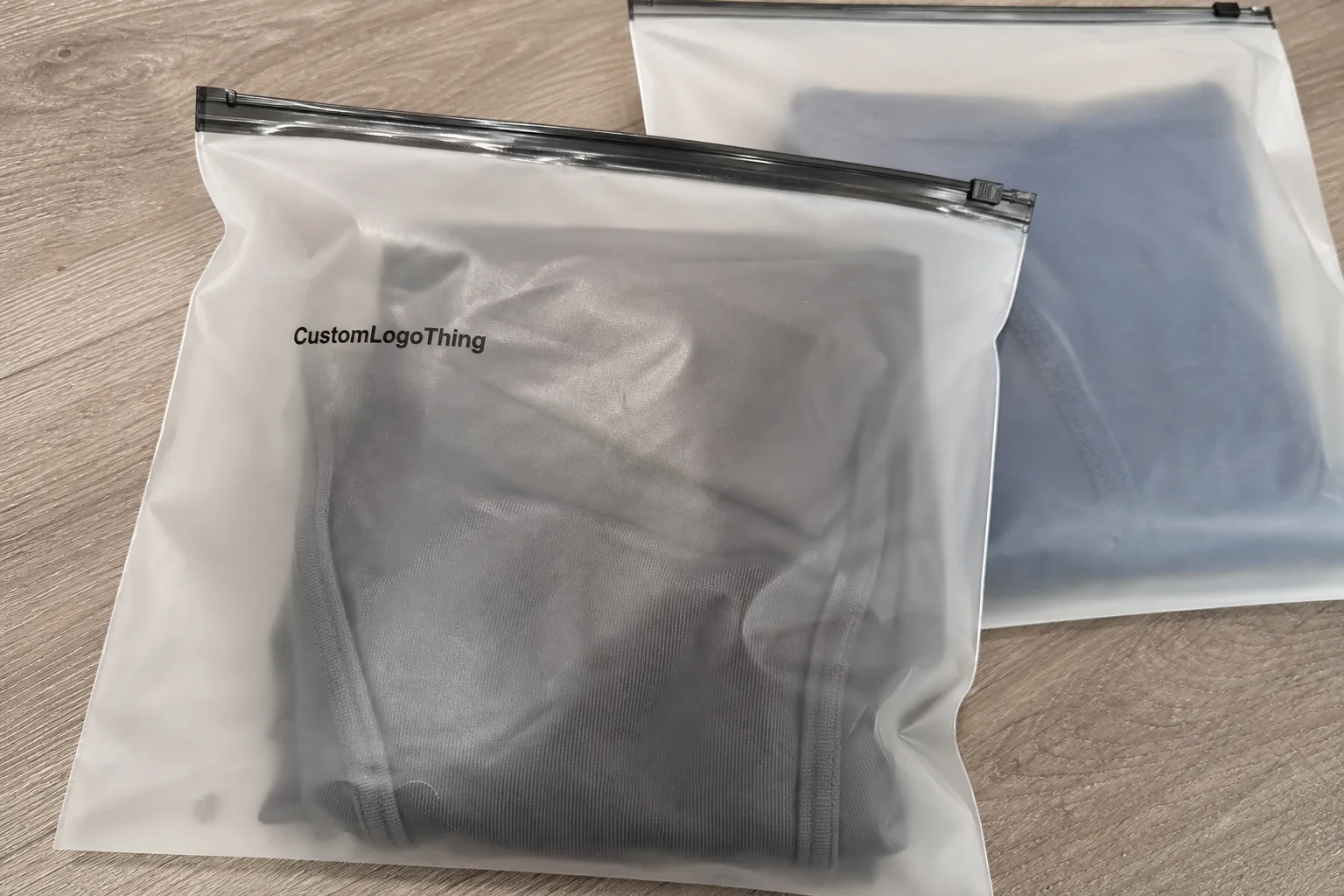
Fitness packaging gets handled constantly. It goes into gym bags, sits in warehouse cartons, gets opened and resealed, and often travels through a few hands before the customer sees it. A frosted zipper bag holds up better than a thin promo pouch, and it does so without looking loud or disposable. That matters when the package needs to work for retail shelves, subscription boxes, sample kits, or influencer mailers.
The frosted finish does useful work visually. It softens what is inside, hides scuffs better than a fully clear bag, and usually reads as more premium without adding complicated decoration. That is one reason Frosted Zipper Bags Unit Cost for fitness often makes sense even when the price is slightly higher than a basic clear bag. You are paying for a better-looking functional package, not just a piece of plastic.
From a buyer’s point of view, the benefits are straightforward:
- Resealability for samples, accessories, and small apparel items.
- Moisture and dust resistance for storage and shipping.
- Light product visibility so the contents are still recognizable.
- Clean branding space for logos and short copy.
That is why these bags show up in subscription kits, retail add-ons, event giveaways, and e-commerce kitting. They are not trying to be fancy just for show. They are doing a job. If you need a package that ships neatly, stacks well, and still looks intentional at delivery, frosted zipper bags are a sensible middle ground.
For fitness brands that sell apparel, resistance bands, recovery tools, or supplement samples, the bag often becomes part of the product experience. That does not mean you need expensive decoration. It means you need the right package structure. The cost per piece should support the brand, not consume the margin.
Frosted zipper bag product details and style options
Not all frosted zipper bags are built the same. The most common options are single zipper, double zipper, and slider zipper styles. Single zipper is usually the least expensive. Double zipper gives a more secure closure. Slider zippers are easier to open and close, which matters if customers will reuse the bag often.
Display use adds another choice: the hang hole. A punched hang hole makes the bag useful for pegboard or hook display. If you sell accessories or sample kits in stores, that detail can prevent repacking later. If the bags are strictly for direct-to-consumer shipping, you may not need it. Paying for a feature no one uses rarely improves the economics.
The frosted effect itself can vary. Some bags are lightly translucent, while others are more opaque. More opacity usually gives a softer, more premium look, but it also reduces product visibility. That is not always a drawback. For mixed bundles or branded kits, stronger opacity can make the contents feel more curated and less like a random assortment of items.
Branding methods are usually simple. One-color logo printing is the cleanest and most cost-controlled route. Multi-color print adds complexity and often increases setup charges. Spot logo placement keeps the bag understated. Full-surface print is possible on some styles, but it is not the best fit for every budget, especially if you are watching bulk pricing against margin.
Fitness categories benefit in different ways:
- Apparel: leggings, tees, socks, compression sleeves.
- Supplements: sample sachets, scoop kits, trial bundles.
- Recovery tools: bands, rollers, massage accessories.
- Merch: hats, wrist wraps, event giveaways.
- Hybrid kits: brand welcome packs and launch bundles.
Check the extras before you place an order. Ask about tear notches, film thickness, sealed edges, and whether the bag is food-contact suitable if it will hold nutrition items or samples. If the product will touch the inside of the bag, that answer should be confirmed before production starts, not after cartons arrive.
The material choice also matters. Most frosted zipper bags are made from polyethylene film, usually LDPE or a blended structure depending on the desired feel and stiffness. A softer film folds more easily and can lower cost, while a heavier film feels sturdier in the hand and is less likely to crease sharply. For fitness brands, the right choice often depends on whether the bag is meant for shipping once or being reused several times by the end customer.
Print quality depends on the film surface and ink coverage. A frosted film hides minor imperfections better than a glossy clear bag, but it also softens very fine artwork. Thin lines, tiny text, and low-contrast gradients can disappear faster on opaque or semi-opaque material. That is why simple logos usually reproduce more reliably and keep the bag looking deliberate rather than crowded.
Specifications fitness buyers should lock in before ordering
Specs control both performance and cost. If you want a reliable quote for frosted zipper bags unit cost for fitness, send the exact size, thickness, zipper style, print colors, and carton count. Vague requests lead to vague pricing. That is not a supplier trick. It is a missing-spec problem.
Start with size. Small bags work for sample packs, bands, and compact accessories. Mid-size bags are better for apparel items or bundled kits. Larger bags suit retail packs or multi-item kits, but they also increase material use and freight weight. The bigger the bag, the more the unit cost tends to move.
Thickness matters too. A thicker film usually feels more durable and looks better in hand. It also costs more and can increase shipping weight. There is no single gauge that works for every brand, but buyers often compare lower gauges for samples and mid-gauges for reusable retail packaging. If the bag will be handled repeatedly, saving a fraction of a cent by going too thin can be false economy.
Artwork is where time gets wasted. Confirm the safe print area, bleed, logo color count, and whether gradients will reproduce cleanly on frosted film. Simple logos reproduce better. Fine lines and tiny text may lose clarity, especially on more opaque film. A busy design can turn a clean package into something muddy very quickly.
There are also a few practical details worth checking before approval:
- Seal strength: important if the bag will be opened many times.
- Tear notch placement: useful for easy opening in retail or kits.
- Flat pack or pre-filled packing: changes fulfillment workflow.
- Odor control: helpful for sealed apparel and sports accessories.
- Food-contact suitability: necessary for supplement samples or nutrition items.
If the bags will be used near supplements, ask for the material spec and any compliance documentation. Some buyers also ask about recycled-content claims or other sustainability statements, but those need to be verified carefully rather than assumed. For shipping performance, standards from organizations like ISTA are useful for thinking about how packaging survives transit stress. A bag that looks good on a screen is not enough if it fails in a parcel network.
For brands that care about environmental claims, it helps to remember that secondary packaging is often where practical reductions happen first. Using only the thickness needed, avoiding unnecessary print coverage, and ordering the right quantity can cut waste more effectively than adding vague “eco” language to a product page. Guidance from the EPA is a useful reference point for waste and materials considerations.
Frosted zipper bags unit cost, pricing, and MOQ
Here is the part most buyers ask about first: frosted zipper bags unit cost for fitness. Fair enough. The range depends on size, thickness, zipper type, print colors, and quantity. Lower MOQ orders usually carry a higher cost per piece because setup is spread across fewer bags. Larger runs bring the unit cost down as setup and tooling get absorbed into the order.
For Custom Frosted Zipper Bags, practical pricing often looks like this:
| Order Type | Typical MOQ | Approx. Unit Cost | Best For |
|---|---|---|---|
| Simple stock size, one-color print | 1,000–3,000 pcs | $0.18–$0.35 | Testing, launches, small retail runs |
| Mid-size custom bag, one- to two-color print | 3,000–10,000 pcs | $0.12–$0.24 | Subscription kits, DTC kits, retail packaging |
| Larger run, more print coverage | 10,000+ pcs | $0.08–$0.18 | Scaled fulfillment, recurring product lines |
Those ranges are realistic enough to help with planning, but they are not universal. A thicker film, a slider zipper, custom dimensions, or more print colors will push the price up. Keeping the structure simple and ordering more usually lowers the unit price. That is how packaging economics work.
The MOQ question matters because it affects cash flow. A lower minimum is useful when you are testing demand or launching a new line, but the per-unit price is usually higher. A bigger order reduces the cost per piece, but it ties up inventory cash and warehouse space. So the real question is not “What is the cheapest quote?” It is “What quantity gives me the best landed cost without overbuying?”
When you Request a Quote, ask for these line items:
- Unit price tiers by quantity.
- Setup charges for printing and production.
- Tooling fees if a custom shape or special feature is required.
- Sample cost and proof cost.
- Freight estimate to your destination.
Compare total landed cost, not only factory unit cost. A low quote with expensive shipping can end up worse than a slightly higher quote with cleaner freight terms. Buyers get misled by unit pricing all the time. The carton does not care about spreadsheet optimism.
“The cheapest bag is not the cheapest order if it arrives late, prints badly, or forces a rework. Buy the spec that fits the use case.”
For a quick budget frame, many fitness buyers prefer to reserve premium-looking frosted bags for the parts of the line that customers actually touch, open, and reuse. That often means kit inserts, accessories, and retail-ready items rather than disposable internal packing. Matching the bag to the product value keeps packaging spend in proportion.
Process, timeline, and production steps for custom orders
Most custom orders follow the same path: inquiry, spec confirmation, artwork review, quote approval, sample or proof, production, inspection, and shipment. Simple enough, but this is also where most delays happen. Somebody forgets to send the final logo file, changes the size after proofing, or approves a color by phone and then expects it to reproduce perfectly without documentation.
Lead time depends on the order. Repeat orders move faster because the specs are already locked. New artwork, custom sizing, or color matching adds time. As a working range, many custom packaging runs land around 12–15 business days after proof approval for straightforward jobs, while more complex orders can take longer. Shipping time sits on top of that.
Here is where projects usually get delayed:
- Artwork arrives incomplete or in the wrong format.
- Final dimensions are not confirmed.
- Proof approval drags on for days.
- Changes are requested after production starts.
Ask for a production schedule before you pay the deposit. That gives you something useful: a proofing date, a production window, and a shipping estimate you can share with sales, fulfillment, or retail partners. If your launch date is fixed, this is not optional. Packaging delays tend to ripple into everything else.
Freight choice matters too. Air shipping is faster and more expensive. Sea freight is slower and less costly. If you need bags for a launch event or an influencer sendout, air may be worth it. If the order is for a replenishment run, sea can save a meaningful amount. The best option depends on urgency, margin, and inventory planning.
Quality control should be built into the process, not handled casually at the end. Before shipment, buyers should expect checks for print alignment, zipper function, edge sealing, bag dimensions, surface finish, and carton count. If the run is large, ask whether the supplier checks against an approved sample or master proof. That is the best way to catch a misprint before it becomes a warehouse problem.
Why Custom Logo Things fits fitness packaging buyers
Custom Logo Things makes sense for buyers who want straightforward packaging without unnecessary drama. That sounds basic because it is. Good packaging buying depends on clean specs, realistic pricing, and fewer surprises. If you are evaluating frosted zipper bags unit cost for fitness, you want a partner that can explain what drives price and what does not.
The advantage is clarity. Fitness brands usually need help balancing MOQ, unit cost, and presentation. You do not want to over-order the wrong size just because the quote looked attractive. A practical supplier should help compare material options, explain print limits, and choose a bag structure that actually suits the product mix.
That also means support during sampling and proofing. A bag can look fine on paper and still feel wrong in hand if the zipper is weak, the opacity is off, or the print is too small. Good packaging work catches those issues early, while changes are still manageable. Not after 8,000 bags are sitting in a warehouse.
What buyers should expect from a solid packaging partner:
- Consistent zipper function across the run.
- Stable print output with readable logo placement.
- Documented specs before production begins.
- Sample review support for retail or kitting programs.
- Transparent pricing with setup charges explained up front.
Communication matters because packaging delays tend to snowball. If the quote, proof, and timeline are documented early, there are fewer surprises later. That protects both your launch calendar and your budget. It also keeps internal teams aligned, which is often where packaging projects quietly go off track.
For fitness brands that need packaging across multiple product types, consistency is another hidden value. A bag style that works for apparel, accessories, and sample inserts can simplify procurement, reduce the number of SKUs you manage, and make reordering easier. That kind of operational simplicity often matters as much as a small savings in unit price.
Next steps to quote frosted zipper bags for fitness
If you want a real quote, send the exact spec. Not “about this size.” Not “something like this.” Send the size, quantity, zipper style, print colors, and use case. The more precise the request, the more accurate the pricing. That is how you get a usable answer for frosted zipper bags unit cost for fitness instead of a polite guess.
Ask for 2–3 quantity tiers. That gives you a clear view of how bulk pricing changes the cost per piece. Sometimes the jump from 3,000 to 5,000 bags barely changes cash flow but lowers unit cost enough to matter. Other times the inventory risk is not worth it. The numbers will tell you which path makes sense.
If the bags will be used in retail, subscription boxes, or influencer kits, ask for a sample or proof. Presentation matters there. A bag that is technically correct but visually clumsy will not help the brand. You want a package that looks intentional, functions properly, and lands inside budget.
Here is the practical buying checklist:
- Confirm exact dimensions.
- Choose zipper style and thickness.
- Lock in print colors and logo placement.
- Request quantity tiers with landed cost.
- Review sample, proof, and timeline before paying.
Then compare quotes by total landed cost, lead time, and functionality. That is the cleanest way to buy. If the bag fits the product, the budget, and the launch schedule, it is the right order. If not, keep looking. The lowest number on a quote sheet is not always the lowest real cost.
What affects frosted zipper bags unit cost for fitness orders the most?
Size, thickness, zipper type, print colors, and order quantity are the biggest cost drivers. Lower MOQs usually raise the unit price because setup is spread across fewer bags. Freight and packing method can change the real landed cost more than buyers expect.
What MOQ should a fitness brand expect for custom frosted zipper bags?
MOQ depends on size, print complexity, and whether the bag is stock or fully custom. Smaller test runs are usually available, but they cost more per unit. Larger runs reduce unit cost and are better for steady retail or subscription demand.
How long does production usually take for custom frosted zipper bags?
Simple orders can move faster once artwork is approved. Custom sizing, color matching, or proof revisions add time. Shipping method also affects delivery, with air faster and sea cheaper.
Are frosted zipper bags good for gym apparel and supplement samples?
Yes, they work well for apparel, accessories, samples, and bundled kits. The frosted finish gives a cleaner premium look than plain clear bags. They also help protect contents from scuffs, dust, and handling wear.
Can I get a quote if I only know my target budget?
Yes, but the quote will be much more accurate if you share size, quantity, print colors, and use case. A target budget helps suppliers recommend the best spec tradeoff. Comparing unit cost plus freight is the smarter way to stay on budget.


