If you are comparing Frosted Zipper Bags wholesale china factory options, the first mistake is judging the bag by appearance alone. A frosted zipper bag has to do several jobs at once: it should look clean on shelf, keep its shape in transit, close reliably after repeated opening, and carry print that still reads clearly on a matte, translucent surface. A bag that misses any one of those points usually creates trouble somewhere else in the supply chain.
From a buyer’s point of view, Frosted Zipper Bags occupy a useful middle ground. They feel more refined than plain clear poly bags, but they still let the customer see the product silhouette, color, or contents. That makes them a practical choice for apparel, cosmetics, accessories, stationery, and gift sets, where presentation matters but a rigid carton or fully printed pouch may be unnecessary.
Factory-direct sourcing matters because repeatability matters. If you are ordering multiple SKUs, the fog level, zipper feel, dimensions, and print placement need to stay stable from lot to lot. A supplier that understands Frosted Zipper Bags Wholesale china factory production should be able to hold film thickness, seal strength, and registration within a predictable range instead of treating every order like a one-off.
Buyers usually regret saving a fraction of a cent on the bag and then losing more money to poor zipper performance, print misalignment, or inconsistent sizing. Packaging is a system, not a single material choice.
Why frosted zipper bags outperform plain poly bags in retail packaging
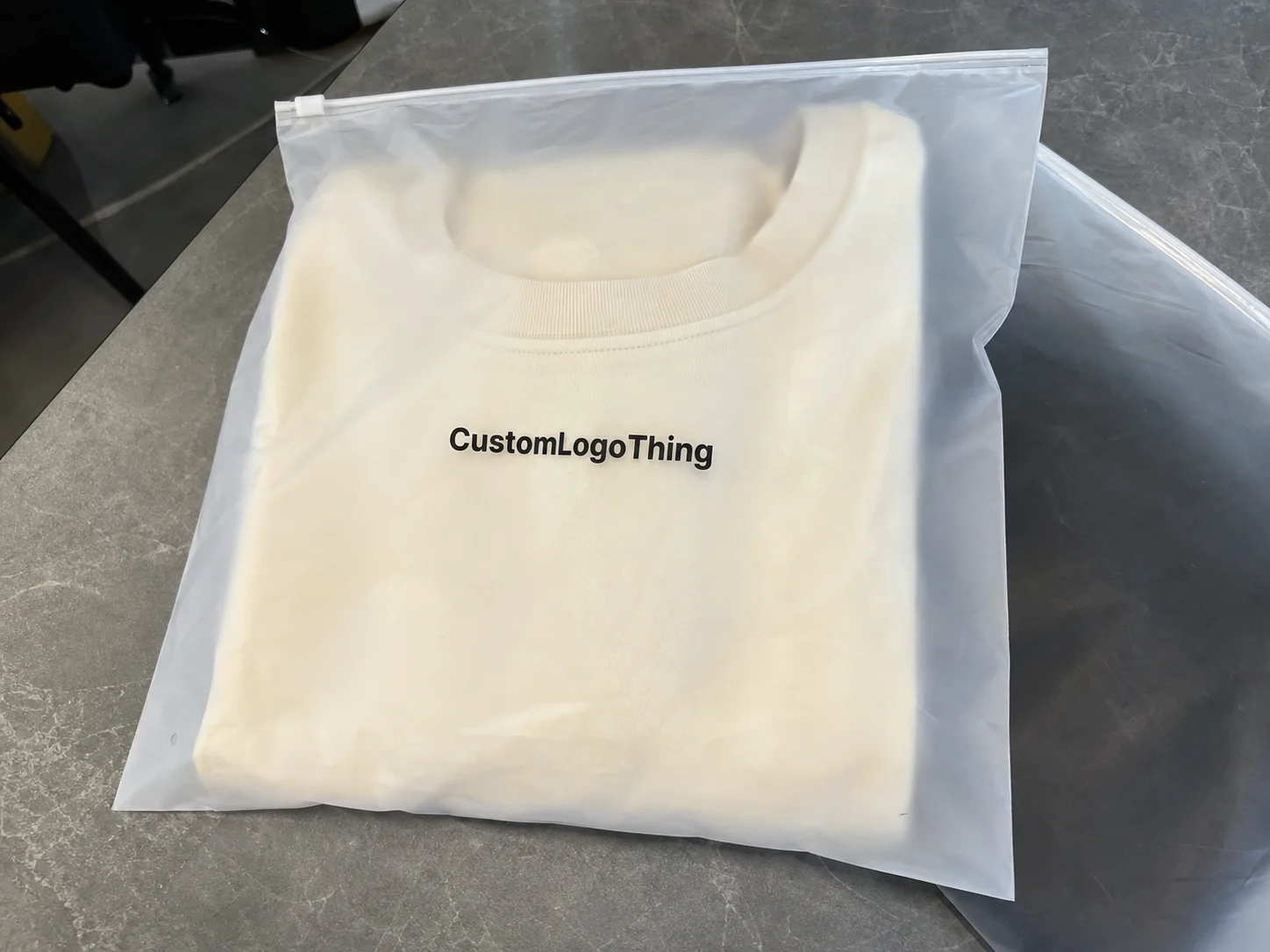
Plain poly bags protect products, but they rarely improve how those products are perceived. Frosted bags do better on shelf because the matte surface cuts glare, softens the look, and gives the package a more deliberate retail presence. That difference shows up most clearly for products that need a clean presentation without moving into higher-cost rigid packaging.
They are also useful for products that will be opened and closed more than once. Folded clothing, phone accessories, beauty tools, craft items, and stationery sets all benefit from a closure that is easy to use and still reusable. In e-commerce or warehouse fulfillment, that zipper closure also reduces accidental spill-out compared with heat-sealed alternatives.
Compared with plain clear bags, frosted film hides minor internal clutter better. A folded garment with a hang tag, a set of cosmetic samples, or a mixed accessory kit looks more organized in a frosted bag than in a fully transparent one. At the same time, buyers still need enough translucency to identify the contents quickly. That balance is more sensitive than it sounds, which is why finish control matters.
For wholesale buyers, the commercial advantage is consistency. A reliable supplier should be able to reproduce the same zipper type, same surface finish, and same edge trim across repeat orders. Once a package becomes part of your brand standard, small changes become obvious, especially when several SKUs sit side by side on the same shelf or packing line.
There is also a practical reason many procurement teams prefer Frosted Zipper Bags over simpler alternatives: fewer complaints about presentation. A bag that looks premium enough for retail but still functions like a storage pouch can reduce the number of packaging-related issues raised by merchandisers, fulfillment teams, and end customers. That is not a glamorous benefit, but it is a real one.
Material and construction details that change performance
The base material is where performance starts. Most frosted zipper bags are made from LDPE, EVA blends, or multilayer film structures. LDPE is common because it is soft, flexible, and economical. EVA can improve the hand feel and give the finished bag a slightly more premium softness. Multilayer structures are used when the buyer needs extra puncture resistance or better body in the finished pack.
The frosted effect is not identical from one factory to another. Some bags use a full-surface matte film that creates a uniform satin look. Others use a lightly textured translucency that feels softer but reveals more of the contents. For brands that care about color control, that difference is not trivial. A white garment, a pastel cosmetic insert, or a printed label can all read differently under fluorescent warehouse light than they do under a retail spotlight.
Zipper style changes the end use, and sometimes the unit price more than the film itself. A press-to-close zipper is the most common option for general retail and storage applications because it is easy to use and economical. Slider zippers cost more, but they are useful when the bag will be reopened often or needs a more polished customer experience. Tamper-evident designs sit in a separate category and are generally used for controlled distribution or higher-risk product categories.
Several structural details deserve attention before ordering:
- Sealing method: side seal, bottom seal, or reinforced edge construction depending on the load.
- Gusset options: no gusset for flat items, side gusset or bottom gusset for bulkier products.
- Hang holes: euro slot or round hole for peg display.
- Tear notches: useful when the bag needs easy opening without damaging the zipper area.
- Print compatibility: frosted surfaces can take logos well, but ink adhesion and readability should be tested.
Printing methods usually include gravure and flexographic printing, with spot-color branding used when a clean logo or product name is enough. On frosted film, fine lines are less forgiving than on glossy film, so artwork should avoid ultra-thin strokes unless the printer confirms the line weight will hold. If you need barcodes, compliance marks, or multilingual labeling, reserve those zones before plates are made.
There is another detail that buyers often overlook: how the bag feels during packing. A film that is too slippery can be awkward for warehouse staff, while one that is too stiff may not fold neatly around the product. That tactile difference does not show up in a spec sheet, but it affects daily use more than many teams expect.
Size, thickness, and custom specification decisions
Before asking for a quote, lock in the size logic. That means width, height, side gusset, bottom gusset, and the usable opening width around the zipper. A bag can be nominally correct on paper and still be awkward in use if the opening is too narrow for folded goods or if the gusset is not deep enough for the product shape.
Thickness is the next decision, and this is where buyers often overbuy or underbuy. For light retail inserts, cards, or small accessories, 40-60 micron film may be enough. For folded apparel, heavier accessories, or items that will move through distribution, 60-100 micron is more common. If the contents are sharp-edged or the package will be handled often, the higher end of the workable range usually pays for itself in fewer defects and fewer returns.
Tolerance matters in wholesale orders. If your bag must fit a card insert, folded T-shirt, or boxed item, ask the supplier to confirm dimensional tolerance in writing. In production, a few millimeters can decide whether the zipper closes cleanly or the top edge looks crooked in retail presentation. That is especially true when the bag has a printed front panel, because any visual offset becomes easier to notice.
| Application | Common Thickness | Typical Features | Best Fit |
|---|---|---|---|
| Small accessories | 40-60 micron | Press zipper, flat seal, print zone | Jewelry cards, cables, small stationery |
| Apparel and soft goods | 60-80 micron | Side gusset, hang hole, stronger seal | Folded T-shirts, socks, scarves |
| Heavier retail packs | 80-100 micron | Reinforced edge, tighter tolerance control | Gift sets, bulk kits, hard accessories |
Custom logo placement should be planned with real use in mind. Keep the logo away from the zipper track and away from any area that will be folded or tucked into cartons. If you need barcodes, recycle marks, or import labeling, reserve those zones early so artwork changes do not slow the schedule later. A factory handling frosted zipper bags wholesale china factory orders well will ask for those details before plate work begins, not after.
Packaging format is another small detail that affects freight and warehouse handling. Some buyers want bulk-packed inner cartons for receiving efficiency, while others need retail-ready counts for easier distribution. Palletization can reduce damage and simplify unloading, but it also changes shipping density, so the packing plan should be reviewed alongside the freight mode and carton count.
One more practical point: if your product set changes through the year, avoid specifying a bag so tightly that it only fits one item and nothing else. Slight flexibility in width or gusset depth can save a second tooling change later. A good packaging spec is precise, but not brittle.
Cost, pricing, and MOQ factors to compare
Unit price is shaped by a handful of concrete variables: film type, thickness, zipper style, size, print colors, and any special finishing. A plain unprinted frosted bag in a standard size will usually sit at the lower end. A custom printed bag with a slider zipper and tighter sizing will move upward quickly. That is normal, which is why comparing quotes only by headline price can be misleading.
MOQ often changes with the level of customization. A stock-like spec may be available in lower quantities, but once you add custom artwork, special thickness, or a unique zipper style, the setup burden rises. Some suppliers build this into the unit price, while others separate it into plate fees or tooling fees. Ask for the full breakdown in writing so the comparison is honest.
For context, many buyers will see Custom Frosted Zipper bags in a range such as $0.08-$0.22 per unit at larger quantities, while smaller runs or more complex specs can sit higher. That range depends heavily on size, material, print coverage, and zipper type, so treat it as directional rather than fixed. If a supplier cannot explain why a quote lands where it does, that usually deserves a closer look.
Freight is part of the real cost. A supplier who packs cartons efficiently can lower your landed cost even if the unit price is not the lowest. Compare carton count, carton dimensions, and whether the bags are nested or flat-packed. A few extra millimeters in carton size can change container loading efficiency more than many first-time buyers expect.
Higher volumes usually bring better price breaks, but storage space is not free. If you are ordering for a seasonal launch or a short product cycle, the cheapest unit cost may not be the smartest overall decision. It can be better to accept a slightly higher unit price and keep inventory manageable than to lock money into a warehouse full of slow-moving bags.
Sample-based quoting is still one of the cleanest ways to avoid confusion. A sample shows the supplier exactly how you want the zipper feel, film finish, and print quality to look. It also reduces the risk of pricing based on a vague description that does not match the actual build.
The same logic applies to repeat orders. If the first order was quoted from text only and the second from an approved sample, the two prices may not line up. That is not necessarily a supplier problem. It is often a specification problem. The tighter the sample standard, the more stable the pricing usually becomes.
Production steps, quality checks, and lead time
A well-run order usually follows a clear path: inquiry, spec confirmation, artwork check, sample approval, mass production, inspection, and shipment. That sounds simple, but the sequence matters. If the spec sheet is vague, the sample will be vague. If the sample is not approved properly, mass production can drift.
Pre-production samples are worth the time. They let you verify zipper feel, frosted appearance, size fit, and print placement before the main run begins. A sample might take a few days to a couple of weeks depending on complexity, but that time is usually cheaper than correcting a full production batch later.
Lead time depends on order size, printing complexity, and factory workload. Simple unprinted orders can move faster, while multi-color custom orders or special zipper constructions need more calendar time. In practice, many buyers see 12-15 business days after proof approval for standard custom runs, but that can extend when artwork revisions, peak season, or export congestion get involved.
Quality control during production should not be treated as optional. The usual checks include film thickness measurement, seal integrity testing, zipper cycling tests, and print registration review. For buyers who care about shipping performance, some factories also test cartons for compression resistance or follow packing standards aligned with ISTA testing guidance when transport risk is higher.
Export steps are straightforward when the supplier is organized. You should expect carton marking confirmation, commercial invoice and packing list preparation, and shipping booking coordination. If the supplier cannot explain the packing list, outer carton labels, or incoterm terms clearly, the order can become messy at the booking stage. A dependable frosted zipper bags wholesale china factory should handle those details as part of normal export work, not as an afterthought.
There is also a seasonality factor that buyers sometimes forget. Production capacity tightens before major retail cycles, and small delays in artwork approval can push the whole order into the next window. The earlier the spec is locked, the better the odds of getting the lead time promised on paper.
What to verify before choosing a China factory supplier
Start with capability, not promises. Ask whether the supplier has in-house extrusion or lamination, printing capacity, zipper application control, and formal inspection standards. If every step is outsourced, it becomes harder to keep the lot consistent, especially when you need repeat orders months later.
For some applications, it also matters whether the factory understands food-contact or retail packaging requirements. Not every frosted zipper bag needs that level of review, but if your product category touches cosmetics, personal care, or items that require stricter packaging expectations, ask how the supplier handles compliance documentation and material declarations. For environmental claims or recycled-content questions, some buyers also cross-check EPA recycling resources to keep claims reasonable and defensible.
Never approve a supplier on the strength of a polished single sample alone. A good-looking sample can hide inconsistent bulk output if the factory’s process control is weak. Ask for bulk-style samples or previous production references that match your requested thickness, zipper type, and print complexity as closely as possible.
Communication details reduce risk more than people think. Written spec sheets, final artwork files, and clear incoterm terms keep both sides aligned. If you are using a branded bag across multiple launches, ask the supplier to save the final approved specification so the same frosted look and zipper feel can be reproduced accurately later. That repeat-order stability is one of the main reasons buyers stay with a trusted supplier.
It also helps to ask how the supplier handles rejects. Rework policy, replacement terms, and inspection thresholds are not glamorous topics, but they tell you a lot about operational discipline. A factory that defines acceptance standards clearly usually produces more predictable shipments than one that answers everything with “no problem” and nothing else.
For buyers who want a simple way to organize sourcing, it helps to think in three layers:
- Can they make it? Material, zipper, print, and size capability.
- Can they repeat it? Dimensional control, lot consistency, and inspection discipline.
- Can they ship it cleanly? Cartons, documents, and export packing.
How to place an order with the right specifications
Before requesting a quote, prepare three essentials: target size, expected quantity, and intended product type. Those three details do more to sharpen pricing than any vague request for a “good quality” bag. If the product is going into retail display, warehouse storage, or e-commerce shipping, say so plainly because the bag construction may change.
If you need the bag to match an existing retail standard, send a reference photo or a physical sample. That saves time and avoids guesswork on frosted finish, zipper profile, and print placement. If the existing bag is working well, the goal should be to match the useful parts of it rather than redesigning the whole thing from scratch.
Always ask for a written spec sheet. It should confirm material, thickness, zipper type, print colors, MOQ, carton count, lead time, and shipping terms. If a quote does not show those details, it is hard to compare it with another supplier in a fair way. That is especially true when sourcing frosted zipper bags wholesale china factory options across multiple vendors.
If branding, fit, or product protection is critical, request a prototype or pre-production sample before the mass run. Check the zipper motion, scuff resistance, bag dimensions, and print legibility under normal warehouse light. Then compare one sample, one quote, and one lead-time plan before you place the wholesale order. That simple discipline usually separates a clean buying experience from a frustrating one.
For products that move through multiple hands before reaching the customer, add one more check: pack a few finished bags into the carton the way your team will actually receive them. This catches issues that a flat sample cannot reveal, such as zipper pressure marks, carton abrasion, or awkward stacking behavior.
For buyers managing ongoing sourcing, you can also review our Wholesale Programs to see how custom order planning can be structured around repeat specs, quantity targets, and inventory control.
In short, the smartest frosted zipper bag purchase is not the cheapest quote on paper. It is the one that gives you the right material, the right zipper, the right print result, and a supplier who can repeat the same standard on the next order. That is what buyers should expect from a serious frosted zipper bags wholesale china factory relationship.
FAQ
What is the typical MOQ for frosted zipper bags wholesale from a China factory?
MOQ usually depends on size, printing, and zipper style. Plain stock-like specs are often lower than fully custom printed orders, while custom branding and special finishes can raise the MOQ because of setup and changeover requirements. The most accurate MOQ is tied to the exact bag dimensions, material, and artwork, so request a written quote with those details.
How do I compare pricing for frosted zipper bags from different suppliers?
Compare the same specification set: material, thickness, zipper type, print colors, and bag dimensions. Also check whether the quote includes setup fees, sample charges, cartons, and export packing, not only the unit price. Landed cost matters too, because freight efficiency and carton count can change the real cost per bag.
Can frosted zipper bags be custom printed with my logo?
Yes, they can usually be printed with logos, product names, barcodes, and compliance marks. Print performance depends on the film surface and chosen process, so artwork should be prepared for the supplier’s printing method. Ask for a sample or proof to confirm color, placement, and readability on the frosted finish.
How long does production usually take after sample approval?
Lead time depends on order size, printing complexity, and factory workload, but the schedule should be confirmed after sample approval. Simple orders move faster than multi-color, custom-size, or special-zipper projects. Always ask for a production calendar that includes sampling, mass production, inspection, and shipping booking.
What should I check on a sample before placing a wholesale order?
Check bag dimensions, zipper smoothness, seal strength, and whether the frosted finish matches your retail expectation. Inspect print sharpness, color consistency, and whether the material feels too stiff, too thin, or prone to scuffing. If the product will be reused or shipped in bulk, test opening and closing cycles before approving mass production.


