Event packaging has two jobs. It needs to look clean in front of people, and it needs to survive a messy production schedule behind the scenes. That is why Frosted Zipper Poly Bags for event teams moq planning keep showing up in quote requests. They sit in that narrow space between presentation, speed, and a quantity plan that does not wreck the budget.
For badge inserts, speaker gifts, sponsor packets, merch drops, or VIP room kits, the bag itself becomes part of the event experience. A Frosted Zipper Poly bag gives you a semi-opaque finish that hides visual clutter better than a fully clear bag, while still showing that the contents are organized and intentional. The zipper closure keeps pieces together when boxes are being stacked, carted, reopened, and repacked. Which, frankly, is most of event week.
The appeal is simple. You get a format that works for welcome kits, back-of-house sorting, and on-site distribution without jumping to rigid packaging that adds cost and slows assembly. For buyers balancing MOQ, unit price, storage, and multiple delivery points, that matters.
Why event teams choose frosted zipper bags when presentation and speed both matter
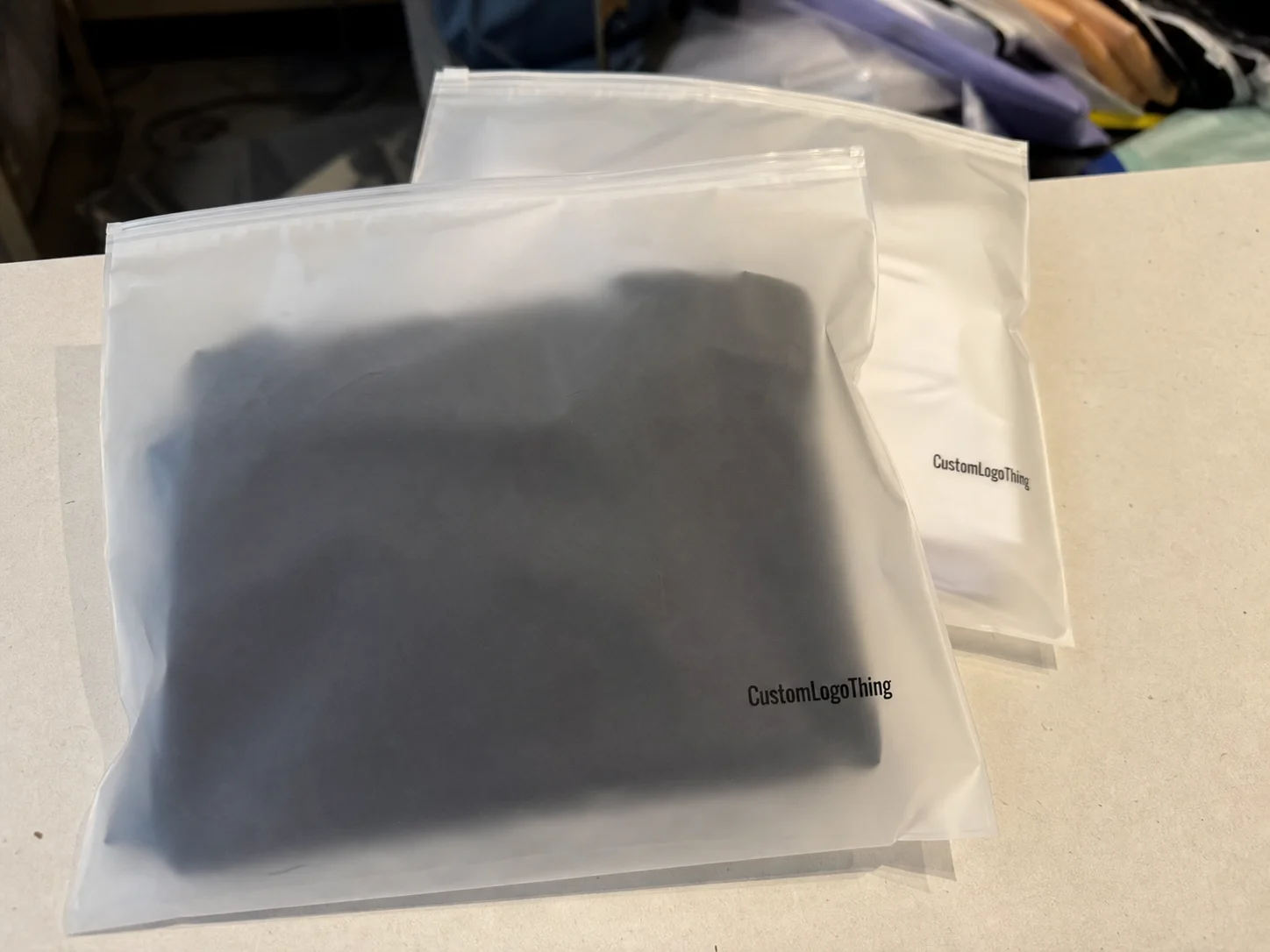
Event teams rarely get a luxury timeline. A crew may pack hundreds of identical kits in one warehouse, then split them into VIP, speaker, sponsor, and staff versions. In that kind of workflow, Frosted Zipper Poly Bags for event teams moq planning make sense because the bags are easy to fill, easy to reseal, and polished enough to hand out without extra wrapping.
The frosted finish does more than soften the look. It turns a kit into something that reads as coordinated instead of chaotic, even when the contents are mixed. A folded shirt, brochure, lanyard, and small branded item can look busy in a crystal-clear bag. Frosted film hides enough to keep the package tidy, but not so much that the contents disappear entirely. It also tends to show fingerprints and handling marks less aggressively than glossy clear packaging, which helps when multiple people touch the same cartons.
That can be a bigger deal than it sounds. Event packaging gets handled more than most people expect. It moves from print table to packing table, then into cartons, then onto a truck, then into a staging area, then onto another table, and sometimes into the hands of five different people who all have a slightly different idea of “careful.” A zipper closure gives the team a better shot at keeping the contents where they belong.
Common event uses include:
- Welcome kits for attendees
- Speaker gifts and agenda packets
- VIP room amenities and sponsor packs
- Merch drops and staff uniform kits
- Back-of-house sorting for labeled components
From a buyer’s perspective, the best packaging is usually the least dramatic option that still looks intentional. Custom boxes and specialty mailers are useful in some cases, but many event programs just need a reliable bag with the right quantity plan. That is where comparing a frosted zipper format with other Custom Packaging Products becomes useful before the order is locked.
Product details that matter for frosted zipper poly bags
Most frosted zipper bags are made from polyethylene film, usually LDPE or a similar flexible poly material, then finished to create the matte translucent look. The frosted effect is not just decoration. It helps disguise small inconsistencies in what is inside, which is useful when the kit contents vary slightly or when an item count is not identical from bag to bag.
The closure is just as important as the film. Standard top-opening zipper bags are common, but buyers still need to confirm how the zipper track behaves, whether the top edge is reinforced, and whether the seal opens and closes cleanly after repeated handling. For event teams, a zipper that snags or misaligns slows down assembly and creates avoidable rework. Nobody needs a box of bags that looks fine and behaves like a minor inconvenience.
There are a few options that can change usability in a real way:
- Hang holes for pegboard display or distribution racks
- Write-on panels for room names, badge groups, or kit tiers
- Reinforced seams for heavier contents or repeated use
- Clear imprint zones to keep logos and QR codes readable
Print method depends on artwork and on the film surface. A one-color logo is usually the simplest and most cost-efficient route. Spot-color branding works well when an event mark or sponsor logo needs stronger contrast against frosted film. If the design includes fine type, thin rules, or a QR code, the artwork needs enough margin from the zipper and side seams so nothing gets distorted during production.
One more practical point: frosted film changes how color reads. Dark inks usually hold up well. Very light inks can look softer than expected. If brand standards are strict, ask for a proof that reflects the actual substrate rather than assuming a color that works on paper will behave the same on poly.
“The right frosted bag is not the flashiest option; it is the one that looks consistent, packs quickly, and prints in the right place the first time.”
Before quoting, a buyer should confirm four things: the intended contents, the target size, the branding coverage, and whether the bags need to be reusable, tamper-evident, or just presentable for front-of-house distribution. Those details usually decide whether the order behaves like a standard print job or needs extra review.
If the kit is meant to move by mail instead of handout, it also helps to compare the format against Custom Poly Mailers. Event logistics are not one-size-fits-all. A great front-of-house bag can be the wrong choice for shipment, and vice versa.
Size, thickness, and closure specs to confirm before you quote
Most quote delays start with missing dimensions. A useful spec sheet should include width, height, any gusset depth, and usable interior space, not just the nominal bag size. That matters because a flat insert may fit comfortably in a bag that becomes too tight once a folded garment, lanyard, acrylic item, or charger is added.
Film thickness is another decision with real consequences. Lighter gauges are fine for brochures, cards, and flat inserts. Medium gauges fit most welcome kits. Heavier film makes more sense for apparel, multi-item kits, or bags that are going to be opened and resealed several times during the event cycle. If the package is handled more than once, a thicker film often feels better in hand and holds up better on the table.
The zipper deserves the same attention as the film. A smooth track saves time when people are processing large quantities, and it lowers the odds that a bag gets rejected because the closure feels unreliable. On a run of hundreds or thousands, a weak zipper is not a small defect. It becomes a workflow problem.
Print area limits also matter. Logos, instructions, QR codes, and sponsor marks need enough distance from the zipper and side seams to avoid distortion. On frosted film, clean spacing tends to improve readability because the background already softens contrast.
Here is a simple planning comparison:
| Option | Best for | Typical tradeoff |
|---|---|---|
| Light-weight frosted bag | Flat collateral, inserts, badges | Lower cost per piece, less structure |
| Medium-weight frosted bag | Most welcome kits and mixed contents | Better handling, slightly higher unit cost |
| Heavier-gauge frosted bag | Apparel, multi-item kits, repeated use | Higher cost, stronger feel and durability |
| Custom printed with 1 spot color | Budget-conscious branding | Lower setup charges, simpler artwork |
| Multi-color imprint | High-visibility sponsor or event branding | Higher tooling fees and setup complexity |
Sample testing is worth the time. A bag can look fine on a drawing and still behave badly once brochures, apparel, rigid items, or chargers are added. Buyers approve the wrong size more often than they admit. The flat sample looks fine. The real kit arrives, and suddenly the zipper is under stress or the contents are crowding the seal. One quick contents test usually prevents that.
For teams comparing formats across several event runs, it also helps to check whether the bag needs to support a single distribution or repeated use over multiple activations. That difference affects thickness, zipper strength, and even how much overage should be built into the order.
Cost, pricing, and MOQ planning for event orders
Pricing for frosted zipper bags is driven by a short list of repeatable factors: bag size, film thickness, zipper style, number of print colors, total quantity, and whether the order requires special packing or kitting. If those inputs are not defined early, the quote gets fuzzy fast. Then everyone spends time comparing numbers that do not actually match.
MOQ planning is where event buyers can either save money or create waste. If the team needs 3,000 bags for a single show and wants 300 extras for overage, the order should reflect that real total, not just the attendee count. If the same design will be used across multiple activations or regional events, ordering more upfront can lower the unit cost. But if artwork changes often, over-ordering just traps cash in storage.
Lower quantities usually cost more per piece because setup charges, print prep, and material conversion are spread across fewer units. Higher quantities usually lower the unit cost, but only if the bags will actually be used. For event teams, the right quantity is usually based on attendance, VIP allocation, contingency overage, and whether cartons need to sit in a staging warehouse before they reach the venue.
Here is a simple planning example:
| Order size | Likely unit cost trend | Planning note |
|---|---|---|
| 500 pieces | Highest | Setup spread across fewer units; useful for pilot runs |
| 1,000–2,500 pieces | Moderate | Common for one event or a focused campaign |
| 5,000+ pieces | Lower | Better bulk pricing, useful for multi-event programs |
For a typical custom-printed frosted zipper bag, the print setup often influences the price more than the raw film. That is why two orders with the same size can land at very different numbers. A one-color logo on a standard bag may be far more economical than a full-coverage design that requires extra proofing, tighter registration control, and more time on press.
The best quote request is usually the one that includes two numbers: the target quantity and a realistic contingency quantity. That gives a clearer view of where the pricing breaks sit and helps the team decide whether the extra units are worth the lower unit cost. It is a small step, but it keeps buyers from overcommitting or approving a number without understanding the threshold.
Also ask about extras that quietly change the final price: tooling fees, split shipments, additional cartons, repacking, or special label requirements. Those charges can move the total more than people expect, especially on event orders with hard delivery windows.
There is no magic formula here. The right MOQ is the one that matches the actual use pattern. If the bags will be used once and discarded, buy tighter. If they will move through multiple shows or need overage for on-site problem solving, build in more quantity so the team is not scrambling later.
Process and timeline: from artwork approval to delivery
The process is straightforward when the information is complete. First comes spec confirmation: size, film weight, zipper style, print area, and quantity. Then the artwork is reviewed and translated into a proof. After the proof is approved, production starts, quality checks are completed, and the order is packed for shipping or palletized for freight.
Where do delays usually happen? Artwork revisions. Missing dieline details. A logo file that is too low-resolution. Last-minute changes to imprint placement or bag size. Those issues are common, and they usually show up late, right when the event calendar is already tight and someone has decided everything “should be quick.” It usually isn’t.
Lead time depends on whether the bags are stock, custom printed, or need extra handling. A stock frosted zipper bag with no print can move faster than a custom order with multiple colors and tighter placement rules. If the order needs consolidated shipments to multiple venues or split deliveries between a warehouse and a show site, the logistics can add more calendar time than the manufacturing itself.
For planning purposes, artwork approval is often the real milestone. Once that proof is signed off, the rest of the run becomes much more predictable. Clean files, fast approvals, and a final quantity decision can keep the order on schedule and reduce the chance of rush charges.
It also helps to match the production schedule to internal event deadlines. Venue receiving windows can be narrow. Some facilities only accept freight during specific hours. Some event teams need cartons at a staging warehouse first so they can split them across registration desks, VIP rooms, and sponsor booths. That planning should happen before the bags are in production, not after they are packed.
For broader material and transit standards, the ISTA resource library is useful for thinking about shipping and handling tests, while the EPA provides context on plastics and materials management. Those references do not replace a packaging spec, but they do support better internal decision-making.
What makes a packaging partner easier for event teams to work with
Responsiveness matters, but proof clarity matters more. A good packaging partner does not just send a quote and disappear. They translate event logistics into the right packaging spec, flag issues before production starts, and help the buyer avoid guessing on dimensions or print placement.
Experienced manufacturers also know when to push back. If the artwork is too detailed for the bag size, they should say so. If the chosen quantity is inefficient, they should explain the unit-cost impact. If a slightly different film weight can improve handling without adding much cost, that should be on the table too. That is useful support, not sales theater.
Quality control is another big piece. Event kits are often handed out in front of guests, sponsors, and speakers, which means batch-to-batch consistency matters. Clean seams, accurate print placement, and a zipper that works the same way from first bag to last bag are not extras. They are the baseline.
Good communication also reduces risk. Buyers Should Know whether inventory is in stock, when print is ready, how shipping is being handled, and what the carton counts are. If the order is tied to a hard venue deadline, those milestones should be visible early enough to correct course if needed.
“A dependable packaging run is usually invisible to the audience. That is the point. Nobody remembers the bag for the wrong reasons.”
The strongest partners keep the job calm. They help event teams plan around real production limits, not optimistic timelines. They also understand that a successful order is not measured by polished language; it is measured by fit, print quality, quantity accuracy, and on-time delivery.
That is especially true for event work, where the packaging itself may only be seen for a few seconds. Those seconds still matter. If the bag looks cheap, opens badly, or arrives late, the entire kit feels less considered. If it works cleanly, nobody notices. Which is exactly how packaging should behave.
Next steps for ordering frosted zipper poly bags without guesswork
If you are preparing a quote request, gather the basics first: bag size, intended contents, logo file, quantity range, delivery date, and whether the order supports one event or multiple activations. Those six inputs answer most of the pricing questions before anyone starts revising artwork.
Then ask for a quote at the target MOQ and a second quote at a slightly higher contingency quantity. That comparison usually shows where the best value sits, and it helps you decide whether the extra pieces are worth the lower unit cost. If the print placement is uncertain, ask for a proof against actual contents or a similar sample. That is especially useful when the kit includes rigid items, mixed shapes, or printed inserts.
Do not ignore the freight side. Carton counts, pallet needs, venue delivery restrictions, and staging warehouse addresses should be confirmed early. In event work, the packaging can be perfect and still cause problems if the shipping plan is vague.
For buyers comparing broader packaging formats, it can help to review the full range of Custom Packaging Products before committing to one structure. Sometimes frosted zipper bags are the right answer. Sometimes another poly format fits better. The best choice is the one that matches the contents, the timeline, and the budget without surprises.
Done well, Frosted Zipper Poly Bags for event teams moq planning gives you a cleaner presentation, better handling, and a clearer cost structure. That is exactly what event buyers need when the deadline is fixed and the order has to work the first time.
FAQ
What is the best MOQ for frosted zipper poly bags for event teams?
The best MOQ depends on the event size, print setup, and how many bags are needed across all activations. A practical MOQ is usually the lowest quantity that still keeps unit cost reasonable and covers any required overage.
How do frosted zipper poly bags affect the unit cost for event packaging?
Unit cost is driven by bag size, film thickness, zipper style, print colors, and total quantity. Higher quantities usually reduce cost per bag because setup and production expenses are spread across more units.
Can we get frosted zipper bags sized for different event kits?
Yes, sizes can be planned around flat inserts, apparel, gift items, or mixed welcome kits. The best approach is to confirm the actual contents first so the bag dimensions and closure performance match the package.
How long does production usually take after artwork approval?
Production time depends on whether the bags are stock, custom printed, or require additional specification checks. Artwork approval is often the key milestone, so clean files and fast proof approval help keep the order on schedule.
What should event teams prepare before requesting a quote?
Prepare the bag size, intended contents, quantity target, print details, delivery date, and destination. Including these details up front helps avoid revisions and makes it easier to compare pricing and MOQ options accurately.


