Packaging has two jobs. It has to protect the product, and it has to make the product look like somebody cared before the customer ever touches it. That is where Frosted Zipper Poly Bags for ecommerce brands material comparison becomes useful. The same item can look forgettable in a plain clear sleeve and feel much more intentional in a frosted bag with a clean zipper and a better surface finish.
The difference is not just cosmetic. Frosted film reduces glare, hides fingerprints better, and gives soft goods, accessories, and beauty items a calmer presentation without the bulk of a rigid box. For a lot of brands, that balance is the whole point: decent protection, a polished first impression, and a package that does not eat margin for breakfast.
Why frosted zipper poly bags feel premium the moment a customer opens them
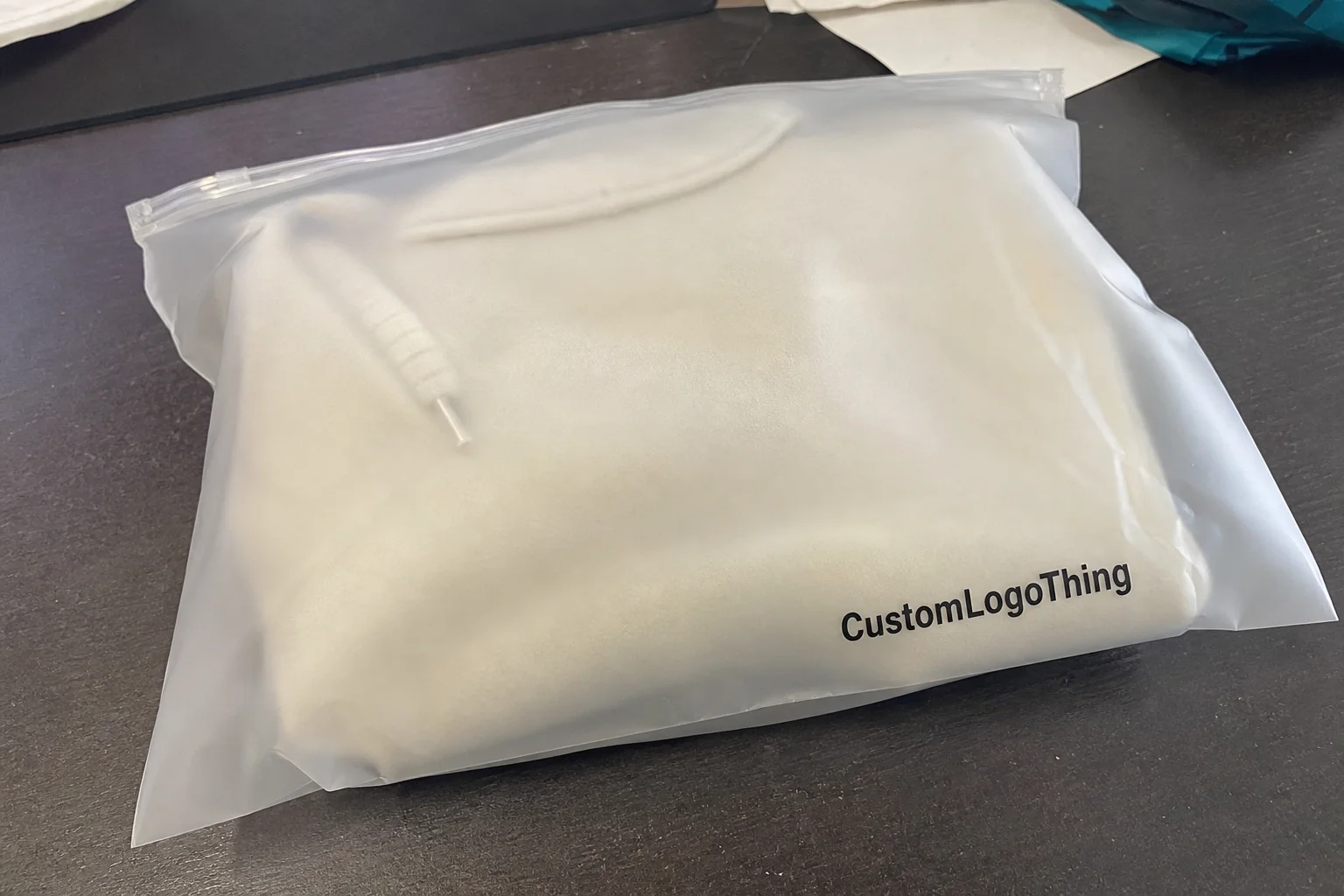
Put the same folded tee into a shiny thin bag and then into a frosted one with a neat zipper. The product is identical, but the perception usually is not. Frosted poly softens the plastic look, so the pack feels more curated and less warehouse-issued.
At a basic level, a Frosted Zipper Poly bag is made from polyethylene film, most often LDPE or a blend built around LDPE and LLDPE, with a zipper track, heat-sealed side seams, and sometimes a hang hole, hang tab, or suffocation warning. That sounds simple. It is not. Small differences in film blend, gauge, seal quality, and zipper alignment are exactly what separate a bag that looks premium from one that just looks cloudy.
Ecommerce teams usually use these bags for apparel, undergarments, socks, swimwear, hair accessories, skincare refills, subscription inserts, and lightweight soft goods. They are common because they give a consistent unboxing moment without the cost and rigidity of folding cartons or custom inserts for every SKU. That alone solves a lot of packaging problems that nobody wants to solve twice.
There is also a practical side. The resealable zipper helps customers store the item after delivery and helps warehouse teams during packing and returns. If the bag is meant to be opened and closed more than once, the closure matters just as much as the film.
How the frosted finish, zipper closure, and film structure work together
The frosted look comes from the film formulation or surface treatment that diffuses light instead of reflecting it sharply. That scattered light creates the matte, satin-like appearance buyers tend to read as cleaner and more premium. Compared with clear poly, frosted film hides a bit more while still showing enough shape and color for product identification.
The zipper closure matters more than many buyers expect. A smooth zipper improves customer experience, but it also affects how well the bag survives repeated handling in fulfillment. If the zipper track is off, the bag can feel loose, hard to seal, or misaligned. None of that helps your brand image.
Film structure changes the feel in hand. LDPE is usually softer and more flexible. LLDPE blends tend to improve tear resistance. Coextruded structures can combine layers to balance strength, flexibility, and consistency. Gauge, usually listed in mil or microns, affects puncture resistance, stretch, and stiffness. Heavier film usually feels more substantial, but more material is not automatically better. If the product is light and flat, overbuilding the bag just raises cost and adds waste.
A frosted zipper bag is only as good as its weakest detail. Film consistency, zipper alignment, seal strength, and print quality all have to hold together if you want the pack to survive real shipping conditions.
For teams comparing Custom Packaging Products, the useful mindset is simple: a bag is a system, not a single material choice. The film, closure, and seals all affect how the item moves through carton packing, delivery handling, and repeated customer use.
Material comparison: which frosted poly construction fits your product best
The main question behind Frosted Zipper Poly Bags for ecommerce brands material comparison is not “Which bag is best?” It is “What does the bag need to do?” If the job is lightweight containment and a polished look, a standard frosted LDPE film is usually enough. If the product has corners, trims, metal hardware, or repeated fulfillment handling, a thicker blend often makes more sense because it resists tears and punctures better.
Clear and frosted bags solve different problems. Clear poly maximizes visibility, which helps when color matching or retail inspection matters. Frosted film softens the presentation and hides a little more, which is often what brands want when they are trying to make a package look intentional instead of exposed. That subtle concealment can matter more than people think.
| Material / construction | Best for | Strength and feel | Presentation impact | Typical use case |
|---|---|---|---|---|
| Standard frosted LDPE | Lightweight apparel, inserts, soft goods | Soft, flexible, moderate puncture resistance | Satin, clean, understated | T-shirts, socks, accessories |
| LDPE/LLDPE blend | Items with mild stress or repeated handling | Better tear resistance, slightly firmer hand-feel | Premium with a more substantial body | Hoodies, kits, bundled products |
| Coextruded frosted film | Heavier loads, more demanding shipping | Stronger structure, improved consistency | Polished and more uniform | Beauty sets, multi-item packs |
| Thicker gauge frosted bag | Products with corners, hardware, or higher reuse | Stiffer, more puncture resistant | Feels more substantial in hand | Jackets, kits, premium merch |
Barrier performance needs a reality check. These bags handle dust, scuff reduction, and basic moisture resistance, but they are not long-term barrier packaging. If your product needs oxygen control, aroma retention, or extended shelf-life protection, you are in a different category entirely. That usually means specialty films or laminated structures, which cost more and behave differently on the line.
For brands with sustainability goals, the conversation often expands into recycled content, post-consumer waste content, or reusable packaging systems. Those options can be worthwhile, but they have to be checked against print quality, zipper performance, and the actual disposal stream customers have access to. A bag that claims recycled content but performs poorly is a bad trade, and the unboxing experience will remind everyone of it.
If you are comparing packaging formats more broadly, it helps to place frosted zipper bags next to corrugated cardboard, kraft paper mailers, and even Custom Poly Mailers. Each format solves a different problem. The right one depends on product type, shipping method, and how much presentation matters to the sale.
Cost, pricing, and MOQ factors that change your unit cost
Unit cost is driven mostly by size, gauge, print complexity, zipper style, and order quantity. A simple unprinted frosted bag in a stock size can be economical. A custom-sized bag with multi-color printing, warning text, and a color-matched zipper will move the price up fast. There is no magic trick there. More requirements mean more cost.
As a practical range, a Custom Frosted Zipper poly bag may land around $0.08 to $0.22 per unit at moderate volumes for simpler builds, while heavier film, larger sizes, or more customized runs can move higher. At smaller quantities, the price per unit rises quickly because setup costs are spread over fewer bags. MOQ matters because setup does not care how badly you want a short run.
Minimum order quantity is usually tied to film setup, printing method, and whether the size is stock or fully custom-cut. A standard size with simple print is easier to run. Once a job needs new tooling, multiple proof rounds, or special zipper components, the supplier will usually push for a higher commitment.
Artwork complexity matters too. Clean, high-contrast branding is easier to print and usually stays sharper on frosted film. Fine gradients, tiny text, and thin line work often soften more than expected on a matte surface. That is not a defect. It is how the substrate behaves. Simpler art typically means fewer production headaches and more predictable pricing.
Hidden costs deserve attention because they are usually the ones that get waved away during quoting and then show up later. Freight, overages, carton configuration, pallet space, and storage at the fulfillment center all affect landed cost. If you are buying for a growing catalog, those small items add up quickly, especially when multiple SKUs each need their own bag size.
Most teams also underestimate the cost of inconsistency. If the same product family uses three slightly different bag specs, purchasing gets messier, reorders take longer, and inventory is harder to balance. Standardizing where possible usually saves more than chasing the absolute lowest unit price on one line item.
Process and lead time: from spec sheet to production steps
The workflow should start with product specs, not artwork. Confirm flat dimensions, product thickness, desired gauge, zipper orientation, and any extras such as hang holes, warnings, or retail tabs. After that comes material selection, artwork review, proof approval, production, inspection, and shipping. If the sequence is clear, the order moves faster and the risk of revisions drops.
Lead time stretches fastest when the order includes custom sizing, special print matching, zipper color changes, or new tooling. Sampling adds time too, but it is usually worth it. A physical sample shows far more than a mockup about how the bag closes, how the frosted finish looks under warehouse lighting, and whether the product fits without stressing the seams.
For planning purposes, many buyers should expect about 12 to 20 business days from proof approval to finished production for a straightforward custom run, with sampling and freight added on top. That window can be shorter for simpler stock configurations and longer for highly customized jobs. Material availability and artwork approval speed are the main variables. Procurement teams love “urgent,” but manufacturing schedules do not.
When preparing a request, send the useful facts early:
- Flat bag dimensions and product dimensions
- Desired thickness or gauge
- Number of print colors and print locations
- Zipper style and orientation
- Any warning text, retail requirements, or hang features
- Carton count and fulfillment packing needs
Inventory planning matters more than many ecommerce teams admit. If a new collection or promotion is waiting on packaging, one delayed shipment can stall the whole launch. Packaging is not the glamorous part of the business, but it can absolutely become the bottleneck. The line cannot ship what it cannot pack.
Common spec mistakes ecommerce brands make when ordering
The first mistake is sizing. Brands pick a bag that fits the product flat, then forget about folds, tags, inserts, tissue, or accessories. Once the real product goes in, the zipper is under strain and the seams have less room to work. That is how a bag ends up feeling too tight before it even leaves the warehouse.
The second mistake is choosing a thin, attractive film and expecting it to tolerate repeated handling. It may look great on a sample table, but fulfillment teams move fast and customers are not always gentle when they reopen a bag. A heavier gauge often makes more sense if the pack is meant to be reused or handled multiple times.
Artwork is another easy place to go wrong. Frosted film gives you a premium look, but it is not friendly to overly delicate print concepts. Tiny fonts, subtle gradients, and low-contrast logo marks can disappear or soften more than expected. Strong, clean artwork usually performs better, and it ages better too.
Compliance needs to be built in early. Depending on the market and end use, you may need suffocation warnings, recycled content claims that are properly substantiated, or retail hang requirements. If the packaging touches regulated categories, get those details into the spec before proofing starts. That is much easier than fixing a finished design.
Some brands also ignore carton packing and shipping stress. Bags that look fine individually may scuff, crease, or shift when stacked tightly in a carton. If you want consistent presentation, you need to think about how the bags travel, not just how they look on a screen.
One more issue: assuming every SKU deserves the same packaging. That is rarely true. A low-risk insert, a premium accessory, and a product with hardware do not need identical specs just because they belong to the same brand family. Matching the bag to the product beats forcing one standard across everything.
Expert tips for choosing the right frosted bag spec for your catalog
Match thickness to actual use, not instinct. If the bag is for a light tee that ships once and is opened once, oversized film may be unnecessary. If it is for a higher-value accessory or a pack that gets handled repeatedly, the extra gauge is usually justified.
Use frosted bags where you want privacy, softness, and a more elevated first impression. Use clear bags where visibility matters more than concealment. That simple decision clears up a lot of confusion before quoting starts.
Keep branding concise and bold. On frosted film, strong contrast usually looks better than complicated artwork. A clean logo, one or two brand colors, and a well-placed mark often do more for presentation than a busy layout ever will.
Ask for a sample or reference photo before placing a larger order, especially if the product shape is unusual. Flat samples can hide fit issues, and fit is everything in pouch-style packaging. A bag that looks generous on paper can still feel awkward once the real product is inside.
Standardizing specs across similar SKUs also makes procurement less painful. If half a dozen products can share the same size and thickness, purchasing gets simpler, reordering is faster, and fulfillment has fewer moving parts. Operations usually appreciates that more than marketing does.
Separate presentation packaging from shipping packaging whenever the product needs both. A frosted zipper bag can create the customer-facing experience, while a sturdier outer shipper, often corrugated cardboard or a poly mailer, takes the transit abuse. Both layers matter, but they should not be forced into the same job.
Material claims need discipline too. If a supplier says recycled content, ask for the actual percentage and the testing or documentation behind it. If a bag is described as biodegradable, confirm what standard is being referenced and whether that claim matches the disposal environment. Packaging language gets sloppy fast. The product should not.
Next steps for comparing samples, quoting accurately, and placing the right order
The most efficient way to compare options is with a simple matrix. Put size, thickness, zipper style, print needs, MOQ, lead time, and target unit cost into one sheet, then compare the top two or three materials side by side. That kind of review cuts guesswork and makes the buying decision easier to defend internally.
Request digital mockups first, then physical samples for the finalists. A mockup helps with layout and copy placement, but the sample tells you what the film really feels like, how the zipper closes, and whether the frosted finish looks right under warehouse or studio lighting. That difference matters more than it should.
Before placing the order, confirm carton counts, packing configuration, and storage plan with fulfillment. If the cartons are too large, too heavy, or awkward to stage, the packaging becomes annoying to handle before it is even used. Smart packaging is not only about the bag. It is about how the bag moves through the operation.
Final artwork should be sized correctly, with safe margins and clean bleed. A proof delay is annoying. A bad print run is worse. If the file is ready, the whole process usually moves faster and with fewer surprises.
For brands doing a final review, frosted zipper Poly Bags for Ecommerce Brands material comparison is the right lens. It keeps the decision grounded in appearance, protection, use case, Cost, and Lead Time. If the spec balances those pieces well, the package usually looks better, works better, and supports the brand instead of fighting it.
For broader packaging systems, compare the bag choice against recycled-content goals, FSC certified cartons, and whether any products should move to paper-based or outer-shipping formats instead. Not every SKU needs the same structure. A good packaging plan uses the right material in the right place, not the fanciest option everywhere.
FAQ
What is the best material for frosted zipper poly bags for ecommerce brands material comparison?
For most ecommerce brands, a mid-weight LDPE or LDPE blend gives the best balance of softness, flexibility, and premium frosted appearance. If the product has sharp edges, hardware, or repeated handling in fulfillment, a thicker gauge or blended structure usually performs better.
Are frosted zipper poly bags better than clear bags for ecommerce packaging?
Frosted bags usually look more premium and conceal the product slightly, which helps with presentation and unboxing. Clear bags are better when product visibility, color accuracy, or retail inspection matters more than concealment.
How do I estimate the right unit cost for custom frosted zipper poly bags?
Start with size, thickness, print colors, zipper style, and MOQ because those are the biggest cost drivers. Then add freight, overages, and any extras like hang holes, warning text, or special packing requirements to get closer to the real landed cost.
What affects lead time for frosted zipper poly bags the most?
Custom size, print complexity, proof approval speed, and whether the order needs new tooling or special film sourcing have the biggest impact. Sampling and artwork revisions also add time before full production can begin.
How should ecommerce brands test samples before ordering?
Test the sample with the actual product, not just a flat insert, because thickness and folds change the fit. Also check zipper smoothness, seam strength, print visibility, and how the frosted finish looks under real lighting.


