When a guest opens a closet door and sees a neatly packed garment bag, it feels minor. Then the logo is too small, the property name is wrong, or the phone number points to a place that no longer exists. Tiny mistake. Big brand bruise.
That is why the Garment Poly Bags for Hotel groups artwork proof checklist matters. It is the last practical checkpoint before print. It catches errors while they are still cheap.
Garment Poly Bags are lightweight protective bags made from polyethylene film, usually LDPE or HDPE, used to keep apparel clean, visible, and organized during storage, transport, and guest presentation. Hotel groups use them for uniforms, guest laundry returns, spa garments, and housekeeping distribution. The same printed bag may be reordered across multiple properties for months or years, which means the proof is not just a design preview. It is a production control document.
For hotel buyers, the proof has to answer three questions at once: does the artwork match the brand, does it fit the bag, and can it actually run on the chosen material? If any of those fail, the order slows down. If two fail, it usually becomes a mess.
What garment poly bags do for hotel groups, and why proofs matter
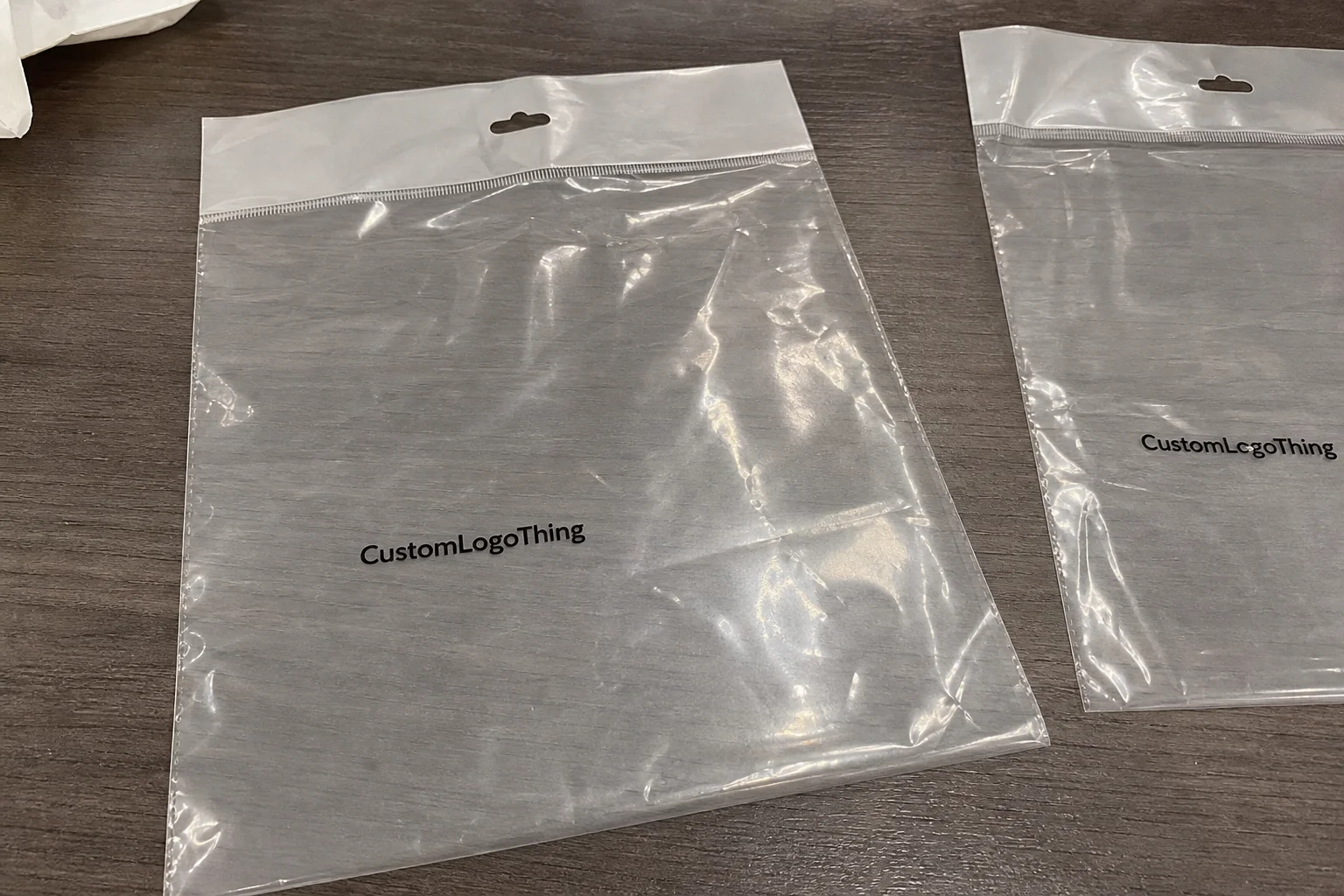
From a packaging buyer’s point of view, a garment poly bag has three jobs. It protects the product, presents the brand cleanly, and survives handling by staff who are moving fast. In hotel operations, that bag may be folded, stacked, stuffed into a cart, or hung in a closet. The artwork still has to read clearly when the film is not perfectly flat.
Hotel group orders add another layer. A corporate brand standard may sit above property-level variations, and one location may need a different address, different contact details, or a different service line. Then a reorder comes in six months later and somebody new opens the file. That is usually how artwork drift starts. A logo gets nudged. A tagline is trimmed. A “temporary” phone number stays in place for a year. The proof is where those errors should die.
Good proof review is less about taste and more about control. The question is not “Does it look nice?” The question is “Does it match the product, the brand, and the manufacturing method?” That means checking dimensions, print position, seal area, opacity, and how the finished bag will read under typical hotel lighting. A proof should behave like a final spec sheet with a picture attached.
A proof that looks clean on screen can still fail in production if the artwork sits too close to a seam, seal, or trim edge. Experienced buyers look for those problems before approving anything.
Packaging standards from trade organizations and supplier resources keep saying the same thing for a reason: the structure, graphics, and end use all have to work together. Ignore one and the whole job gets shaky.
How the artwork proof process works from file upload to approval
The proof flow is usually simple. The buyer sends artwork, ideally as a vector file such as AI, EPS, or a print-ready PDF. Prepress checks it for font issues, low-resolution images, hidden layers, overprints, and spot color definitions. Then the supplier creates a digital proof or mockup showing the bag shape, artwork placement, and key notes. The buyer reviews it, sends corrections if needed, and approves the final version for production.
For Garment Poly Bags, the proof should show more than the logo. It should show logo size, location, bag dimensions, seal style, and notes about film clarity or opacity. If the bag is clear or lightly tinted, the proof needs to make it obvious how the printed area will contrast with what is inside. That matters more than many teams expect. A crisp logo on a bright monitor can disappear on a transparent bag if the ink setup is wrong.
Screen color trips people up all the time. Monitors do not show print ink the same way polyethylene film does. A deep blue on a laptop can print lighter on clear film, especially if the white underbase is weak or missing. So the right question is not “Does the screen match perfectly?” It is “Is the logo readable, accurate, and acceptable on the chosen material and print method?”
Hotel group approval chains are rarely single-person decisions. Brand marketing looks at visual standards. Procurement watches cost and lead time. Operations cares about how the bag handles on property. Legal or compliance may review disclaimers, country-of-origin statements, or contact details. That is normal. The problem starts when those comments come in separately and the proof gets edited in pieces. One consolidated response is cleaner and safer than a half-dozen scattered emails.
If the artwork cannot be manufactured as shown, it is not approved. Text too close to a seal line, artwork wider than the usable print area, or a layout that depends on a print effect the line cannot support will create delay. A good proof has to answer both questions: does it look right, and can it run correctly?
| Proof option | What it shows | Best use case | Typical buyer risk |
|---|---|---|---|
| Digital proof | Artwork placement, copy, colors, dimensions | Most reorder and standard hotel group jobs | Color may differ slightly from print |
| Mockup rendering | Approximate real-world look on the bag shape | Stakeholder review and brand approval | Can hide small text or edge issues |
| Press-ready proof review | Final production layout and print-specific notes | High-visibility programs and repeat contracts | Requires slower, more careful sign-off |
Key proof factors: size, color, material, and print position
Size comes first. A bag can be 12" x 16", 14" x 20", or another custom dimension, but the real number that matters is the usable print area. Seams, gussets, closures, perforations, and seal zones all reduce the space where artwork can safely live. If a logo is stretched into a region that later gets sealed or trimmed, the print may distort or disappear. That is not a design problem. That is a production problem that should have been caught earlier.
Color deserves careful review. Spot colors can be a better fit for brand-sensitive hotel programs, especially when a logo must stay consistent across multiple reorders. CMYK can work well too, but it can shift on clear film or tinted material. White ink matters a lot on transparent bags because it acts as an underbase and helps the logo stand out. Metallic effects are possible in some print setups, but they usually need extra confirmation and can add cost fast.
Material changes the look more than many buyers expect. LDPE tends to feel softer and more flexible, with a smoother gloss and clearer presentation. HDPE is thinner and crisper, often with a more satiny or rustled feel. Under hotel lighting, those differences change how black text, grayscale logos, and fine lines read from a distance. If the bag is part of a retail-style presentation, a test on the selected film is usually worth the time.
Print position is where a lot of proofs prove their value. A centered logo may look tidy on paper, but a side-gusset bag or a bottom seal can crowd the layout once the job runs. The proof should show whether the artwork is front-only, front and back, repeat printed, or oriented for hanging or folding. Staff handling also matters. If housekeeping needs to grab the bag quickly, the most important line should be visible at a glance.
Functionality is not separate from print. Thickness, tear notches, ventilation holes, and closure style all affect the finished impression. A 1.5 mil film behaves differently from a 2 mil film, and if the design depends on a crisp premium look, the substrate has to support it. For sustainability or recycled-content discussions, hotel buyers sometimes review supplier guidance alongside official resources such as the EPA, especially when packaging reduction or material handling is part of the brief.
Process and timeline: production steps that affect approval speed
The fastest jobs start clean. If the logo file is vector, the copy is final, and one person is collecting feedback, proof approval can move quickly. Once approved, production usually moves into printing, curing or inspection depending on the ink system, then packing and dispatch. For a simple printed poly bag order, a reasonable timeline is often about 12 to 15 business days from proof approval, although quantity, print method, and plant schedule can push that out.
Artwork readiness affects timing more than buyers like to admit. Raster files, screenshots, low-resolution logos, and files with font issues often need cleanup before a proof can even be released. That can add a day or two before the approval process begins. If the job needs multiple versions for different properties, the schedule stretches again because each version has to be checked for the correct address, contact details, and layout.
Revision rounds can be harmless or painful. One round is usually fine. Three rounds across brand, procurement, and operations can stretch the timeline quickly, especially if approval has to move through different stakeholders. The cleanest process is to set an internal comment deadline, then send one consolidated response. A single list is easier to act on than a string of email replies with conflicting instructions.
Order quantity also affects the clock. Small runs are not always faster, and large runs are not always slow, but bigger quantities usually require more press time, more inspection, and more packing labor. Special ink requirements, white underprints, and custom construction all add steps. That does not make the order difficult; it just means the schedule needs to be realistic before anyone promises a delivery date.
Cost and pricing: what changes the quote for custom poly bags
The main price drivers are usually straightforward. Bag size, film gauge, number of print colors, number of printed sides, quantity, and artwork complexity all affect the quote. A simple one-color logo on a standard bag is typically far less expensive than a multi-color layout with white underlay, exact placement, and property-specific copy.
Hotel group orders often improve unit pricing because scale helps spread the setup cost. A 5,000-piece order will usually carry a higher per-unit cost than a 25,000-piece order, even though the total spend is higher, because setup and press labor are distributed across more bags. That is why experienced buyers compare both unit price and total cost across multiple reorders and properties.
There are also cost drivers that hide in the details. Custom sizing may require tooling changes. Rush production may add a premium. White ink underlays often increase ink usage and press complexity. If the proof needs revisions after approval, the supplier may have to reset setup or remake artwork components, and that can increase cost. Proof changes are not always expensive, but they are rarely free once they touch production prep.
| Pricing factor | Lower-cost choice | Higher-cost choice | What to confirm |
|---|---|---|---|
| Print colors | 1 color, one side | Multiple colors, both sides | Exact ink count and placement |
| Material | Standard clear LDPE | Special opacity, tinted, or heavier gauge | Film appearance and handling needs |
| Artwork setup | Ready-to-print vector file | Complex cleanup or revision work | Who handles prepress changes |
| Order size | Small run | Large hotel group volume | Unit price versus total spend |
Buyers should also ask what the quote includes. Does it cover proofing? Setup? Freight assumptions? Property-specific versioning? A quote that looks lower on paper can become less attractive if those items are excluded. For hotels that also buy other branded packaging, it helps to keep the sourcing standards consistent across Custom Packaging Products so the approval process does not drift from one item to the next.
Step-by-step proof checklist before you approve the artwork
If you are using the Garment Poly Bags for Hotel groups artwork proof checklist, keep it tight and practical. The goal is to catch small errors before they become expensive. A simple checklist usually works better than a long one nobody finishes.
- Confirm the logo file is current. Make sure brand or marketing has approved the exact version shown on the proof.
- Read every word. Check spelling, punctuation, property names, taglines, phone numbers, and website URLs.
- Match the bag spec. Verify dimensions, print area, seam placement, and the actual construction style against the order.
- Review color and contrast. Check how the ink reads on the chosen film color, opacity, and finish.
- Get cross-functional sign-off. Brand, procurement, operations, and legal or compliance should clear the final copy if their input applies.
- Ask about anything unclear. Bleed lines, trim marks, and seam interference should never be guessed at.
A clean approval usually happens when one person owns the proof and sends one compiled response. That person does not need to be a designer. They do need to be organized enough to protect the timeline. A small pre-approval worksheet helps too. Capture the logo version, bag size, ink colors, property name, and delivery destination before proofing starts. That prevents the second round from turning into a debate about basics.
Archive approved artwork, spec sheets, and previous versions in one place. Sister properties can reorder without rebuilding the layout every time. That matters even more for hotel groups with multiple brands or seasonal programs. If the artwork changes, request a new proof even when the change seems minor. A small copy shift can alter balance, readability, or print position.
Before final approval, compare the proof against the purchase order and the product specification one last time. If the version number is missing or unclear, ask for it in writing. That tiny habit prevents a surprising number of reprints.
Common mistakes hotel buyers make with proof approvals
The most common mistake is approving too quickly because the layout looks fine at first glance. Zoom in. Small spelling errors, a missing period, an outdated property suffix, or an off-center logo can hide in plain sight when the proof is viewed on a small screen.
Another frequent issue is assuming the monitor color will match the finished bag. It often will not, especially on clear or tinted film, or when white ink is required to support the design. A proof can be accurate in placement and still vary in visual intensity after printing. That is not always a defect. It is simply how film and ink behave together.
Readability gets missed too. Hotels handle packaging quickly, and fine linework or tiny contact details can become hard to read once the bag is folded, stacked, or viewed through a garment. If text is only legible when the proof is enlarged on screen, it may be too small for real use.
Property-specific details are another trap. A hotel group may have three locations with nearly identical names, similar logos, and different addresses or phone numbers. One swapped line is enough to create confusion. Tight deadlines make that worse because teams start approving before all stakeholders have reviewed the proof. That is how errors slip through.
The same discipline applies to related packaging programs too. If you are also ordering Custom Poly Mailers, version control, proof review, and final sign-off need the same level of care.
Expert tips and next steps for a clean approval
If there is one rule that saves the most headaches, it is this: treat proof approval like a manufacturing control point, not a brainstorming session. Brand matters, but production needs clarity more than opinion.
Keep a master spec sheet for each hotel group program. Include the bag dimensions, gauge, film type, print colors, exact logo file name, version number, and destination property. Then every reorder starts from the same baseline. Consistency gets easier, and the risk of one property drifting away from the approved look drops fast.
Ask for clarification whenever a proof uses a term you do not fully understand. A note about bleed, a seal margin warning, or an opacity callout may seem minor, but those details usually tell you whether the design is safe to produce. The more repeatable the program, the more that discipline pays off.
For teams standardizing branded packaging across multiple product lines, a clear internal process beats a rushed approval every time. It protects the brand, protects the schedule, and usually saves money on avoidable corrections.
Use the Garment Poly Bags for Hotel groups artwork proof checklist as the final gate before sign-off, then approve only when the file, the spec, and the business details all agree. That is the cleanest path to a printed bag that looks right, runs right, and supports the hotel brand properly.
FAQ
What should be on a garment poly bags for hotel groups artwork proof checklist?
Check the logo file, spelling, color, bag size, print placement, and any hotel-specific property details. Then confirm the proof matches both the purchase order and the final product specification before you approve it.
How long does artwork proof approval usually take for hotel group poly bags?
Simple proofs can move quickly if the artwork is print-ready and one decision-maker is collecting feedback. Multiple approval layers or file revisions can extend the timeline quite a bit.
Can I approve a proof if the screen color looks slightly different?
Yes, but only after confirming the print method and material are suitable for the look you want. If exact brand color matters, ask about PMS matching, white ink, or sample comparison options.
What details most often get missed on hotel poly bag proofs?
Spelling, logo version, print position, and property-specific contact information are common misses. Buyers also overlook seam areas, bleed space, and how the artwork reads on clear film.
How do I avoid delays when ordering printed garment bags for multiple hotels?
Gather all property approvals before submitting final artwork feedback, and keep one master spec sheet so reorders stay consistent across locations. That discipline cuts down on back-and-forth and keeps the job moving.


