A hotel logo can look sharp on one bag size and cramped on another, which is why Garment Poly Bags for Hotel groups print placement guide decisions matter more than most buyers expect. The same artwork can feel polished on a 20-inch clear bag and awkward on a smaller folded shirt bag, even before you account for seal edges, warning text, and the way the garment sits inside the film.
For hotel groups, the bag does two jobs at once. It protects the garment, and it presents the brand. That means the print has to read cleanly on a rack, look tidy in housekeeping carts, and still feel intentional when a guest opens it at the end of a stay. Bag size, fold style, print method, and artwork scale all affect that result.
If you are building a broader packaging system, our Custom Packaging Products page is a useful starting point. For property-to-property distribution and replacement stock, Custom Poly Mailers can sit alongside the garment bag program without forcing every item into the same spec.
Why Print Placement Can Change the Whole Bag
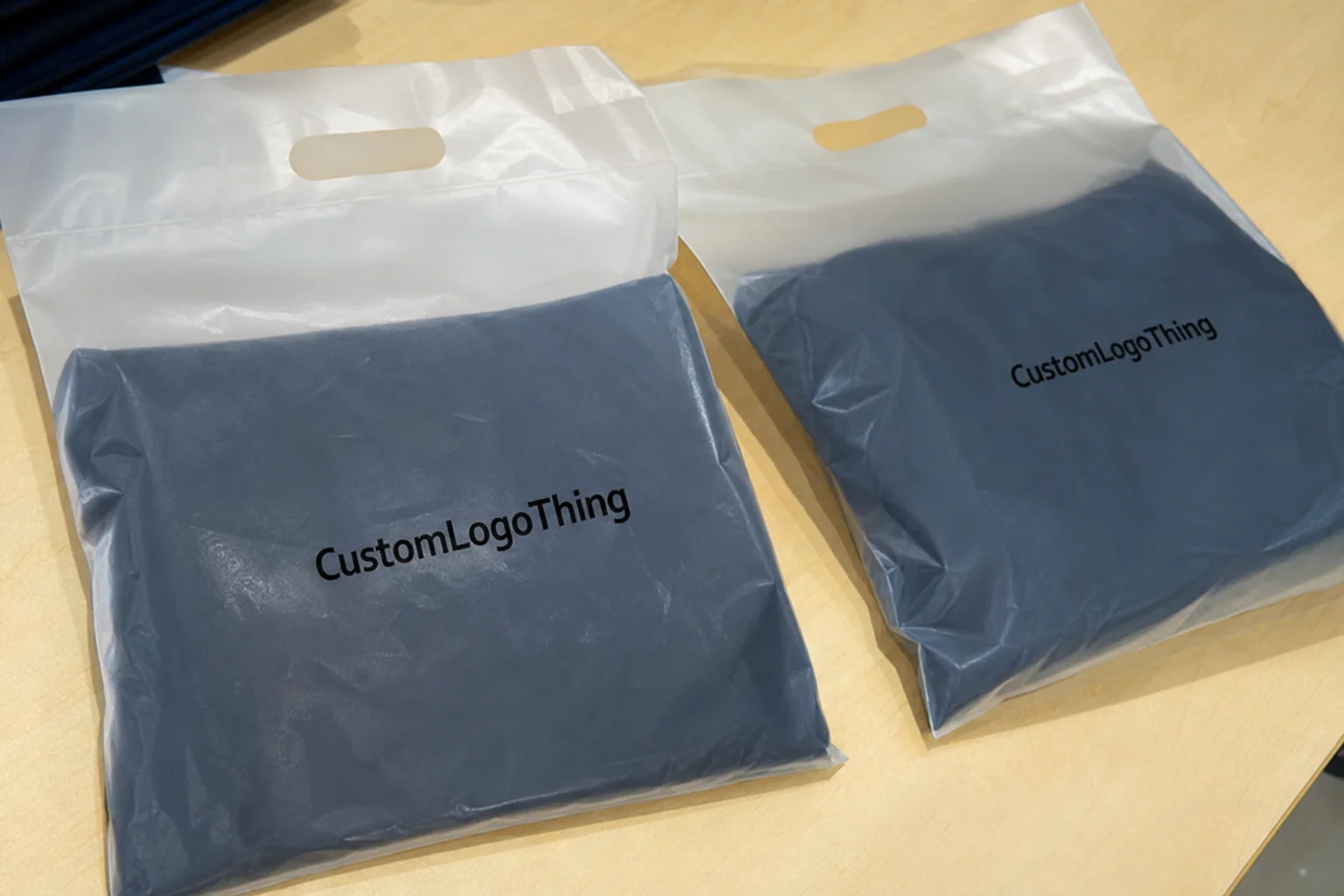
Placement is not a small design detail. On clear polyethylene, the logo competes with the garment itself, so the exact position can make the bag feel premium or accidental. A centered mark on a long robe bag may look balanced, while that same mark on a narrow shirt bag can crowd the seal area or leave too little clear film around the artwork. That is why Garment Poly Bags for Hotel groups print placement guide decisions need to start with bag geometry, not with a favorite artwork file.
Hotel groups usually need the bag to communicate quickly. Housekeeping wants to identify sizes at a glance. Front-desk teams want a clean presentation if the item is handed to a guest. Laundry partners want a package that opens cleanly and does not hide the contents. A print zone that supports all three jobs is better than a bigger logo in the wrong place.
There is also a production side to placement. When art sits too close to a seal, vent, perforation, or hang hole, the risk of misregistration goes up. That affects line speed, scrap, and repeat consistency. A placement decision that looks harmless on screen can create trouble once the press is running at production speed.
A proof that does not show the logo relative to the fold, seal, and warning copy is not a complete proof. It is only a picture of the artwork.
From a branding angle, buyers usually want one of three things: a centered logo for broad visibility, a top-corner logo for a cleaner utility look, or a vertical mark that follows the narrow bag shape. None of those is universally correct. The right answer depends on the garment, the way the bag is folded, and the visual hierarchy the hotel wants guests to notice first.
It also helps to treat the bag as part of a wider packaging program instead of a one-off print job. That mindset keeps the hotel brand consistent across storage, transport, and guest presentation, and it reduces the number of small exceptions that usually cause problems later.
Print Process and Approval Timeline for Hotel Orders
Most hotel buyers are surprised by how much time passes before the press ever starts. The path usually runs from artwork submission to size check, proof layout, stakeholder review, setup, and then production. The delays tend to happen at the proof stage, especially when a brand sends a logo file built for a brochure, not for a folded poly surface. A clean Garment Poly Bags for hotel groups print placement guide workflow should expose that problem early.
Good suppliers will ask for the bag dimensions, the folded garment dimensions, the print colors, and the intended print method before they build a mockup. That is where mockups earn their keep. A digital proof should show the logo in relation to the seal edge, the safe print area, and any required warning text. If the proof only centers the logo on a white rectangle, it is not enough for production sign-off.
The production method changes the timeline too. Flexographic printing is common for longer runs on film because it is efficient once the plates are prepared. Digital printing can help on smaller runs or when designs change property by property. For brand-critical work, many buyers specify a spot color instead of relying on a loose process match, especially when the logo has to stay consistent across multiple properties and repeat orders.
Material choice also affects the approval path. A 1.5 mil clear LDPE bag will behave differently from a 2.0 mil film. Thicker film can improve the presentation and reduce the chance of stretching around the fold, but it may also change how the print lays down. Recycled content can introduce a slight haze or variation in clarity, which is fine if the brand accepts it, and a bad surprise if nobody discussed it during quoting. That is the kind of detail that should be settled before the PO goes out.
Typical timelines are often 7-10 business days for proofing and setup on a first run, then 12-18 business days for production after approval, depending on volume and film availability. Repeat orders can move faster when the file, bag spec, and print position are already locked. If the order needs new plates, a custom size, or revised warning copy, add time. That is normal, not a sign of poor service.
Hotel groups also benefit from a tighter approval chain than a single-property buyer. Multiple stakeholders usually need the same proof: brand, operations, procurement, and sometimes the laundry vendor. If the review process is loose, the order can bounce around for days. If the review process is clear, the press schedule is much easier to protect.
Key Placement Factors That Affect the Final Look
The first factor is bag size. A logo that feels centered and elegant on a 20-inch bag can look oversized on a 14-inch bag, even if the artwork never changes. The print zone has to match the folded garment height, the exposed film around it, and the amount of empty space the hotel wants to preserve for a clean look. That is a core part of any practical Garment Poly Bags for Hotel groups print placement guide.
The second factor is visual weight. A wide landscape logo behaves differently than a tall, narrow one. On clear film, a top-left mark often reads as functional and understated, while a centered logo feels more formal. There is no universal rule here, but there is a very real design consequence if the logo shape fights the bag shape.
The third factor is the structure of the bag itself. Seal bands, perforations, hang holes, gussets, and suffocation warning copy all consume real space. The artwork has to work around those features, not ignore them. If the brand mark sits too low, it may disappear into the fold. If it sits too high, it can compete with regulatory text or get clipped by the seal.
Hotel operations shape the placement as much as design does. Housekeeping teams want bags that are easy to read in a stack. Front-desk teams want the printed side to face out cleanly if the garment is handed over at arrival or checkout. Laundry partners want opening points that do not obscure the item or force extra handling. Those practical needs usually tell you where the print should live.
One more detail matters more than people expect: the view distance. A garment bag on a shelf is seen from a few feet away, not from a designer’s monitor. Fine lines, small text, and tiny brand marks lose clarity fast on thin film. A slightly larger logo with more breathing room usually performs better than a dense design that tries to use every inch.
Print clarity also depends on ink and line weight. Thin strokes can fill in on film, especially if the print method is not ideal for the artwork. Soft gradients often disappear or shift on clear plastic, and they are rarely worth the headache unless the supplier has already proven that exact treatment. Strong logos usually hold up better than clever but fragile artwork.
For sustainability and transit references that affect packaging decisions beyond the print itself, the ISTA standards are useful when you want to think about transport stress, while the FSC site is a solid reference if you are pairing the bag with paper-based cartons or inserts that need responsible sourcing.
Cost, Pricing, and MOQ Factors That Change the Quote
Pricing for hotel garment bags comes down to a short list of variables, and it helps to name them plainly. Bag thickness, bag size, print colors, number of printed sides, total order volume, and custom placement all matter. More coverage usually costs more. More colors usually costs more. Larger runs usually improve the unit price. That pattern holds across most print programs, including flexographic printing and shorter-run digital printing jobs.
MOQ, or minimum order quantity, matters because hotel groups do not all buy at the same scale. A smaller property may need a low threshold just to test fit and visual impact. A larger chain may want one consolidated run across several hotels because that can reduce unit cost and simplify repeat ordering. The right answer depends on whether the bag will stay consistent across properties or vary by tier.
There are also quote variables that buyers sometimes miss. Custom sizing usually adds setup cost. Rush production can change the pricing model. A second print location on the reverse side increases registration and press time. If the artwork needs a spot color matched tightly to a brand standard, that can be more expensive than a basic CMYK build. And if the supplier needs extra setup for platen control, curing, or registration checks, that will show up in the quote too.
Film type affects price and appearance as much as print coverage does. LDPE is common because it is flexible and usually gives a cleaner drape around folded garments. HDPE can be lighter and less expensive, but it tends to feel crinklier and more utilitarian. If a hotel wants a premium presentation, the bag spec should reflect that from the beginning instead of trying to fix it with more ink.
| Option | Typical Spec | Typical MOQ Impact | Approx. Unit Price at 5,000 Units |
|---|---|---|---|
| Standard clear bag, 1-color logo | 1.5 mil LDPE, single-side print | Lower setup burden | $0.14-$0.22 |
| Clear bag, 2-color logo | 1.5-2.0 mil LDPE, single-side print | Moderate setup cost | $0.18-$0.28 |
| Premium presentation bag | 2.0 mil film, larger print area, tighter placement control | Higher spec control | $0.22-$0.36 |
| Short-run digital print | Smaller order, flexible artwork changes | Lower MOQ, higher unit cost | $0.28-$0.45 |
Those numbers are directional, not universal. Film prices move, freight moves, and print coverage changes the math. A buyer should compare quotes only after confirming the same bag dimensions, the same gauge, the same number of colors, the same placement assumptions, and the same proofing standard. Otherwise, the lowest quote can be misleading because it is built on a smaller bag or lighter film.
Hotel groups that want to compare packaging programs more broadly should look at the full system, not just the inner garment bag. A change in outer carton size, shelf packing, or distribution method can affect how many bags fit per case and how much damage risk appears in transit. That does not sound glamorous, but it affects the real cost of the program more than a lot of art-director language ever will.
Step-by-Step Placement Setup for a Cleaner Print
Start with the garment, not the art. Measure the folded shirt, robe, or uniform that will actually sit inside the bag. A spec built around a guessed fold is one of the fastest ways to end up with a logo too low or too crowded. The bag should be designed around the real packed shape, because that is what the guest sees and what the hotel team handles.
Next, map the bag with a simple placement grid. Mark the safe print area, the seal edge, the fold zone, any hang hole or perforation, and any required warning copy. That grid is the easiest way to keep the logo centered and readable after packing. It also helps the supplier avoid press-side adjustments that can break consistency across a multi-property run.
Then size the logo for the viewing distance. A bag seen on a shelf needs a different treatment than a bag handed directly to a guest at check-in. If the mark is too small, it gets lost in the transparency of the film. If it is too large, it can overpower the garment and make the package feel heavy. The sweet spot is usually simpler than people expect.
After that, review the artwork in the actual production color mode. For process builds, ask for the CMYK values. For brand-critical work, ask whether a spot color is a better fit. On clear film, very soft tints can disappear, and thin strokes can fill in. This is where a practical buyer saves time by keeping the design simple and insisting on real file checks before the press run.
Finish with a proof checklist:
- Artwork resolution is high enough for the chosen print method.
- The logo sits in the approved location, measured from the edge.
- Warning text, if required, stays separate from the mark.
- The mockup shows the exact bag size and fold style.
- The final file matches the approved proof with no silent changes.
That checklist sounds basic, but it protects the repeat order. Once a hotel group approves a spec sheet, the next production run should feel familiar. A clean spec also makes it easier to compare new quote requests against the original bag, which matters when properties change managers or procurement teams.
QC should not stop at artwork approval. Ask for a preproduction sample or a press proof if the size changes, the garment changes, or the logo shifts position. Check the actual fold, the real opacity, the alignment against the seal, and the readability of any small type. A mockup on a monitor can hide problems that show up immediately in hand.
If the program extends beyond the garment bag itself, keep the surrounding packaging simple and consistent. The goal is not more packaging layers. The goal is a package that is easy to pack, easy to read, and easy to repeat without rethinking the whole spec every quarter.
Common Mistakes That Make Hotel Bag Prints Look Off
The most common mistake is placing the logo too low. That sounds minor until the fold eats the bottom line of the artwork or the seal cuts into the visual field. Once that happens, the bag starts to look like a rushed utility item instead of part of the hotel brand. This is one of the easiest problems to avoid in a Garment Poly Bags for Hotel groups print placement guide process, yet it still shows up often.
Another mistake is asking too much of the film. Thin poly is not a great home for tiny serif type, hairline rules, or subtle gradients. Those details can fill in or lose clarity depending on the print method and ink laydown. Strong logos usually work better than clever but fragile artwork.
Some buyers approve a proof without checking the actual dimensions. On a screen, a centered logo looks acceptable almost anywhere. On a real folded garment, the same mark may sit too high, too wide, or too close to the edge. A good proof should include measurements, not just a visual.
Brand drift is another expensive problem. If one property buys a slightly different bag size, thickness, or print position, the chain loses consistency. Guests may not be able to name the difference, but they will feel it. Consistency across hotel groups matters because packaging becomes part of the service signal, just like linen quality or amenity presentation.
There is also the temptation to overcomplicate the print. If the logo already has strong recognition, the bag usually performs better with clear positioning and modest coverage than with busy art on every available surface. A bag should support the brand, not compete with it.
Another quiet failure is ignoring supplier limits. A design that looks fine in a PDF can become unreliable if the supplier has to stretch the print area, shift the plate, or run it on a different machine than the one used for the sample. That is why the approved dimensions matter as much as the artwork file. The press cannot guess what the brand meant.
For buyers managing multiple packaging items, it often helps to align the garment bag with the rest of the program. A smaller, cleaner logo on the bag can echo the same brand logic used on inserts, shipping cartons, and related retail packaging. That makes the whole system easier to maintain and easier to audit when something changes.
Expert Tips and Next Steps for Better Repeat Orders
The best repeat programs are the ones with a one-page spec sheet. Keep the approved bag size, film gauge, print location, color references, and mockup on a single document. That way, when a property reorders six months later, nobody has to guess which version was approved. The spec sheet becomes the memory of the project.
My practical advice is to order a small sample or preproduction proof any time the bag size changes, the garment changes, or the brand wants to shift the logo position. That is especially true for hotel groups with multiple tiers, because a luxury property and a limited-service property often want different visual cues even when they share the same master brand.
Keep the artwork scalable. Clean shapes, clear spacing, and fewer fragile details usually reproduce more reliably on poly. They also hold up better if the order moves between print methods or if the supplier needs to switch between flexographic printing and a shorter-run digital run. Simpler art is not plain. It is easier to execute well.
If you are comparing suppliers, ask for the same variables on every quote: exact bag dimensions, film gauge, print side count, ink colors, placement measurements, and proofing method. That is the fastest way to separate real pricing differences from quoting noise. It also gives procurement a cleaner basis for approval.
Pay attention to repeatability, not just first-run appearance. The right supplier should be able to reproduce the same print zone, the same color target, and the same bag feel on the next order without rebuilding the job from scratch. That is the real test of a hotel packaging program. The first sample matters, but the second and third orders tell you whether the spec was actually controlled.
For hotel groups that want the garment bag to remain consistent across properties, the simplest path is usually the best one: one approved spec, one approved placement, one approved proof format. That is how you keep the program clean over time and avoid the slow drift that makes packaging look inconsistent from one property to the next. In the end, a strong garment poly bags for hotel groups print placement guide is less about decoration and more about discipline.
How do I choose print placement for garment poly bags in hotel groups?
Start with the folded garment size, then place the logo where it stays visible after packing and storage. Keep the design away from seals, folds, perforations, and warning text, and require a proof that shows the actual bag dimensions instead of a generic artwork preview.
What affects the price of custom poly bags with hotel logos?
Bag size, film thickness, print colors, print coverage, and total order volume all affect unit cost. Higher volumes usually reduce the price per bag, while small runs, rush schedules, and tighter placement control can move the quote upward.
How long does production usually take for printed garment bags?
First runs often take longer because the proof, placement, and artwork specs need approval. A realistic timeline is usually 7-10 business days for proofing and setup, then 12-18 business days for production after approval, depending on volume and material availability.
What is the safest logo placement on a garment poly bag?
The safest zone is the area that stays clear of folds, seals, hang holes, and perforations after the garment is packed. Centered placement often works well for broad visibility, but the real answer depends on the bag size and the folded item inside it.
How can hotel groups keep print placement consistent across properties?
Use one approved spec sheet for bag size, film gauge, print location, and color references. Require the same mockup format for every reorder, and review a sample whenever the bag size or print position changes.


