Garment Poly Bags for nonprofit campaigns moq planning sounds tedious until a shipment lands in the wrong size, the shirts will not reseal cleanly, and volunteers are reworking every kit by hand. That is not a small inconvenience. It slows packing, drives up unit cost, and makes a donation drive look messy before the first box leaves the room.
For nonprofit teams, packaging has to do a few jobs at once: protect folded apparel, keep counts organized, and present a clean package for storage, sorting, or donor pickup. The right bag spec keeps the workflow moving. The wrong one creates rework, which is just waste with extra steps.
Most buyers do not need fancy packaging. They need a bag that fits, seals, and shows what is inside without forcing the team to open every carton. That is the whole job. Everything else is decoration unless the campaign has a specific branding or display requirement.
Why garment poly bags matter for nonprofit campaign kits
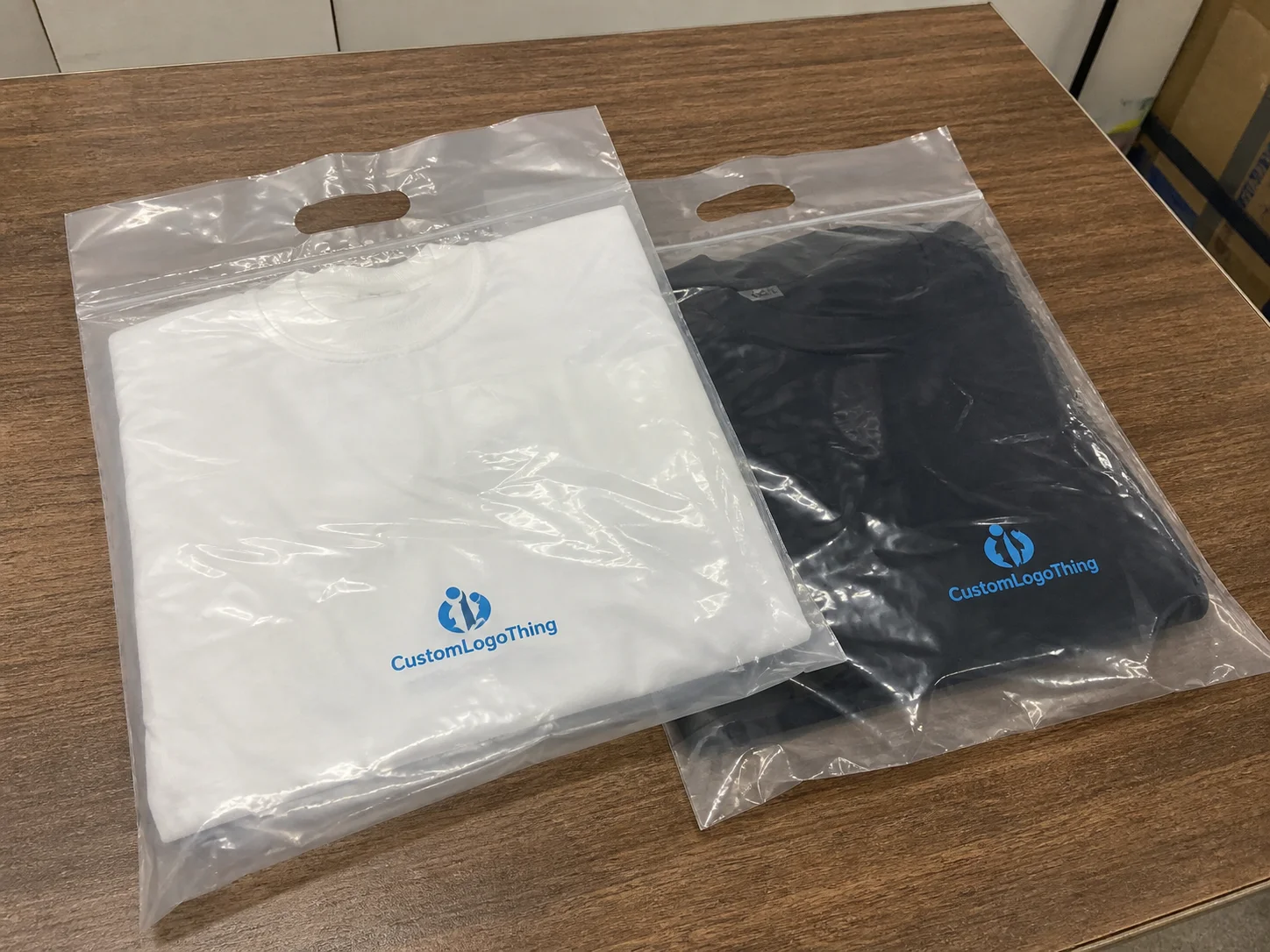
Nonprofit apparel campaigns live or die on consistency. If you are packing volunteer shirts, awareness-drive tees, sponsor gifts, or fundraising merch, every bag needs to fit the folded garment the same way. If one batch is tight and another is oversized, carton counts get messy fast. Then someone is hand-correcting every third piece, which is exactly the kind of volunteer labor nobody budgets for.
Clear-front poly bags are popular for a reason. They let staff and volunteers see what is inside without opening the package, which speeds up sorting and distribution. They also help with inventory checks. A quick visual scan is usually enough to confirm size, color, or kit contents. That beats opening cartons one by one, which is a great way to lose an afternoon.
For nonprofit buying teams, the real value is repeatability. A package that folds the same, seals the same, and stacks the same is easier to count, easier to store, and easier to ship. That consistency reduces handling complaints and keeps sponsor deliveries tidy. Not glamorous. Just useful.
There is also a practical storage benefit. Apparel packed in poly bags holds its shape better in bins and cartons, and the bags help keep dust and surface moisture off the garments during staging. That matters when campaign materials sit in a warehouse, a back room, or a volunteer center for more than a day or two. The goal is not perfection. The goal is avoiding preventable damage.
“If the bag size is off by even a little, the whole packing workflow slows down. Nonprofit teams need predictable packaging more than decorative extras.”
Industry resources like the Packaging Machinery Manufacturers Institute and EPA guidance on materials and waste reduction can help teams think past the sample and toward the full lifecycle of the package. That is especially useful when a campaign has to balance cost, storage, and disposal concerns.
Product options for charity apparel packaging
Most charity apparel packaging starts with a few basic bag types. Flat poly bags are the simplest and cheapest. Resealable bags, usually with a self-seal strip, save time on assembly because you are not fighting tape or separate closures. Suffocation-warning bags are common when apparel is being shipped in volume, especially in markets where warning text is expected or required. Custom-printed bags add branding, but they are not always the smartest first move if the budget is tight.
The best format depends on the campaign job. If the shirts are already sorted and only need protection, a plain flat bag may be enough. If volunteers are assembling kits with shirts, brochures, and a sponsor insert, a resealable closure can reduce labor. If the package is intended to sit on a table or move through a display-style distribution setup, a hang-hole or header-style option can help with presentation. No magic here. Just fit the tool to the task.
Size selection matters more than most buyers expect. Youth tees often fit smaller flat bags, adult tees need a wider body and enough height for a clean fold, and hoodies usually need noticeably more room because of bulk and seam thickness. Folded polos land somewhere in the middle. Multi-piece kits need clearance for inserts and a little breathing room so the seal does not strain the contents.
Teams often underestimate how much fold style affects the final bag size. A neat retail fold is different from a fast volunteer fold. If your packing crew is working in a hurry, give the bag a little extra width and height. That minor buffer usually costs less than paying volunteers to wrestle every garment into a too-tight sleeve.
Common bag types and how they compare
| Bag type | Best for | Typical cost impact | Practical note |
|---|---|---|---|
| Flat poly bag | Basic folded tees, storage, sorting | Lowest unit cost | Simple, stackable, and easy to source in standard sizes |
| Self-seal resealable bag | Kits, volunteer packs, quick assembly lines | Moderate increase | Saves labor; good when volunteers are packing by hand |
| Suffocation-warning bag | Shipped apparel, higher-volume distribution | Small increase | Often expected for packed garments; check local requirements |
| Custom-printed bag | Branded campaigns, sponsor kits, premium presentation | Higher setup charges and unit cost | Worth it only if branding matters enough to justify MOQ and tooling fees |
Nonprofit buyers usually care about three things first: durability, visibility, and how neatly the bags stack in cartons and bins. If the bag slips, wrinkles badly, or bunches at the seal, the packing line slows down. That is why a basic, well-sized bag often beats a prettier one with a worse fit.
If your campaign also uses shipping mailers for some items, compare your apparel bag spec against Custom Poly Mailers so the team does not mix up protection needs for flat apparel versus shipped donor kits.
Specifications that affect fit, print quality, and handling
Bag specs sound boring until one detail wrecks the run. Start with material, thickness, width, and length. Then look at seal strength, print method, and whether the bag needs a suffocation warning or a hang-hole. Those details decide whether the package works in real life, not just in the mockup.
LDPE is the common flexible option. It is easy to fold, resists cracking, and usually gives a softer feel. CPP is clearer and stiffer, which can look cleaner for display or sorting. Recycled-content films are also available, but the exact feel and clarity vary more than buyers expect. If sustainability is a requirement, ask for the actual resin blend, not a vague green promise on a quote sheet.
Thickness is usually discussed in mils or microns. For basic garment protection, many buyers sit in the mid-range rather than chasing the thickest film available. Too thin, and the bag tears during packing. Too thick, and the bag gets expensive and harder to fold. For donation kits, a balanced spec is usually smarter than overbuilding.
Print quality is another place where expectations need to stay grounded. One-color logos are the most cost-efficient. Limited coverage keeps setup charges lower and usually improves consistency. If you want a full-bleed print, expect higher tooling fees, more care around registration, and more chances for visible variation. On a tight campaign budget, that tradeoff is hard to justify unless branding is a top priority.
Here are the details buyers should confirm before requesting pricing:
- Material type: LDPE, CPP, or recycled-content blend
- Thickness range: enough for protection, not so heavy it inflates cost per piece
- Exact width and length: based on folded garment dimensions, not shirt tag size
- Closure type: open-top, self-seal, flap seal, or hang-hole
- Print method: one-color, multi-color, or no print
- Safe margins: keep artwork away from seal areas and cut lines
Compliance details matter too, especially if apparel is being stored or shipped in bulk. Many Garment Poly Bags used for retail or e-commerce distribution need warning language related to suffocation risk. Requirements can vary by destination and usage, so the exact text and opening size should be checked before production starts. A packaging supplier should be able to flag this early, not after proofs are signed.
For teams that want a standard to reference, ISTA is useful for thinking about distribution and transit testing. It is not a bag spec sheet, obviously, but it does help buyers ask better questions about handling and shipment conditions.
Another point that gets missed: printing on clear film can look different under warehouse lighting than it does on a screen. Dark logos usually hold up well. Very thin lines and pale tints do not. If brand visibility matters, ask for a physical proof or at least a print simulation that reflects the actual film color and thickness.
Pricing, MOQ, and quote planning for nonprofit orders
This is the part that decides whether your budget survives contact with reality. Pricing for Garment Poly Bags depends on bag size, thickness, print colors, print coverage, and total quantity. Larger bags cost more because they use more material. Custom printing adds setup charges, and in some cases tooling fees, especially if the run needs plates or specialized print preparation. Plain stock bags are cheaper, but they also give you less control over branding.
MOQ planning for nonprofit orders should be based on actual campaign phases, not wishful thinking. If you only need 2,000 pieces for an upcoming volunteer drive, do not order 10,000 just because the unit cost drops. Lower unit cost is nice. Paying for inventory you will not use is not.
In practice, MOQs often fall into three working tiers:
- Sample or test run: 500-1,000 pieces, usually plain or very limited print
- Small campaign run: 1,000-5,000 pieces, enough for local events or one distribution wave
- Program or seasonal run: 5,000-20,000+ pieces, where bulk pricing starts to matter more
That said, MOQ is not one-size-fits-all. A plain standard size may be available at a much lower minimum than a custom-printed bag with multiple colors. A buyer should ask for tiered quotes. One quote should match the immediate need. The other should show the cost per piece at a higher quantity so the team can compare cash flow against future use.
| Order tier | Typical use case | Indicative cost per piece | MOQ planning note |
|---|---|---|---|
| Test run | Sample approvals, small donor event | $0.12-$0.28 | Good for checking fit and seal performance before a larger order |
| Small campaign run | Volunteer shirts, local awareness kits | $0.08-$0.18 | Balances inventory risk with manageable unit cost |
| Higher-volume program | Seasonal drives, recurring donor mailers | $0.05-$0.12 | Best bulk pricing, but only if storage and usage are already planned |
Those ranges are directional, not a quote. A thicker film, a larger bag, and printed coverage will push the number up. Freight can also matter more than people expect, especially on bulky but low-value packaging. If the order is split into multiple shipments, the savings from a lower unit cost can disappear fast.
Watch for hidden cost items: artwork setup, plates, sample charges, freight, split shipments, and rush fees. Some suppliers hide these until late in the process. That is annoying, and yes, it happens more than it should. Get the full landed cost before you approve the spec.
Garment Poly Bags for nonprofit campaigns moq planning works best when you ask for a quote that separates product cost, setup charges, and delivery charges. Then the team can compare vendors on real numbers instead of a single shiny headline price.
It also helps to ask whether the quoted MOQ is tied to one size, one artwork version, or one material specification. A quote that looks attractive can become a headache if a minor change forces a fresh setup fee. Consistency lowers cost. Frequent changes do the opposite.
Production steps, lead time, and delivery planning
The production flow is usually straightforward, but only if the buyer supplies clean information. First comes spec confirmation: size, material, thickness, closure, and print details. Then artwork review. Then a proof. After approval, the order moves into production, packing, and shipping. If any of those steps stall, the schedule slips.
For standard custom runs, lead time is often 12-15 business days from proof approval, though larger or more complex jobs can take longer. Simple plain stock orders may move faster. If the bag has multiple colors, special warnings, or a tight custom size, add time. Rush production is possible in some cases, but rush fees can be painful, and they usually reduce your options instead of expanding them. Funny how that works.
Campaign timing matters more than most teams admit. If the shirts must arrive before a volunteer event, the bags should not land the same afternoon. Build a buffer. Store the empty bags at the packing site early, then stage the apparel when it arrives. That gives you room to absorb freight delays, proof revisions, or a carton count correction.
What should buyers prepare early?
- Final bag dimensions based on an actual folded garment
- Print-ready artwork in vector format
- Quantity target and backup quantity
- Shipping destination and receiving hours
- Any split-delivery instructions for multiple campaign locations
If your nonprofit distributes through several sites, ask whether the supplier can palletize by location or keep carton labels separated by campaign phase. That small request can save a surprising amount of warehouse confusion later.
Storage conditions matter too. Poly film does not like prolonged heat, heavy compression, or rough pallet handling. Bags can arrive in perfect shape and still become frustrating if they are stored under heavy cartons or near a heat source that warps the stack. Keep the cartons flat, dry, and out of direct sun whenever possible.
What to check before you approve a nonprofit bag order
Before you sign off, run a short checklist. It sounds basic because it is basic, and basic steps are the ones people skip when they are trying to move fast.
- Size test with the actual folded garment, not a guess
- Seal test to confirm the closure holds and opens as intended
- Carton count to verify packing density and storage needs
- Print proof for logo placement, safe margins, and legibility
- Shipping label accuracy for the correct destination and delivery contact
Common mistakes are predictable. Buyers order a bag that is too small for hoodies or multi-piece kits. They choose a glossy finish that reduces the visibility of the print or makes the bag harder to handle. They skip sample verification and discover the closure is weaker than expected. They approve artwork too close to the seal line, which leads to cropped logos. None of this is rare. It is just expensive.
Also compare vendors on more than price. A supplier with slightly higher bulk pricing may still be the better value if they respond quickly, send accurate proofs, and can rerun the same spec later without guesswork. For nonprofit programs that repeat annually or seasonally, consistency matters a lot. Reordering the exact same package should be easy. If it is not, the supplier probably did not document the spec well enough.
To avoid overbuying, match MOQ to campaign phases. If you have a spring drive and a fall drive, do not automatically buy for both unless storage is ready and artwork will stay unchanged. Stage the order around actual use. That is how you protect cash flow.
One more sanity check: confirm whether the bags will be packed in cartons by size, by artwork version, or by distribution site. Mixed cartons can slow down volunteer teams faster than almost anything else. A small labeling decision up front can save a lot of sorting later.
For more support on packaging selection and order planning, the FAQ and Custom Packaging Products pages are useful starting points before you send a request for quote.
How to place a campaign order without wasting budget
Start with the garment count. Then define the exact fold size. Then choose the smallest print area that still does the job. Those three steps usually do more for cost control than any other decision. After that, request a tiered quote so you can compare a minimum-need option against a higher-quantity option with better unit cost.
Ask for two versions if possible. One should cover the immediate campaign requirement. The other should show what happens if you step up quantity and reduce cost per piece. That comparison makes the tradeoff obvious. Sometimes the lower MOQ wins because it protects cash. Sometimes the larger run wins because the nonprofit knows it will need the same bags again next quarter.
Prepare artwork in vector format if you want clean print results. And decide early whether the bags need branding at all. Plenty of campaigns do fine with plain stock bags, especially when the bag is used mainly for internal sorting or short-term protection. If the packaging will sit in front of donors or sponsors, printed branding may be worth the extra setup charges. If not, skip the decoration and put the money where it matters.
One more practical tip: request a sample pack before the full run. It is easier to approve a physical bag than to argue with a PDF. Check the fold, the seal, the clarity, and how it stacks in a carton. That small step saves bigger mistakes later.
If you are comparing options across multiple vendors, keep the comparison narrow. Use the same size, thickness, material, print count, and delivery terms. Otherwise the quote sheet turns into a circus and nobody learns anything useful from it. Apples-to-apples comparisons are boring. They also work.
For nonprofit teams planning Garment Poly Bags for nonprofit campaigns moq planning, the best move is simple: lock the spec early, compare MOQ options honestly, and choose the version that fits the campaign schedule instead of chasing the lowest headline price. That is how you keep the project on budget and out of trouble.
FAQ
What MOQ should I expect for garment poly bags for nonprofit campaigns?
MOQ usually depends on size, material, and print complexity. Plain stock bags can have lower minimums, while custom-printed bags often need a higher MOQ because of setup charges and production requirements. Ask for tiered options so you can compare the lowest viable run against a better unit-cost quantity.
Can nonprofit orders get a lower unit cost by changing the bag spec?
Yes. Reducing print colors, simplifying artwork, or choosing a standard size can lower unit cost. Higher quantity usually drops cost faster than almost any other change, but only if you can actually use the inventory without creating storage problems.
How do I choose the right size for folded shirts or hoodies?
Measure the folded garment before ordering. Do not guess based on shirt size labels. Add enough clearance for easy insertion and sealing, especially for thicker fleece, hoodies, or multi-item kits.
What is the usual lead time for custom garment poly bags?
Lead time depends on proof approval speed, print method, and quantity. A standard custom run often needs about 12-15 business days after proof approval, while more complex jobs can take longer. Build extra buffer for campaign launch dates and volunteer distribution schedules.
What files do I need before requesting a quote?
Have final bag dimensions, quantity, print details, shipping destination, and vector artwork ready. If you want accurate pricing, include whether you need samples, rush shipping, or split delivery.


