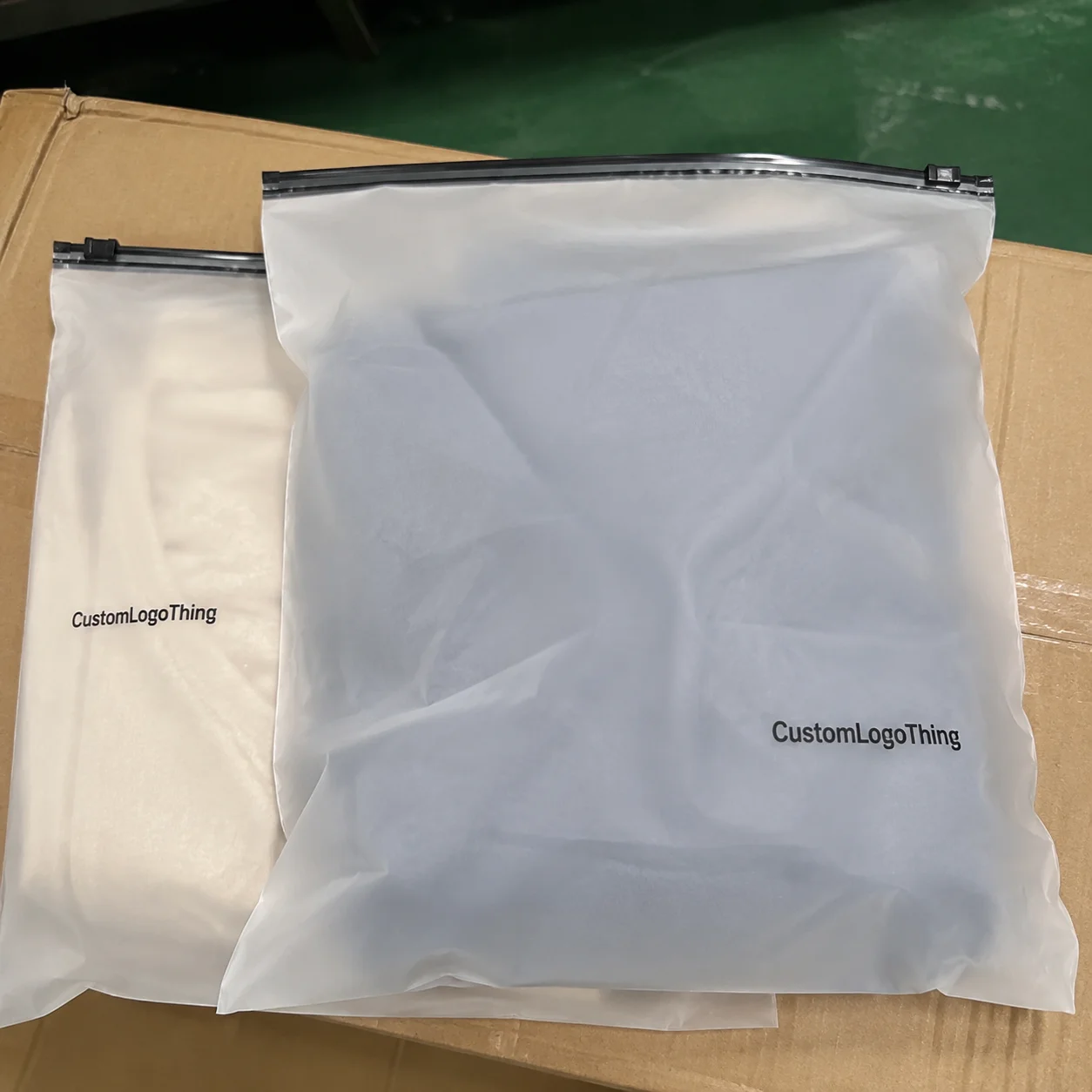
“Garment Poly Bags for Streetwear labels material comparison” sounds like a procurement exercise. It is, but it is also brand control in a very unglamorous wrapper. The wrong film can make a premium tee look cloudy, soft, or oddly cheap before anyone sees the print. And once the bag looks wrong, the garment starts from behind.
Most brands do not need the fanciest film. They need the bag that fits the fold, protects the product, and moves through packing without slowing the line down. That means looking at clarity, stiffness, seal quality, and the real job the bag has to do: retail display, ecommerce shipping, or both. Treat it like a packaging spec, not a vibe check.
There is a reason packaging buyers get picky about something that seems small. A bag can affect shelf appearance, carton efficiency, labor time, and even return rates. A split seal or sloppy fold is never just a bag problem. It becomes a warehouse problem, a customer service problem, and eventually a margin problem.
Why the cheapest bag is usually the most expensive mistake
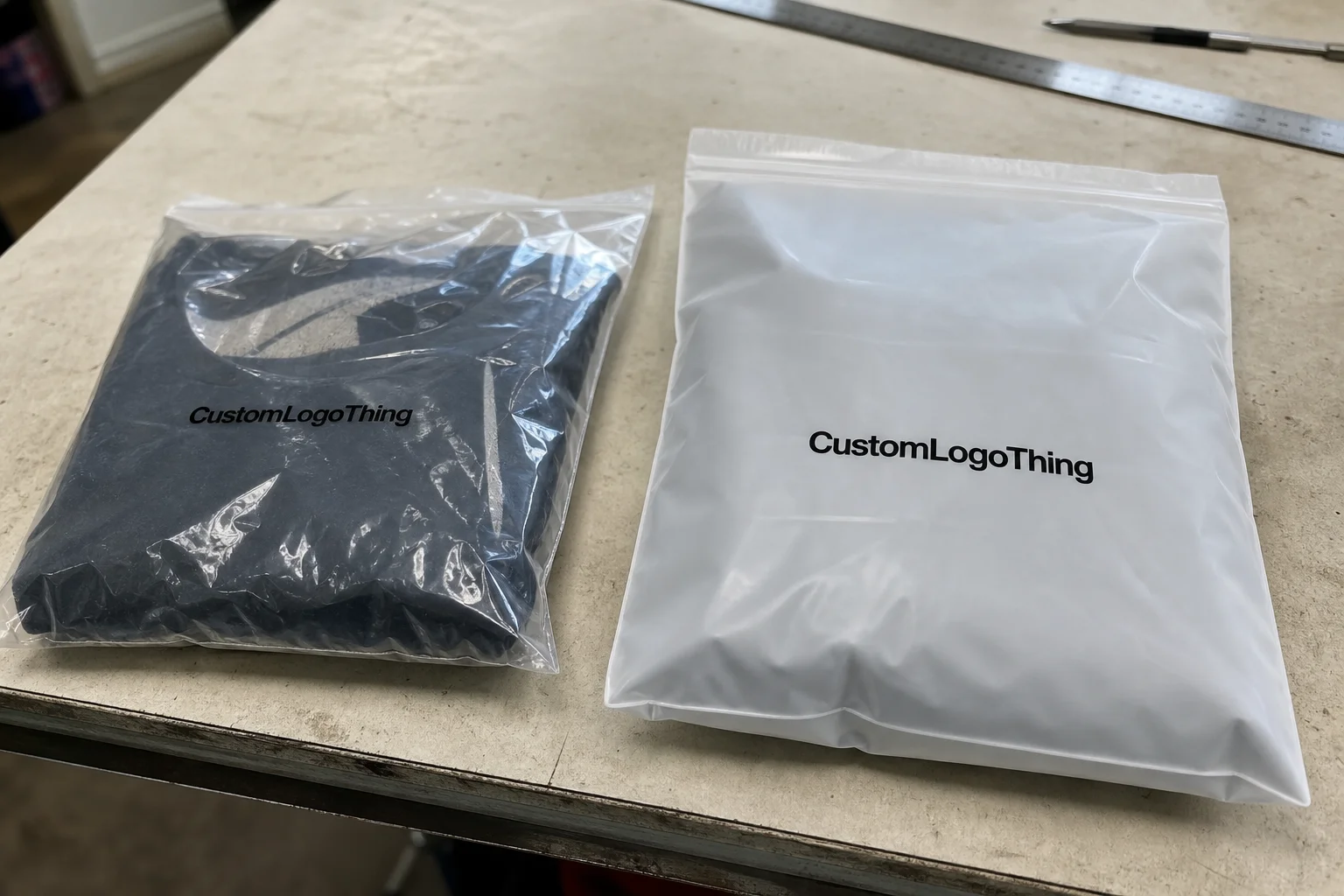
A low-cost bag can fail quietly. It clouds under store lighting, wrinkles in stacks, or tears at the corner when a folded hoodie is inserted. Those failures do not show up on the quote sheet, which is part of the charm, apparently. They show up during packing, transit, or store presentation, which is where the expensive part begins.
From a buyer’s point of view, the first three things that matter are clarity, stiffness, and seal quality. Too soft, and the bag collapses around the fold. Too thin, and the corners stretch or split. Too weak at the seal, and the entire pack-out gets risky. If you are sending product to wholesale accounts, that risk compounds fast because one bad run can affect multiple stores at once.
“If the bag looks tired before the garment does, the product loses shelf value.”
The hidden costs are mostly boring, which is why they get ignored. Repacking damaged bags. Slower fulfillment because the film clings or curls. Inconsistent presentation because the gauge shifts. Returns because the item arrives scuffed or compressed. None of that appears in a clean unit-price line, but all of it shows up in the budget sooner or later.
Streetwear buyers usually end up balancing five variables: film type, thickness, finish, closure, and use case. A retail bag wants better optics and a cleaner fold. A shipping bag wants puncture resistance and repeatable sealing. If a supplier sends one vague quote for “clear poly bags,” they are not really quoting the same job you are trying to solve.
Material comparison for garment poly bags for streetwear labels
This is where the decision gets real. LDPE, LLDPE, CPP, and recycled blends all behave differently in hand and under load. The right one depends on whether the priority is softness, puncture resistance, clarity, or a sharper presentation on rack. If the phrase Garment Poly Bags for streetwear labels material comparison feels overly technical, that is fine. The material choice affects everything else that follows, so it deserves the attention.
LDPE is the flexible option. It bends easily, packs fast, and tends to work well for lighter tees and knitwear. The film is forgiving when the fold is not perfect, which helps in high-volume packing. The downside is presentation: LDPE can look a little relaxed, sometimes even slightly soft around the edges, which is not always what a premium streetwear label wants on display.
LLDPE adds stretch and puncture resistance. If the product is heavier, denser, or likely to move through rougher fulfillment, this is often the safer choice. It tolerates stress better than plain LDPE, which matters when the bag has to survive repeated handling before the customer even sees it. The tradeoff is feel. It is sturdier, less plush, and sometimes a little less elegant visually.
CPP, or cast polypropylene, is the cleaner-looking Choice for Brands chasing a sharper retail presence. It has a brighter, crisper appearance and more stiffness than LDPE. That makes folded garments look more defined on a hanger wall or shelf. The catch is that CPP is less forgiving if the pack-out is rough or the garment shape is irregular. Pretty packaging still has to function. Decorative failure is still failure.
Recycled blends need a practical eye, not a hopeful one. They can reduce virgin resin usage and support a packaging story around recycled content, but performance depends heavily on resin control. Some recycled films come with more haze, odor, or seal variation than brands expect. Others are perfectly usable. The point is simple: ask for samples and inspect the actual film, not just the sustainability language on the quote.
Retail display and shipping do not ask for the same thing
A retail-ready bag needs optical clarity, fold discipline, and enough stiffness to hold shape without looking overpacked. A shipping-only bag needs toughness, repeatable sealing, and enough stretch to handle movement inside a carton. If you are comparing Garment Poly Bags for Streetwear labels material comparison options, separate those two jobs first. Otherwise you end up paying for the wrong property.
Streetwear brands often combine garment bags with other packaging layers. That can include a branded mailer, a rigid insert, a belly band, tissue, or a corrugated carton if the order needs more crush protection. Some teams keep branding on labels and tags, then let the bag stay clear so the garment stays visible. That is usually smarter than stuffing every brand message into one layer of plastic.
| Material | Look | Durability | Best use | Typical unit cost at 5,000 pcs |
|---|---|---|---|---|
| LDPE | Soft, clear, slightly relaxed | Good for light to medium garments | Tees, lighter knits, retail fold packs | $0.06-$0.11 |
| LLDPE | Clear, resilient, a bit firmer | Better puncture and stretch resistance | Heavy tees, hoodies, transit-heavy orders | $0.07-$0.13 |
| CPP | Bright, crisp, premium-looking | Good, but less forgiving on rough handling | Display-focused streetwear, premium folding | $0.08-$0.15 |
| Recycled blend | Can be slightly hazy or variable | Depends on resin control | Brands prioritizing recycled content claims | $0.07-$0.14 |
Those prices are directional, not contractual. Size, gauge, print coverage, and order quantity can shift them quickly. Still, the pattern is useful: the difference between film types is usually smaller than the cost of fixing a bad packaging choice later.
How thickness, seal style, and finish change the final look
Thickness changes both function and appearance. Thin film wrinkles easily, caves in around the garment, and can make the whole package look underdressed. Overspec the gauge and you get a bag that feels rigid, costs more, and slows packing because it refuses to drape naturally over the fold. For light tees, around 1.5 to 2 mil is often enough. For hoodies and heavier fleece, 2 to 3 mil is usually more realistic. Go thicker only when the product actually needs it.
Seal style matters more than many brands expect. A side seal can create a neat visual edge. A bottom seal can improve load-bearing strength where the weight sits. A self-seal flap saves time at packing and looks cleaner for retail or direct-to-consumer orders. Every option changes both appearance and line speed. If the pack team is handling hundreds of units a day, even a small time savings per bag adds up fast.
Finish is the first thing people notice, even if they cannot name it. Clear is the safest choice for visibility. Frosted and matte hide fingerprints and handling marks better. Glossy gives a brighter look, but it also shows creases and folds more clearly. A premium finish cannot rescue a sloppy pack-out. It can only make good work look better.
Functional extras are worth considering if the bag has to do more than sit in a carton. Vent holes help with bulky knits. Euro slots or hang holes matter for retail display. Static control can help in dust-prone environments or with certain fabrics. Resealable strips make sense for repeated opening in-store or during QC checks. These details look small on paper. In production, they decide whether the bag behaves like packaging or just like plastic.
Use the garment to guide the spec. Heavy fleece does not need the same film behavior as a slim tee. Denim accessories need different support than socks. One bag size and one film type for every category is usually how packaging starts drifting off-brand.
Cost, MOQ, and unit price tradeoffs
The three cost drivers that matter most are resin type, print complexity, and order quantity. Everything else usually sits beneath those. If a quote looks strangely cheap, check whether the supplier reduced the gauge, changed the finish, or simplified the print area. The spreadsheet can be polite while the sample tells the truth.
MOQ changes unit economics quickly. At 1,000 pieces, setup costs are spread over a small run, so the per-bag price jumps. At 5,000 pieces, the pricing usually starts to make more sense. At 10,000 pieces or higher, simple clear bags often reach the best unit cost. That does not mean bigger is always better. It means the supplier should give you quantity breaks so you can see where the curve settles.
Printing adds real cost. A plain clear bag is the cheapest place to start. Add a one-color logo and you bring in setup costs, plate or screen charges, and some waste during production. Add multi-color artwork or full-coverage printing and the price moves again. If the logo sits under a fold or under a barcode sticker, ask whether that print space is doing actual work. Paying for hidden artwork is a nice way to donate money to the packaging line.
Other cost bumps are easy to miss:
- Custom sizing for a nonstandard fold profile
- Heavier gauges for thicker garments
- Matte or frosted finishes
- Reinforced or resealable closures
- Special holes, slots, or anti-static treatment
The bag should also be judged inside the rest of the packaging system. If the garment bag sits inside a branded mailer, a simpler outer layer can save money. If the order ships in a carton, a printed insert or tag may carry the branding better than forcing the poly bag to do all the work. Packaging does not need to be dramatic. It needs to be coordinated.
Brands that care about recycled-content messaging often ask whether they should switch away from poly entirely. Sometimes yes. Sometimes no. If the bag is performing a real protective job, the better move may be to keep it functional and place the sustainability cue on a secondary layer, such as a paper insert or FSC-certified carton. That way the bag does its job and the brand story stays honest.
For freight-sensitive or retail-compliance programs, test the whole pack-out against transport conditions. Industry methods such as ISTA drop and vibration tests are useful because they show how the bag behaves inside the full system, not just on a table. A bag that looks perfect in a showroom can still fail after a rough route in transit. Lab work is not exciting. It is cheaper than rework.
Production steps and lead time from spec to delivery
The production path is simple enough, but every delay starts with a vague spec. First comes review: garment type, folded dimensions, bag size, film choice, thickness, finish, closure, and print file. Then the supplier confirms resin and tooling. After that comes artwork setup, sample approval, production, inspection, packing, and freight booking.
Delays usually come from paperwork, not machinery. A loose spec forces back-and-forth. Late artwork changes trigger a new proof. A sample approved too casually becomes a problem once production starts. If the timeline matters, decide the bag details before asking for pricing. Basic? Yes. Somehow still ignored? Also yes.
Typical timing is usually this: sample development takes about 7 to 14 days if the size and print are clear. Production often takes 15 to 25 days, depending on material, print coverage, and quantity. Freight time sits on top of that. Ocean transit, customs checks, and port delays can stretch the schedule even further. If the bags are needed for a product launch, do not plan as if every handoff will work perfectly. That is how people end up paying stupid money for rushed shipping.
Custom colors, special finishes, and tighter tolerances can extend lead time because the supplier may need to source nonstandard resin or fine-tune the print line. Recycled blends can add more sample work because color and haze tend to vary more than they do with virgin film. If the brand wants a premium look and a recycled story, it usually takes more approval time, not less.
A practical schedule rule: approve one clean sample before production begins. Not four rounds of “almost there.” One sample, one sign-off, then move. Packaging deadlines are usually tied to launch calendars, and launch calendars do not care how pretty the proof email looked.
Common mistakes that make streetwear packaging look off
The first mistake is using one bag size for everything. A slim tee, a cropped hoodie, and heavyweight fleece do not share the same fold profile. A bag that is too big lets the garment slide around. A bag that is too tight makes the fold bulge and the package look rushed. Either way, the result is off.
The second mistake is choosing a film that fights the product. Too soft, and the bag collapses in stacks. Too stiff, and it resists the fold or creates awkward crease lines. Some brands select a material because it looks premium in isolation, then discover it slows down the warehouse team or makes the packs inconsistent. That is not a branding win. That is a workflow problem wearing a nice face.
Seal strength matters too. A weak seal can split during packing or transit. An overheated seal can distort the film and leave a burnt edge that looks careless. Neither result helps the brand. If the line moves fast, the seal has to be repeatable, not theoretically elegant.
Skipping samples is still the classic mistake. Poly film changes how ink, opacity, and contrast read in the real world. A screen mockup can hide haze, glare, fold tolerance, and the way the logo sits against the garment. If the bag has to be exact, test it. That is far cheaper than discovering the problem after thousands of units are already packed.
Do not oversell sustainability either. Biodegradable packaging is a separate conversation, and it is not automatically the right answer for every garment bag. If the film tears too early or clouds badly, the eco claim becomes expensive decoration. Better to choose a material that performs and use recycled content where it makes sense than to chase a badge that harms the package.
Next steps: build a spec that gets a useful quote
Start with the garment. Note the product type, folded dimensions, weight, and whether the bag is for retail display, ecommerce packing, or both. A supplier can only quote accurately if they know what the bag has to hold and how it will be used. A tee pack and a hoodie pack are different jobs, even if they look similar in a spreadsheet.
Then write the spec in plain language: film choice, thickness range, seal type, finish, closure, print requirements, and any special features. Leave those out and you invite assumptions. Assumptions are expensive. They create quotes that look tidy and samples that miss the mark.
Ask for two or three material options and request pricing at multiple quantity breaks. That is the fastest way to compare LDPE, LLDPE, CPP, and recycled blends for your brand. One quote is just one data point. A small matrix tells you what the market is really charging for clarity, durability, and presentation.
If the bag needs to sit beside other branded pieces, align it with the rest of the package system. A clear bag, a kraft insert, and an outer shipper can work together without the bag carrying all the branding weight. That is where corrugated cartons, simple inserts, and clean finishing details keep the package intentional instead of overloaded.
Before you commit, ask for a sample or a production reference. Especially if the bag has to look premium on a rack or survive long transit. The practical version of Garment Poly Bags for Streetwear labels material comparison is not picking the fanciest film. It is choosing the one that matches the garment, the channel, and the budget without creating avoidable damage or rework. That is the whole point.
What material is best for garment poly bags for streetwear labels?
LDPE is usually the most flexible choice for tees and lighter knits. LLDPE works better when puncture resistance and stretch matter more. CPP suits brands that want a sharper retail look and a stiffer presentation.
How thick should garment poly bags be for streetwear hoodies?
Light tees often work in the 1.5 to 2 mil range. Hoodies usually perform better around 2 to 3 mil. Heavy fleece or dense folded items may need 3 mil or more if the bag has to survive rougher transit.
Are recycled poly bags worth it for streetwear packaging?
Yes, if the supplier controls the resin well and your team can accept a little more haze or variation. Ask for samples, check seal consistency, and inspect the film in real light. Recycled content works best when the bag still protects the garment properly.
How much does custom printing add to the unit cost?
Printing adds setup cost, plate or screen charges, and some production waste. A simple one-color mark is much cheaper than full-coverage or multi-color artwork. Higher MOQs usually reduce unit cost because setup is spread across more bags.
What is a realistic production timeline for custom garment poly bags?
Sample development often takes 7 to 14 days if the specs are clear. Production commonly takes 15 to 25 days, depending on material, print complexity, and quantity. Freight time sits on top of that, and customs or port delays can push it further.