A gift set heavy duty garment Bags Bulk Order should do more than keep dust off apparel. It needs to hold shape, protect the contents during handling, and make the set feel intentional the moment it is lifted out of a carton, a shelf bin, or a shipping box.
That is why buyers in hospitality, corporate gifting, retail, and uniform programs usually move past thin retail poly bags and ask for something with better structure, cleaner seals, and a closure that will not fail after a few touches. The right bag does not need to be decorative. It needs to be consistent, easy to pack, and strong enough to keep a coordinated apparel set looking finished from warehouse to end user.
A bag that sags, splits, or arrives wrinkled can make a premium gift set look underbuilt before the customer even opens it.
From a packaging buyer's point of view, the value of a heavy-duty garment bag is simple: fewer tears, less scuffing, less dust intrusion, and better presentation across large quantities. That matters whether the program is 500 sets for a corporate event or 50,000 units for a seasonal retail run.
Why heavy-duty garment bags make gift sets feel premium and protected
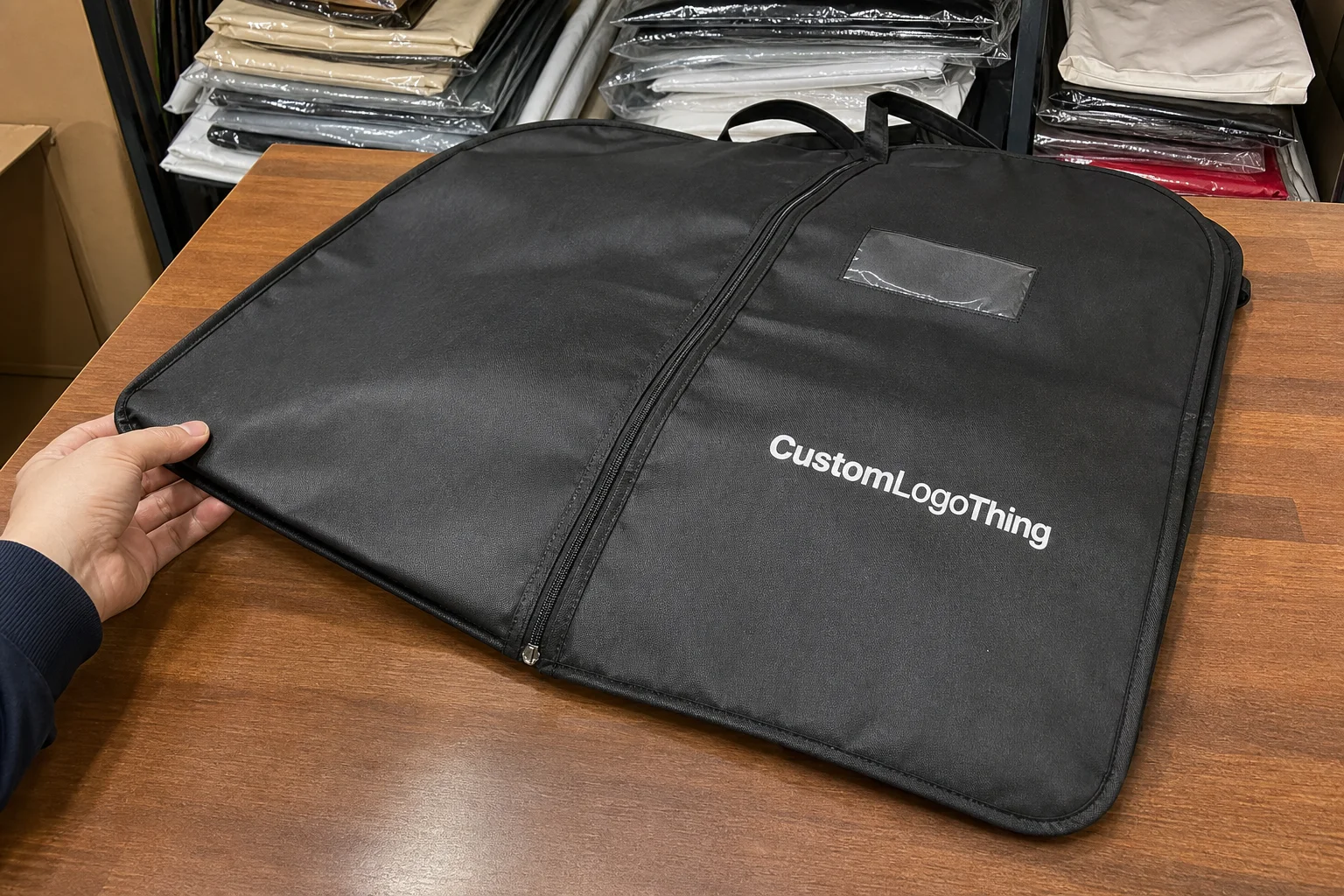
Gift sets often include more than one textile item. A robe and slippers, a jacket with a scarf, a uniform shirt with accessories, or a folded apparel bundle can all shift around in transit if the outer bag is too light. A thin bag may close, but it will not always hold its form, and that is where presentation starts to slip. A gift set heavy duty garment Bags Bulk Order solves that by adding structure at the point where the customer first judges value.
Heavier-gauge film, reinforced seams, and better closures do practical work. They reduce split corners when a packer slides in a bulky folded set. They resist tearing at the hanger opening. They also hold up better when cartons are stacked, dragged across a fulfillment table, or moved through a warehouse with mixed handling. For branded gift sets, that consistency is not cosmetic. It protects the contents and lowers the chance of repacking.
These bags are common across several buyer groups:
- Brands that want a cleaner retail presentation for apparel kits and seasonal gift sets.
- Corporate gifting teams that need the same packout quality across hundreds or thousands of units.
- Hotels and resorts that package robes, spa wear, and guest merchandise.
- Uniform programs that distribute coordinated garments by location or department.
- Promotional distributors that need predictable pack size and print consistency.
In practice, the heavy-duty part is not just thickness. A well-made bag distributes load across the seams, keeps the hanger opening from stretching, and closes cleanly without forcing the garment into an awkward fold. That is what separates a bag that merely exists from one that actually supports the product inside it.
Presentation also changes behavior on the receiving end. A tidy, clearly sized bag speeds unpacking, reduces handling mistakes, and gives the product a more finished look even before any branding is noticed. In apparel gifting, that first impression matters as much as the item count inside the set.
Material and construction details that affect performance
Most buyers narrow the choice to three broad material paths. LDPE is popular because it is flexible, clear enough for presentation, and easy to convert into different gauges. HDPE is stiffer and can feel crisper, but it may be less forgiving around bulky folds. Reinforced or laminated film blends sit higher on the performance ladder and can improve tear resistance and dimensional stability for larger gift sets.
The right choice depends on how the garment is packed. If the set is folded flat and displayed on a retail fixture, clarity and a smooth finish may matter most. If the set is shipped to multiple sites or stacked in cartons, a tougher, less stretchy construction usually makes more sense. For some programs, a semi-clear finish is ideal because staff can identify the contents quickly without sacrificing too much presentation. Full clarity works well for merchandise that benefits from being seen immediately. Opaque or frosted options are useful if the buyer wants a more controlled, uniform look.
Construction details matter just as much as resin choice. Look at these features closely:
- Gussets for extra depth when the gift set includes bulkier garments or accessories.
- Reinforced top edges to reduce stretching around the hanger area.
- Zipper or slider closures for repeated opening and closing.
- Punch holes or hanger openings that match the display or packing method.
- Bottom seals that stay flat and do not bow under weight.
Printing should stay practical. A one-color logo, size callout, care note, or SKU marking is often enough. Flexographic printing is common for repeat production because it handles simple branding efficiently and keeps registration predictable on larger runs. If the logo is too crowded or the print area is oversized, the result can be harder to read and more expensive than it needs to be.
Thicker film does not automatically equal better packaging. If the dimensions are off by even a small margin, a heavy bag can crease the garment, push at the seal, or slow packout. A well-chosen film with clean seals and proper sizing usually performs better than an oversized gauge that was never matched to the actual contents.
Size, gauge, closure, and print specifications to confirm before ordering
Before any gift set heavy duty garment Bags Bulk Order goes to production, the buyer should lock down the basics. Width, length, gusset depth, thickness, closure type, and print location all shape how the finished bag performs. A vague spec sheet creates avoidable rework. A precise one shortens approval time and improves the chance that the first run will actually fit the product.
Start with the garment itself, not the nominal product category. A folded robe, a hanging blazer, and a two-piece apparel set do not need the same dimensions. Measure the finished packout with the item folded or hung exactly as it will be packed. Add room for seam allowance, closure hardware, and a small amount of movement. If the bag hugs the contents too tightly, the surface can wrinkle and the closure may strain.
For most buyers, the key specifications are:
- Bag width and length based on the actual packout size.
- Gusset depth if the set has volume or layered pieces.
- Gauge or micron thickness matched to handling demands.
- Closure style such as zipper, slider, or open-top.
- Print area and color count for logo or product information.
Printing details deserve the same attention. A logo can look centered in artwork and still land too close to a seam on the finished bag. If a barcode, size code, or care instruction must appear on the package, confirm that the print panel can fit all of it without clutter. For programs with multiple SKUs, buyers should also ask whether the same construction can carry different print versions without changing the base bag spec.
| Option | Typical use | Relative cost | Performance notes |
|---|---|---|---|
| 2 to 3 mil LDPE, plain or lightly printed | Light apparel sets, soft presentation needs | $0.14 to $0.24 per unit at 5,000 pieces | Flexible, clear, economical, but not ideal for heavier folds |
| 3 to 4 mil LDPE with gusset | Robes, shirts, mixed gift sets, retail packaging | $0.20 to $0.34 per unit at 5,000 pieces | Better structure and packout stability, good balance of cost and strength |
| 4 to 6 mil reinforced blend with closure | Premium kits, transit-heavy orders, larger uniform bundles | $0.28 to $0.48 per unit at 5,000 pieces | Higher tear resistance, stronger seams, and better dimensional hold |
Those numbers move with size, artwork coverage, and order volume, but they give a realistic starting point. If a supplier cannot explain the tolerance range on width and length, or refuses to sample with the actual folded set, that is a signal to slow down. Packaging that is meant to protect a gift should not be approved on guesswork.
For many programs, the practical target is not the thickest film available. It is the film that protects the contents, prints cleanly, and packs quickly without causing back-end problems. The best spec is the one that matches the distribution route as much as the product itself.
Gift set heavy duty garment bags bulk order pricing and quote factors
Pricing for a gift set heavy duty garment Bags Bulk Order usually comes down to a few very specific levers: film grade, thickness, bag size, closure style, print coverage, packing format, and total quantity. Buyers sometimes focus only on unit price, but the quote is usually a stack of decisions, not a single number. A larger run can reduce the cost per piece, yet custom dimensions or extra print colors can lift the price quickly.
Minimum order quantity is often tied to setup. If a bag needs a new cutting tool, a new print plate, or a custom closure component, the producer has to spread that preparation across the run. That is why stock dimensions are often cheaper to start, while fully custom sizes carry a higher threshold. In some cases, mixed sizes are possible, but only if the production line can convert without excessive downtime. Ask that question early.
For buyers comparing suppliers, a line-item quote is the cleanest way to judge value. It should separate:
- Tooling or setup
- Printing and plates
- Sampling or proofing
- Unit packaging and carton packing
- Freight or delivery terms
That structure matters because two quotes with the same unit price can have very different total costs once sampling, freight, and carton configuration are added. If the bags are going into a distribution program, ask about pallet pattern and carton counts as well. A well-packed carton saves space, reduces damage, and makes receiving easier for the client.
Value is not the same as the lowest quote. The best outcome usually comes from matching the spec to the job. If the set is hand-delivered at a conference, a lighter film may be enough. If the bags will be stored, stacked, and shipped multiple times, a heavier construction often pays for itself by reducing scrap and complaints.
It helps to treat price as a function of performance, not a separate decision. A slightly higher unit cost can be justified if it cuts repacks, returns, or damaged presentation on arrival. On the other hand, overspecifying a bag for a short local distribution can waste budget that would be better spent on branding or carton protection.
For reference, standards and testing resources can help frame the conversation. The ISTA testing methods are useful for transit validation, while the Packaging School and similar industry resources help teams think more clearly about material selection, packout, and damage prevention. If your cartons also need paper components, FSC-certified board can support a cleaner sustainability story without changing the bag spec itself.
For a buyer managing a recurring program, the most useful quote is the one that shows where the money goes. That allows an honest tradeoff between appearance, handling strength, and budget, instead of pushing every decision into one vague unit number.
Process and timeline from sample approval to bulk production
The buying flow should stay straightforward. A solid supplier will usually move through inquiry, specification review, artwork check, sample or proof approval, production, inspection, and shipment. If any of those steps are skipped, the order may still ship, but the chance of a mismatch goes up. For a gift bag, Fit and Finish are too visible to leave open.
The fastest way to move an order is to send complete information up front. That means exact dimensions, quantity, closure preference, artwork files in a usable format, delivery destination, and the final packing method. If the project needs a special carton count or pallet height, include that too. Every missing detail can add a round of back-and-forth that pushes approval out by several days.
Lead time depends on the order type. Standard constructions with simple one-color branding may be ready faster, often around 10 to 15 business days after proof approval, depending on factory load and material availability. Custom sizes, heavier gauges, or multiple print colors usually need more time, and 15 to 25 business days is a more realistic planning range. Freight adds its own clock, especially if the order is moving by ocean rather than domestic truck.
If presentation is critical, request a pre-production sample. A digital proof can confirm artwork placement, but it cannot tell you how the bag behaves around a folded jacket or a multi-piece set. A sample can. That is especially useful for programs with branded Holiday Gift Boxes, uniform rolls, or items that have awkward fold lines.
Some teams underestimate the time needed for artwork sign-off. Even simple logos can require a second review once scale, placement, and readability are shown on the actual bag size. Building one extra approval window into the schedule is often enough to keep the launch on track.
The most disciplined teams also connect the bag to the shipping method. If the cartons will face long transit or mixed warehousing, ask whether the pack should be checked against a transit test profile that reflects the real journey. That is a sensible way to tie packaging decisions to actual handling, not just artwork approval.
For recurring buyers, it also helps to keep the common purchase path documented through the Wholesale Programs page and to use the FAQ page for standard terms and ordering questions. That keeps routine requests from slowing down the people who are only trying to confirm size, Price, and Lead Time.
Quality checks that protect retail presentation and shipping consistency
Quality control on garment bags should be practical and visible. The first checks are simple: confirm dimensions, test the closure, and inspect the seams. If the bag is for a gift set, make sure the packed unit still looks orderly after closing. A bag can pass a dimensional spec and still look poor if the seal bows or the closure misaligns under load.
Good suppliers usually check for the defects that matter most:
- Pinholes that could allow dust or moisture intrusion.
- Weak seals that fail when the bag is lifted or stacked.
- Off-center print that makes branding look careless.
- Warped or sticky closures that slow packout.
- Gauge inconsistency that changes the feel from carton to carton.
Carton packing matters here too. If bags are tossed loosely into a box, they can crease before the buyer even sees them. Clean carton counts, protective poly bundling where needed, and a sensible pallet pattern all help preserve the finished look. That is especially true for retail programs that move through multiple warehouses before reaching a store shelf.
Quality control also protects speed downstream. Consistent bags are faster to pack, easier to scan, and less likely to trigger repacking or returns. That is the real cost of poor quality in a bulk program. It is not just a defect charge. It is the labor spent correcting something that should have been right the first time.
For higher-value gift sets, buyers sometimes ask for AQL-style inspection thresholds or a documented pre-shipment check. That level of control is not overkill when presentation is tied directly to the brand experience. The bag is still a package component, but it is also the first visible cue that the set was assembled with care.
Next steps to place a confident bulk order
Before requesting a quote, gather three things: the finished garment set dimensions, the desired quantity, and the branding details. If you already have an existing bag that works, send a sample or a flat photo with measurements. If you do not, describe the use case clearly, because retail display, storage, shipping, and uniform distribution do not call for the same spec.
It also helps to define the priority. Is the main goal presentation, transit protection, or low unit cost? A supplier can usually tune the bag toward one of those goals, but not all of them at once. If the order is tied to a seasonal launch or a corporate event, ask for a proof early and confirm the packing format before production starts.
The cleanest buying path is to compare two or three options, review the sample fit, and confirm carton packing before sign-off. That keeps the decision grounded in the actual use case, not a generic product description. If you are building out a repeating program, treat the first order as the reference standard so future runs stay consistent.
For teams evaluating a gift set heavy duty garment Bags Bulk Order, the smartest move is usually the most practical one: verify fit, confirm closure behavior, check the print, and make sure the carton spec matches the handling route before production begins.
That sequence sounds basic, but it is where most bulk packaging programs either stay controlled or drift into avoidable rework. The bag itself may be a small line item, yet its effect on opening perception is outsized. A solid spec, a clear proof, and a realistic lead time do more for the final result than a polished sales pitch ever will.
Frequently Asked Questions
What size should I choose for a gift set heavy duty garment bags bulk order?
Measure the finished garment set after it is folded or hung exactly as it will be packed, not just the individual item. Add room for seams, closure hardware, and a little movement so the bag does not stretch the contents or crease the fabric.
What material is best for heavy duty garment bags in bulk?
LDPE is a common choice because it stays flexible and presents well, while heavier-gauge films offer more tear resistance for larger or more heavily handled sets. The right material depends on whether the bag needs more clarity, more stiffness, or more protection in transit.
How does MOQ affect pricing on custom garment bags?
Lower quantities usually cost more per unit because setup, printing, and material preparation are spread across fewer pieces. Higher quantities generally improve pricing, especially if the size, closure, and print stay consistent across the full run.
Can I add a logo to gift set garment bags without raising the cost too much?
Yes. A simple one-color logo or limited print area is usually more economical than full coverage or multi-color graphics. Clean artwork and efficient placement help keep the bag branded without pushing the quote higher than needed.
What should I confirm before approving production for a bulk order?
Confirm the size, gauge, closure type, artwork placement, quantity, and approved proof or sample. Also verify lead time, freight details, and carton packing so the order arrives ready for fulfillment.


