Home Fragrance Embroidered Beanies: Material Thickness Guide — A beanie can look soft and simple on a product page, then behave completely differently at embroidery time. Knit structure, cuff density, yarn recovery, and seam placement all change how stitches sit. That is why the home fragrance embroidered Beanies Material Thickness guide matters: the blank determines whether the logo looks crisp, cramped, or distorted.
Why Home Fragrance Beanies Feel Bulkier Than They Look
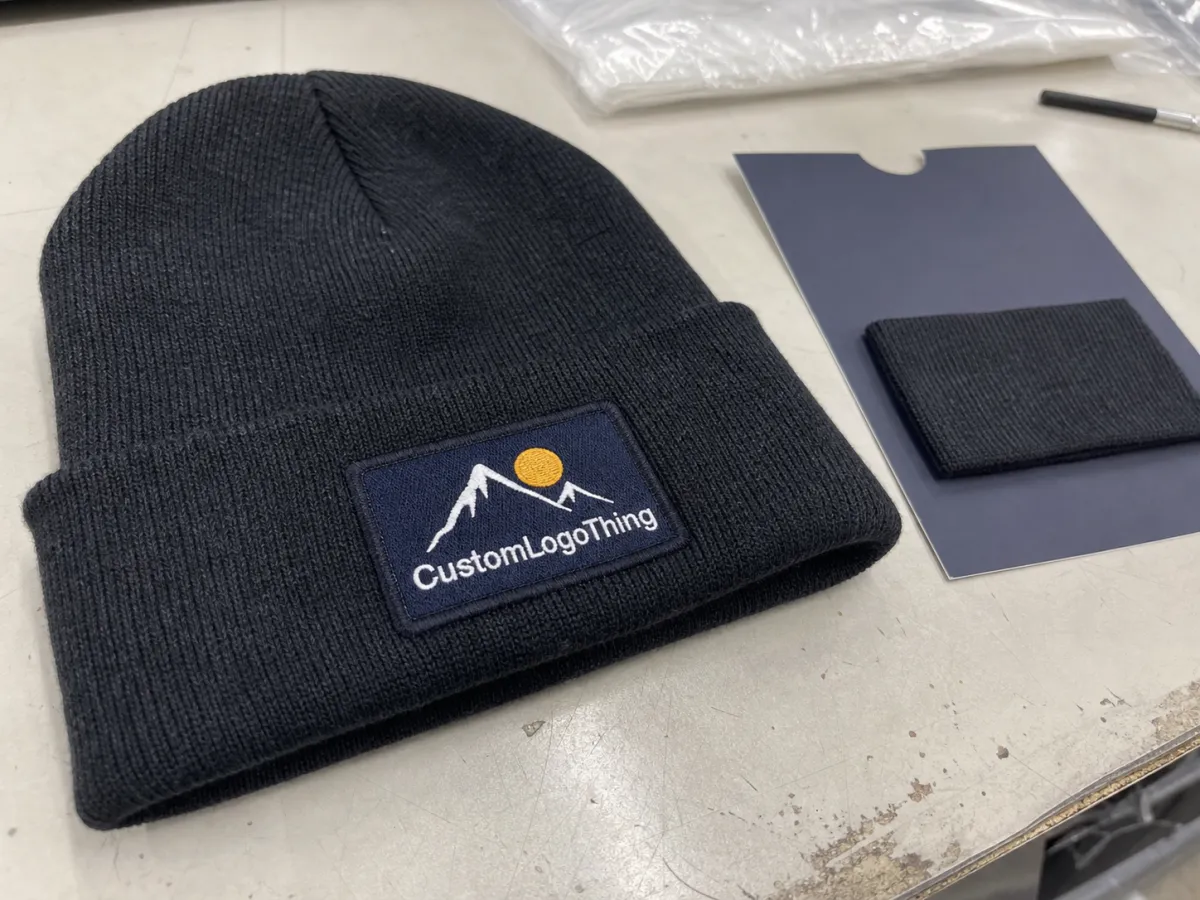
Most knit caps hide their real behavior until production starts. A beanie may seem light in the hand, but ribbing, yarn twist, and cuff depth can make it feel much denser once the needle starts punching through. The first stitch test usually tells the truth faster than any spec sheet.
For home fragrance brands, that matters because the merch has to feel calm, giftable, and clean. A beanie that sits too stiff or too puffy can break that mood. A beanie that is too soft can lose shape after a few wears. Neither outcome helps the product.
The logo placement also changes the visual weight. A 2.5-inch mark on a smooth mid-weight cuff can look balanced. Put the same art on a thicker, highly ribbed knit and the letters may dip into the texture, spread wider than expected, or pucker along the edges. Same artwork, different result.
Fine detail suffers first. Very small type, thin outlines, tiny icons, and serif fonts are the first things to disappear when the knit gets heavy. Below about 0.20 inch high, text gets risky on textured or chunky beanies unless the design is extremely simple. The embroidery machine can do a lot, but it cannot rescue artwork that was never built for knitwear.
That is the practical rule in the home fragrance embroidered Beanies Material Thickness guide: pick the blank for the embroidery result, not the other way around.
If the mockup needs a rescue mission, the knit is already telling you to simplify.
How Knit Density Changes Embroidery Results
Embroidery on knitwear is a controlled fight between thread, needle, and fabric. Knit density decides how hard that fight gets. Loose construction gives the needle more room to move, which increases fabric shift and distortion. Tight construction gives better control, but it can still swallow detail if the surface texture is busy or the ribbing is too pronounced.
Three factors do most of the work here: needle penetration, stitch tension, and stabilizer choice. A lighter acrylic beanie usually accepts smaller artwork and needs less backing. A mid-gauge blend sits in the middle and is often the safest choice for branded merch. A chunky knit can hold a bold logo well, but hooping and alignment need more care because the fabric wants to roll, stretch, or shift at the seams.
Surface texture changes the result even when the fabric weight sounds similar on paper. Two beanies can both be labeled “winter weight” and behave very differently if one uses a tighter twist or a denser stitch build. One may give a clean satin edge. The other may make the same stitch line look fuzzy and tired.
For this reason, simplified artwork usually performs better on thicker blanks. Strong shapes, wider letters, and fewer breaks hold up. Thin script fonts and crowded emblems do not age well on knitwear; they tend to look fine in a flat digital proof and then collapse into visual noise once the stitches settle.
- Lightweight acrylic: lower bulk, cleaner edges, easier for small logos and precise placement.
- Mid-gauge blends: balanced hand feel, decent stretch recovery, reliable for most retail programs.
- Chunky knits: strong visual presence, but they need bold art and careful control of distortion.
Seam placement matters too. A thick side seam can push the logo off center or tilt the cuff after wear. A sloppy seam can make the whole beanie sit crooked. That is not a tiny detail; it is the difference between a finished product and a piece that looks misaligned on arrival.
Key Material Factors That Change Hand Feel and Durability
Fiber content sets the starting point. Acrylic is common because it is predictable, cost-efficient, and generally easier to embroider cleanly. It is not luxurious, but it behaves. Wool feels warmer and more premium, though it can fuzz more, itch more, and create enough surface texture to blur tiny details. Cotton gives a smoother hand but less stretch recovery, so it is less forgiving if the logo pulls the knit out of shape. Blends usually land in the practical middle.
Gauge and yarn twist matter just as much as fiber content. A higher-gauge knit tends to feel finer and cleaner. A lower-gauge knit feels heavier and more casual. Neither is inherently better. What matters is how the knit supports the embroidery. If the surface is too soft or too springy, the stitches can sink or spread. If the fabric is too tight, the machine may leave puckering around dense areas.
Durability is where the tradeoff gets real. Thicker does not automatically mean better. A heavy knit can trap heat more than intended, lose shape after repeated wear, or start pilling around dense stitching. A better blank has enough thickness to hold the design, enough recovery to spring back after stretch, and enough softness that people actually want to wear it.
For home fragrance brands, comfort matters because the beanie often sits in a candle set, a seasonal gift box, or a retail bundle. If it looks nice but feels scratchy, it becomes a sample that never leaves the drawer.
Packaging specs belong in the conversation early too. If the sample ships in corrugated cardboard with a tidy kraft paper sleeve, that is one thing. If the project needs FSC certified board, recycled materials, or a claim tied to post-consumer waste, write it down before sampling starts. Biodegradable packaging sounds good, but the claim still has to match the actual materials. A crushed box does not care how well the copy sounds.
The takeaway from the home fragrance embroidered Beanies Material Thickness guide: compare fiber, gauge, and recovery together. A blank that looks premium in a swatch deck may still be wrong for embroidery if the knit surface moves too much.
Cost, Pricing, and MOQ Tradeoffs for Thicker Beanies
Heavier blanks raise cost before decoration even starts. More yarn means more material. Denser construction takes more time on the knitting line. Extra finishing work adds a little more on top. None of that is mysterious, but it still surprises buyers who compare only the decoration quote and ignore the garment.
MOQ changes the math quickly. A 300-piece order spreads digitizing, setup, and sample handling across fewer units, so the per-piece number stays high. At 1,000 to 5,000 pieces, the same setup cost is easier to absorb. The baseline still depends on the blank, though. A chunky wool blend and a lightweight acrylic do not live in the same price universe.
Very rough landed pricing, assuming one logo placement and ordinary stitch counts, often falls around the ranges below:
| Material build | Typical blank cost | Embroidery behavior | Best fit |
|---|---|---|---|
| Lightweight acrylic | $1.10-$2.00 | Clean edge, lower bulk, easier for small art | Promo programs, simple retail basics |
| Mid-gauge acrylic blend | $1.60-$3.20 | Balanced softness and control, usually the safest choice | Most branded merch and seasonal gift sets |
| Wool blend | $2.80-$4.90 | Premium hand feel, more texture risk, better for bold art | Higher-end retail and winter capsules |
| Chunky fashion knit | $2.50-$5.50 | Strong visual presence, higher distortion risk | Statement merch and oversized logos |
At 500 to 1,000 pieces, finished embroidered pricing often lands around $2.80-$4.75 for lightweight acrylic, $3.40-$5.90 for mid-gauge blends, and $4.75-$8.25 for wool-heavy or chunky builds. That assumes a modest stitch count and one placement. Add dense lettering, multiple colors, oversized art, or a second location, and the number climbs quickly.
Hidden costs are usually the ones that cause friction. Sample fees often run $30-$75. Digitizing commonly sits around $25-$60. Rush orders can add 15% to 30%. If the knit is loose and needs extra backing, that cost is small on paper and annoying in aggregate. The real problem is usually not the fee itself. It is the surprise.
Process and Turnaround: From Spec Sheet to Approved Sample
A clean order follows a clean sequence. Artwork review comes first. Then blank selection. Then digitizing. Then the sample. Then approval. Then production. Then inspection. If a supplier starts swapping materials or guessing at placements before the sample is approved, the project usually pays for it later in delays or rework.
Material changes are the most common cause of schedule drift. A buyer asks for “something thicker,” the factory changes the blank, and the digitized file no longer behaves the same way on the new knit. The logo file may be fine; the substrate changed under it.
Simple beanie orders can move in about 10-15 business days after proof approval. Thicker knits, multiple placements, custom colors, or heavier stitch counts often need 15-25 business days. If the sample needs revision, add more time. If the knit changes after approval, add more time again.
Ask for three things before locking the order:
- A written spec sheet with blank type, knit weight, stitch count, and placement size.
- A photo proof or sewn sample on the actual knit, not a generic cap mockup.
- A production window and a shipping window in writing, so nobody has to interpret “soon” later.
Quality control needs a real checklist, not vague reassurance. Inspect the embroidery for tension, coverage, and edge clarity. Check whether the cuff twists after sewing. Feel the inside backing for scratchiness. Stretch the fabric once and let it recover. If the logo opens up or puckers after release, that issue is not going away on its own.
Packaging should be judged the same way. A beanie in a soft bag may be fine for a sales sample. Retail kits and PR sets usually need something more controlled, like a corrugated cardboard mailer with a kraft paper insert or recycled sleeve. If the product is part of a sustainability claim, make the packaging language specific enough to survive supplier review. [FSC](https://www.fsc.org/) certified board and [ISTA](https://www.ista.org/) style transit testing are relevant references if the carton will move through multiple touches before it reaches the buyer.
That is why the home fragrance Embroidered Beanies Material thickness guide belongs next to the spec sheet. It keeps the material, decoration, and packout decisions in one place instead of scattered across email threads and half-remembered notes.
Common Mistakes That Waste Time and Money
The first mistake is choosing a thick knit because it feels premium in the hand. Sometimes it is premium. Sometimes it is just bulky. If the surface texture is too loud, the logo gets swallowed. The beanie may feel substantial, but the mark looks smaller and less intentional.
The second mistake is bad art sizing. Tiny type, thin outlines, and gradients do not translate well onto knitwear. Embroidery is not print. It has physical height, thread direction, and tension. If the design needs a magnifier in the proof, the fabric will not make it readable.
The third mistake is skipping the fabric test. Stretch and recovery can distort the logo after first wear, and sometimes after the first wash. If the cuff loosens and the embroidery puckers, customers notice immediately.
The fourth mistake is comparing quotes that are not actually the same product. A 3,500-stitch single-color logo on a mid-gauge acrylic beanie is not comparable to a 7,800-stitch multicolor badge on a wool blend. A 300-piece MOQ is not comparable to a 3,000-piece MOQ. Yet these numbers get lined up as if they should mean the same thing. They do not.
The practical fix is straightforward:
- Lock the blank material before asking for pricing.
- Set the logo width and stitch count before sampling.
- Keep the placement identical across every quote.
- Review the inside backing, seam behavior, and recovery before approval.
The home fragrance Embroidered Beanies Material Thickness guide saves time because it removes fake comparisons. Same knit. Same artwork. Same MOQ. That is the only way the numbers mean anything.
Material Thickness Guide: What to Ask For
Start with the logo area you actually have. Measure the cuff or front panel. Do not guess. A clean 2.75-inch mark is often easier to place than a crowded 3.5-inch design that tries to use every millimeter of available space. If the artwork includes small type, simplify it before sampling. That is cheaper than discovering too late that the design was overbuilt for the knit.
Then ask for two or three material options side by side. Compare thickness, stretch, recovery, and unit cost together. A mid-gauge acrylic blend may outperform a chunkier blank if the embroidery is cleaner and the hand feel is still good. A wool blend can justify the extra cost if the brand is aiming at a premium winter gift set or a limited retail capsule. Choose on purpose, not by accident.
Sample under the light your buyers actually use. Retail buyers inspect differently than design teams do. So do merch managers. So do customers standing near candles, diffusers, and shelf displays. If the beanie is part of a home fragrance gift bundle, presentation has to hold up at arm’s length and under store lighting.
Use this simple filter before you approve anything:
- Keep the logo bold enough to survive knit texture.
- Use simpler artwork if the blank is dense or heavily ribbed.
- Write down the exact blank, backing, stitch count, and placement before production.
That is the heart of the home fragrance embroidered beanies material thickness guide: match the knit to the logo, not the other way around. Once the blank supports the embroidery, the rest of the decision gets easier.
FAQ
What beanie thickness works best for a home fragrance embroidered logo?
Mid-weight acrylic or a mid-gauge blend usually gives the cleanest result. The knit has enough body to support embroidery without making the beanie feel bulky. Heavier knits work better for bold logos and winter-focused merch.
Does a thicker embroidered beanie always look higher quality?
No. Thick can feel premium, but it can also make stitches sink into the knit and distort small details. A cleaner mid-weight beanie often looks better than a chunky one with a crowded logo.
How does material thickness affect pricing and MOQ?
Heavier materials usually raise the blank cost, which increases the finished price before decoration is added. Lower MOQs also raise unit cost because setup, digitizing, and sample fees are spread across fewer pieces.
What should I check on a sample before ordering embroidered beanies?
Check logo clarity, stitch density, backing comfort, and whether the knit stretches out after embroidery. Inspect the seam, the cuff shape, and the edge behavior around the design. A quick stretch-and-release test reveals more than a polished photo ever will.
How do I keep every quote comparable?
Use the home fragrance embroidered beanies material thickness guide to lock the knit, logo size, stitch count, backing, and packaging before asking for quotes. If every supplier is pricing the same build, the numbers finally mean something useful.


