If you are sourcing a hotel bulk knit Beanies Bulk Order, start with the unglamorous question: will people actually wear it after the first handoff? A beanie that survives the commute, the ski line, the valets' cold shift, and a week of bag stuffing is doing real work. A cheap winter giveaway that looks fine in a proof and never leaves a drawer is not.
That difference matters more in hospitality than in most promo categories. Hotels, resorts, and lodge properties need items that can sit at a front desk, move through staff rotations, and still hold up as a retail add-on if the design lands well. Warmth is only the first requirement. Fit, hand feel, decoration quality, and reordering consistency decide whether the item becomes useful inventory or a seasonal headache.
“The beanie that gets worn is cheaper than the beanie that gets replaced.”
That is the useful lens for buying. Treat the piece like part apparel, part inventory SKU, not like a novelty handout. Once you think that way, the spec gets clearer, the QC list gets shorter, and the landed cost is easier to defend.
Why hotel bulk knit beanies bulk order beats cheap winter giveaways
Knit beanies make sense because they solve a real seasonal problem. Guests get cold. Staff gets cold. A winter property can burn through beanies faster than most buyers expect, especially during peak check-in hours and ski weekends. If the item is comfortable enough to keep on, the logo keeps working after the stay ends.
That is the part many low-cost giveaways miss. A plastic trinket gets ignored. A novelty cap gets left behind. A decent beanie ends up in a car, a gear bag, or a coat pocket and becomes part of the rotation. In practice, that is a better marketing return than most small-format promos because the use case is frequent and visible, not decorative.
Think of the beanie as a mobile uniform layer. The comparison is closer to staff apparel than to souvenir merch. That is why hotels use them for guest welcome kits, employee winter uniforms, gift shop stock, and event gifts tied to cold-weather travel. The same item can do all four jobs if the spec is disciplined.
One more advantage: beanies are forgiving on sizing, but only if the knit is right. A one-size stretch hat covers most adults without the fit failures that come with structured caps. There is no snapback to adjust and no brim geometry to fight. The tradeoff is that knit quality matters more. A sloppy rib, weak crown, or scratchy yarn shows immediately.
For a hotel Bulk Knit Beanies bulk order, the goal is repeatable value. Not trend chasing. Not overdesigned branding. Just a winter item that photographs well, feels decent in hand, and can be reordered without reinventing the whole thing.
Choose the right knit, cuff, and fit for hospitality use
The yarn choice sets the whole tone. Acrylic is still the most common starting point because it is warm, color-friendly, and typically the lowest-cost route. It also dries faster than wool, which matters when beanies are used by staff, stored in lockers, or packed into amenity kits. Recycled acrylic works when the property wants a cleaner sourcing story without moving into premium wool pricing. Wool blends feel more substantial and often look better in a retail setting, but they can raise cost and care requirements.
Blend ratio matters more than buyers sometimes expect. A lighter acrylic content can lower cost, while a wool-heavy mix usually improves warmth and hand feel. The compromise is maintenance: wool can itch more, pill more, and demand a more careful care note. For hotels, that can be a problem if the beanie is likely to be tossed into a duffel bag and used hard.
Gauge and construction are just as important as fiber. A 7-gauge or 9-gauge knit feels winter-weight and reads as practical. A 12-gauge knit is smoother and a bit more retail-ready, but it can feel less rugged. If the beanie is meant for staff who will wear it outdoors for hours, a medium-heavy knit usually holds up better than a fashion-forward light knit that looks good only in a photo.
Style changes how the whole piece is read. A cuffed beanie gives the cleanest branding zone and the most familiar hospitality look. An uncuffed or fisherman style can feel more contemporary, but it leaves less room for decoration. Ribbed knits stretch well and sit neatly on most heads. Slouch styles can work for lifestyle retail, though they are less dependable for uniform programs where a tidy appearance matters.
Fit is not a small detail. A beanie that rides too high, pinches the forehead, or itches after ten minutes will be left behind, and then your logo is invisible for the wrong reason. For most hotel programs, the target is a one-size fit that comfortably covers roughly a 20-24 inch head circumference. If the beanie will be used by both staff and guests, crown depth and stretch recovery matter more than trend language.
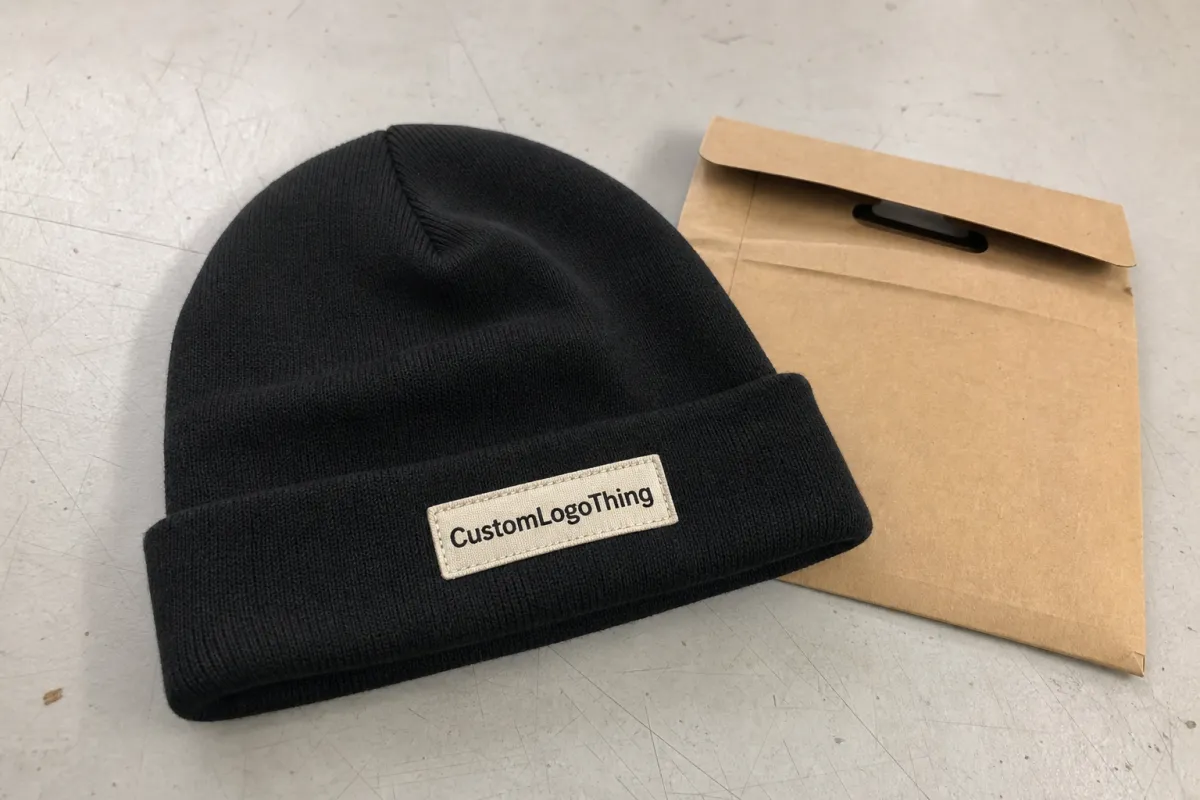
Decoration should match the knit, not fight it. Embroidery works best on stable cuffed beanies with simple logos and enough stitch density to hold shape. Woven labels are cleaner for small marks and subdued branding. Patches handle more detail and give the piece a more retail feel. Sewn-on badges can be useful when the hotel wants a premium look without thick stitching on top of a loose knit.
There is a practical limit here. Very small logos can blur once they are stitched into knit fabric, especially on a loose or fluffy yarn. If the brand mark depends on fine detail, a patch or woven label usually performs better than embroidery. That is one of those small production truths that saves buyers from a lot of disappointment.
Color choices should be made with real use in mind. Neutral shades like black, navy, heather gray, and dark green are easy to issue to staff and still look retail-safe. Branded colors make sense if the property wants the beanie to feel like a true merchandise item. A contrast cuff can help the logo stand out without turning the hat into a billboard.
Specs to lock before production starts
Most problems start with vague specs, not bad factories. For a hotel bulk knit Beanies Bulk Order, the quote should be tied to a written spec sheet or approved sample. Do not rely on a screenshot and a hopeful email chain. The supplier needs the same details you do, or the run will drift.
Lock the basics first: yarn composition, knit gauge, finished width, crown height, cuff depth, and the intended fit. If the beanie is custom knit, ask for finished measurements in both relaxed and stretched states. That matters because a beanie that looks generous in a mockup can feel shallow in actual production. Cuff size also changes where the decoration lands, which affects visibility more than many buyers realize.
Artwork needs the same discipline. Confirm logo dimensions, stitch count if it is embroidered, patch dimensions if it is appliqued, and exact placement. A logo centered on the cuff is not the same as a logo placed on the body of the hat. The difference shows up in how the finished piece drapes and how much clean space the factory has to work with.
Color matching deserves caution. Yarn matching is approximate, not exact. PMS references help, but knit fiber has texture, sheen, and dye variation that can shift the look once it is produced. If brand color precision matters, ask for a physical sample or a yarn strike-off before approving the full run. That is the cheapest place to catch a mismatch.
Packaging should be decided early. For hospitality use, the common options are individual polybags, size stickers, barcode labels, belly bands, or bulk carton packing. If the beanies will be sold in a gift shop, retail-ready presentation makes sense. If they are for staff distribution or welcome kits, bulk packing is usually the better cost choice. The packaging decision can change both the labor count and the freight cube, so it is not cosmetic.
Sample approval is the cheapest risk check in the whole order. Verify color, stretch, logo clarity, placement, seam behavior, and hand feel before the full run starts. If the sample feels scratchy or the logo sits too close to a seam, fix it there. Once production is underway, every correction costs more time and more money.
For recycled yarn claims or paper packaging inserts, ask for the documents, not just the promise. FSC paperwork is the standard reference if paper components need a credible sourcing claim: FSC. Shipping durability is another place where buyers sometimes get surprised, especially if cartons travel through multiple handoffs. If that is part of the program, it helps to discuss carton testing expectations early rather than after a crushed shipment arrives.
Pricing, MOQ, and unit cost by order size
Price changes for a handful of reasons, and none of them are mysterious. Yarn type, stitch density, decoration method, number of colors, packaging, and setup labor all move the number. A simple cuffed acrylic beanie with a small embroidered logo will almost always cost less than a wool blend with a woven patch, a custom hangtag, and individual retail packaging. That is just production math.
For a hotel bulk knit Beanies Bulk Order, MOQ depends on how custom the piece is. Standard decorated runs often start around 100-300 units. Better unit pricing usually begins to show at 500 units and up. Fully custom knit patterns can push the threshold higher because the factory has more setup work, more color handling, and more risk if the run is short. Lower quantity is possible in some cases, but the unit price climbs quickly.
The useful way to compare quotes is by tier, not by wishful thinking. A 250-piece pilot run can make sense if you are testing a new property logo or checking guest reaction at a single location. A mid-size order often gives the best balance between flexibility and cost control. Larger multi-property runs usually bring the strongest unit economics and make reordering simpler because the setup costs have already been absorbed.
| Option | Typical unit cost | Best use | Tradeoff |
|---|---|---|---|
| Blank stock acrylic beanie | $4.50-$7.50 | Fast guest giveaways, simple staff use | Less brand control |
| Cuffed acrylic with embroidery | $6.50-$10.50 | Most hotel programs, front desk resale | Logo detail is limited by stitch count |
| Recycled acrylic with woven label or patch | $7.50-$12.50 | Eco-leaning properties, premium amenity kits | Slightly higher setup and decoration cost |
| Wool blend or heavier knit with patch | $9.50-$15.00 | Upscale retail, ski resorts, colder markets | Higher MOQ pressure and care sensitivity |
Do not stop at the unit cost. Landed cost is the real number. That includes setup charges, samples, packaging, freight, any rush fee, and the cost of fixing mistakes. A lower quote can become the more expensive buy if the decoration is weak or the shipment lands late. The cheapest beanie is not cheap if you cannot hand it out on time.
Ask every supplier to quote the same spec: same yarn, same decoration, same packaging, same ship-to address, same delivery window. Otherwise you are comparing different products and pretending the numbers mean the same thing. That is where a lot of procurement conversations get muddy.
Process and timeline for a smooth bulk order
The cleanest order path is simple: brief, quote, artwork proof, sample or mockup, approval, production, quality check, packing, and shipping. If any step is fuzzy, delays start to stack up. Sometimes the factory is the bottleneck. Just as often, the delay is a missing logo file or a three-person approval chain that cannot settle on one decision.
Lead time depends on the style. Blank stock beanies can move in roughly 5-10 business days after proof approval if inventory is ready. Standard embroidered or patched beanies often land in the 12-20 business day range. Fully custom knit patterns usually need 20-30 business days, sometimes longer during peak winter demand. If the order is tied to a conference, opening weekend, or holiday rollout, build in a buffer. Winter freight congestion is a real thing.
Rush orders are possible, but they usually cost more and leave less room for corrections. If the deadline is tight, simplify the decoration, keep the color count low, and approve the proof quickly. Every revision round takes time away from production. That is not theory; it is scheduling arithmetic.
One practical move saves a lot of friction: assign one decision-maker. Multiple reviewers can help early, but the final signoff should come from one person with authority to approve. Three conflicting notes are not collaboration. They are a delay wearing a friendly face.
The approval checklist should stay short and explicit:
- Confirm quantity, style, delivery address, and target date.
- Send vector artwork or the cleanest available logo file.
- Approve the digital proof or physical sample.
- Lock packaging, carton count, and labeling requirements.
- Sign off on the final spec sheet before production starts.
Quality control should not stop at the visual check. Pull on the knit to confirm stretch recovery. Inspect the stitching around the cuff and crown. Check logo placement on multiple units, not just one. Look for color consistency across the run and loose threads that might show up in guest-facing use. For hospitality buyers, a small defect rate still matters because the product is often handed over in person.
There is one more constraint that usually shows up late: dye lot variation. Even within the same color family, different production batches can shift slightly. If your order is split across time or across properties, keep that in mind. The second run should be matched against the first sample, not against the memory of the first order.
What makes these beanies easy to reorder for hotels
Reorders are easy only when the original spec was disciplined. Same yarn code. Same logo placement. Same patch size. Same cuff depth. Same packaging format. That consistency saves time and keeps the second order from drifting away from the first one. Busy hospitality teams do not need to relearn the product every season.
That is where a hotel bulk knit Beanies Bulk Order model pays off. The spec can stay on file, the artwork does not need to be rebuilt, and the quote cycle gets shorter. It also helps when one property group manages multiple locations. A single core style can hold a location-specific color or badge without turning the whole program into custom work.
Buyers usually care less about trend language than they do about measurable outcomes: fewer defects, fewer complaints about itch, fewer size problems, and fewer late deliveries. That is fair. A beanie is not supposed to be the star of the show. It is supposed to show up, do its job, and disappear into use.
There is also a margin story here for retail programs. When the landed cost is controlled, front-desk resale becomes easier to price. Random stock hats do not give that visibility. They create inventory questions, inconsistent margin, and awkward restocks. A repeatable bulk spec does the opposite.
The easiest reorders happen when the first order was documented well. Keep the spec file, the approved sample photos, the decoration placement, and the packing method together. That sort of dull housekeeping saves money later, which is exactly why experienced buyers care about it.
Next steps to get a quote, sample, and delivery date
The fastest quote comes from four things: quantity, style, logo file, and target in-hands date. If you know the property tier, color palette, and decoration preference, include those too. A vague request for winter hats invites a vague answer. A tight brief gets you a usable number.
If the order depends on exact color match, decoration scale, or retail presentation, ask for a sample or a detailed mockup before production. For a hotel bulk knit beanies bulk order, the difference between a decent piece and a strong one is usually in those small decisions: cuff proportion, logo size, placement, and yarn texture. Those details change how intentional the item feels.
Ask every supplier to spell out the same lines: unit cost, setup fees, MOQ, production lead time, sample timing, shipping method, and any charge for split shipments. A quote that hides those items is not a better deal. It is a later problem with cleaner formatting.
If the deadline is fixed, give the hard date, not the soft one. “Around Thanksgiving” and “must arrive by November 18” are not the same instruction. One encourages optimism. The other gives the production schedule something real to work around.
For recurring hospitality programs, the best results come from keeping the spec tight and the review cycle short. The beanie should not need a new strategy every season. It needs a stable fit, a decoration method that matches the knit, and a delivery window that holds under pressure. That is the useful version of a winter merchandise program.
What is the MOQ for a hotel knit beanie bulk order?
MOQ depends on yarn, decoration method, and whether the beanie is stock or custom knit. Simple decorated stock items can start lower, while custom knit styles usually begin in the low hundreds and price better as the count moves up. The cleanest quote comes from sending quantity, color count, and delivery date together.
Can you add a hotel logo to bulk knit beanies?
Yes. Most hotel orders use embroidery, woven labels, patches, or sewn-on badges. The right method depends on the yarn, logo detail, and the look the property wants. Simple logos usually reproduce better and cost less than highly detailed artwork, especially on loose knit fabric.
How long does a knit beanie bulk order usually take?
Timeline depends on sample approval, production volume, and decoration type. Blank stock orders move faster than fully custom knit or embroidered runs. A realistic planning window is about 5-10 business days for ready stock, 12-20 business days for standard decorated runs, and 20-30 business days for custom knit orders, with peak season sometimes adding more time.
Which material is best for hotel guest giveaways?
Acrylic is the most common value option because it is warm, durable, and cost-effective. Recycled acrylic or wool blends can make sense when the property wants a more premium feel. The best choice depends on budget, climate, and whether the beanie is for guests, staff, or retail.
Can one bulk order be split across colors or sizes?
Sometimes, but split colors or mixed specs can change MOQ and unit pricing. The more variations you add, the harder it is to keep production efficient. If you need multiple colors, ask for a quote that breaks down each option clearly so the landed cost stays visible.