Buying a cuffed beanie for a hotel looks straightforward until the sample arrives. The knit is slightly too shallow, the cuff rolls on itself, or the logo lands where the fold swallows half of it. That is why the hotel premium cuffed Beanies Sample Checklist matters. It is less about paperwork than protection: protection against a bulk order that looks polished in renderings and ordinary in hand.
Hospitality merch has a narrow window for success. Guests notice texture immediately, but they also notice restraint. A premium beanie does not need loud decoration or oversized branding. It needs the right yarn, a clean silhouette, and a cuff that behaves predictably after being worn, packed, and worn again. Photos show intention. The sample shows reality.
A sample is not a miniature promise. It is the first real version of what you may ship in bulk.
What the hotel premium cuffed beanies sample checklist needs to catch
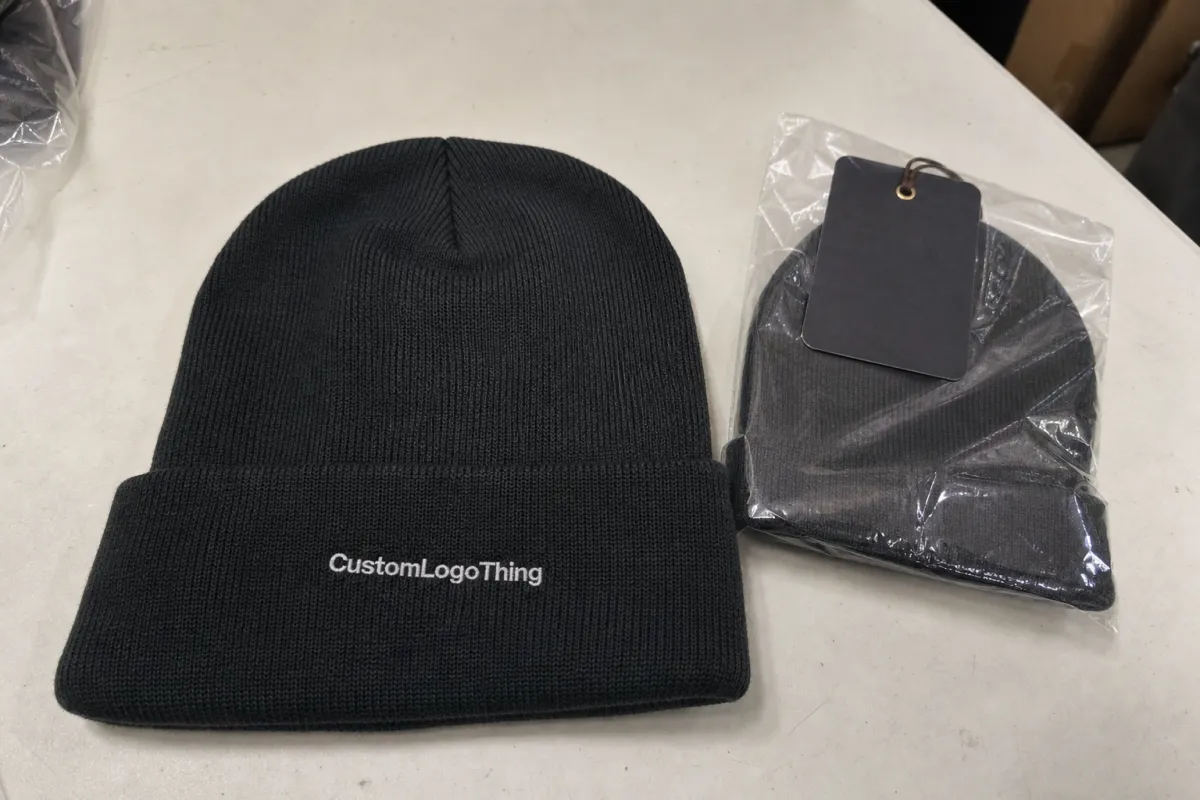
The first job of the hotel Premium Cuffed Beanies Sample Checklist is to surface errors that are invisible on a screen. Knitwear is sensitive to small shifts. A slight change in rib tension can make the cuff feel loose. A crown that sits a little too tall can make the hat look budget. Even a one-centimeter difference in depth can change the silhouette enough to move it from refined to awkward.
That matters more in hospitality than in many other categories because the beanie is part of a guest experience. It may sit in a welcome kit, hang in a retail display, or be handed to staff as winter uniform gear. The sample has to hold up to touch, movement, and comparison. People may not know why one beanie feels better than another, but they know it instantly.
Check the hand feel first. Premium usually means a smoother face, less scratchiness, and enough stretch recovery to keep shape after repeated wear. Then inspect the cuff. Fold it twice. Unfold it. Fold it again. If the edge twists, waves, or collapses, that weakness will show in bulk. A clean sample should look calm, not strained.
- Hand feel: soft enough for extended wear, without a slick synthetic feel.
- Stretch recovery: should return close to original shape after pulling.
- Cuff stability: should hold its fold without rolling or warping.
- Silhouette: should sit close to the head, not balloon at the crown.
- Brand placement: should still read clearly when the cuff shifts slightly.
Photos help with direction, but they hide the quiet problems: yarn fuzz, seam bulk, label mismatch, and fit drift. A premium piece is usually defined by what does not call attention to itself. No odd bulges. No loose threads at the inside seam. No decoration fighting the knit structure. That is the standard worth enforcing.
How the sample process should run
A clean sampling process saves weeks later. A messy one produces the familiar supplier conversation where everyone says the sample is "close" and no one agrees on what that means. Start with the spec sheet, not the artwork. Lock the base size, yarn type, cuff height, logo method, and packaging format before the first sample is made. If those move later, every revision gets more expensive.
For cuffed beanies, the most useful early approvals are often the least glamorous ones: circumference, depth, and cuff width. Those three dimensions control how the hat sits. A beanie that is too shallow can perch awkwardly. One that is too deep can bunch at the crown and lose the premium shape buyers want. A hotel buyer may care about the logo first, but the body shape often decides whether the logo feels right at all.
A practical sample path usually looks like this:
- Brief and mockup: confirm shape, decoration, color direction, and packaging.
- Material selection: approve yarn, stitch gauge, and trim options.
- Initial sample: review fit, hand feel, decoration, and finish.
- Revision sample: tighten the weak points and recheck measurements.
- Pre-production signoff: confirm the version that will go into bulk.
Timelines vary, but a useful working range is easy enough to remember. A plain sample may take 7 to 10 business days. Add embroidery, woven labels, or patch work, and 10 to 14 business days is more realistic. Knit-in graphics, special yarn matches, or custom trims often push the process to 14 to 21 business days. If a revision is needed, plan on another 3 to 7 business days per round. That is not delay for delay's sake; it is what happens when knitwear, decoration, and packaging all need to line up.
Do not approve by chat alone. A screenshot of a mockup can be useful, but it cannot tell you whether the beanie feels scratchy, whether the label sits crooked, or whether the cuff collapses after folding. If the supplier sends a photo, ask for the corresponding measurement sheet and a close look at the inside finish. That extra minute often prevents a second round of production.
Cost, MOQ, and timeline basics
Sample pricing can be misleading if you treat it as the full cost picture. A low sample fee may simply mean the supplier expects to recover margin elsewhere. Bulk price, setup charges, freight, carton configuration, and labeling all decide the real number. The Hotel Premium Cuffed Beanies sample checklist should force those questions early, before a quote turns into a stack of add-ons.
MOQ shifts with yarn choice, color count, and decoration method. One extra Pantone match can affect cost. A woven label may look simple on the page, yet require a higher minimum because of setup time. Embroidery usually supports lower runs more easily. Knit-in graphics often need more commitment because the knitting program has to be set up for the design. That is not a sales trick. It is how production works.
| Option | Typical sample cost | Common MOQ | Typical bulk unit price range | Where cost creeps in |
|---|---|---|---|---|
| Plain cuffed beanie, no branding | $25-$45 | 100-200 pcs | $2.80-$4.20 | Yarn upgrades, color matching, shipping |
| Embroidered logo | $35-$70 | 100-300 pcs | $3.60-$5.80 | Digitizing, stitch density, thread changes |
| Woven label or patch | $45-$90 | 200-500 pcs | $4.50-$7.20 | Label setup, patch backing, placement changes |
| Retail-ready with hangtag and carton markings | $50-$100 | 300-500 pcs | $5.20-$8.50 | Inserts, custom packing, split shipments |
The useful habit is to ask for three numbers at once: sample fee, bulk unit price, and landed cost. Landed cost is the number procurement actually lives with because it includes freight and handling, not just the factory quote. Rush fees, label changes after approval, special packaging, and split shipments can quietly raise the final number. None of those seems dramatic on its own. Together, they can erase the advantage of a quote that looked competitive on paper.
If the order is going into boxed guest kits or e-commerce fulfillment, ask about packaging strength as well. Carton performance matters more than people expect when products ship in mixed bundles. Guidance aligned with ISTA testing methods is useful here, especially if the outer box is part of the brand presentation. A crushed carton can make a premium beanie feel ordinary before anyone opens it.
Fit, fabric, and construction checks
This is the part that tells you whether the beanie actually feels premium. Measure the sample. Do not estimate it by eye. Check circumference, depth, cuff width, and how far the knit stretches before it distorts. Cuffed beanies can look similar on a hanger and feel very different on a head. A one-size-fits-most label is not a substitute for a pattern that fits cleanly.
Fabric blend matters more than many buyers expect. Acrylic can be soft and price-friendly, but quality varies widely. Acrylic-wool blends often hold shape better and feel warmer. Recycled yarns can work well if the hand is clean and the color is consistent. Gauge matters too. A tighter knit usually looks more refined and resists sagging better. A looser knit may feel lighter, but it often reads less premium and can pill sooner.
On the sample, check the following:
- Rib tension: should grip without leaving harsh marks.
- Crown shaping: should sit evenly with no strange bulges.
- Seam bulk: should not create a hard ridge inside the beanie.
- Cuff roll: should stay even after repeated folding.
- Recovery after wear: should return close to form after removal.
A quick hand wash or steam test tells you a lot. If the sample twists, shrinks, or loses its shape with light treatment, bulk production will not improve that behavior. Hospitality orders are handled by people with different levels of care, so the construction needs to tolerate imperfect use. A conservative build that survives handling is usually better than a fragile one that photographs beautifully and fails in a locker room.
Inside finishing matters as much as the visible face. Loose thread tails, rough seam joins, or a bulky join at the crown can all make a product feel cheaper than it is. Guests rarely name those flaws, but they feel them. That difference between "looks nice" and "feels expensive" is often a matter of millimeters.
Branding details that change the result
Decoration can rescue a simple beanie or ruin a good one. The question is not just where the logo sits. It is how the logo interacts with the knit, the cuff, and the overall silhouette. Embroidery works well for crisp, close-range branding. Woven labels and patches can feel more retail-oriented. Knit-in graphics deliver the most integrated appearance, but they usually need tighter planning and a higher minimum.
Placement deserves more attention than buyers often give it. A logo centered on the cuff may look clean, but only if the cuff stays folded as planned. A body placement may be more flexible, yet it can disappear once the cuff is rolled higher. Test the beanie both flat and worn before approving the position. If the logo only works when the hat is sitting perfectly still on a table, it is not a strong placement.
The details that separate polished from merely acceptable are usually small:
- Embroidery density: enough to read cleanly, not so dense that it puckers the knit.
- Patch edge finish: trimmed neatly, with no lifting corners.
- Thread match: should hold up under daylight and indoor lighting.
- Inside trims: should be tidy, because loose ends signal unfinished work.
- Care label and hangtag: should stay clear of the front-facing view.
There is also a subtle but important check: look at the back of the branding. That sounds minor until a guest flips the cuff and finds a nest of threads. Premium product should look finished from every angle. It does not need to be ornate. It does need to be clean. For hospitality, that standard matters because the item is not being judged in isolation; it is being read as part of the property.
If the order uses paper tags or recycled inserts, verify claims instead of repeating them. For FSC-certified materials, confirm the chain at fsc.org. That matters more when the beanie is being sold at retail or positioned as a higher-end gift, because packaging becomes part of the product story. A small tag can carry more trust than a large slogan.
Common mistakes that create rework
The biggest mistake is approving the sample by image and assuming the physical version will behave the same way. Knitwear does not work like that. Screens flatten texture, soften the effect of gauge, and hide proportion problems. A beanie can look elegant in a mockup and awkward in hand. That gap is why the physical sample exists.
Another common error is leaving measurements vague. If the supplier does not have a target circumference, depth, cuff width, and tolerance range in writing, the second sample can drift. It may still be technically close. It may also be enough different to cause arguments later. Put tolerances on the sheet. Even a simple plus-or-minus 1 cm on key dimensions helps keep everyone aligned.
These are the mistakes that usually cost the most time:
- Changing the logo after sample approval.
- Ignoring yarn shade variation until bulk is already underway.
- Forgetting care labels or packaging until the last minute.
- Approving softness without testing stretch recovery.
- Skipping shrinkage or relaxation checks before signoff.
Color deserves special caution. Knitwear is affected by yarn, stitch density, and lighting. A charcoal beanie may look rich under showroom lighting and flat under office fluorescents. Ask for daylight photos. Ask whether the factory matches to Pantone, to an internal yarn card, or only to a similar shade from prior work. Those are different standards, and the difference shows up in bulk.
Packaging can create its own category of rework. If the final product is meant to feel retail-ready, the beanie, insert, tag, and carton all need to work together. Otherwise, the sample may look polished while the bulk shipment lands looking improvised. That is usually where the phrase "we thought it was included" enters the conversation.
Turn notes into a production-ready brief
Once the sample arrives, convert the feedback into a single approval sheet. Keep it blunt. Measurements. Approved photos. Color codes. Decoration method. Packaging spec. Delivery window. If the supplier has to piece together your decisions from scattered emails, they will make a best guess. Best guesses are a poor fit for guest-facing merchandise.
Use one consolidated revision list rather than a string of small messages. A clean note set keeps the factory from chasing moving targets. If a second sample is needed, ask for the one change that matters most to the final result. Do not reopen every decision unless the product truly needs a reset. Otherwise, a controlled revision turns into a full restart.
Before the purchase order goes out, request one final pre-production confirmation that repeats the size, yarn, logo, packaging, and delivery window. If the supplier offers production signoff, take it. Attach the hotel Premium Cuffed Beanies sample checklist to the order so both sides are reading from the same document, not from memory.
That is the practical version. Fewer assumptions. Cleaner approvals. Fewer surprises after bulk production starts. Used well, the hotel premium cuffed Beanies Sample Checklist cuts through the usual noise and keeps the order focused on what actually matters: fit, finish, and whether the beanie feels intentional in the hand.
What should I ask for in a hotel cuffed beanie sample?
Ask for one physical sample made with the exact yarn, cuff height, logo method, and label setup you plan to buy. Request the measurements in writing, including width, depth, and stretch recovery. Check the inside finish too, because messy seams are easier to hide in photos than to fix in bulk.
How long does a premium cuffed beanie sample usually take?
A basic sample often takes 7 to 10 business days. Add embroidery, woven labels, or patch work, and 10 to 14 business days is more realistic. Special yarns, knit-in graphics, or multiple revisions can extend the process to 14 to 21 business days.
What is a normal MOQ for custom hotel cuffed beanies?
Many suppliers start around 100 to 300 pieces for custom work, though the exact number depends on decoration and yarn choice. Simple embroidery often supports smaller runs, while woven labels, special dye matches, and knit-in graphics can push the minimum higher. If the MOQ seems unusually low, check whether the price rises sharply after sampling.
How much do sample costs and setup fees usually add?
Expect a sample fee plus separate setup or digitizing charges for embroidery, patches, or custom labels. Freight and revision shipping can matter almost as much as the sample itself if you need multiple rounds. Ask whether the sample fee is credited back on the bulk order, because that changes the real cost.
What files or specs speed up approval for a hotel beanie sample?
Send vector logo files, Pantone or color references, exact placement instructions, and the size targets before sampling starts. Include cuff width, packaging notes, and any care label text in the same brief. Clear input at the beginning is the fastest way to keep the hotel premium cuffed beanies sample checklist useful instead of decorative.