Hotel retail Custom Poly Mailer Bags Print method comparison sounds like a procurement exercise, but the real question is simpler: does the bag support the hotel’s brand, or does it look like an afterthought the second it reaches the guest? A well-printed mailer can make a small retail purchase feel considered. A weak one can flatten the whole experience, even if the product inside is strong.
The same artwork can look expensive in one process and ordinary in another. Crisp typography may suit flexographic printing. A gradient, photograph, or multi-color pattern may need digital printing. Film color, opacity, finish, scuff resistance, and turnaround all matter too. Buyers who focus only on the logo file usually miss the part that determines what guests remember: how the bag looks and feels under real handling conditions.
Poly mailer bags in hotel retail are usually used for amenity kits, gift shop purchases, ecommerce orders, and room-drop deliveries. They are lighter and more flexible than boxes, which changes everything about print performance. A thin LDPE film or recycled blend flexes, folds, and rubs differently than paperboard. The print method has to work with that movement, not against it.
Why print method choice changes what guests remember
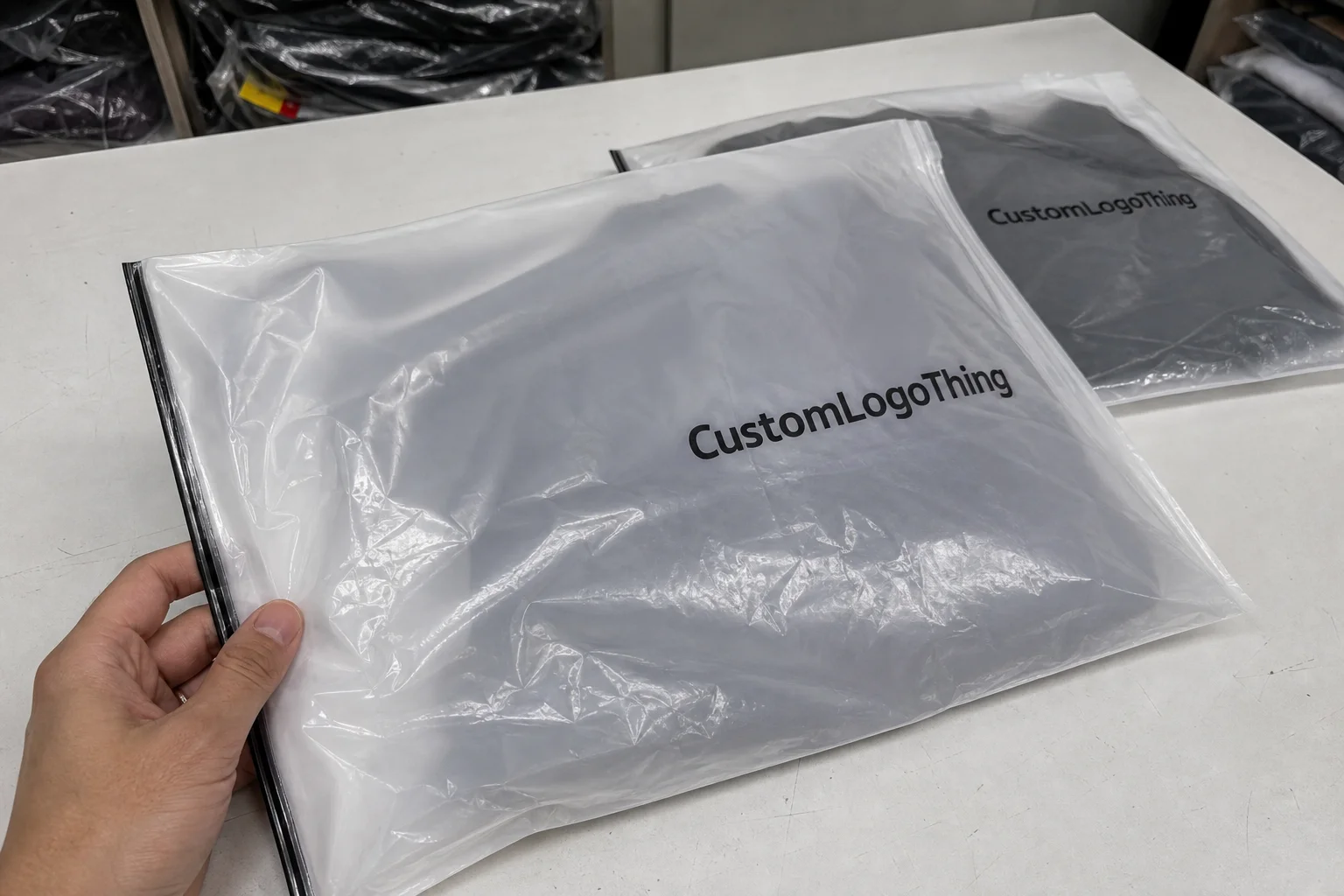
Guests do not study the production method. They notice the result in a few seconds. If the logo is centered, the color is stable, and the surface looks intentional, the bag feels premium. If the ink looks uneven, the edges blur, or the finish catches light in the wrong way, the piece starts to feel generic.
That judgment happens fast because hotel retail packaging sits between brand display and shipping function. The bag has to carry a product, survive handling, and still look like part of the property’s visual system. That is a harder brief than many buyers expect.
Print method also affects how the bag ages. Flexographic printing is efficient and reliable for simple graphics, but it is less forgiving when the art demands fine tonal shifts. Digital printing handles detail better and allows later artwork changes, yet the unit cost can climb on larger runs. Gravure offers excellent repeatability, but the tooling cost makes little sense for a small program. Screen printing creates bold effects, though it is not ideal for detailed artwork or broad coverage.
“A mailer can look premium at the front desk and still fail if the ink rubs off in transit. Buyers need to judge appearance and durability together.”
That is why a hotel retail Custom Poly Mailer Bags print method comparison should begin with the guest-facing goal and only then move to price. Reversing that order often leads to false savings. A quote can look attractive until the bag feels thin, the color drops out on a dark film, or the finish conflicts with the rest of the property’s packaging.
How the major print methods work on poly mailers
Poly mailers are a difficult surface. They are smooth, flexible, and usually made from low-density polyethylene or a recycled blend. That means ink adhesion, drying, and registration all behave differently than they do on paper or rigid stock.
Flexographic printing is usually the practical workhorse for medium and high-volume orders. It uses flexible plates and fast production speeds, which helps keep unit costs down once setup is spread across enough bags. It works especially well with one or two spot colors, large logos, and simple brand blocks. For repeat replenishment programs, flexo often gives predictable results if the artwork stays stable.
Digital printing is the strongest option for short runs, seasonal artwork, and graphics with many colors or fine detail. No plates are needed, so file changes are easier and proofing cycles can be shorter. For boutique hotels or properties ordering a few hundred to a couple thousand bags, digital often beats a plate-based method simply because the order does not justify tooling.
Gravure printing is the high-volume precision option. The image quality and color consistency can be excellent, especially for large branded programs that will be reordered often. The catch is tooling. Cylinders cost more up front, which is difficult to justify unless volume is high and the design will remain stable over time. It is a stronger fit for a standardized chain program than for a one-off property campaign.
Screen printing and other specialty overprints still have a place. They can create strong visual contrast or tactile effects, especially when the design is simple and bold. On thin poly film, though, screen printing is slower and less efficient for detailed graphics or full coverage. It should be treated as a specialty option, not a default.
For a practical side-by-side view, this comparison is usually enough to narrow the field:
| Print method | Best for | Typical strengths | Main tradeoff |
|---|---|---|---|
| Flexographic | Simple logos, medium to large runs | Low unit cost at scale, solid color coverage | Plate setup and weaker performance with fine gradients |
| Digital | Short runs, detailed graphics, variable data | Fast artwork changes, no plates | Higher unit cost as quantities rise |
| Gravure | High-volume branded programs | Excellent consistency and image fidelity | High tooling cost |
| Screen / specialty overprint | Bold effects, limited graphics | Strong visual impact | Slower, less efficient for detail |
For material and handling context, packaging references from The Packaging Association and transit guidance from ISTA are useful checkpoints. Poly mailers do not live in a controlled studio. They get stacked, folded, slid across counters, and shipped in cartons. Scuff resistance and print adhesion matter as much as the proof image.
Key factors that decide the best print method
The most common buying mistake is starting with the print process instead of the artwork and usage. A one-color logo on a white mailer and a full-bleed design on a black one are not comparable jobs, even if both are called Custom Poly Mailers. The technical and cost differences are substantial.
Artwork complexity comes first. Simple logos, bold type, and solid spot colors usually favor flexographic printing. Fine text, gradients, and layered color transitions tend to push the decision toward digital printing. If a hotel brand depends on thin lines, delicate iconography, or exact color shifts, the print method has to protect those details.
Film color and thickness change what is visible and how well it holds up. White or light film gives the most flexibility. Dark films often need extra ink coverage or a white underbase so the artwork remains readable. Recycled blends can behave differently during curing and cooling, which can affect gloss, color stability, and surface feel. A heavier gauge film may improve stiffness and print behavior, but it also changes material cost and hand feel.
Brand standards are often the final decider. Hotels with controlled PMS targets, premium positioning, or a strict visual system may accept a higher quote if the output is cleaner and more consistent. That is not overbuying. It is brand control. In a guest-facing environment, the mailer is part of the brand story in the same way signage, amenity labels, and room collateral are.
Run size changes the economics quickly. A boutique property ordering 500 bags for a seasonal gift shop display usually should not pay for expensive tooling. A chain ordering 25,000 bags every quarter can often save enough through flexo or gravure to justify setup costs. The exact crossover point depends on color count, coverage, and supplier structure, but the pattern is stable: higher volume favors plate-based methods.
Handling and compliance deserve a separate check. A mailer used for retail carryout or ecommerce fulfillment needs enough tear resistance to survive stacking, parcel friction, and occasional moisture. If sustainability claims matter, ask for material documentation and confirm whether the film is recyclable in the intended collection stream. For programs that include paper inserts or mixed packaging, chain-of-custody references from FSC can help support adjacent sourcing claims.
Cost and pricing: what drives the quote
Pricing is where hotel retail Custom Poly Mailer Bags print method comparison stops being theoretical. Unit price can look low until setup, proofing, freight, and rework are added. That is often where the apparent bargain disappears.
Flexographic printing usually carries plate costs and setup time. Gravure adds cylinder tooling and can raise the first order significantly. Digital printing reduces setup friction, but its per-unit cost is usually less competitive on large quantities. Screen printing sits somewhere in between depending on coverage and labor time. None of these is automatically cheap or expensive; the order structure decides that.
Directional pricing bands often look something like this, though film spec and artwork can move the numbers materially:
| Quantity | Digital printing | Flexographic printing | What usually happens |
|---|---|---|---|
| 500-1,000 bags | $0.35-$0.85/unit | $0.45-$1.10/unit including setup spread | Digital often wins on speed and lower setup friction |
| 2,000-5,000 bags | $0.22-$0.55/unit | $0.18-$0.42/unit | Flexo often becomes more economical |
| 10,000+ bags | Usually less competitive | $0.10-$0.28/unit depending on colors | Plate-based methods usually gain the advantage |
These numbers are directional, not fixed. Dark film, high ink coverage, white underlayers, special surface treatment, or rush production can shift the quote quickly. Freight can matter more than buyers expect, especially on large cartons of lightweight bags where shipping density is low. Peak holiday periods and travel-season demand can also extend lead times and add cost.
If you want a fair comparison, ask suppliers to quote the same bag size, material thickness, color count, and destination across at least two methods. Then request pricing tiers at 1,000, 3,000, 5,000, and 10,000 pieces. That exposes the break-even point instead of hiding it behind a single unit price.
For broader packaging programs, compare the mailer against related formats such as Custom Poly Mailers and other Custom Packaging Products that may share artwork, size standards, or reordering patterns. Standardizing dimensions can reduce art revisions and make replenishment easier across departments.
Process and timeline: from artwork to production steps
Print method affects lead time as much as it affects price. Digital usually moves fastest because no plates or cylinders are needed. Flexographic printing takes longer because artwork must be finalized before plates are made. Gravure can take longer still due to tooling and setup.
A clean production workflow should follow a predictable order:
- Artwork review and dieline fit.
- Color verification, including PMS targets if needed.
- Digital proof or layout simulation.
- Sample confirmation for print placement, finish, and film feel.
- Production sign-off.
- Printing, curing or drying, inspection, and packing.
Typical lead times vary by supplier, but a rough planning range is useful. Smaller digital orders may ship about 7-10 business days after proof approval. Flexographic jobs often land around 12-18 business days. Gravure can run longer if tooling is required. Seasonal demand, raw material availability, and freight scheduling can extend any of those windows.
The most common delay points are not dramatic. They are practical: missing logo files, low-resolution artwork, unclear dimensions, color corrections, and last-minute copy edits. Buyers often assume those can be handled after approval. In packaging, that assumption usually costs time.
If the bags support a holiday retail launch, a guest event, or an ecommerce drop, work backward from the ship date and add buffer. That is less about caution and more about keeping the packaging program under control when the calendar gets tight.
Common mistakes buyers make when comparing print options
The first mistake is choosing the lowest quote without checking whether the print method fits the artwork. A simple two-color logo and a full-bleed design are not the same job, even if both are described as custom Printed Poly Mailers. Comparing them as if they were equivalent hides the real tradeoffs.
Another mistake is ignoring how film color affects visibility. Darker films often require more ink or a white base layer to keep artwork readable. That can improve the finished look, but it can also change cost and surface feel. If a supplier does not mention opacity or underprinting, ask directly.
Minimum order quantity can distort the decision as well. A low unit price is not useful if the MOQ is 20,000 pieces and the property needs only 2,500. Some buyers chase the lowest per-bag number and end up with storage problems, stale artwork, or cash tied up in inventory.
Skipping physical proofing is another expensive habit. A screen image cannot show how ink sits on film, how glossy the bag looks under lobby lighting, or how small text behaves after folding. If the design includes gradients, fine lines, or dark-film printing, request a printed sample or at least a realistic proof.
Finally, some buyers compare hotel retail packaging as though it were generic shipping packaging. It is not. Guests interact with the bag at a counter, in a lobby, or in a room. That makes it a brand moment, not just a transit container.
Expert tips for smarter hotel retail packaging decisions
Match the print method to the action you want the guest to take. If the bag is for a premium gift shop purchase, color consistency and finish matter most. If it supports ecommerce fulfillment, durability and unit cost may matter more. If it is used for amenity distribution, speed and order simplicity may carry the most weight.
A useful three-question filter can shorten the decision cycle:
- How many bags are actually needed?
- How many colors and how much detail are in the artwork?
- How fast does the order need to arrive?
That filter removes a lot of unnecessary back-and-forth. A buyer with 800 bags and a detailed logo should not begin with gravure pricing. A chain ordering 30,000 bags with a one-color mark should not default to digital unless timing is the overriding issue.
Ask for sample swatches or prior retail examples that show film feel, ink density, and edge sharpness. Avoid client-name examples if confidentiality is a concern; the point is to assess the material, not the account. Texture matters more than many buyers admit. A glossy mailer and a matte one may both look premium in isolation, yet only one may align with the hotel’s broader packaging system.
Standardizing sizes across spa, gift shop, and ecommerce can also improve economics. Shared formats reduce inventory complexity and make reorders easier. That matters because larger repeatable runs often shift the cost advantage toward flexo or gravure, while small ad hoc orders keep digital in the running.
The bag is not just a shipping item. It is part of the guest experience, and the print method is part of that experience too. If the bag looks right, arrives on time, and holds up through handling, it supports the brand without calling attention to itself. That is usually the best outcome.
Next steps: build a comparison sheet before you request quotes
A one-page spec sheet will improve the quality of quotes more than a long email thread ever will. Include bag size, material, thickness, film color, color count, artwork type, target quantity, and delivery window. If the supplier has to guess at any of those, the quote will be less useful.
Then request at least two print methods. If only one method is quoted, the comparison is already framed for you. Ask for digital and flexographic pricing first, and add gravure or screen printing only if the volume or artwork makes sense. Request tiered pricing so the break-even point is visible.
For artwork with small text, gradients, or dark film, ask for a physical sample or a realistic photo proof. In hotel retail custom poly mailer Bags Print Method Comparison decisions, that step often separates confidence from regret. Price matters, but so do proof clarity, responsiveness, and production transparency. A low quote is only useful if the bag looks right and holds up in the guest’s hand.
Done well, the chosen print method supports brand image, budget, and timeline at the same time. That is the real objective.
Which print method is best for hotel retail custom poly mailer bags with simple logos?
Flexographic printing is often the best fit for simple logos and solid spot colors. It usually offers strong unit economics on medium to large runs. It works best when the design does not require gradients or multiple color transitions.
What is the most cost-effective option for small hotel retail orders?
Digital printing is often the more practical choice for short runs because setup costs are lower. It also handles design changes without new plates or cylinders. That makes it useful when the order is too small for volume pricing to offset tooling.
How do I compare pricing for custom poly mailer bags across print methods?
Compare setup charges, unit price, color count, freight, and proofing costs together. Ask suppliers for price breaks at several quantities so the break-even point is visible. Do not compare only the unit price if MOQ or tooling fees are high.
What affects turnaround time the most for printed poly mailers?
Artwork readiness is often the biggest factor, especially if files need cleanup or color correction. Print method matters too: digital usually moves faster than plate-based methods. Shipping distance and inspection requirements can add time as well.
How can I tell if a print method will hold up in hotel retail use?
Ask about scratch resistance, ink adhesion, and how the print looks after folding and handling. Request samples or a physical proof when possible. Choose the method that matches the actual handling conditions, not just the screen image.