For a private label buyer, the private label buyer opp header Bags Print Method Comparison is rarely about the bag alone. It is about how the package looks under store lighting, how fast you need it, and whether the branding survives handling without turning into a scuffed mess. A clean print method can make a low-cost bag look intentional. A poor one can make a decent product look cheap before it ever reaches the shelf.
OPP Header Bags show up in candy, sample packs, hardware kits, apparel accessories, beauty items, and simple retail display products. The header is the first thing shoppers see. If that area prints badly, the whole package feels weaker. Buyers often discover this only after the first shelf test, when glare, tiny type, or a slight color shift suddenly becomes visible from three feet away.
The choice is not cosmetic in the narrow sense. It affects reorder consistency, artwork flexibility, and how much risk sits in the first production run. That is why print method deserves more attention than bag size, especially in private label programs where packaging often carries more of the brand identity than the product itself.
Why print method choice matters more than bag size
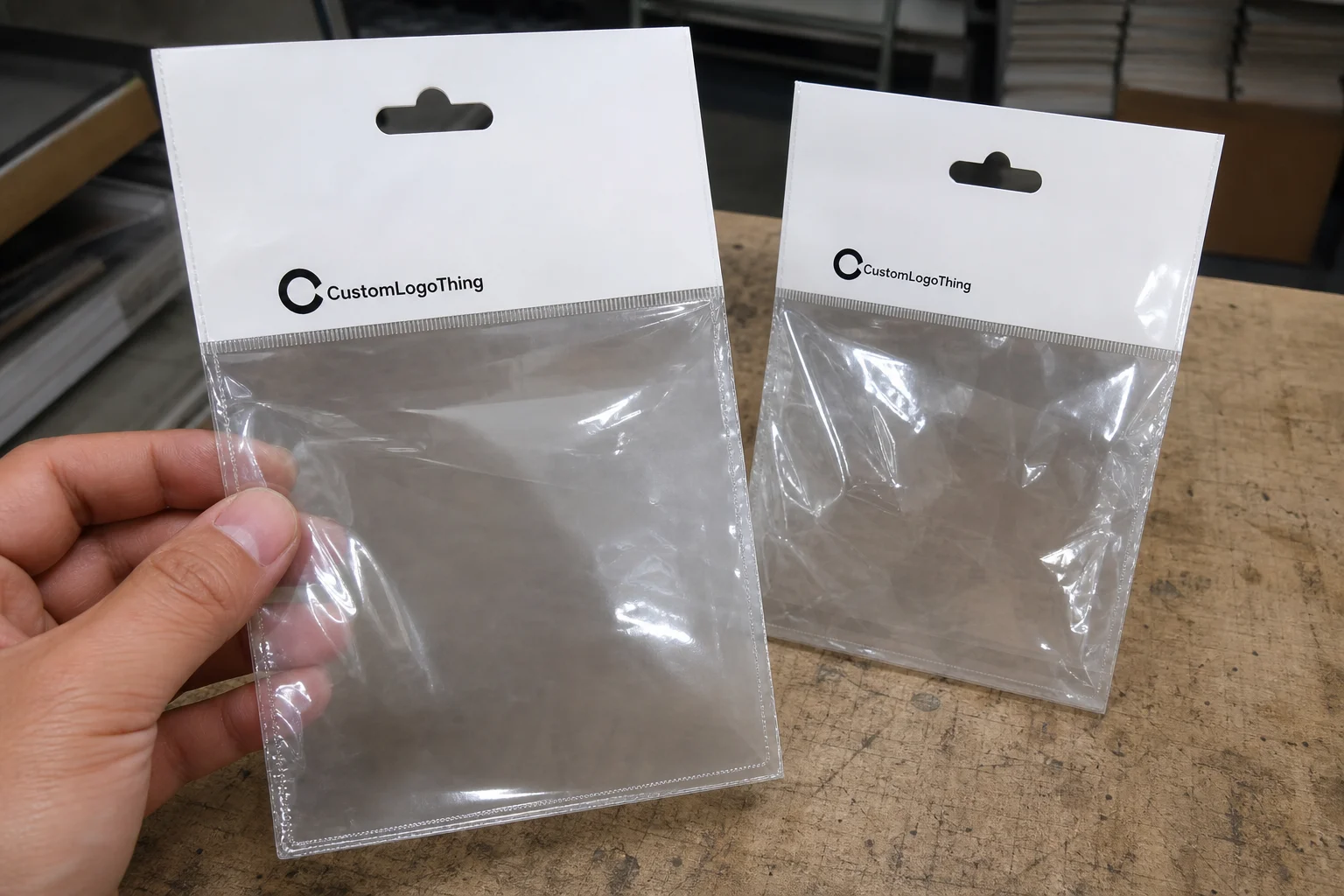
On OPP Header Bags, dimensions are usually the easy part. Print method is where the tradeoffs start. The same 4x6 bag can look premium or generic depending on whether the artwork is handled with digital printing, flexographic printing, or gravure. The wrong method can also stretch lead time by days or even a week, which is how a packaging decision starts affecting a launch calendar.
From a buyer’s point of view, the header area does a lot of work. It carries the logo, the SKU cue, sometimes the barcode, and often the only retail-facing brand message. If the print is blurry, too glossy, or off-color, shoppers notice. Not always consciously, but enough to reduce confidence in the product.
The common mistake is simple: choose the cheapest quote before checking artwork complexity, quantity, and color requirements. That is a weak way to buy packaging. A two-color logo with bold shapes is a different job from a photo-style design with gradients and small text, and the economics are just as different.
For private label programs, the business impact usually shows up in three places:
- Shelf appeal — clear branding gets more attention than a plain header with weak ink coverage.
- Scuff resistance — glossy OPP shows scratches quickly, so print durability matters.
- Production efficiency — the right method reduces proof changes, rework, and reorders.
That is why a private label buyer opp header Bags Print Method comparison matters more than many buyers expect. A small change in print setup can alter unit cost, MOQ, and the final look of the package. For low-risk commodity items, those differences may not matter much. For a branded launch, they usually do.
OPP header bag print options: flexo, gravure, and digital
There are three common ways to print OPP header bags. Each has a practical use case. None is perfect.
Flexographic printing
Flexographic printing is usually the best all-around option for medium to higher quantities when the artwork is simple. It handles spot-color logos well, especially if the design uses one to three colors and clean lines. If repeat orders are likely, flexo often becomes the value play because setup costs spread out over more units.
Flexo is also practical when the same bag design needs to cover multiple SKUs with only small changes. That is common in private label programs where the core brand mark stays fixed, while flavor names, size marks, or barcode details change. It is not ideal for photographic art, but for bold retail marks it performs well without much drama.
One caveat: flexo results vary more than some buyers expect if the file preparation is weak. Thin strokes, fine reversals, and dense gradients can expose plate limitations. The method is reliable, but it is not forgiving of sloppy artwork.
Gravure printing
Gravure printing is built for larger runs and tighter color consistency. It can deliver strong image quality and is often used when a buyer wants premium visual control across a long program. The catch is tooling. Cylinder setup is expensive enough that gravure only makes sense when volume justifies it.
If the item is stable and likely to reorder in sizable batches, gravure can become efficient over time. If the artwork is still evolving or the program is being tested, it is usually the wrong place to start. Buyers sometimes underestimate how costly it is to change direction after cylinders are made.
Gravure also tends to be the most demanding method on scheduling. Tooling, color approval, and press setup can add time before production begins. That makes it attractive for long-run retail programs, but less attractive for a short pilot run where the final packaging may still change.
Digital printing
Digital printing is the smart option for short runs, multiple SKU launches, or fast market testing. There are no plates or cylinders to amortize, which is why digital often wins on smaller quantities. It also makes artwork changes easier. That matters when marketing is still changing the logo placement after the third review.
Digital handles full-color work well, especially when you need CMYK graphics, gradients, or photo-like details. It is also useful when each SKU needs a slightly different design. Instead of paying setup charges across several versions, buyers can move faster with less waste.
The tradeoff is unit cost. At higher volume, digital often becomes expensive compared with flexo or gravure. It is best used for speed and flexibility, not because it is automatically the cheapest. Buyers who treat it as a long-run cost solution usually end up disappointed.
The real comparison is not “which method is best?” It is “which method fits this quantity, this artwork, and this launch window?” That is the useful question.
| Print method | Best use | Typical MOQ behavior | Cost profile | Turnaround |
|---|---|---|---|---|
| Digital printing | Short runs, test launches, many SKUs | Lower MOQ possible | Higher unit cost, low setup cost | Fastest setup |
| Flexographic printing | Simple designs, mid-to-high volume | Usually moderate to high MOQ | Good unit cost at volume | Moderate |
| Gravure printing | Large runs, premium consistency | Higher MOQ is common | High setup, strong economics at scale | Longest setup |
One detail many buyers miss: print quality is not only about resolution. Glossy OPP film can make colors pop, but it can also show rub marks and handling scuffs quickly. A sharp image is useful. A print that still reads clearly after packing, shipping, and retail handling is better.
The surface finish also changes perception. High-gloss OPP can make a simple logo look brighter and more premium, but it can exaggerate fingerprints and scratches. If the bag is likely to be handled a lot before sale, that tradeoff deserves attention before the order is placed.
Specifications that affect print performance and shelf appeal
The bag spec matters because the print does not sit in a vacuum. OPP film thickness, sealing behavior, header construction, and artwork placement all affect the final result. A design that looks fine on screen can distort if the header curls or if the seal line eats into the safe zone.
Typical OPP header bags use clear OPP film for product visibility, often in the range of 30 to 50 microns depending on product weight and handling needs. Thicker film can feel sturdier, but it also costs more and can change how the bag folds or hangs. For light retail items, extra thickness may not add much value. For hardware, samples, or products that are repeatedly handled in transit, it often does.
Header format matters too. Buyers may need a euro slot, a simple hang hole, a reinforced header, or a custom header height to match a peg display plan. If the bag hangs crooked, the retail display looks sloppy. Shoppers do notice that, even if they do not describe it in technical terms.
Artwork prep should be boring and exact. That is the point. Send:
- Vector logo files whenever possible.
- Pantone references for spot color matching.
- Bleed and safe zone details near the seal and header edge.
- Barcode placement if the retail package needs scanning.
- Font size checks for tiny legal text or ingredient copy.
Small text is a common failure point. Ultra-thin lines and dark-on-dark designs can disappear on glossy film, especially if the artwork sits near a fold or seal. A proof catches that early; a reprint catches it expensively.
For compliance-sensitive products, ask the supplier about food-contact requirements, inks, and any regulatory expectations for the market you are selling into. If the bag is part of a food or snack item, get confirmation in writing. If the packaging program involves a regulated market, the supplier should be able to explain the materials and ink system without sounding uncertain. That answer matters more than a polished sales sheet.
Transit protection matters too. Carton packing method, pallet wrap, and stacking pressure can damage glossy surfaces before the bags reach your warehouse. That is not a print defect. It is a packaging and logistics issue, and it can ruin an otherwise clean production run.
If you want a reference point for shipping stress or packaging test language, the ISTA site is useful. For broader packaging sustainability programs, the FSC site remains relevant if your lineup uses certified paper components elsewhere in the pack.
Cost, pricing, and MOQ tradeoffs by print method
Pricing for printed OPP header bags usually depends on five things: print method, color count, bag size, film thickness, and order volume. If one of those changes, the quote changes. Sometimes a lot.
As a rough buyer-side pattern, digital printing tends to win on smaller quantities, flexo usually starts to beat it at mid-volume, and gravure becomes attractive once the run is large enough to absorb tooling. The crossover point depends on artwork, bag size, and the number of SKUs, but the pattern is consistent enough to plan around.
Here is the practical version of the cost behavior:
- Digital — low setup cost, higher unit cost, good for 500 to a few thousand pieces depending on design and supplier.
- Flexo — setup cost exists, but unit cost can fall as quantity rises; often a strong fit from several thousand units upward.
- Gravure — tooling adds upfront cost, but large runs can produce better long-run economics and more consistent repeatability.
The part buyers should ask for, and often do not, is quotes at multiple quantities. Five thousand pieces may price differently than ten thousand or twenty-five thousand in a way that changes the decision entirely. A supplier should also separate tooling, plates, cylinders, sample charges, and freight. If those are bundled together, the “cheap” quote is often just incomplete.
Artwork complexity can move the number too. More colors mean more work. Special effects, dense coverage, multiple SKUs, and tighter registration all add cost. If the private label line needs five small variations of the same bag, digital may save money overall because repeat setup charges do not stack across every version.
| Buyer scenario | Likely best method | Why it fits | Watch-outs |
|---|---|---|---|
| 500–2,000 pieces, test launch | Digital | Fast, low setup burden | Higher unit price |
| 5,000–20,000 pieces, simple branding | Flexo | Good balance of cost and quality | Plate cost and color limits |
| Large repeating retail program | Gravure | Strong consistency at scale | Tooling cost, slower start |
For broader packaging economics, the Packaging Machinery Manufacturers Institute resources are useful if you want to understand how print and converting choices influence production costs. Not glamorous. Very useful.
In practice, the best quote is not always the lowest unit price. It is the one with the lowest total landed cost after rework, freight, inventory risk, and reorder planning are included. A slightly higher print price can still win if it reduces the chance of a delayed launch or a rejected shipment.
Process and timeline: from artwork to shipment
The production flow is usually straightforward, but it slows down fast when the buyer sends incomplete files. A normal order moves through file review, proofing, print method selection, prepress approval, sample or mockup, production, packing, and dispatch. Skip a step and someone will pay for it later.
Digital orders are typically faster because setup is lighter. Flexo and gravure need more preparation before bulk printing starts. If cylinders or plates are involved, add time for tool creation and confirmation. A realistic lead time is often 12 to 15 business days from proof approval for a straightforward digital or flexo job, while gravure can run longer depending on tooling and quantity. If artwork is messy or approvals take too long, add more. That is normal.
Common delay points include:
- Missing vector artwork or low-resolution logos.
- Late color changes after proof review.
- Unclear header measurements or seal placement.
- Changes to barcode position or legal copy.
- Approval delays from too many internal reviewers.
Buyers should always request a proof before mass production, especially when the logo sits close to the header edge or seal zone. A printed sample or digital proof can catch color mismatch, text compression, and layout problems early. That is far cheaper than discovering the issue after 10,000 bags are already packed.
“If the proof is wrong and you approve it anyway, the factory is not the one taking the inventory hit. The buyer is.”
Separate production time from shipping time. Those are not the same thing. A factory may finish on schedule, but freight, customs, and warehouse receiving can still move the final delivery date. Buyers who mix those up often blame the wrong part of the chain.
There is also a quality-control timing issue. If you need a special color match, request a press-side or pre-production check rather than waiting for cartons to arrive. That is especially useful for private label programs where one visual mismatch can affect the rest of the line.
How to choose the right method for your private label launch
If you need speed, flexibility, or multiple designs, digital is usually the safest starting point. It is especially useful for launches, seasonal items, test markets, and private label programs where the artwork may change after the first sell-through. You pay more per unit, but you buy time and flexibility.
If the item sells steadily and the artwork is simple, flexo is often the practical middle ground. It works well for bold logos, one- to two-color branding, and medium-to-high volumes. The setup cost makes sense when the design will stay in place for a while.
Gravure fits larger, repeatable programs where premium consistency matters more than low setup cost. If you are planning long-run retail distribution and want the same print look across big batches, gravure can be the right call. If not, it is too much machinery for a simple launch.
Here is the cleanest decision rule:
- Simple design + high quantity → flexo is usually the first quote to check.
- Low quantity or frequent changes → digital is usually the smarter route.
- Large repeat program + color control → gravure deserves a look.
Do not judge only the print line on the quote. Weigh total landed cost, warehousing risk, reorder timing, and the chance of artwork changes. A cheap run that forces a reprint later is not cheap. It is just delayed pain.
From a packaging buyer’s point of view, the best purchase is the one that fits the product stage. Launch stage? Flexibility. Stable program? Cost efficiency. High-volume retail? Consistency. That is the backbone of any useful Private Label Buyer opp header bags print method comparison.
One practical observation: buyers often overestimate how much print complexity they need for the first order. A restrained design with good contrast, a clear logo, and readable product details usually performs better than a busy layout that tries to say too much. Packaging has to work from a distance, on a hook, and in a cart. If it only looks good in a design proof, it is not finished.
Next steps for ordering OPP header bags with confidence
Before you request a quote, prepare a clean spec sheet. Include bag size, header style, quantity, print colors, artwork file, and target delivery date. If you do that, the quote will be useful instead of vague, which is rare enough to appreciate.
Ask for side-by-side pricing using at least two print methods. If you only ask for one, you are letting the supplier decide the comparison for you. That is not negotiation. That is guessing with paperwork.
Request a sample or proof before production. Confirm color expectations, logo placement, barcode readability, and any special print finishing details. If the item is sold near food or needs a more regulated packaging setup, ask those questions before the order is locked.
Also confirm the practical details:
- Minimum order quantity
- Production lead time
- Packing format for shipping
- Repeat-order setup reuse
- Freight method and delivery window
If you need another branding component for the same program, our Custom Labels & Tags page is a useful place to compare formats. It keeps the visual system consistent without forcing every detail onto one printed bag.
The main takeaway is simple: choose the method that fits sales volume, launch timing, and branding goals. Do not chase the quote that only looks cheapest on paper. A useful private label buyer opp header bags print method comparison always starts with the actual job requirements, not with the lowest number on the page.
FAQ
Which print method is best for private label OPP header bags with a small MOQ?
Digital printing is usually the best fit for a small MOQ because it avoids plate or cylinder costs. It also works well when you need fast sampling, multiple SKUs, or frequent artwork changes. Flexo and gravure can get expensive at low volumes because setup costs are spread over too few bags.
How do I compare flexo vs digital for OPP header bag printing?
Compare total unit cost, setup charges, color complexity, and expected reorder volume. Flexo is usually better for simple designs at medium volumes; digital is better for short runs and fast turnaround. Ask for quotes at multiple quantities so the crossover point is clear.
Can OPP header bags be printed with full-color artwork?
Yes, full-color artwork is possible, but the print method matters. Digital is often the easiest choice for complex graphics or photo-like designs. Gravure can also handle high-end color work, but it usually makes more sense at larger volumes.
What artwork file do I need for an accurate quote?
Provide vector files when possible, plus Pantone references for spot colors. Include bag dimensions, header height, and any barcode or logo placement requirements. Clear files reduce proof delays and help avoid re-quoting after prepress review.
How long does production usually take for printed OPP header bags?
Digital orders are typically faster because setup is lighter. Flexo and gravure usually take longer due to prepress, tooling, and approval steps. Final timing depends on artwork readiness, quantity, and whether a sample or proof is required before mass production.


