Buyer Fit Snapshot
| Best fit | Package Fragile Products for Safer Shipping projects where brand print, material claims, artwork control, MOQ, and repeat-order consistency need to be specified before quoting. |
|---|---|
| Quote inputs | Share finished size, material target, print colors, finish, packing count, annual reorder estimate, ship-to region, and any compliance wording. |
| Proofing check | Approve dieline scale, logo placement, barcode or warning zones, color tolerance, closure strength, and carton packing before bulk production. |
| Main risk | Vague material claims, crowded artwork, missing packing details, or unclear freight terms can make a low unit price expensive after revisions. |
Fast answer: Package Fragile Products for Safer Shipping: Material, Print, Proofing, and Reorder Risk should be specified like a repeatable production item. The safest quote records material, print method, finish, artwork proof, packing count, and reorder notes in one written spec.
Production checks before approval
Compare the actual filled-product size with the drawing, then confirm tolerance on folds, seals, hang holes, label areas, and retail display edges. Reserve space for logos, QR codes, warning copy, and material claims before decorative graphics fill the panel.
Quote comparison points
Review material grade, print process, finish, sampling route, tooling charges, carton quantity, and freight assumptions side by side. A quote is only useful when the supplier can repeat the same color, closure quality, and packing count on the next order.
How to Package Fragile Products for Safer Shipping starts with a simple truth: most damage is not caused by a "bad" outer box. It comes from movement. A carton can look fine on the outside and still let a glass jar slam into a corner hard enough to crack. That is the real job of how to package fragile products. Stop the motion. Control the hit. Make the package actually do something useful.
For anyone buying packaging, the goal is pretty plain. Cut damage claims. Keep returns from eating margin. Make the unboxing feel intentional instead of thrown together five minutes before the carrier pickup. The better systems handle all of that together. They hold the item in place, cushion impact, resist crush force, and still look polished enough for direct-to-consumer shipping. If you are learning how to package fragile products, think in systems, not random materials shoved into a box and called strategy.
"Fragile" also covers a mess of different products. Glassware, ceramics, candles, lab samples, coated electronics, skincare bottles, collectibles, and anything with brittle seams or sharp edges can all need different protection. A nice presentation box might work for one SKU and fail hard on another. Good how to package fragile products decisions start with fit, cushioning, closure, and handling cues all pulling in the same direction.
How to Package Fragile Products: What It Really Means
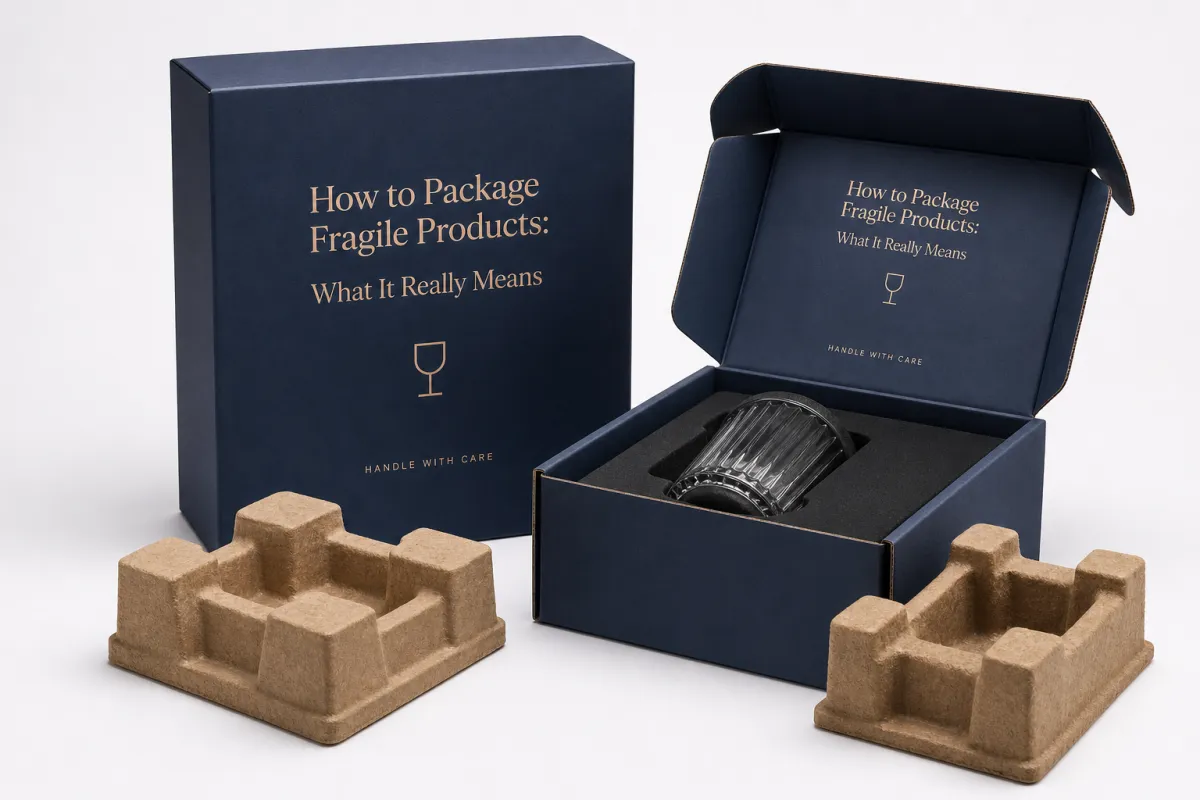
How to package fragile products is not stuffing a carton with paper and hoping the shipping gods feel generous. It means building a package that holds up under vibration, compression, drops, and ugly temperature swings. That usually starts with a tight internal fit and ends with an outer box that can survive the route without letting the item smack into a wall, lid, or insert.
Most breakage comes from the quiet stuff. Not a dramatic box collapse. A parcel gets dropped on a corner. It slides off a conveyor. It gets stacked under something heavy and unhelpful. If the item has room to move, impact transfers straight into the product. I have seen a perfectly clean carton fail because the item inside was floating around like a maraca. That is why how to package fragile products has to solve both shock and motion control.
Here is the practical definition I use: fragile packaging is a complete setup made of product fit, cushioning, closure, and handling communication. Bubble wrap can protect a painted surface from scuffs, sure. It will not stop a hollow ceramic piece from rattling itself to death. An outer carton can resist crush force. It will not replace a properly sized insert. Smart how to package fragile products planning treats every layer as part of one system.
Common fragile items include:
- Glass bottles, jars, and drinkware
- Ceramics, stoneware, and decorative objects
- Cosmetics, fragrance, and skincare containers
- Small electronics, chargers, and displays
- Lab samples and diagnostic components
- Collectibles, ornaments, and branded gift items
- Anything with corners, coatings, or brittle seams
Presentation matters too. A package can protect well and still look clumsy if the item floats around or arrives with shredded filler. For branded shipments, especially direct-to-consumer orders, how to package fragile products should support the unboxing instead of fighting it. Clean. Tight. Intentional. Not wasteful for the sake of looking premium.
"If the item can move, the package is not finished." Crude? Yes. Useful? Also yes. Movement is usually the warning sign that damage is coming long before the carrier admits anything.
Organizations such as the International Safe Transit Association publish test methods that help model real parcel abuse. Those standards will not magically fix a bad pack-out, but they do give teams a common language for drops, vibration, and compression. That structure matters when you are deciding how to package fragile products.
How the Packaging System Works
How to package fragile products gets a lot easier once the carton is split into functions. A good setup does five things at once: it immobilizes the item, absorbs impact, resists crush force, manages moisture, and signals handling needs. Miss one of those and the package can fail even if the materials look tough enough to survive a meeting room demo.
Start with immobilization. The item should not slide, bounce, or tilt when the box gets moved. A snug insert, molded tray, or tight wrap usually does this better than loose void fill alone. Void fill can stop minor rattling. It cannot replace a real fit. If you are learning how to package fragile products, this is one of the easiest places to save money and avoid damage.
Next comes impact absorption. The package needs to soften the hit from drops and sudden stops. Foam corners, paper cushioning, air pillows, molded pulp, and bubble wrap all do that in different ways. The right choice depends on weight, surface sensitivity, and how much empty space needs to be controlled. How to package fragile products is rarely about the "best" material in a vacuum. It is about the best material for that product and that transit lane.
Crush resistance matters too. A perfect internal fit still fails if the box walls collapse under stacking pressure or carrier handling. Double-wall corrugate, a stronger board grade, or a reinforced mailer can help, but only if the inside of the pack-out supports them. A strong box with sloppy internals is still a weak package. That is why how to package fragile products has to cover inside and outside at the same time.
Moisture control is the part teams forget until the labels wrinkle or the carton softens. For some products, humidity is a bigger problem than impact. Paper labels can curl. Coated cartons can lose print quality. Metal parts can corrode. A polybag, desiccant, coated liner, or moisture-resistant outer can be worth the small added spend. It is not needed for every product, but for cosmetics, electronics, and mixed-material sets, it often belongs in how to package fragile products.
Communication is the last piece. Orientation arrows, "this side up" marks, and fragile icons do not guarantee perfect handling, because carriers are not reading your mind. They do reduce guesswork. They matter most when the parcel has a preferred orientation or a liquid component. A warning on the carton should be obvious in seconds. The job of how to package fragile products is not to scold handlers. It is to remove ambiguity.
One simple way to think about the layers:
- Primary wrap or insert keeps the item off hard surfaces.
- Inner protection absorbs small shocks and protects finishes.
- Outer carton handles crush and stacking forces.
- Closure system keeps the package sealed under vibration.
- Labeling tells handlers what kind of parcel they are dealing with.
Protective packaging and presentation packaging are not the same thing. Protective packaging can be plain, dense, and very functional. Presentation packaging has to look good on a porch, in a retail bag, or on camera during unboxing. The toughest solution is not always the prettiest one, so how to package fragile products has to balance both. The tradeoff is real. Pretending otherwise is how teams end up redoing work later.
If sustainability matters, this is where material choice gets practical instead of performative. Paper-based inserts, recyclable corrugate, and FSC-certified board may fit the brief better than mixed-material packs that are hard to separate. The Forest Stewardship Council explains certified paper and wood sourcing clearly enough for packaging teams that need to align protection with environmental claims. That does not solve how to package fragile products on its own, but it narrows the field in a sensible way.
Key Factors That Change the Packaging Plan
There is no universal answer to how to package fragile products because the item changes the math. Weight matters. Shape often matters more. A light object with a narrow base can tip and focus force in one ugly spot, while a heavier object with a centered footprint may survive a simpler pack-out. The packaging plan should follow the product, not force the product to obey the packaging.
Item geometry is usually where failures begin. Sharp corners can punch through wraps. Hollow forms can collapse under pressure. Tall bottles like to topple if the base is loose. Rounded ceramics can roll into the carton wall if they are not nested properly. Good how to package fragile products planning asks where the pressure points are before anyone picks a box size.
Transit risk matters too. A local courier drop-off is not the same thing as a multi-carrier parcel journey with hub transfers, sortation equipment, and longer dwell times. If the item moves through several handling points, the cushion and box need to work harder. That is why how to package fragile products for a subscription box may look different from the same item sold through a regional retail program.
Environmental conditions can quietly wreck a pack-out. Heat can soften adhesives. Cold can make some plastics brittle. Humidity can weaken paperboard and label adhesion. If the product is sensitive, the packaging needs to account for that risk before it turns into refunds. In practical terms, how to package fragile products should include temperature and moisture assumptions, not just drop protection.
Branding matters too. A luxury candle may need a rigid setup box with a snug insert. A replacement part may ship more efficiently in a corrugated mailer with a die-cut tray. The unboxing experience, the damage tolerance, and the budget all shape the final decision. Smart teams do not separate those concerns. They decide how to package fragile products by weighing them together.
Three variables usually drive the choice of cushioning and carton strength:
- Weight and center of gravity - heavier items need more support under the base and around the walls.
- Shape and surface - corners, coatings, and uneven surfaces often need custom support.
- Transit severity - local delivery, regional parcel, and long-haul shipping each carry different abuse levels.
Repeatability matters too. A one-time gift order can be packed manually with more attention per unit. A recurring ecommerce SKU needs a pack-out that warehouse staff can repeat quickly without making mistakes. If the process is too complicated, labor costs rise and errors creep in. The best answer to how to package fragile products is often the one operators can execute correctly every time.
How to Package Fragile Products Step by Step
Here is the part most teams want first: a practical route for how to package fragile products without turning it into a science project. Start with the item itself. Inspect for chips, cracks, loose caps, weak seams, or coating defects before the product goes into the pack-out. If a flaw is already there, the customer may blame shipping even when the damage happened earlier. Nobody enjoys that conversation.
Next, choose the inner protection based on the surface and the failure mode. Soft-touch coated packaging, glass, and polished finishes need scratch protection. Brittle items need more shock absorption. Do not use one material for everything just because the warehouse already has a pallet of it. Bubble wrap can work well for lightweight surfaces. For precision items with corners, a molded pulp or foam insert can do much better. That is a basic rule in how to package fragile products: match the material to the item, not to habit.
Then size the outer carton. The item needs enough room for a consistent cushion layer, but not so much empty space that it can build momentum inside the box. Too much void is a common failure point. Too little space can compress the item directly against the wall. A better move is to test a few carton sizes instead of guessing and calling it a strategy. If you are serious about how to package fragile products, box sizing belongs in the test plan.
- Inspect the product for pre-existing damage before pack-out.
- Add primary protection such as wrap, sleeve, tray, or insert.
- Place the item in the carton with even cushioning on all sides.
- Close the box with the right tape for the board grade and weight.
- Mark handling cues only when they are truly useful.
- Run a shake test before approving the pack-out.
Sealing deserves more attention than it usually gets. Pressure-sensitive carton tape in the 2 to 3 inch range is common for light to medium parcels, while heavier packs may need reinforced tape or a stronger closure pattern. The goal is to keep the seal intact through vibration and rough handling, not just make the carton look closed. In how to package fragile products, closure is part of protection.
Labeling should be selective. Too many labels become noise. Too few create confusion. "This side up" helps with liquids, layered inserts, or any product that wants a specific orientation. "Fragile" is less useful if the box construction and fit already do the heavy lifting. Use the markings that actually help handlers understand the package. That discipline keeps how to package fragile products from turning into visual clutter.
"A good pack-out should survive being turned, shaken, and stacked by people who do not know what is inside." That is the bar. It mirrors real shipping better than a perfect sample sitting quietly on a desk.
Finally, run a shake test and a drop-minded check. Hold the sealed carton and listen. If you hear movement, the item is not fully restrained. Rotate it, tilt it, listen again. Some teams also do simple corner, edge, and flat drops from a low height during prototyping, then raise the bar once the fit is stable. It is not glamorous. It is still how to package fragile products with fewer surprises.
If the goal is a branded experience, this is the stage for custom printed cartons, branded tissue, or a logo insert. Introduce those elements carefully. Decoration should never reduce protection. Good packaging does both when the design is actually thought through. Bad packaging looks polished for ten seconds and fails after the parcel gets its first real hit.
Process and Timeline: From Prototype to Shipping
The real process for how to package fragile products usually moves through five stages: sample selection, material sourcing, prototype assembly, fit testing, and approval before bulk production. That sequence sounds obvious. Teams still skip one of the middle steps and then act surprised when the damage claims show up. Controlled workflows are less flashy than fast ones, but they usually cost less by the end of the month.
Prototype path
For simple items, same-day sample validation can be realistic if you are using off-the-shelf mailers, standard corrugate, or existing inserts. Custom die-cut trays, molded pulp, or Printed Rigid Boxes take longer. A typical cycle often needs several days for sampling and fit review, then another stretch for any dieline changes. If you are figuring out how to package fragile products for a new SKU, assume at least one revision round unless the geometry is already familiar.
Approval path
After the prototype fits, the team still needs to think about production readiness. Carton lead times, board stock availability, adhesive selection, and print setup can all add delay. If the pack-out is supposed to support a test program, it may be worth validating against a shipping protocol such as ISTA 1A or ISTA 3A, depending on the parcel profile. Those test methods help formalize how to package fragile products under common shipping conditions.
Timeline matters because changes after approval usually cost more than anyone wants to admit. A tiny shift in bottle height can force a new insert. A new cap shape can change the box depth. Even a better-looking print layout can alter the internal clearances. Good teams document the finished spec so how to package fragile products does not turn into a recurring guessing game every time the product line changes.
There is also a handoff problem. Warehouses need a pack-out that can be trained quickly. If the instructions are vague, staff improvise. If they are too detailed, the process slows to a crawl. The sweet spot is a short written standard with photos, one or two exception rules, and a simple quality check. That is how how to package fragile products becomes repeatable instead of artisanal.
Here is a useful timeline shorthand:
- Day 1 - inspect the product and define failure risks.
- Days 2-4 - test 2 or 3 pack-out options.
- Days 5-10 - revise inserts, carton sizes, or print details if needed.
- Following production window - validate a small batch before scaling.
That may sound cautious, but it is often the difference between a clean launch and a pile of support tickets. When the pack-out is proven early, fulfillment is faster, damage is lower, and customer service spends less time replacing broken orders. That is the payoff of treating how to package fragile products as a process instead of a guess.
Cost and Pricing Considerations for Fragile Packaging
How to package fragile products is always a cost question, even if nobody says it out loud in the first meeting. Packaging cost is not just the price of the box. It includes materials, labor, testing, storage, and the freight hit from size and weight. A slightly cheaper insert can become expensive fast if it creates returns, replacements, or repacking time. Cheap is only cheap until the invoices arrive.
For many teams, the hidden cost is dimensional weight. An oversized carton can cost far more to ship than the insert or cushioning inside it. That means the best value is not always the least expensive material. It is the combination that protects the item without inflating parcel charges. In other words, how to package fragile products should be priced at the shipment level, not the component level.
Custom tooling changes the math too. A molded insert or custom die-cut tray may carry an upfront setup cost, but that cost can drop hard per unit at volume. Printed cartons usually follow the same pattern: higher setup, lower unit cost as quantities rise. If the SKU is stable, those fixed costs can pay back quickly. If the SKU changes often, a simpler pack-out may be the better move. This is one reason how to package fragile products should tie back to order volume and product lifecycle.
Here is a practical comparison of common options:
| Packaging option | Typical unit cost at 5,000 units | Protection profile | Best fit |
|---|---|---|---|
| Corrugated box + paper void fill | $0.18-$0.35 | Good for light items, limited motion control | Simple products with moderate fragility |
| Bubble wrap + mailer | $0.12-$0.28 | Good scratch protection, weaker shape control | Small, light, surface-sensitive items |
| Foam insert + outer carton | $0.35-$0.85 | Strong immobilization and shock absorption | Glass, electronics, precision parts |
| Molded pulp tray + corrugate | $0.22-$0.55 | Balanced protection, often recyclable | Retail and DTC brands with moderate fragility |
| Custom rigid box + insert | $0.90-$2.40 | Excellent presentation and control | Premium gifting and luxury products |
Those numbers are directional, not universal. Print coverage, board grade, insert complexity, and order quantity can shift them a lot. Still, the table makes one thing obvious: the cheapest piece is not always the cheapest solution. If a low-cost pack-out increases breakage even a little, returns can wipe out the savings quickly. Good how to package fragile products decisions keep that tradeoff visible.
Sustainability can also affect cost, but not always in the way people expect. FSC-certified board, recycled corrugate, and paper-based cushioning can fit a lower-waste brief, yet custom formats may need extra design time. For buyers who want materials aligned with environmental claims, the FSC standard is a useful reference point. It gives procurement teams a cleaner way to talk about sourcing while still staying focused on how to package fragile products effectively.
One more pricing point: labor. A pack-out that takes 20 seconds longer per unit can become expensive at scale. If a warehouse ships thousands of units a week, even a small timing difference matters. That is why high-protection packaging also has to be easy to assemble. In practical terms, how to package fragile products has to work on the cost sheet and on the packing line.
Common Mistakes and Expert Tips
The most common mistake in how to package fragile products is overestimating void fill. Paper, peanuts, and air pillows can help, but only if the item is already reasonably restrained. If the product can drift into one corner, the filler becomes decoration with a shipping label. That is how plenty of boxes fail while still looking "full."
The second mistake is using one protection method for every SKU. A candle, a ceramic mug, and a framed ornament do not share the same failure mode. The better move is to match the protection to shape, finish, and shipping risk. If a brand sells several fragile items, it may need two or three pack-outs rather than one universal compromise. That is normal. It is also better how to package fragile products practice than forcing everything through the same funnel.
Skipping testing is another expensive habit. A package can feel solid in the hand and still fail in a real network. That is why basic drop-minded tests, shake checks, and carton compression checks matter. You do not need a lab to catch obvious problems, but you do need discipline. The ISTA framework helps because it reminds teams that transit damage usually comes from vibration, impact, and stacking working together, not one dramatic event.
For more structured reference, the standards library at packaging.org can help teams train staff or compare protective methods. It is not a replacement for SKU testing. It can help create a shared language around board grades, inserts, and shipping environments. That shared language makes how to package fragile products easier to explain to operations and finance without everyone drifting into their favorite guess.
Here are a few expert habits that save time:
- Standardize proven pack-outs for repeat products so staff do not invent new methods every shift.
- Use photo-based instructions so new hires can see insert placement and tape lines at a glance.
- Track damage by SKU instead of by department, because the problem often sits in one product family.
- Recheck fit after product changes such as new caps, labels, or closures.
- Retest after carrier changes because route severity can shift even when the item stays the same.
Watch the corners. Corners take abuse first, so they deserve real attention in the carton design and cushioning layout. If the item has a fragile shoulder, lip, or edge, that zone should not sit against a hard wall. Plenty of teams focus on the center of the product and then wonder why the corner failed. That is a very common lesson in how to package fragile products.
Document the final pack-out with dimensions, materials, tape pattern, and acceptable substitutions. If the exact board stock is unavailable later, a substitute should be chosen on purpose, not by whatever happened to be sitting on the dock. That kind of documentation reduces drift. It also keeps how to package fragile products from getting weaker over time as people rotate in and out of the packing line.
How to Package Fragile Products: Next Steps That Work
The easiest way to put how to package fragile products into action is to start with one breakable SKU, not the whole catalog. Pick the item that creates the most claims or the highest replacement cost, then build a small test plan around it. That narrows the variables and gives you a clear before-and-after comparison.
Create a simple scorecard with four fields: movement, cushion depth, carton strength, and cost per shipment. Movement tells you whether the item shifts inside the box. Cushion depth tells you whether the product is too close to the wall. Carton strength tells you whether the outer structure is doing enough. Cost per shipment tells you whether the solution is actually sustainable at scale. That scorecard turns how to package fragile products from a vague idea into a measurable process.
Then pilot two or three options through normal shipping channels. Do not just test them on a desk. Send them through the same carrier routes your customers use, then inspect the result on arrival. Look for scuffs, corner crush, cracked seams, cap leaks, torn inserts, and evidence that the item shifted during transit. The best solution is the one that survives real handling, not a controlled demo. That is the core of how to package fragile products done well.
Once a pack-out performs reliably, standardize it. Write the instructions. Photograph the sequence. Train the team. Then revisit the package when something changes: product dimensions, carrier mix, order volume, or branding direction. Fragile packaging is not a one-time project; it is a controlled system that should get checked again when the risk profile changes. That mindset is what keeps how to package fragile products useful instead of stale.
If you want a stronger starting point, think in this order: protect the item first, control motion second, manage crush third, and only then polish the presentation. That order keeps the work grounded. It also stops teams from spending on looks before the package can survive transit. For a brand that cares about both protection and appearance, that balance is the sweet spot. The smartest answer to how to package fragile products is the one that protects margins, preserves customer trust, and still feels like it belongs to the brand.
Frequently Asked Questions
How do you package fragile products for shipping without overpacking them?
Use the smallest outer box that still allows consistent cushioning on all sides, then restrain the item so it cannot hit the walls. A snug insert or layered wrap is usually better than piling in loose filler. If you shake the sealed carton and hear movement, the pack-out still needs work. That is the simplest test in how to package fragile products without wasting material.
What is the best cushioning for fragile products?
Foam or molded inserts are usually best for precision items, glass, and parts with corners because they control both shock and position. Bubble wrap can work well for light, scratch-prone items, but it should be paired with a carton or insert that prevents shifting. Paper is useful as fill or surface protection, but it should not be the only shock absorber for delicate goods. The right answer in how to package fragile products depends on shape and fragility.
How much cost should I expect when packaging fragile products?
Cost usually comes from materials, labor, testing, storage, and freight, not just the insert or carton itself. A custom insert or printed carton may cost more upfront, but it can reduce claims, returns, and repacks. For many brands, the cheapest packaging is not the lowest-cost choice once damage is counted. That is a central lesson in how to package fragile products for ecommerce and retail.
How long does it take to set up a fragile packaging process?
Simple combinations can be tested and approved quickly, while custom inserts or printed cartons may need several rounds of sampling. Timing depends on material availability, proof approvals, and whether shipping tests are required. A basic process can be written in a day, but a reliable one usually takes a few shipping cycles to validate. That is normal when working out how to package fragile products for real operations.
How can I tell if my fragile packaging is strong enough?
Run corner, edge, and shake tests, then inspect the item after sample shipments for cracks, crushed corners, scuffs, or loose inserts. If the package survives handling but the product still moves inside, it is not strong enough yet. The carton has to protect the item, not just survive the trip. That is the final check in how to package fragile products that actually holds up.
Bottom line: if you want to get how to package fragile products right, build around fit first, immobilize the item second, choose cushioning for the actual failure mode, and test the pack-out in real shipping conditions before you scale it. That sequence is boring. It also works.
Related packaging resources
Use these related guides to compare specs, costs, quality checks, and buyer decisions before making the final call.


