Buyer Fit Snapshot
| Best fit | Prevent Box Crushing During Transit projects where brand print, material claims, artwork control, MOQ, and repeat-order consistency need to be specified before quoting. |
|---|---|
| Quote inputs | Share finished size, material target, print colors, finish, packing count, annual reorder estimate, ship-to region, and any compliance wording. |
| Proofing check | Approve dieline scale, logo placement, barcode or warning zones, color tolerance, closure strength, and carton packing before bulk production. |
| Main risk | Vague material claims, crowded artwork, missing packing details, or unclear freight terms can make a low unit price expensive after revisions. |
Fast answer: Prevent Box Crushing During Transit: Board, Finish, Dieline, and Unit Cost should be specified like a repeatable production item. The safest quote records material, print method, finish, artwork proof, packing count, and reorder notes in one written spec.
Production checks before approval
Compare the actual filled-product size with the drawing, then confirm tolerance on folds, seals, hang holes, label areas, and retail display edges. Reserve space for logos, QR codes, warning copy, and material claims before decorative graphics fill the panel.
Quote comparison points
Review material grade, print process, finish, sampling route, tooling charges, carton quantity, and freight assumptions side by side. A quote is only useful when the supplier can repeat the same color, closure quality, and packing count on the next order.
Why Box Crushing Happens: A Real-World Look at Transit Damage
If you want to understand how to prevent box crushing during transit, start with a truth I learned years ago on a corrugated line in Newark, New Jersey: most crushed cartons did not fail because the board was automatically “too weak.” They failed because the load path got interrupted somewhere between packing, palletizing, staging, and delivery. Once that path breaks, even a decent box can buckle under forces it was never meant to absorb.
I remember standing there with a clipboard, watching a perfectly decent pallet get condemned by something as unglamorous as a sloppy wrap job. No drama. No movie-style disaster. Just a stack that looked “fine” for about 20 minutes and then turned into a squashed mess the second someone parked another load too close. That sort of thing sticks with you, especially after you’ve seen a trailer loaded in Elizabeth, New Jersey at 7:15 a.m. and the same freight arrive in Philadelphia with the top tier already sagging.
On the floor, box crushing usually shows up as corner collapse, top-panel bowing, edge crush, panel buckling, seam splits, or obvious pallet overhang damage where the outer cartons took the hit first. I’ve seen a shipper send out a perfectly print-finished 32 ECT RSC carton, only to have the top two layers flatten in the trailer because the pallet had 1.5 inches of overhang on two sides and the warehouse stacked a second pallet against it like it was a block wall. That kind of damage is frustrating because it feels random, but it almost never is.
There’s also a difference between cosmetic compression and true functional failure. A carton can have a dented face panel or a slightly creased corner and still protect the product inside, especially if the item is light and well-centered. But once the structure loses compression strength, you get the classic signs that matter: sagging top flaps, crushed corners, bowed sidewalls, and the product starting to press through the carton from the inside. A $0.42 carton with a wrinkle is very different from a carton that loses 30% of its stacking performance.
Transit is a rough environment, and I’ve watched that play out in all kinds of settings: a warehouse in Dallas where humidity spiked after a summer storm, a cross-dock in Chicago where cartons were stacked for 18 hours before pickup, and a container shipment coming through the Port of Los Angeles where condensation dripped from the ceiling onto the top layer of boxes. Add vibration, trailer dwell time, fork truck handling, and a few careless stack decisions, and you have the perfect recipe for damage. It’s almost rude how ordinary the cause often is.
So the promise here is simple. If you’re trying to figure out how to prevent box crushing during transit, I’ll walk you through the mechanics, the weak points, the decisions that matter, and the practical changes that usually stop the damage before it starts.
How Box Strength Works in Shipping and Stacking
Corrugated packaging is designed to carry vertical load, which is why the corners and edges matter so much. In plain language, a box is strongest when force travels downward through the structure the way it was intended: from the top load, into the corners, down through the flutes, and into the pallet deck. If the shipment is built correctly, the box resists compression; if it is built badly, the panel walls take the pressure and start to fold. That’s why a well-made 275# test box can survive a stacked pallet in Cleveland, while a poorly supported carton with the same print finish fails on the first trailer run.
Two terms come up constantly in packaging tests: edge crush resistance and box compression strength. Edge crush, often tied to board grade, tells you how the corrugated sheet behaves at the edge, while box compression is the practical measure of how much top load a finished carton can withstand before it gives way. I’ve seen customers fixate on print finish or carton color while ignoring the board spec, and honestly, that’s backwards. A beautiful box that caves in on a pallet is still a failed package. It’s like polishing a car with no engine, except the freight bill still arrives on time.
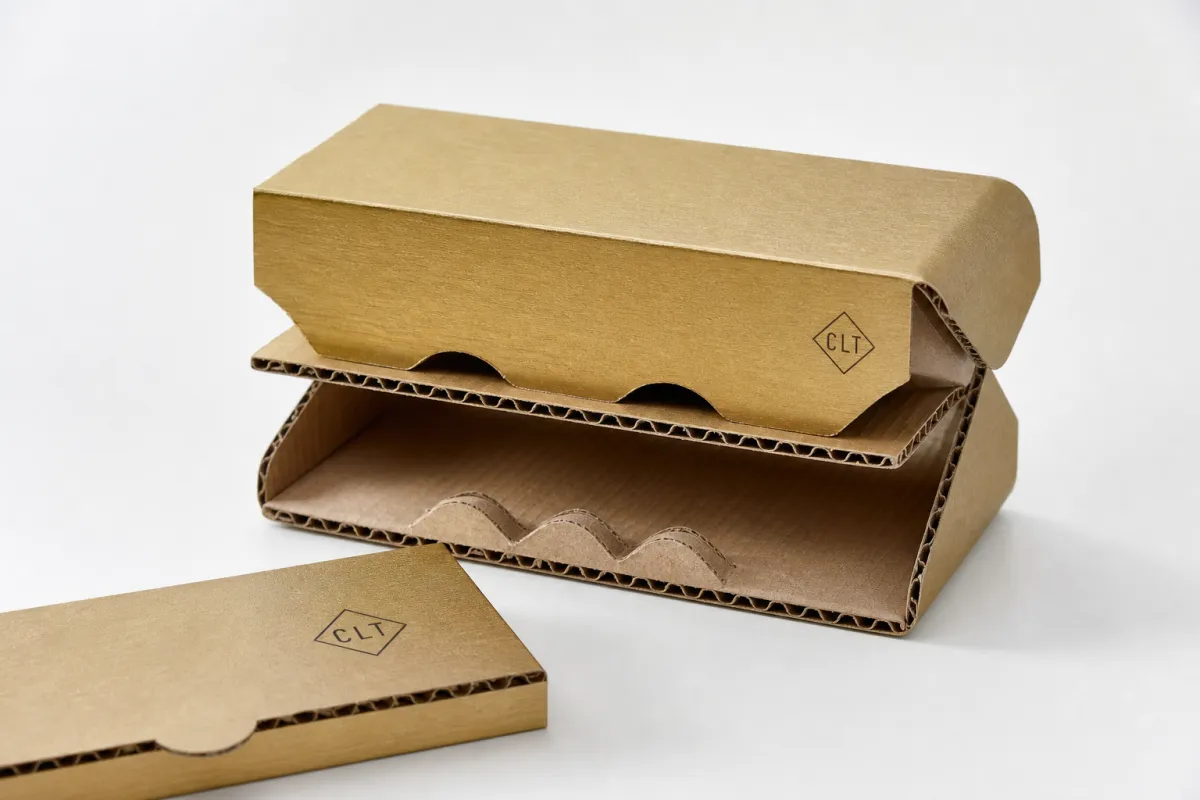
The inside of the shipper matters too. If the product is loose, the top panel can bow inward during stacking or vibration. Inserts, partitions, and dunnage help create internal support so the load is not hanging on the carton walls alone. A molded pulp tray, a die-cut corrugated insert, or even a tightly sized paper void fill system can make a meaningful difference, especially for retail-ready products and e-commerce shipper boxes. I’ve seen a simple one-piece corrugated insert cut corner crush by half on a 6-unit glassware set shipped from Charlotte, North Carolina.
Here’s the basic force path I explain to clients: the top box pushes down, the force goes to the corners, the corners push into the bottom box, and the bottom box carries the stack. That is why crushed corners are so common. They are the first place where load concentration shows up, and once a corner starts to fold, the whole panel can follow. A 15-pound carton stacked six-high can put more stress on the bottom layer than people expect, especially if the pallet has 0.75 inches of overhang.
In the real world, that plays out across common formats like RSC cartons on pallets, die-cut mailers in parcel networks, and double-wall shippers for heavier SKUs. I remember one cosmetics client in Atlanta using a nice printed die-cut carton for a 24-unit display pack. The carton looked great, but the side panels had almost no internal bracing, so the top layer compressed in the warehouse before the truck even left. The fix was not “more tape.” It was a better insert, tighter fit, and a stronger board spec. More glamorous? Not remotely. More effective? Absolutely.
Key Factors That Increase the Risk of Box Crushing During Transit
The first factor is board construction. Single-wall corrugated works fine for many lightweight shipments, but once you get into heavier products or stacked freight, double-wall often makes more sense. Flute profile matters too: a C-flute, B-flute, or combined profile changes how the box handles compression and impact. In one plant visit I made to a Midwest fulfillment center near Indianapolis, the team was using a lighter single-wall box for a 38-pound hardware kit because it shaved a few cents off unit cost. They were replacing crushed cartons on nearly every pallet. The “savings” disappeared fast. I’ve seen that movie more than once, and it never ends well.
Box size and fit come next. Oversized cartons invite movement, and movement usually means load concentration in the wrong places. The product shifts, the top panels cave inward, and the carton loses structure. Undersized cartons create the opposite problem: bulging, seam stress, and internal pressure on the panels. If you want to learn how to prevent box crushing during transit, fit is one of the easiest places to start, because a carton that fits the product well usually performs better before you even change the board grade. A box with 12 mm of extra void on each side can behave very differently from one with a 2 mm fit window.
Pallet quality and stacking pattern are just as important. Full-pallet support keeps the load distributed evenly, while overhang creates edge crush points that can ruin the bottom layers. Column stacking generally transmits load better for corrugated cartons, while interlocking patterns can look tidy but sometimes reduce vertical strength, especially on mixed-SKU pallets. I’ve seen a distribution center in Atlanta use a strong double-wall carton, then destroy the stack with 2 inches of overhang and a crooked top layer. The box was not the problem; the pallet build was. A messy pallet has a talent for making good packaging look guilty.
Environmental conditions deserve more attention than they get. Corrugated loses strength when it picks up moisture, and that can happen in damp warehouses, humid ports, refrigerated transfers, and trailers that swing between warm days and cool nights. Condensation on container walls is a real issue on imported freight. I’ve opened containers where the top row looked fine from the outside, but the board had already softened enough to crush under a second pallet. Even a 10% increase in moisture content can knock a noticeable amount off compression performance.
Handling and route length multiply the risk. A one-stop dedicated truck is a different animal from a parcel shipment bouncing through multiple hubs, or a cross-dock lane where cartons are sorted, restacked, and handled more than once. The more touches and dwell time, the more opportunities for compression, vibration, and dropped-load damage. That’s why how to prevent box crushing during transit is never just a carton question; it’s a shipping system question. A route with three transfers in 48 hours is not the same as a direct lane from Memphis to Nashville.
| Packaging Option | Typical Use | Relative Unit Cost | Crush Resistance | Best Fit For |
|---|---|---|---|---|
| Single-wall RSC | Light to medium cartons | $0.38–$0.85 | Moderate | Parcel, light retail, short lanes |
| Double-wall RSC | Heavier or palletized freight | $0.72–$1.65 | High | Stacked pallets, long transit, warehouse storage |
| Die-cut mailer with insert | E-commerce and presentation packs | $0.55–$1.40 | Moderate to high | Products that need fit control and a cleaner unboxing |
| Reinforced custom shipper | Heavy, fragile, or high-value items | $1.10–$3.50 | Very high | Premium goods, dense products, high claim-risk lanes |
How to Prevent Box Crushing During Transit: Step-by-Step
Step one is matching the carton style to the ship method, product weight, and stacking conditions. That sounds obvious, but I’ve sat in supplier meetings where a buyer selected a box based on the cheapest quoted sample, not the actual freight environment. If the carton is going on a pallet, through a humid warehouse, and then onto a long-haul truck, you need to think like the stack, not like the spreadsheet. Learning how to prevent box crushing during transit starts with choosing packaging for the route, not just the catalog photo. A carton approved for a 9-pound e-commerce order in Austin may fail on a 24-box pallet in Newark.
Step two is selecting the right corrugated grade and checking the compression performance against the expected top load. For palletized freight, I usually want to know the gross weight per layer, the number of layers, the dwell time, and whether the shipment may be double-stacked. If those numbers get ignored, you end up guessing. And guessing with corrugated is expensive. Standards from groups like ISTA help frame testing expectations, while corrugated performance data from organizations like Packaging School / Packaging.org can give teams a better language for comparing board options. If you need a practical target, many teams start by comparing 32 ECT, 44 ECT, and double-wall specifications against the real pallet height and freight lane.
Step three is reducing empty space. Void space is a hidden enemy because it lets the product move and removes internal support from the carton walls. Inserts, dividers, paper fill, molded pulp, and foam all have a job to do, but I’m not a fan of using foam just because it feels “protective.” Use what fits the product, route, and budget. I’ve seen a molded pulp end cap solve a crush issue at half the cost of a foam conversion because it stabilized the product and helped the top panel stay flat. That kind of fix is common when people truly focus on how to prevent box crushing during transit. A 0.5-inch fit improvement can change the outcome more than a glossy print upgrade.
Step four is building stable pallets. Keep the layer count consistent, square the edges, avoid overhang, and use slip sheets or corner boards when needed. For tall loads, corner boards are worth every penny because they help transfer load vertically instead of letting straps or stretch film carve into the carton edges. If you have to stack mixed SKUs, place the strongest cartons at the bottom and the lightest on top, but only if the load can still stay square. A pretty pallet is nice; a stable pallet is better. On a 48 x 40 pallet, even a 1-inch edge offset can create a weak point on the lower tier.
Step five is sealing, labeling, and orienting the shipment correctly. Bottom seams should be reinforced for heavier items, and I like to see clear handling labels where they matter, not hidden under graphics or shrink wrap. If there is a “do not stack” requirement, the carton and pallet need to support that claim in practice, because a label alone will not save you in a busy warehouse. Orientation arrows, center-of-gravity marks, and load-limit warnings should be legible, simple, and consistent. The carrier is not a mind reader, and a crew moving freight in Reno at 3:00 a.m. will not stop to decode a vague icon.
Step six is testing a pilot run. This is where the real learning happens. Ship 20, 50, or 100 units through the actual lane, then inspect the failures by condition: corner crush, seam split, top-load bowing, moisture softening, or impact damage. If you only test in a clean office setting, you miss the ugly stuff. I prefer to see the first run through a real carrier network with photographs taken at packout, at pallet wrap, and after receipt. That’s the quickest route to understanding how to prevent box crushing during transit on your specific product. A 72-hour test through the Dallas-to-Chicago lane can teach more than a week of bench testing.
One client in Texas gave me a great line after their first test round: “We finally stopped treating the box like a container and started treating it like part of the structure.” That’s exactly the right mindset, and it usually saves time because the team stops relying on a single material to solve a system problem.
Box Crushing Prevention Costs, Pricing, and Tradeoffs
Stronger cartons cost more, and there’s no honest way around that. The question is whether the added packaging spend is less than the cost of damage, returns, reshipments, and unhappy customers. In my experience, it almost always is on fragile, dense, or palletized goods. A jump from a $0.48 single-wall box to a $0.94 double-wall box can look painful on a purchase order, but if it cuts damage claims by even 4% to 6%, the numbers often favor the stronger spec quickly. On 8,000 units, that change can be the difference between $3,840 in packaging cost and $7,520 in packaging cost, but the freight-loss reduction can be bigger than the added spend.
Pricing depends on board grade, dimensions, print coverage, custom inserts, order volume, and whether you’re buying stock, semi-custom, or fully custom packaging. A plain brown RSC in large volume can be inexpensive, but once you ask for a precise fit, heavier liner weights, die-cut features, or branded printing, the cost moves up. For custom branded packaging at Custom Logo Things, I’ve seen clients land around $0.18 per unit for simple printed wrap elements on 5,000 pieces, while more engineered shippers with inserts can reach several dollars each depending on the product and carton size. In Dongguan, China or Monterrey, Mexico, those numbers can shift by freight lane and tooling complexity, but the spread is normal.
Here’s the part many teams miss: the lowest-cost box is rarely the lowest total cost when the freight environment is rough or the product is heavy. Underpackaging hides its cost in labor rework, damaged inventory, customer service tickets, chargebacks, and shelf-image problems when retail cartons arrive mangled. If a retail buyer opens a master carton and sees crushed faces or bowed tops, confidence drops immediately. I’ve watched a buyer at a national chain reject a pallet in under 90 seconds because two corner columns were visibly compressed. Ninety seconds. That’s all it took to turn a shipment into a headache.
A practical way to compare options is to calculate your current damage rate, then test a stronger spec and compare the total landed loss. That includes packaging cost, freight, labor, and return expense. If your current packaging causes 3.5% damage across 10,000 units, and each damaged unit costs $14 in replacement and service labor, that’s $4,900 in loss before you even count reputation. Spending an extra $0.22 per unit to save most of that is usually a very good trade. On a 5,000-unit order, that extra spend is $1,100; one claim-heavy lane can burn through that in a week.
If sustainability is part of the decision, that can fit too. Better fit often means less void fill, and stronger corrugated can sometimes replace mixed-material solutions that are harder to recycle. FSC-certified fiber is also worth considering for buyers who need sourcing credentials, and FSC has clear guidance on chain-of-custody language. Just remember that “eco-friendly” does not automatically mean “strong enough.” You still need the right spec for the ship lane, and that may mean a 350gsm C1S artboard insert paired with a stronger corrugated sleeve for the outer pack.
Common Mistakes That Lead to Crushed Boxes
The first mistake is using a carton that is too large for the product. Oversized boxes leave too much room for shifting, and shifting almost always means the sidewalls or top panels absorb the force instead of the product supporting itself. I’ve opened countless test cartons that looked clean on the outside but had a 2-inch air gap on every side. That gap turns into a crush zone under stack pressure, especially on lanes with 12 to 18 hours of dwell time.
The second mistake is choosing a lighter board grade to save pennies per unit. I understand the temptation; buyers live under pressure, and corrugated prices can swing with paper markets. But if the cheaper box fails on the lane, those pennies disappear inside freight claims, customer returns, and labor time spent reworking damaged pallets. That is why how to prevent box crushing during transit is as much a purchasing decision as a packaging decision. A spec that saves $0.07 per unit can cost $3.00 per unit after failure.
The third mistake is ignoring humidity and storage conditions. Corrugated can lose significant strength when exposed to moisture, especially in warm, damp warehouses or in containers that experience condensation. I’ve seen boxes that passed a bench test in the morning collapse by afternoon after sitting next to a dock door with high humidity rolling in. If your lane touches ports, refrigerated transfer points, or long trailer dwell times, moisture control deserves real attention. A Houston warehouse in July is not the same as a dry inland facility in Phoenix.
The fourth mistake is overlooking pallet overhang and uneven stacking. Even a strong carton can crush if the pallet footprint is sloppy or the layers are offset too far. Mixed-SKU loads are especially tricky because the weight distribution changes from layer to layer, and one weak carton can create a soft spot in the entire stack. If the pallet is unstable, the shipment is already working against you. Even 1.25 inches of overhang on one side can turn a good bottom tier into a failure point.
The fifth mistake is skipping test shipments and assuming one good result applies everywhere. A package that survives a short regional lane may fail on a multi-stop route with more vibration, more restacking, and more time in uncontrolled conditions. I’ve had clients tell me, “It worked fine on the first order.” That’s useful, but not enough. Transit is inconsistent, and packaging should be tested under the worst realistic conditions, not the easiest ones. A lane from Milwaukee to St. Louis is not the same as a parcel route through Memphis, Nashville, and Birmingham.
Expert Tips and Process Timeline for Better Transit Protection
When I work through a packaging fix, I like to use a simple timeline. First, audit the current damage pattern for 2 to 4 weeks and separate the failures by SKU, lane, carrier, and storage condition. Then request sample cartons in at least two board grades, because comparing only one option can hide the actual improvement. After that, run compression and transit tests, approve production, and keep monitoring the first few shipments after launch. That sequence may sound basic, but it saves a lot of guesswork. It also keeps the team from making a rushed switch after one damaged pallet in the wrong city.
Here’s a timeline that has worked well in real plants and fulfillment centers:
- Days 1-5: Pull damage photos, count claims, and measure current carton dimensions, void space, and pallet patterns.
- Days 6-10: Review board options, insert styles, and stacking requirements with your packaging supplier or engineer.
- Days 11-15: Receive samples and test pack them with the actual product weight and internal supports.
- Days 16-20: Run pilot shipments through the real lane and inspect arrivals at destination.
- Days 21-30: Approve the final spec, update work instructions, and train packing staff on sealing and pallet rules.
Working with packaging engineers is worth it when the product is dense, fragile, or high-value. They can size the carton to the shipment instead of guessing at a generic fit, and they can recommend whether a stronger liner, a different flute, or a better insert will fix the issue more efficiently. That’s where a lot of companies get stuck: they buy a box, when what they really need is a packaging system. A simple package drawing from a supplier in Chicago or Shenzhen can be the difference between a 15-pound carton that stacks cleanly and one that fails in warehouse staging.
Field checks also matter. I always tell teams to inspect corner condition, top-load bowing, seam integrity, and product movement inside the box. If the product shifts even a half inch, that movement can turn into a crush issue during stacking. Photographing failures by lane or carrier helps too, because patterns show up quickly. One of my favorite client wins came from a beverage distributor in Charlotte that traced nearly all top-panel collapse to one DC where pallets were stored near a humid loading bay. Move the inventory, and the damage dropped almost immediately. Sometimes the villain is just a bad corner of the warehouse, which feels almost offensively simple after all the spreadsheets.
For heavier cartons, I often recommend reinforcing the bottom seam and using double-wall board on stacked freight. For taller loads, corner protection can keep straps and stretch wrap from cutting into the edges. And if your packaging changes by shift or by plant, document the spec in plain language: carton size, board grade, insert type, seal pattern, pallet layout, and orientation. Consistency is a huge part of how to prevent box crushing during transit, because a great spec is only helpful if the team uses it the same way every time. A spec written as “use stronger box” is a liability; a spec written as “44 ECT double-wall, 18 x 12 x 10 inches, 2-piece corrugated insert, full H-tape, no overhang” is actionable.
“The box didn’t fail in the truck; it failed because three small decisions stacked up before it ever left the warehouse.” That’s a line I’ve used more than once in supplier meetings, and it usually gets people looking back at their packing room instead of blaming the carrier first.
Action Steps to Stop Box Crushing on Your Next Shipment
Start with a damage audit and sort the issues by SKU, lane, and condition. If only certain products crush, that usually tells you the problem is fit, board grade, or stack load rather than a broad packaging failure. If everything on a specific route arrives damaged, the issue may be humidity, rough handling, or poor palletization. That distinction matters if you want a fast fix, and it helps you avoid replacing a good 275# carton with an unnecessarily expensive custom shipper.
Next, measure the carton, the product weight, and the void space, then compare those numbers to the current board grade and pallet pattern. If the box is carrying 28 pounds of product and the stack sits six layers high, You Need to Know whether the carton was ever intended for that use. That simple check usually points straight to the answer for how to prevent box crushing during transit. A carton that works for 12 pounds and two layers may be completely wrong for 28 pounds and six layers.
After that, order a small sample run with a stronger board, a tighter fit, or improved inserts. Test the revised packaging in real transit, not just in the packing room. If the cartons are going into parcel networks, send a few through parcel. If they ride on pallets, stack them the same way the warehouse will stack them. Real conditions reveal the truth faster than bench tests alone. Even a 25-unit pilot can expose a weak corner fold or a seam failure that the office test never catches.
Then update internal packing instructions so the seal pattern, carton orientation, and pallet build are repeated the same way across shifts. I’ve seen a good packaging design underperform simply because one shift was taping the bottom seam once while another shift was running full H-tape. Small process differences can produce big differences in crush resistance. The difference between one strip of tape and a full 3-strip seal can be the difference between a pass and a claim.
Finally, track results for the next few shipments and lock in the proven spec. If the damage rate falls from 4% to under 1%, keep the winning materials, document the measurements, and protect the process from drift. That is the practical heart of how to prevent box crushing during transit: measure, test, correct, and standardize. Put the final spec in the ERP, print the carton code clearly, and make sure the warehouse in Phoenix uses the same build as the warehouse in Richmond.
FAQ
How do you prevent box crushing during transit for heavy products?
Use a stronger corrugated grade, often double-wall, and make sure the box corners carry the load. Reduce internal movement with inserts or void fill so the product supports the carton. Build square pallets with no overhang and avoid stacking beyond the carton’s compression limit. For a 35-pound product, many teams start with double-wall and a fit tolerance under 0.25 inches.
What box style helps prevent box crushing during transit best?
A properly sized corrugated shipper with enough board strength for the load is usually more effective than a larger loose-fitting box. For palletized freight, RSC cartons with stronger board or reinforced die-cut designs often perform well. The best style depends on weight, stacking pressure, and shipping route. A 44 ECT RSC in Chicago may outperform a custom mailer if the lane includes double-stacking.
Does humidity cause box crushing during transit?
Yes, moisture can reduce corrugated strength and make cartons much easier to crush. Damp warehouses, condensating trailers, and humid ports are common risk points. Moisture-resistant coatings, better storage, and faster shipping help reduce the problem. In coastal regions like Savannah or Long Beach, even short dwell times can matter.
How can I tell if my packaging is too weak?
Look for bowed panels, crushed corners, seam splits, and top-load collapse after palletizing. If damage appears mainly on the bottom rows or edge cartons, the board grade or stack pattern is often too weak. Transit testing and real shipment inspections reveal weak points quickly. A carton that buckles under a 3-high test stack usually needs a stronger board or tighter fit.
What is the fastest way to reduce box crushing during transit?
Improve fit by removing excess void space and upgrading to a stronger board grade where needed. Fix pallet stacking so loads are square, stable, and free of overhang. Test a small packaging change on the most damage-prone SKU first, then expand from there. Many teams see improvement within 2 to 3 shipment cycles after moving to a tighter insert and double-wall outer.
If you take one thing from this, make it practical: how to prevent box crushing during transit is not solved by one miracle material, one thicker box, or one carrier complaint. It’s solved by matching carton strength, product fit, pallet structure, and shipping conditions so the load path stays intact from packout to final delivery. I’ve seen that approach save clients thousands of dollars in claims, and more than once it has turned a “bad box problem” into a simple process correction. The best outcomes usually come from one precise change: the right corrugated grade, a correctly sized insert, and a pallet build that respects the physics instead of fighting them.
Related packaging resources
Use these related guides to compare specs, costs, quality checks, and buyer decisions before making the final call.