Jewelry embroidered beanies Bulk Order Planning starts with a simple question that is often skipped: does the finished piece feel like a premium accessory, or does it read like a giveaway? That answer changes the whole order. It affects embroidery size, placement, thread choice, packaging, and even the quantity break that makes the program workable.
A clean embroidered beanie can carry more perceived value than a heavier blank with weak branding. Buyers do not pay extra for weight alone. They pay for how the logo reads, how the knit feels in hand, and whether the piece looks deliberate on a shelf, in a gift box, or on a crowded event table.
A beanie can function as a premium gift or a low-cost handout, and the difference usually comes down to decoration quality, presentation, and fit.
That is why jewelry embroidered beanies Bulk Order Planning should begin with sell-through logic, not a unit price. Retail teams think about margin and display impact. Corporate buyers need brand clarity across hundreds of pieces. Event teams need fast approvals, readable decoration, and enough consistency that a crooked front panel or thread snag never becomes the story.
Jewelry Embroidered Beanies Bulk Order Planning: Start With Sell-Through
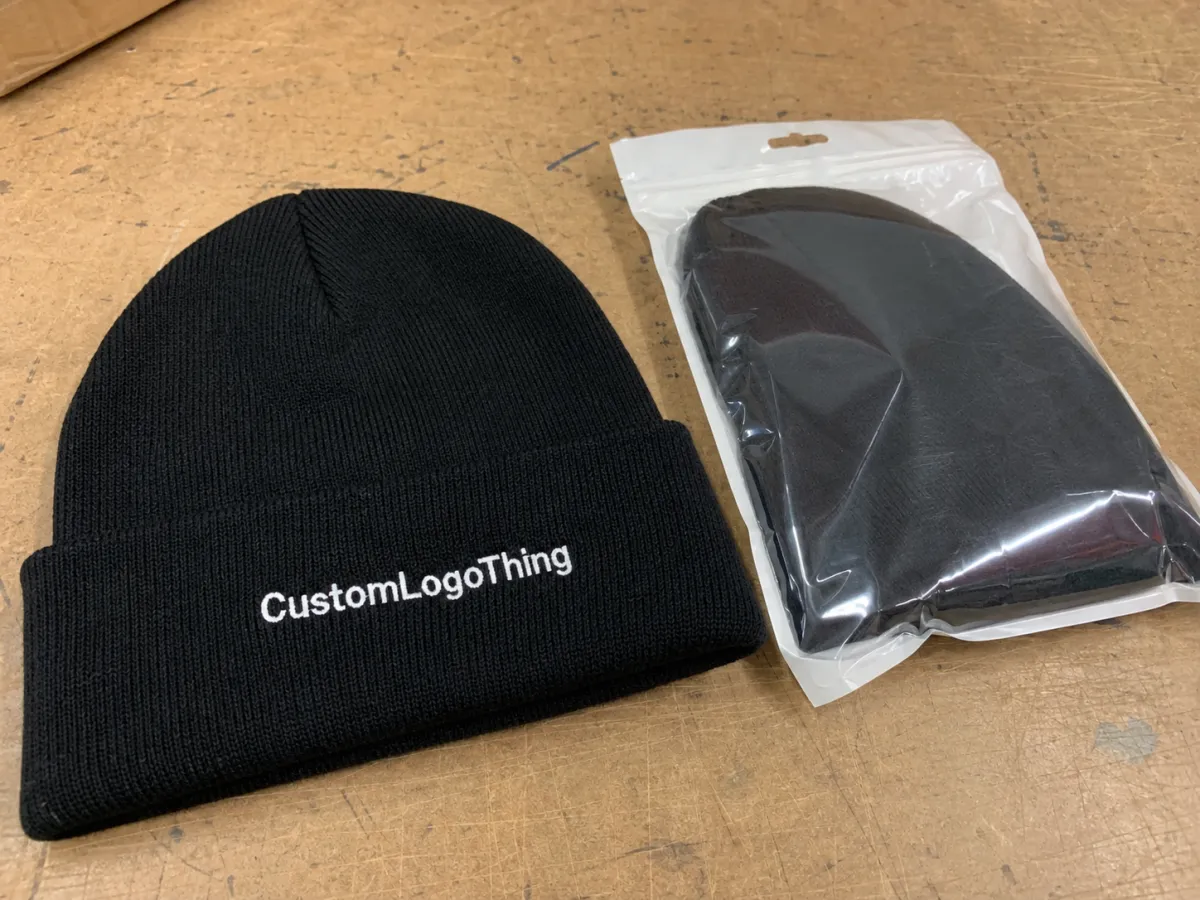
The merchandising question is practical: what should the customer feel when they pick up the beanie? For a jewelry-inspired look, the answer is usually refined rather than flashy. That can mean metallic thread, a compact high-contrast logo, or a tonal stitch pattern that feels closer to boutique apparel than promo wear. A buyer planning jewelry embroidered Beanies Bulk Order Planning needs to think like a merch planner, not just a purchasing contact.
Retail-ready pieces usually need tighter visual control than team merch. A small logo centered on the cuff can support a stronger price point than a larger design that is visible but busy. Corporate gifts usually sit in the middle. They need polish, but the branding still has to be legible enough to justify the spend. Event giveaways are harsher. If the icon disappears at three feet, the value drops fast.
Start with three questions:
- Who is wearing it, and in what setting?
- Should the beanie read as premium, practical, or promotional?
- What landed cost or margin target keeps the program viable?
That framing keeps the spec honest. A buyer who wants a jewelry-like finish but asks for tiny lettering and a dense emblem is creating a quality risk before production even starts. Cleaner art, stronger contrast, and a placement that aligns with the cuff usually outperform a more complicated concept.
Packaging changes the read as much as decoration does. Folded pieces in individual polybags, a soft insert card, or a recycled paper hang tag alter the perceived value immediately. If packaging needs to support a more sustainable story, FSC guidance is a practical reference point: FSC.
Choose the Right Beanie Body and Decoration Style
Not every beanie body gives the same embroidery result. A cuffed knit usually offers the best flat area for a logo, which is why it shows up so often in jewelry-inspired custom headwear. Slouch styles can look more fashion-forward, but they reduce predictability because the logo may sit on a looser panel. Fisherman-style beanies are sharper visually, yet the shorter profile limits decoration size and can make dense designs feel cramped.
Fiber content matters more than many buyers expect. Common bodies include 100% acrylic, acrylic-wool blends, recycled polyester, and occasionally cotton-rich knits for a softer touch. Acrylic is cost-effective and easy to source in volume. Wool blends usually feel more substantial, but they can change the price profile and care expectations. Recycled polyester helps with sustainability claims, although the hand feel and knit behavior should still be checked before the order is locked.
Knit density and gauge are part of the equation too. A tighter knit can hold finer stitching and cleaner edges. A looser knit may distort under a dense stitch pattern, especially if the design includes small lettering or thin strokes. In many production runs, a clean 2.0 to 2.75 inch logo area with roughly 5,000 to 8,500 stitches is easier to execute than a tiny badge that looks crisp on screen and fuzzy in thread.
For a jewelry-inspired aesthetic, there are four common decoration paths:
- Metallic thread embroidery for a subtle shine without hard embellishments.
- Tonal embroidery for a quiet premium look that depends on texture rather than contrast.
- Applique or woven patch when the mark needs sharper edges or more graphic detail.
- Mixed decoration where embroidery handles the logo and a patch or label adds the jewelry cue.
None of these is automatically better. Metallic thread can elevate a design, but it also increases needle drag and can slow production. Applique creates a more fashion-forward feel, yet it usually needs a larger footprint to look intentional. A woven patch keeps lettering crisp, though it changes the tactile experience. For buyers building a broader branded apparel line, the beanie finish should sit comfortably beside the rest of the kit so the product family feels connected.
Match the body to the use case. Premium gifting programs usually benefit from a softer hand feel, a cleaner fold, and packaging that feels finished. Event orders often need faster decoration and stronger contrast. Wholesale buyers should also think about reorder consistency. A style that looks great on the first run but changes shape or fit on the second run creates friction that a lower unit price cannot fix.
Stitch Count, Placement, and Color Matching Specs
Embroidery only looks premium when the spec is tight. The easiest way to protect quality is to define the logo size in inches or millimeters before anyone starts digitizing. Small lettering can disappear into knit texture. Thin outlines can break apart. A compact logo with solid fills often looks cleaner than an oversized design that tries to show too much detail.
Placement is just as important. Front cuff is the most common location because it gives a flat, visible panel and holds position when worn. Center front works well for simple marks. Side placement can feel more fashion-driven, but it is harder to keep aligned. Back-seam placement should be treated carefully; if the seam shifts the design off center, the whole piece reads off-balance.
Color matching deserves early attention. Thread does not behave like print ink. Knit texture, lighting, and yarn color can change how bright a shade appears. If brand accuracy matters, ask for Pantone guidance and a thread-matching conversation during quoting, not after approval. Dark base colors can make metallic accents pop. Light bases can flatten subtle tones if the contrast is too weak.
Use these planning rules:
- Keep the thread count as low as the design allows, especially if metallic accents are included.
- Avoid hairline details unless the sample proves they survive on the knit.
- Confirm how the logo will sit after stretching, folding, and wear.
- Approve a proof that shows actual placement, not a generic mockup.
Quality control should include more than a visual glance. Good buyers ask for photo proof of placement, stitch direction, and thread color against the selected blank. For larger runs, a quick stretch test helps reveal whether the embroidery pulls the knit too tightly or leaves the mark unstable after wear. If the program uses metallic thread, ask how the supplier prevents fraying at the edges, because shiny thread can look excellent in a still image and rough in hand.
If packaging or shipping material is part of the brief, lower-waste choices can be specified at the same time. The EPA’s recycling guidance is a useful reference for secondary packaging and carton material decisions: EPA recycling guidance.
Pricing, MOQ, and Unit-Cost Drivers
Pricing becomes clearer once the quote is broken into pieces. A believable estimate usually includes digitizing, setup, blank beanie cost, embroidery labor, packaging, and freight. That breakdown matters because a low-looking unit price can hide expensive add-ons. Jewelry embroidered beanies Bulk Order Planning works best when the buyer sees the whole landed picture, not a single decoration number.
MOQ changes the economics quickly. A 50-piece run carries a much heavier setup burden per unit than a 500-piece run. The same logo file, the same thread colors, and the same placement can produce very different results in the quote depending on quantity. For many buyers, the useful middle ground sits between flexibility and scale: large enough to spread setup, small enough to avoid overbuying stock.
Typical cost drivers include:
- Higher stitch counts for dense or oversized logos.
- Multiple thread colors, especially if metallic thread is involved.
- More than one placement on the beanie.
- Private labeling, woven labels, or custom hang tags.
- Individual bagging, gift boxing, or retail-ready presentation.
| Quantity band | Typical decorated unit cost | What it suits | Why it behaves that way |
|---|---|---|---|
| 48-99 units | $9.50-$14.00 | Small launches, samples, tight event needs | Setup and digitizing are spread across fewer pieces |
| 100-249 units | $7.25-$10.50 | Staff gifts, boutique retail tests, smaller wholesale drops | Better balance between flexibility and pricing |
| 250-499 units | $5.75-$8.25 | Seasonal promotions, multi-location teams, retail runs | Enough volume to reduce per-unit setup pressure |
| 500+ units | $4.80-$7.00 | Repeat programs, broader distribution, sharper margin targets | Production and overhead are spread more efficiently |
Those figures are directional, not universal. A compact single-color logo on a basic cuffed beanie will usually price lower than a premium knit with metallic thread and custom packaging. Still, the table exposes the real pattern: quantity lowers unit cost, but decoration complexity can erase part of that gain. Buyers should ask for two or three quantity tiers so they can compare landed cost instead of guessing.
One more practical point: a supplier should explain what is included. Some quotes bundle quality control and packaging. Others separate every step into add-ons. That difference can move the final landed cost by more than expected, especially on small orders.
Production Process and Timeline From Proof to Delivery
A good production timeline is less about speed claims and more about clear gates. The usual path is straightforward: artwork intake, digitizing, digital proof, sample approval if needed, bulk production, inspection, and shipment. If each step has a named owner and a deadline, the order moves. If approvals drift, the schedule slides.
For a simple single-location embroidery order, lead time is often faster than a multi-step premium build. A clean approval cycle can keep the order moving in roughly 12 to 15 business days after proof approval, though larger runs or more complex decoration can take longer. If the order includes custom labels, multiple color revisions, or a pre-production sample, the schedule grows accordingly.
Common delay points are predictable:
- Artwork arrives in the wrong format or with weak resolution.
- The logo needs digitizing revisions after the first proof.
- Color sign-off takes longer than planned.
- The buyer changes quantity after production has started.
- Transit time was not built into the launch calendar.
That last point matters. A beanie order can finish on schedule and still miss the event if freight or receiving was not planned. Build a buffer for both transit and inbound inspection. If the beanies need to support a retail launch or seasonal promotion, leave time for a final count, carton check, and any relabeling.
Shipping standards matter too. If the program includes cartons that need to survive a longer distribution path, ask whether the pack-out was tested against an ISTA test plan. That is not necessary for every merch order, but it is a smart question if the shipment will pass through multiple handoffs or needs to arrive shelf-ready.
The clearest way to manage timing is to set a decision calendar before the quote is accepted. Who approves the proof? Who signs off on the sample? Who handles shipping details? A supplier can move quickly only if the buyer removes ambiguity at the front end. Missing ownership is one of the most common reasons a simple order turns into a scramble.
What a Reliable Beanie Supplier Must Show Before You Order
Price matters, but reliability protects the margin story. A trustworthy supplier should be able to show sample photos, explain stitch decisions, and describe how they inspect the embroidery before packing. If the answer is always vague, the risk usually sits with the buyer, not the vendor.
Look for signs that the supplier can repeat the order later without drift. Reorder consistency is not a minor detail. Color mismatch, placement creep, or changes in knit body shape can turn a second run into a customer service problem. For a jewelry-inspired program, that consistency matters even more because the whole point is to look elevated and intentional.
Ask these questions before you approve the quote:
- Can you explain what happens from digitizing through final inspection?
- What tolerance do you hold on placement and thread match?
- How do you handle corrections if the proof needs revision?
- What is included in the price, and what is billed separately?
- Can you support repeat orders with saved thread codes and spec notes?
Communication speed is part of quality. If a supplier takes days to answer basic questions during quoting, that pattern often continues during production. Buyers planning custom embroidered beanies should expect direct responses on MOQ, packaging, and delivery windows. If a vendor cannot state a realistic lead time or explain where the cost comes from, the quote is not complete yet.
QC should be specific, not vague. For this category, that usually means checking stitch density, measuring logo placement from the cuff edge, confirming thread color against the approved sample, and inspecting the back side for excessive knotting or puckering. If the order uses a woven patch or applique, edges should be clean and secure after handling, not just photographed under perfect lighting.
Packaging detail also signals process discipline. If a supplier offers FSC-certified paper components, clear carton labels, and a sensible pack-out, that usually points to a system rather than guesswork. It does not guarantee perfection, but it is better than treating packaging as an afterthought.
Next Steps for an Accurate Quote and Smooth Launch
The fastest quote comes from a clean brief. Send the quantity tiers, target ship date, artwork file, preferred beanie style, and any color-matching requirements in one message. If you want private labeling, individual polybags, or retail-ready presentation, state that up front. Each of those choices changes timing and landed cost.
Use a simple approval path. One person should own the proof. One person should own the sample, if a sample is needed. One person should handle shipping details. That structure keeps jewelry embroidered Beanies Bulk Order Planning from turning into a chain of conflicting replies.
A buyer-ready checklist usually includes:
- Final quantity by size or color, if applicable.
- Artwork in vector format, plus any brand color references.
- Preferred beanie body and decoration method.
- Packaging preference, including tags, bags, or inserts.
- Ship-to address, receiving hours, and launch deadline.
Once those pieces are locked, ask for confirmation on three points: decoration placement, thread colors, and delivery window. Those are the details most likely to create surprises later. If the supplier can answer them clearly, the order usually moves with fewer revisions and less friction.
The strongest programs usually share one trait: the buyer treats the beanie like a brand asset, not a one-line decoration job. That mindset keeps the order focused on fit, finish, and repeatability, which matter more than a small price difference once the pieces are in hand and in circulation.
How do I estimate quantity for jewelry embroidered beanie bulk orders?
Start with the use case: resale, event giveaway, employee merch, or bundled gift. Then add a small buffer for replacements, size variation, and late additions if the deadline is tight. For a launch, a 5% to 10% cushion is often easier to manage than a second rush order.
What affects pricing most on custom embroidered beanies?
The biggest drivers are quantity, stitch count, number of thread colors, and whether metallic or specialty thread is used. Packaging, labeling, and rush timing can also move the final landed cost more than buyers expect.
What is the usual lead time for bulk embroidered beanies?
Lead time depends on proof approval speed, decoration complexity, and order size. Simple single-location embroidery is usually faster than multi-placement or sample-heavy programs, and transit time should always be added on top of production time.
What artwork works best for jewelry-inspired beanie embroidery?
Clean vector art with solid shapes, readable lettering, and limited tiny details usually produces the sharpest result. If the design uses sparkle or metallic cues, the supplier should translate that into thread choices rather than tiny printed effects.
Can I reorder the same beanie design later?
Yes, if the digitized file, thread codes, and placement specs are saved accurately. Keep the approved sample and final proof on file so repeat orders stay consistent across seasons.

