Logo Patches Supplier Quote for Home Fragrance Brands
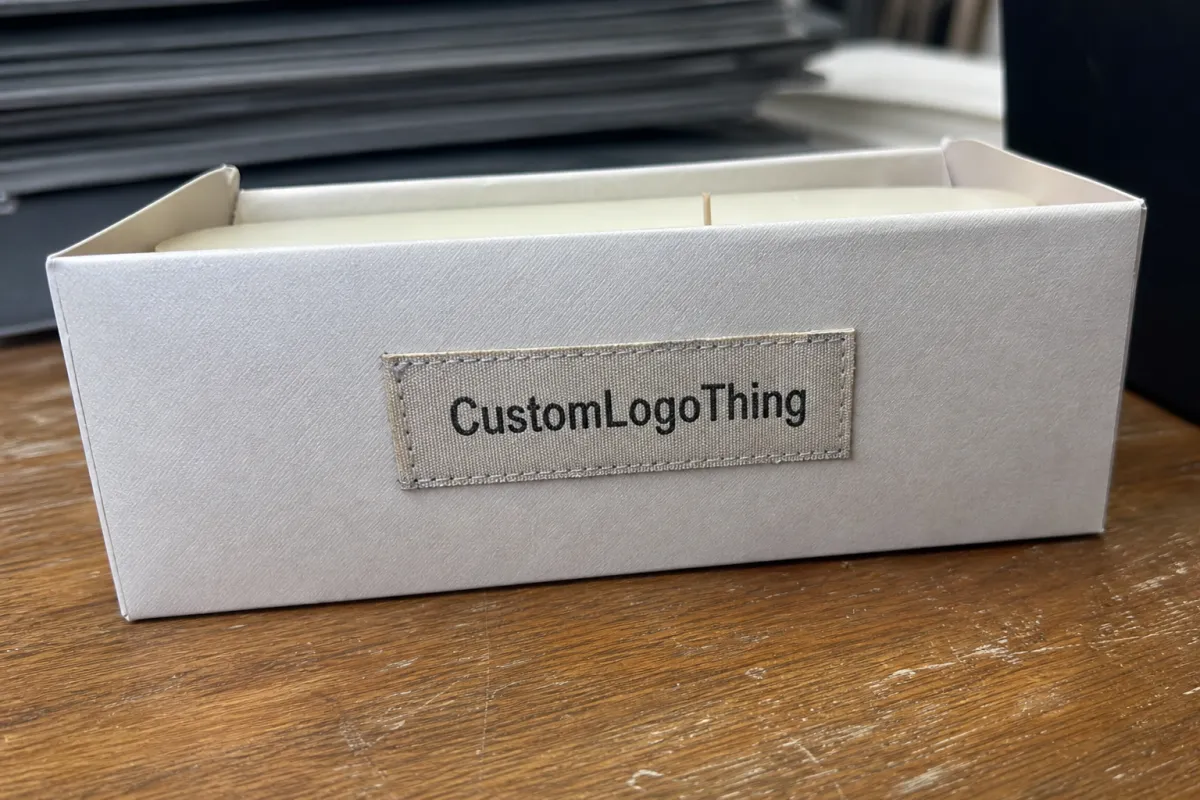
A candle, diffuser, sachet, or travel tin can be judged in three seconds on a retail shelf. A small patch often carries more tactile brand value than a large printed panel because shoppers can see it, touch it, and read the quality cues before they ever smell the product.
Requesting a Logo Patches Supplier Quote for Home Fragrance Brands is not just a pricing exercise. It is a specification exercise. The quote needs to define a physical component: material, size, attachment method, color system, edge finish, packing format, production tolerance, and timing.
That detail matters. A woven label on a cotton drawstring bag, a faux leather badge on a kraft sleeve, and a soft rubber tab on a limited gift pouch send completely different signals. One feels apothecary. One feels natural and warm. One feels clean, modern, and controlled.
The right patch gives packaging a finished hand. The wrong one looks heavy, wrinkles the textile, lifts at the corners, absorbs odor, or competes with the candle label. Small component, large consequence.
Home fragrance brands use logo patches in more places than many buyers first expect: linen wraps, drawstring dust bags, rigid box sleeves, ribbon tabs, organza pouches, sachet bags, travel tin wraps, promotional bundles, and seasonal gift packaging. Each surface behaves differently. Coated paperboard is not cotton. Velvet is not jute. A sew-on woven label that looks excellent on a pouch may fail if someone tries to attach the same construction with standard pressure-sensitive tape to a textured wrap.
Most patch types come from apparel labeling: woven labels, embroidered badges, faux leather patches, PVC patches, silicone patches, and heat-transfer labels. Fragrance packaging adds a different set of pressures. Paper coatings, scented oils, alcohol-based formulas, folding pressure, display handling, and gift-set assembly all affect the finished result. None of these factors are unusual, but they need to be named before the supplier prices the job.
Practical rule: a patch quote is only useful if it explains how the patch will be made, how it will attach, and how it will arrive at the packaging line.
A clean quote gives purchasing, design, and operations the same facts. It also prevents the familiar problem: a low unit price that looks attractive until sampling reveals the backing is wrong, the logo detail is too fine, or the pieces arrive packed in a way that slows down application.
Patch Formats That Fit Candle, Diffuser, and Sachet Packaging
Patch format sets the tone before the logo is even read. Woven patches are usually the cleanest choice for compact brand marks, fine line logos, and small lettering because the design is built from tightly controlled threads on a loom. For cotton pouches, linen bags, and dust bags, woven construction often gives the best balance of detail, softness, and repeatability.
Embroidered patches add raised thread texture. They suit seasonal collections, handmade positioning, and gift sets that need a little craft. The limitation is detail. Tiny serif type, thin botanical stems, and fragrance notes under roughly 5 mm high can fill in, especially at high stitch density. Embroidery is often overused on very small marks; it performs better when the artwork has room to breathe.
Faux leather patches are strong for boutique candle lines, kraft boxes, linen wraps, and earthy fragrance stories. They can be debossed, printed, foil stamped, or laser cut. A tan PU patch with blind debossing feels very different from a black patch with silver foil, even at the same 35 mm width. Material grain, thickness, and contrast decide whether the result feels refined or costume-like.
PVC and silicone patches create a molded, modern badge. They work for clean geometric logos, limited-edition tins, travel sets, or brands with a more graphic retail presence. Tooling is part of the cost, so these formats usually make more sense once the order moves beyond a small trial run.
Printed fabric patches fit gradients, watercolor artwork, detailed botanicals, and full-color fragrance graphics. They may not feel as dimensional as embroidery or molded rubber, but they can reproduce visual detail that thread, debossing, and molded color cannot.
| Patch Type | Best Packaging Fit | Typical Strength | Watch Point |
|---|---|---|---|
| Woven patch | Cotton pouch, linen bag, dust bag | Crisp small text and clean logos | Limited gradient effects |
| Embroidered patch | Gift pouch, seasonal wrap, textile sleeve | Raised thread texture | Fine details can fill in |
| Faux leather patch | Kraft sleeve, rigid box band, linen wrap | Warm boutique finish | Deboss contrast depends on grain and pressure |
| PVC or silicone patch | Travel tin wrap, modern gift bag, limited badge | Molded shape and strong color blocks | Tooling cost affects small runs |
| Printed fabric patch | Sachet bag, art-led pouch, promotional set | Full-color artwork and gradients | Ink hand-feel and edge finish need review |
Construction choices matter as much as base material. Merrowed edges give a raised border. Laser-cut edges feel flatter and cleaner. Folded ends suit label-style applications. Satin stitch borders frame embroidered patches. Backing can be sew-on, iron-on, adhesive, pressure-sensitive tape, hook backing, heat-press backing, or plain back if the patch will be stitched by the bag maker.
Scale is where many fragrance brands lose refinement. A 28 mm woven patch with tight edges and clear contrast can look more premium than a 55 mm badge fighting the jar label. Small does not mean cheap. Small, controlled, and correctly placed often feels expensive.
Specifications to Prepare Before Requesting a Patch Quote
A fast, accurate Logo Patches Supplier Quote for home fragrance brands starts with a complete spec. The supplier does not always need a finished production file, but vague inputs force assumptions. Those assumptions usually appear later as revised pricing, sampling delays, or production compromises.
Prepare these basics before sending the request:
- Patch size: width and height in millimeters or inches, even if approximate.
- Shape: rectangle, oval, circle, shield, custom die-cut, folded label, or tab.
- Logo file: AI, EPS, SVG, or editable PDF for most woven, embroidered, leather, and molded patches.
- Color targets: Pantone references, thread targets, foil color, molded color notes, or approved brand standards.
- Base material: woven thread, twill, felt, PU leather, microfiber leather, PVC, silicone, or printed fabric.
- Edge finish: merrowed, laser cut, heat cut, folded, stitched border, or raw edge if appropriate.
- Backing: sew-on, adhesive, iron-on, heat press, hook backing, or plain back.
- Quantity: launch order, reorder estimate, and seasonal forecast if available.
- Application surface: cotton, linen, jute, velvet, organza, coated paperboard, kraft paper, ribbon, or rigid box wrap.
- Packing preference: loose bulk, bundles of 100, individual bags, carton labels, or oriented stacks for applicators.
Vector artwork gives the cleanest path for woven, embroidered, leather, and molded methods. High-resolution raster artwork can work for printed fabric patches, but only if the resolution holds at final size. A 300 dpi file at postcard size may still be weak if the original image came from a small web graphic and was enlarged.
Detail limits are real. A thin fragrance note list, delicate lavender stem, or serif tagline may need modification. Woven patches can hold surprisingly fine marks, but not every 0.2 mm line survives. Embroidery needs thread space. Debossed leather needs enough surface area for pressure to read. Molded PVC needs clean color separations, and each raised or recessed area has to make sense as a physical form.
Color changes by process. Thread can be matched closely to Pantone references, but thread reflects light differently than ink on 350gsm C1S artboard with soft-touch lamination. Faux leather debossing depends on pressure, heat, dwell time, and material grain. PVC and silicone colors need careful proof approval because molded color is not adjusted the same way as printed ink.
Send photos or physical samples of the packaging surface whenever possible. The same adhesive may hold well on smooth coated board and poorly on loosely woven jute. A heat-applied patch may suit a cotton pouch but damage organza. These are production questions, not design criticisms.
Cost, Pricing, MOQ, and Unit Cost Drivers
Patch pricing is built from connected inputs: material, size, shape complexity, number of colors, edge finish, backing, artwork setup, mold or die charges, sampling, production quantity, inspection, and packing. That is why the unit price alone can mislead.
As a practical range, simple woven or printed patches may land around $0.18 to $0.45 per unit at mid-level quantities such as 5,000 to 10,000 pieces, depending on size, color count, backing, and packing. Embroidered patches can run higher when stitch coverage is dense, often $0.35 to $0.95 or more for small packaging sizes. Faux leather patches vary widely, roughly $0.30 to $1.10 in many common cases, because material grade, debossing, foil, printing, and die cutting all change the cost.
Molded PVC or silicone may require tooling that ranges from modest to several hundred dollars depending on size and complexity. After the tool is approved, the unit cost usually improves as order quantity rises. That makes molded patches less attractive for a 300-piece test, but much more reasonable for a recurring gift-set program.
Those ranges are not promises. A 20 mm woven tab with no backing is a different product from a 50 mm custom-shaped silicone badge packed individually with adhesive liner.
MOQ follows the same logic. A supplier may quote a small test run, but the best unit cost usually appears when the production quantity fits material purchasing, machine setup, dyeing, molding, cutting, and packing efficiency. For many custom patch projects, buyers compare 500, 1,000, 2,500, 5,000, and 10,000 pieces. The right break depends on launch volume, reorder risk, storage space, and cash flow.
Two quotes for the same logo can look far apart because they are not quoting the same scope. One price may include artwork cleanup, sample fee, adhesive backing, inspection, and bags of 100. Another may quote only the bare patch, loose in bulk. The second looks cheaper until operations asks how the patches will be counted, applied, and controlled.
Request tiered pricing. A sensible buying request might ask for 1,000 pieces for a first run, 3,000 pieces for a reorder, and 10,000 pieces for a seasonal forecast. That shows whether increasing the order saves enough per unit to justify carrying the inventory.
If freight matters, ask for itemized or landed pricing. Patch production, sample cost, tooling, packing, courier freight, ocean freight, duties, and special handling should be visible enough for purchasing to compare offers fairly.
Process and Timeline From Artwork Review to Bulk Delivery
The normal path is straightforward: quote request, spec review, artwork adjustment, digital proof, material confirmation, physical sample if needed, sample approval, bulk production, quality inspection, packing, and shipping. Each step removes risk if the team gives it enough attention.
Woven and embroidered patches move through loom or embroidery setup, trimming, edge finishing, backing, and final packing. Faux leather patches may involve sheet selection, cutting, debossing, foil stamping, screen printing, or laser work. Molded PVC and silicone patches need tooling and color confirmation before bulk production starts, which adds front-end time but creates repeatable parts after approval.
A digital proof is not the same as a physical sample. The proof confirms layout, size, border width, text placement, and general color direction. The sample shows actual texture, thickness, edge finish, backing behavior, flexibility, and readability at final scale. For a premium candle gift set, one real sample is more valuable than a polished screen proof that cannot show hand-feel.
Typical timing depends on workload and construction. Many projects follow this pattern: 1 to 3 business days for quote and proof preparation after complete specs arrive, 5 to 10 business days for sampling on many woven, embroidered, printed, or leather styles, and 10 to 20 business days for bulk production after sample approval. Molded patches can take longer because tooling and color checks add steps. Shipping may add a few days by courier or several weeks by ocean, depending on the freight plan.
Delays usually come from preventable gaps: missing vector artwork, unclear backing, late logo resizing, Pantone changes after sampling, packaging surface changes, and rushed approvals. Another common issue is timing the patch order too late. If the pouch maker needs patches before sewing, the patch timeline sits upstream from pouch production, not beside final assembly.
Speed improves when the first request includes complete specs, target delivery date, quantity tiers, packaging photos, and any compliance or labeling constraints. For finished-pack shipping performance, many packaging teams refer to guidance from ISTA, especially where gift sets face parcel handling. Patch suppliers do not replace package testing, but they should understand that a decorative component may still face compression, vibration, and repeated handling.
Quality Checks That Matter for Fragrance Packaging
Quality inspection should protect the finished presentation, not just count pieces in a carton. For fragrance packaging, check logo clarity, color consistency, edge cleanliness, stitch density, cut accuracy, adhesive strength, backing alignment, material defects, and packing orientation.
Small errors show quickly. A 1 mm shift in border width can be visible on a 30 mm patch. A slightly fuzzy edge may look acceptable loose on a table, then look poor once centered on a crisp candle sleeve. On a drawstring pouch, patch placement can appear crooked if the fabric stretches or the patch is too stiff for the substrate.
Fragrance-specific contact deserves practical review. Patches may sit near oils, alcohol-based fragrance components, scented inserts, coated paperboard, or printed wraps. Not every project has a risk, but possible contact areas should be discussed before bulk production. Materials should be selected to reduce staining, adhesive lifting, odor absorption, or surface interaction where contact is possible.
Attachment testing is not optional for adhesive work. Test the adhesive on the actual box, sleeve, pouch, ribbon, or wrap. Coated paperboard, kraft, linen, velvet, jute, satin, and organza each give the adhesive a different surface. A pressure-sensitive adhesive that bonds well to a smooth rigid box may not hold on a loose fiber textile. For sustainability claims or paper sourcing questions tied to the broader pack, many buyers also review chain-of-custody expectations through groups such as FSC.
Sew-on patches need edge allowance, thread color approval, and a check for puckering. Heat-applied patches need substrate temperature testing. Some lightweight fabrics cannot tolerate the heat, dwell time, or pressure required for a secure bond. This depends on fabric, backing chemistry, and application equipment, so no responsible supplier should guess without details.
Packing quality affects the line. Patches can be supplied loose, bundled by 50 or 100, bagged by quantity, or oriented in stacks so the applicator does not waste time flipping pieces. If the project needs left-facing tabs, folded labels, or patches fed in a specific direction, state that before the quote is finalized.
Comparing Suppliers Without Getting Distracted by Hype
A reliable supplier asks specific questions before quoting. A patch for a linen diffuser pouch is not the same as a patch for a rigid candle box, velvet gift bag, or kraft paper sleeve. If the supplier does not ask about surface, backing, size, or application method, the number may be fast but incomplete.
Look for proof points that can be checked:
- Material recommendation: clear reasons for woven, embroidered, faux leather, printed, PVC, or silicone construction.
- Artwork feedback: warnings about small text, thin lines, gradients, deboss contrast, or stitch fill.
- Itemized pricing: unit cost, setup, sample, tooling, backing, packing, and freight where relevant.
- MOQ transparency: practical minimums and useful quantity breaks.
- Sample options: digital proof, stock material reference, pre-production sample, or production sample.
- Production tolerances: expected variation in size, color, border width, and placement.
- Packing instructions: bulk, bundles, individual bags, orientation, or carton labeling.
- Lead time communication: timing separated by proof, sample, bulk production, and shipping.
Custom Logo Things works as a manufacturing partner for custom packaging and label-style components, including woven labels, embroidered badges, printed patches, faux leather patches, and molded logo pieces. The useful work is translation: taking a flat logo and turning it into a physical material that still looks like the brand after thread, grain, edge finish, and backing are involved.
Technical guidance has real value. A supplier should flag a tagline that will close up in embroidery, a blind deboss that may lack contrast on dark faux leather, an adhesive that may not hold on textured fiber, or a patch size that feels too heavy for a 5 oz cotton pouch. That is not being difficult. That is protecting the finished pack.
Be careful with quote comparisons built only on the lowest unit price. Omitted setup, weak sampling, unsuitable backing, poor packing, or loose tolerances can cost more if the packaging line slows down or the finished gift set looks inconsistent. A clean Logo Patches Supplier Quote for home fragrance brands makes the full scope visible.
If you want to see how different branded components can affect finished presentation, review the practical examples on the Case Studies page. The best patch choice is not always the most expensive one. It is the construction that gives the brand a clean, repeatable logo detail at a cost that fits the launch plan.
Next Steps to Request a Clean, Comparable Supplier Quote
Start with a simple spec list. Send the logo file, preferred patch type if known, size range, quantity target, packaging surface, backing preference, color references, delivery location, and in-hand date. If the patch will be applied by a pouch maker, box assembler, co-packer, or in-house team, mention that too.
If the construction is undecided, ask for two or three options. Woven versus embroidered is a useful comparison for a cotton bag. Faux leather versus printed fabric may be more relevant for a candle sleeve. Adhesive versus sew-on can be compared for a textile wrap. A supplier can often suggest a better direction after seeing the artwork and substrate.
Ask for tiered pricing and sampling details in the same email. Purchasing needs the unit cost. Design needs proof and sample confidence. Operations needs packing format and application notes. Treat the patch as a finished packaging component, not a loose decorative item.
Photos help. Dielines help more. Pouch samples, box material notes, ribbon width, laminate type, or fabric weight can prevent wrong backing recommendations. If adhesive or heat application is being considered, the supplier should review the actual surface or at least a close photo before making a firm recommendation.
For a clear Logo Patches Supplier Quote for home fragrance brands, send complete specs and ask for unit pricing, sample cost, MOQ, lead time, tolerances, and packing format. That gives you a faster reply, a cleaner comparison, and fewer surprises when the launch schedule tightens. To move from idea to priced options, prepare the spec list, choose the patch styles you prefer, and send the details through Contact Us.
FAQ
What should I include in a logo patch supplier quote request for a home fragrance brand?
Include logo artwork, patch size, material preference, quantity, color references, backing type, application surface, delivery location, and target in-hand date. Photos or samples of the pouch, box, sleeve, or ribbon help the supplier recommend the correct backing and patch construction. Ask for tiered pricing, sample cost, MOQ, estimated lead time, production tolerances, and packing format so the quote is complete enough to compare.
Which logo patch type is best for candle and diffuser packaging?
Woven patches are strong for clean logos and small lettering on textile pouches or dust bags. Embroidered patches add raised texture, although they may not suit very fine type or delicate botanical artwork. Faux leather, printed fabric, PVC, and silicone patches can also work well depending on whether the brand wants a natural, graphic, or modern molded finish.
Can adhesive logo patches be used on home fragrance boxes or pouches?
Yes, but the adhesive should be tested on the actual surface before bulk production. Coated paperboard, kraft paper, linen, velvet, jute, and satin can all behave differently with pressure-sensitive adhesive. For textured or flexible textiles, sew-on, heat-applied, or mechanically attached options may be more reliable than standard adhesive.
What affects the MOQ and pricing for custom logo patches?
MOQ and unit cost depend on size, material, color count, edge finish, backing, tooling, setup, quantity, and packing needs. Molded PVC or silicone patches may have tooling costs, while embroidery can vary with stitch coverage and thread detail. Requesting multiple quantity tiers helps show where the unit cost improves enough to justify a larger production run.
How long does a custom logo patch order take from quote to delivery?
Timing depends on artwork readiness, patch construction, sampling needs, approval speed, production volume, and shipping method. A digital proof is usually faster than a physical sample, but a sample is recommended for premium fragrance packaging or unfamiliar materials. The fastest timelines happen when the buyer sends complete specs, packaging photos, color targets, and a realistic in-hand date with the quote request.


